TL;DR:
- Pet deposits are upfront, refundable payments meant to cover pet-caused damages, while pet rent is a non-refundable monthly fee added to rent. Landlords may charge both, but service and support animals are exempt from these fees under federal law. Understanding these costs helps renters budget effectively and avoid surprises at lease signing or move-out.
Signing a lease with a pet in Boca Raton feels exciting until the fee section appears and suddenly you’re staring at two separate charges you weren’t expecting. Many renters assume pet deposit and pet rent are just two ways of saying the same thing, but they work completely differently and can cost you hundreds of dollars if you mix them up. One is upfront and potentially refundable. The other quietly adds to your monthly expenses for the life of your lease. This guide breaks down exactly what each charge means, how they compare in the local market, and how you can make the smarter financial choice before you sign anything.
Table of Contents
- What is a pet deposit and what is pet rent?
- Pet deposit vs. pet rent in Boca Raton: A comparison
- When do you pay, and how much? Real examples from Boca Raton
- How to decide: Which is better for you (and your budget)?
- Why smart renters ask about pet fees up front
- Find the best Boca Raton apartments for you and your pet
- Frequently asked questions
Key Takeaways
| Point | Details |
|---|---|
| Pet deposit vs rent | Pet deposits are usually refundable and cover damage, while pet rent is a monthly non-refundable charge. |
| Know your lease | Always review lease terms to understand total and ongoing pet costs as policies differ widely. |
| Local practices | Boca Raton landlords often use both charges, so budgeting for both is wise. |
| Legal exceptions | Service and emotional support animals are exempt from pet-related fees under federal law. |
| Be proactive | Ask landlords up front about all fees for clear budgeting and to avoid move-out surprises. |
What is a pet deposit and what is pet rent?
Now that we’ve set the stage, let’s define what each charge really means and why knowing makes a difference.
A pet deposit is a one-time, upfront payment you make before or at lease signing. It’s specifically meant to cover any damage your pet causes during your tenancy. Think chewed baseboards, scratched hardwood floors, or carpet stains. In Boca Raton, pet deposits typically range from $200 to $500 depending on the property and the pet. Importantly, a pet deposit is usually refundable. If your pet causes no damage, you should get that money back when you move out.
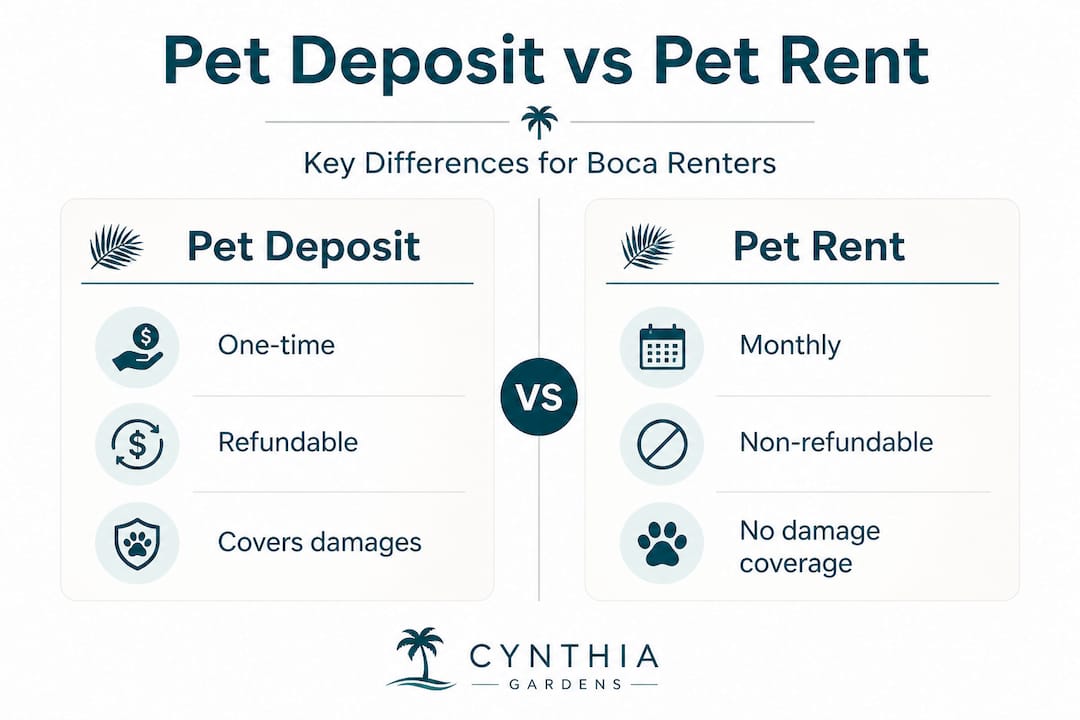
Pet rent, on the other hand, is a monthly fee added on top of your base rent. It’s non-refundable, meaning once you pay it, it’s gone regardless of how well-behaved your pet is. Pet rent in Boca Raton typically runs between $25 and $50 per month. On a 12-month lease, that adds up to $300 to $600 in fees you’ll never see again.
Here’s what trips people up: these two charges are not mutually exclusive. A landlord can legally charge both a pet deposit and pet rent at the same time. Some properties charge only one. Some charge neither. It completely depends on the property’s policy, so you need to ask specifically about both before assuming anything. Reviewing pet deposit rules explained before you start touring can save you from unpleasant surprises.
Key distinctions at a glance:
- Pet deposit: one-time, refundable if no damage, paid at lease signing
- Pet rent: monthly, non-refundable, paid throughout the entire lease term
- Either, both, or neither can appear in a single lease
- Amount and refund terms vary widely between properties
- Non-refundable fees labeled as “pet fees” at signing are neither deposits nor rent but a third category entirely
One major protection many renters don’t know about: under federal law, service and emotional support animals are fully exempt from all pet deposits, fees, and pet rent, even in buildings that otherwise prohibit pets. No landlord can legally charge you for having a service or emotional support animal. This is a critical distinction to understand before you sign.
Pro Tip: Before you sign any lease, ask your landlord or property manager two specific questions. First, “Is the pet deposit refundable?” Second, “Under what conditions would any of it be withheld?” Get those answers in writing so there’s no confusion at move-out. You can also check current apartment pet policies to understand what’s standard in the area.
Pet deposit vs. pet rent in Boca Raton: A comparison
With definitions in hand, compare how each charge actually affects your bottom line and what local renters should watch out for.
| Feature | Pet deposit | Pet rent |
|---|---|---|
| Payment type | One-time, upfront | Monthly, recurring |
| Refundable? | Usually yes, if no damage | Never |
| Typical Boca amount | $200 to $500 | $25 to $50/month |
| When you pay | At lease signing | Every month |
| Legal limits in Florida | No specific state cap; must be in writing | No specific state cap; must be in writing |
| Covers what? | Pet-caused property damage | General risk and amenity costs |
| Service/ESA exempt? | Yes, by federal law | Yes, by federal law |
Important: Under the Fair Housing Act, landlords cannot charge any form of pet fees, pet deposits, or pet rent for service animals or emotional support animals. This applies even in buildings with strict no-pet policies. If a landlord tries to charge you for a verified service or emotional support animal, that is a federal fair housing violation.
Now let’s put real numbers to a typical scenario. Imagine you’re signing a one-year lease on a Boca Raton one-bedroom apartment with your cat. Here’s what your total pet-related cost could look like:
- Pet deposit at signing: $300 (refundable if no damage)
- Pet rent per month: $35
- Pet rent total over 12 months: $420
- Total pet-related cost paid: $720
- Amount you could get back: Up to $300 if your cat causes no damage
- Minimum non-refundable cost: $420 in pet rent
That means even in the best-case scenario where your deposit is fully returned, you’re still spending $420 on pet rent. Understanding Boca Raton pet agreements before committing to a lease helps you budget for these exact scenarios. And if you want to compare multiple properties, browsing pet-friendly options in Boca gives you a side-by-side view of what the market looks like.
When do you pay, and how much? Real examples from Boca Raton
Understanding the rules is key, but real numbers tell you what to expect. Here’s how the costs work in practice for Boca Raton renters.
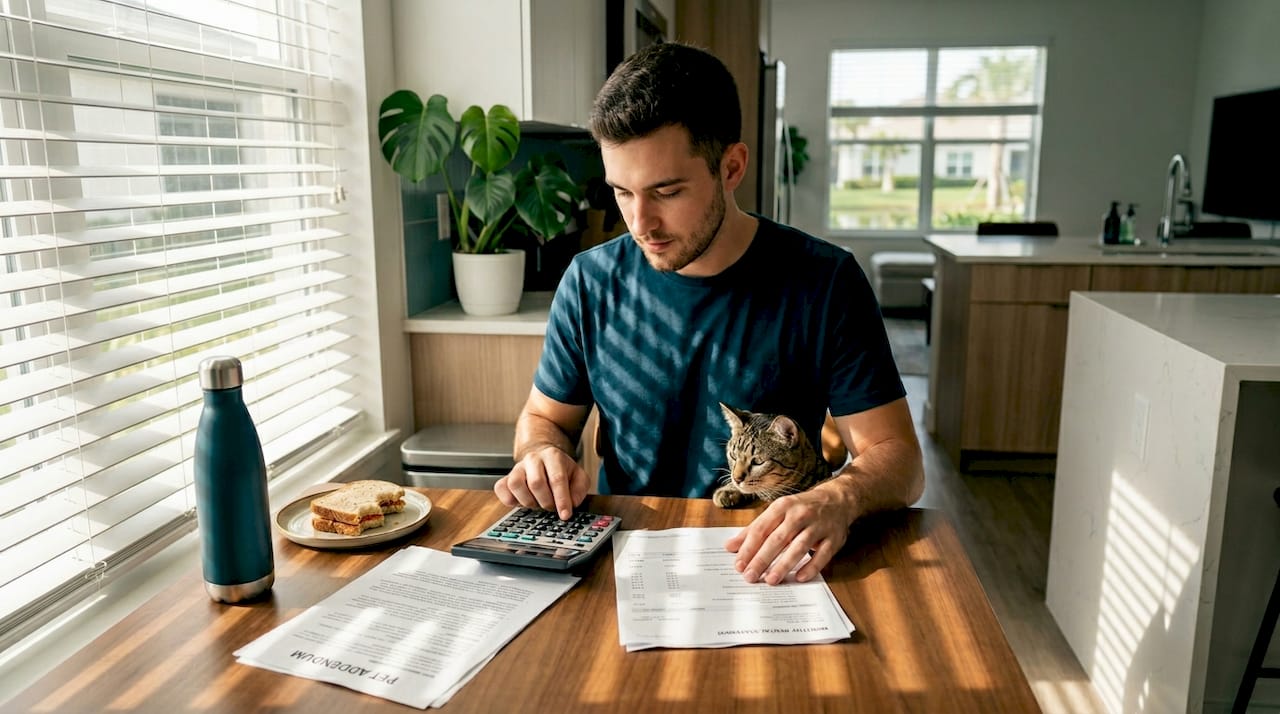
The timing of these payments matters a lot, especially when you’re already stretching your budget to cover first month’s rent and a security deposit. Pet deposits are almost always due at lease signing, alongside or immediately after your regular security deposit. Pet rent starts the first month your lease is active and continues every single month until you move out.
Here’s a look at how fees compare across typical Boca Raton apartment types:
| Apartment type | Pet deposit | Pet rent/month | Breed or size restrictions |
|---|---|---|---|
| Budget studio or 1-bed | $150 to $250 | $20 to $30 | Common for dogs over 25 lbs |
| Mid-range 1-bed | $250 to $400 | $30 to $50 | Sometimes, case by case |
| Higher-end complex | $400 to $600 | $50 to $75 | Often stricter breed lists |
| Private landlord rental | $100 to $300 | Sometimes none | Varies widely |
What a pet deposit typically covers:
- Damaged flooring, especially carpet and hardwood
- Chewed trim, doors, or window frames
- Urine odors requiring professional cleaning
- Wall scratches or scuffs caused by the animal
What pet rent typically goes toward:
- General property maintenance in pet-designated areas
- Liability buffer for the landlord
- Wear considered normal in any pet-allowed unit
- Outdoor amenity upkeep like pet stations or dog walking areas
Note that some properties also charge a non-refundable pet fee at move-in as a separate one-time payment. This is distinct from both the deposit and monthly rent. It’s simply a flat fee for allowing your pet on the property, and you will never see it again. Always ask if the fee you’re paying is refundable or not. Finding pet-friendly Boca apartments that are upfront about all fees will save you from unpleasant surprises. Reviewing affordable housing tips can help you compare true total costs across different properties.
Again, the federal Fair Housing Act exemption applies here too. If you have a service animal or an emotional support animal with proper documentation, none of these charges can legally be applied to you, regardless of the timing or structure of the fee.
How to decide: Which is better for you (and your budget)?
After looking at the numbers, let’s help you make the smartest decision for your finances and your pet’s needs.
Not every renter’s situation is the same. The right choice between prioritizing a low deposit or accepting a higher monthly pet rent depends on a few key personal factors. Work through these steps before you commit:
- Calculate your total outlay. Multiply monthly pet rent by the number of months in your lease. Add that to your pet deposit. That’s your maximum pet-related cost before considering any refund.
- Estimate your refund odds realistically. Think honestly about your pet’s behavior, your apartment’s materials, and how meticulous you’ll be about cleaning. If your dog chews furniture or your cat has accidents, factor in a reduced or forfeited deposit.
- Compare your upfront budget vs. monthly budget. If you’re cash-strapped at signing, a property with no pet deposit but a modest pet rent might be easier to manage, even if you pay more over time.
- Check your lease length. On a short lease of six months, a higher pet deposit with no pet rent could be cheaper overall. On a 24-month lease, monthly pet rent compounds significantly.
- Review any breed or size restrictions. Some properties allow pet fees only for certain animals. Knowing this before applying saves time and avoids application fee losses.
Pro Tip: Before committing to any lease, ask your potential landlord these three questions directly. “What exactly does the pet deposit cover?” “Under what specific conditions would you withhold some or all of it?” and “Is the pet rent fixed or can it increase at renewal?” These questions often reveal more about the landlord’s expectations than the lease itself. Checking out pet policy review tips gives you a solid framework for asking the right questions.
If you have a service or emotional support animal, remember that federal law protects you from all of these charges. Document your animal’s status properly and provide it to your landlord before or at lease signing to avoid any confusion.
Why smart renters ask about pet fees up front
Here’s the practical wisdom experienced renters wish they’d known sooner.
Most renters in Boca Raton focus almost entirely on the base rent when they’re comparing apartments. They calculate rent, utilities, maybe parking, and that’s it. Pet fees become an afterthought that only surfaces at lease signing or, worse, at move-out when a deposit isn’t returned.
The uncomfortable reality is that not all refundable deposits come back. Landlords can legally withhold part or all of a pet deposit for what they consider excessive wear, odor, or damage. Normal wear and tear is supposed to be excluded, but what counts as normal is often a gray area. A carpet that looks fine to you might be documented as “pet-stained” in your landlord’s move-out report. Photographing and documenting the state of your apartment at both move-in and move-out is not optional. It’s essential.
There’s also a dynamic that rarely gets discussed: talking to your landlord about pet fees before you sign can sometimes change the terms. Landlords, especially independent property owners rather than large management companies, often have more flexibility than their posted policies suggest. Coming in prepared, asking specific and professional questions, and demonstrating that you’re a responsible pet owner can open conversations about reducing deposits or waiving non-refundable fees. The real-world impact of pet fees on your total housing cost is significant enough to make it worth having that conversation.
One more thing that’s rarely mentioned: if you have roommates, guests, or family members whose pets visit your unit regularly, check your lease carefully. Some leases define pets as any animal present in the unit for more than a set number of days. Your roommate’s cat that visits on weekends might technically count under certain policies, and that could affect your deposit situation at move-out.
Never assume a “pet-friendly” label on a listing means transparent fees or fair policies. Always read the actual pet addendum, which is usually a separate document attached to your lease. That’s where the real terms live.
Find the best Boca Raton apartments for you and your pet
Now that you understand exactly how pet deposits and pet rent work, you’re in a much stronger position to shop for your next apartment with clear eyes and a realistic budget.
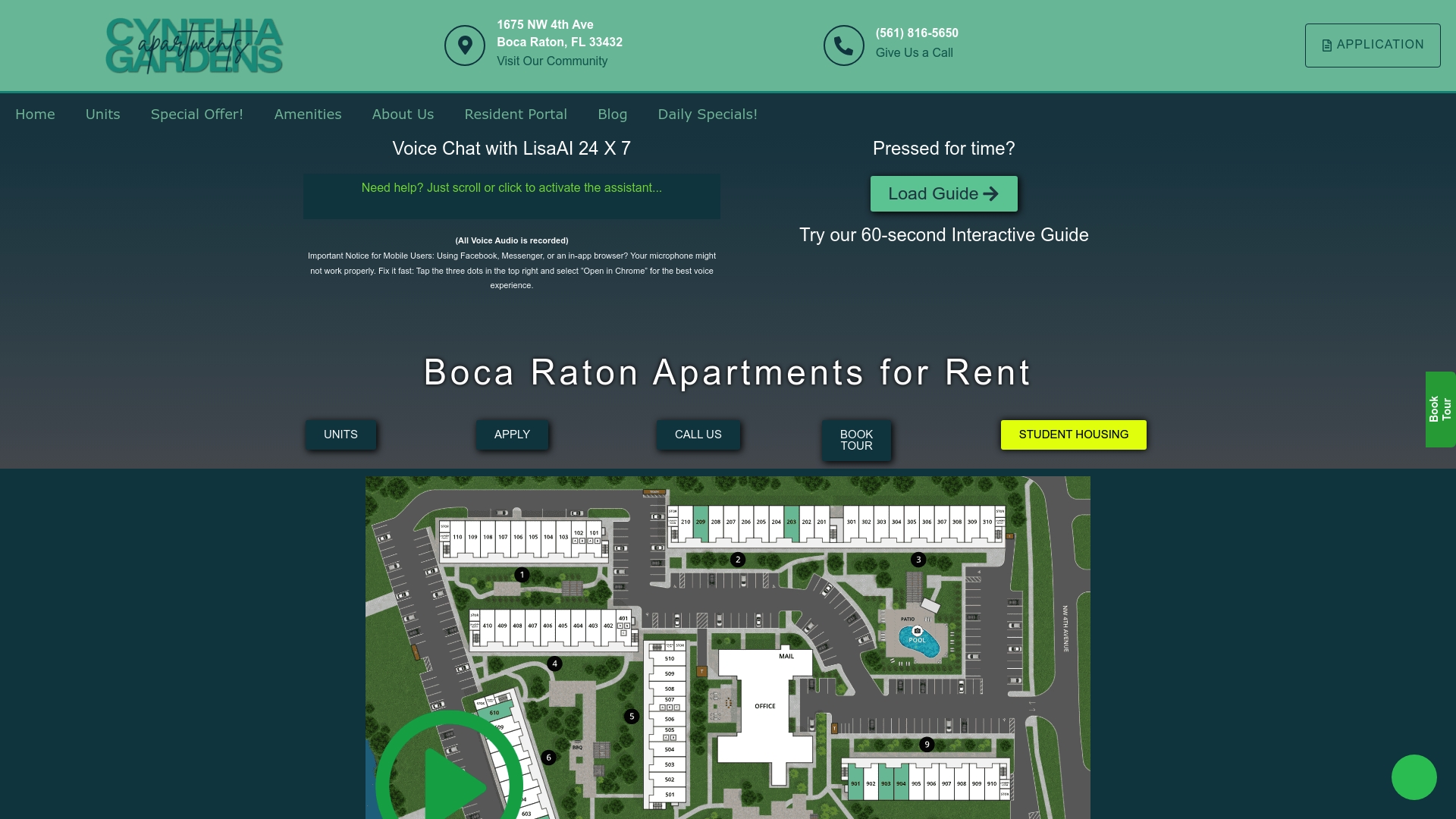
At Cynthia Gardens, we believe renters deserve straightforward answers, not confusing fee structures. Our affordable housing for pet owners resources help you understand exactly what you’re paying and why. Whether you’re searching for pet-friendly Boca apartments with clear policies or you simply want to compare your options before committing, our guides and listings are designed to give you real information. Use our virtual tours, interactive property map, and AI chat support to explore available units on your schedule. Ready to get specific? Visit our page to find affordable pet-friendly Boca apartments and take the next step with confidence.
Frequently asked questions
Are pet deposits refundable?
Pet deposits are usually refundable if there is no pet-related damage, but documenting your pet’s impact and your apartment’s condition at both move-in and move-out is essential to getting your money back.
Can landlords in Boca Raton charge both pet rent and a pet deposit?
Yes, many landlords charge both simultaneously, but policies vary widely, so always review your lease pet addendum and ask specifically about both charges before signing.
Does the Fair Housing Act protect service and emotional support animals from pet fees?
Yes. Under federal law, landlords cannot charge deposits, fees, or rent for service or emotional support animals, even in buildings with strict no-pet policies.
What happens if my apartment or pet doesn’t pass the move-out inspection?
Some or all of your pet deposit could be withheld to cover documented damages, which is why taking timestamped photos at move-in and move-out and keeping records of professional cleanings is so important.
Are there limits on how much Boca landlords can charge for pet rent or deposits?
There are currently no specific city-wide or state-wide caps in Florida for pet-related fees, but state law requires all charges to be clearly stated in your written lease agreement before you sign.
Recommended
- Rental pet agreements: A Boca Raton renter’s guide
- Pet Friendly Housing: Impact on Boca Raton Renters
- What Is a Pet-Friendly Apartment in Boca Raton?
- Understanding Pet Deposit Rules for Boca Raton Apartments: A Renter’s Guide – Luxury Apartments for Rent in Boca Raton | Premium Boca Raton Apartments | Aapartments Boca Raton