
Searching for a pet-friendly one-bedroom apartment in Boca Raton can feel like juggling priorities with transparent pricing, modern amenities, and a welcoming space for your furry friend all competing for attention. For young professionals and FAU students, finding affordable housing means more than just a low rent—it is about discovering options that respect both your budget and your pet’s needs. This guide breaks down housing accessibility and uncovers what makes an apartment truly pet-friendly for Boca Raton renters.
Table of Contents
- Defining Affordable Housing For Pet Owners
- Types Of Pet-Friendly Housing Options
- Key Apartment Features For Pet Owners
- Transparent Pricing And Hidden Fees Explained
- Legal Rights And Tenant Responsibilities
Key Takeaways
| Point | Details |
|---|---|
| Affordable Housing Benefits Pet Owners | Affordable housing must include pet-friendly policies such as reasonable fees and clear community guidelines to support diverse resident needs. |
| Types of Pet-Friendly Housing | Various housing options exist for pet owners, including public housing, private apartments, and single-family homes, each with unique benefits and restrictions. |
| Essential Apartment Features | Key apartment features for pet owners include durable flooring, outdoor spaces, and soundproofing to enhance the living experience for both pets and residents. |
| Awareness of Hidden Fees | Prospective tenants should be vigilant about potential hidden fees associated with pet ownership, including deposits and monthly charges, to ensure they can budget effectively. |
Defining Affordable Housing for Pet Owners
Affordable housing represents more than just accessible living spaces—it’s about creating inclusive environments that accommodate diverse resident needs, including those with pets. According to legal housing regulations, pet-friendly affordable housing must balance reasonable accommodation with safety and community standards.
The core definition of affordable housing extends beyond mere pricing. It encompasses housing accessibility for individuals and families earning below specific income thresholds, with additional considerations for pet ownership. These considerations typically involve:
- Reasonable pet fees
- Limited pet deposits
- Restrictions on animal types and sizes
- Compliance with public health regulations
In the context of Boca Raton, affordable housing for pet owners means finding apartments that offer transparent pricing and flexible pet policies. Affordable housing policies recognize that pets are integral family members, not just additional occupants.
Understanding these nuanced definitions helps renters navigate housing options that respect both financial constraints and pet companionship needs. Prospective tenants should carefully review pet policies, associated costs, and community guidelines before making housing decisions.
Pro tip: Always request a comprehensive breakdown of pet-related fees and restrictions before signing any lease agreement.
Types of Pet-Friendly Housing Options
Pet-friendly housing encompasses a diverse range of living arrangements designed to accommodate both residents and their animal companions. Public housing regulations provide a foundational framework that ensures access to housing for pet owners across different residential categories.
The primary types of pet-friendly housing options include:
- Public Housing: Federally subsidized apartments with specific pet guidelines
- Private Apartment Complexes: Rentals with varying pet policies
- Condominiums: Owned units with community-defined pet restrictions
- Townhouse Communities: Shared living spaces with pet accommodation rules
- Single-Family Rental Homes: Standalone properties with individual pet policies
According to recent legislative trends, pet housing regulations are becoming increasingly tenant-friendly. Many jurisdictions now prohibit breed discrimination and cap additional pet-related fees, making housing more accessible for pet owners.
Each housing type presents unique advantages and constraints. Prospective renters should carefully evaluate pet policies, additional fees, size restrictions, and community guidelines before selecting their ideal living space. Understanding these nuances helps ensure a comfortable environment for both residents and their furry companions.
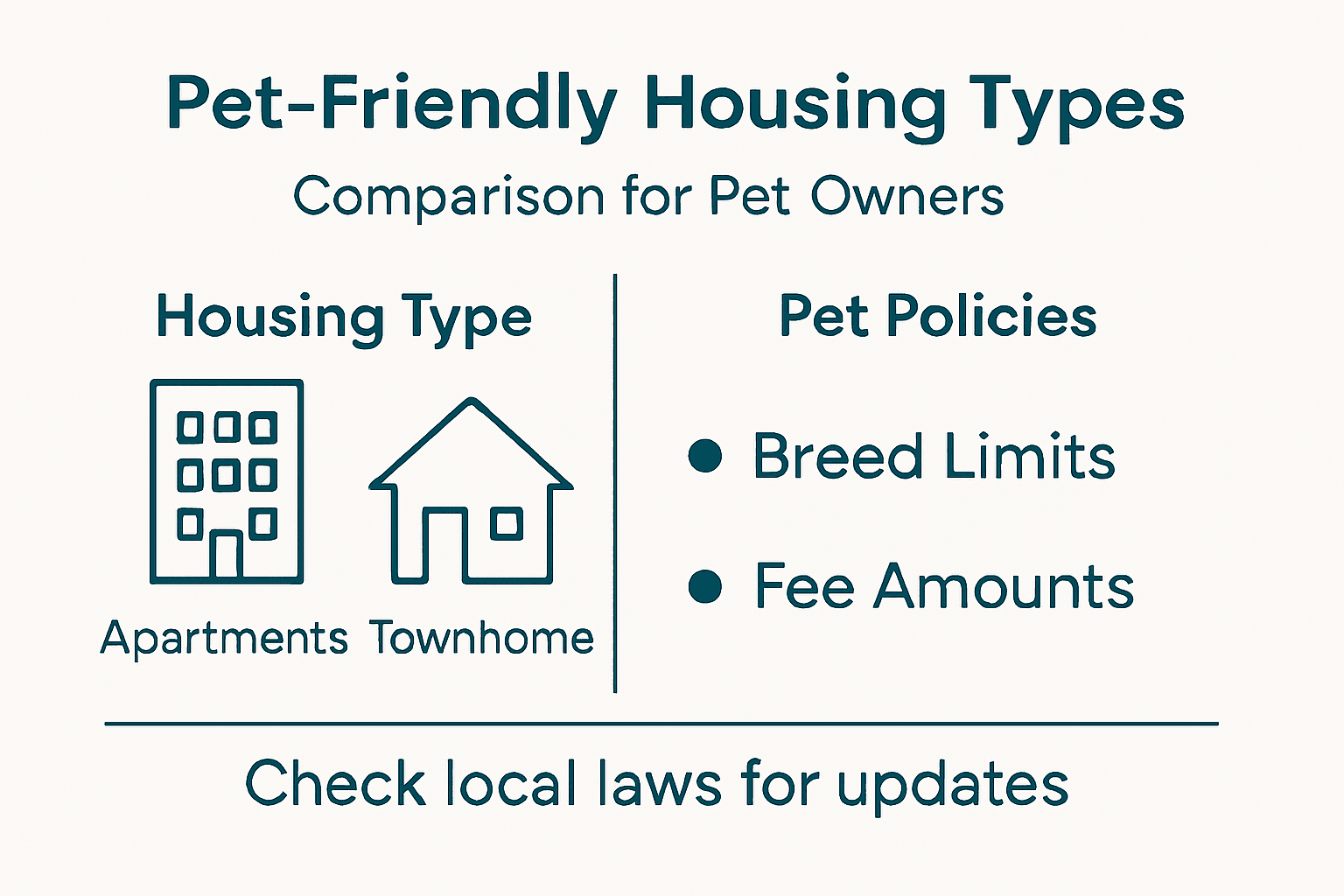
Here’s a quick comparison of pet-friendly housing types and what makes them distinct:
| Housing Type | Ownership Structure | Typical Pet Policy Approach |
|---|---|---|
| Public Housing | Government-owned | Federally regulated, consistent guidelines |
| Private Apartments | Privately leased | Policies vary by landlord |
| Condominiums | Individually owned | Community association rules apply |
| Townhouses | Shared or private ownership | Mix of owner and HOA regulations |
| Single-Family Homes | Individual landlord | Owner discretion, usually most flexible |
Pro tip: Always request a detailed written copy of the community’s pet policy before signing any lease agreement.
Key Apartment Features for Pet Owners
Finding the perfect pet-friendly apartment requires careful consideration of specific design features that accommodate both animal companions and their owners. University housing research highlights the importance of thoughtful amenities that support comfortable living for pets and their human families.
Critical apartment features for pet owners include:
- Flooring Options
- Scratch-resistant surfaces
- Easy-to-clean materials
- Non-porous tiles or vinyl
- Outdoor Access
- Nearby green spaces
- Designated pet walking areas
- Convenient waste disposal stations
- Interior Considerations
- Adequate ventilation
- Soundproofing
- Durable furniture and wall materials
Pet-friendly apartment design emphasizes creating environments that balance animal needs with tenant comfort. This means considering factors like noise reduction, easy maintenance, and spaces that allow pets to feel secure while preventing damage to the living area.
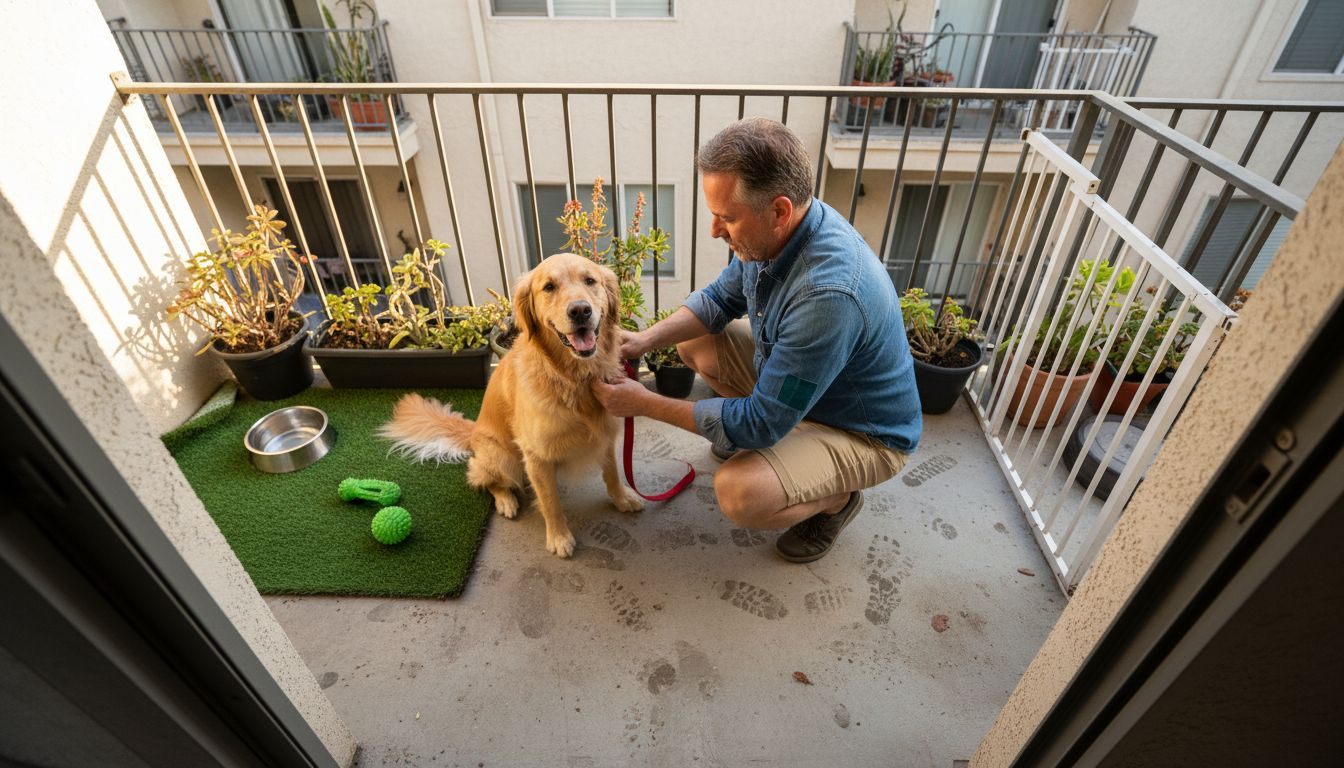
Modern apartments are increasingly recognizing the importance of pet-friendly features. Prospective renters should prioritize communities that offer comprehensive amenities, transparent pet policies, and spaces that genuinely welcome four-legged residents.
Pro tip: Request a comprehensive walkthrough of pet-specific amenities before finalizing your apartment lease.
Transparent Pricing and Hidden Fees Explained
Navigating the complex landscape of rental pricing requires a keen understanding of potential hidden costs, especially for pet owners seeking affordable housing. Housing fee reforms are increasingly addressing the challenge of unpredictable and excessive charges that can significantly impact a renter’s budget.
Typical hidden fees for pet owners often include:
- Initial Pet Fees
- Non-refundable pet deposits
- Move-in pet charges
- Administrative pet registration costs
- Monthly Additional Charges
- Pet rent
- Additional pet insurance requirements
- Cleaning surcharges
- Potential Unexpected Expenses
- Damage assessment fees
- Deep cleaning charges
- Breed or weight restrictions with financial penalties
Rental housing initiatives are actively working to combat ‘junk fees’ that disproportionately affect low-income renters. These efforts aim to create more transparent pricing structures that eliminate surprise charges and provide clear, upfront cost information.
Prospective tenants should carefully review all lease documents, ask detailed questions about potential fees, and request a comprehensive breakdown of all charges before signing any agreement. Understanding the full financial landscape helps prevent unexpected expenses and ensures a more predictable housing budget.
Below is a summary of common hidden pet-related fees and tips to avoid budget surprises:
| Fee Type | Typical Range | How to Avoid Surprises |
|---|---|---|
| Upfront Deposit | $100–$500 | Request full itemization upfront |
| Monthly Pet Rent | $10–$50 per pet | Ask for monthly cost breakdown |
| Cleaning/Repairs | Varies widely | Confirm criteria for extra charges |
| Registration/Admin | $25–$100 | Clarify what services these cover |
Pro tip: Request a written, itemized list of all potential pet-related fees before committing to a lease.
Legal Rights and Tenant Responsibilities
Understanding the legal landscape of pet ownership in rental housing is crucial for both tenants and property managers. Federal housing regulations establish a framework that balances the rights of pet owners with the need to maintain safe and clean living environments.
Key legal rights and responsibilities for pet-owning tenants include:
- Tenant Rights
- Right to own pets under reasonable conditions
- Protection from arbitrary pet restrictions
- Reasonable accommodation for assistance animals
- Tenant Responsibilities
- Maintaining pet control and behavior
- Preventing property damage
- Complying with community pet policies
- Keeping pets up-to-date on vaccinations
- Legal Protections
- Fair Housing Act accommodations
- Protection from breed-specific discrimination
- Reasonable fee limitations
Disability housing accommodations provide additional protections for individuals requiring assistance animals. These regulations ensure that tenants with disabilities can maintain their animal companions, even in properties with strict pet policies.
Navigating these legal requirements demands careful attention to lease agreements, local regulations, and individual property policies. Tenants should thoroughly review all documentation, ask clarifying questions, and maintain open communication with property management to ensure compliance and avoid potential conflicts.
Pro tip: Always request a written copy of the complete pet policy and keep documentation of your pet’s vaccinations and training.
Discover Affordable Pet-Friendly Living Designed for You
Finding affordable housing that truly values your pet as part of the family can feel overwhelming. This article highlights the challenges of hidden fees, unclear pet policies, and limited apartment features that accommodate both you and your furry companion. At Cynthia Gardens, we understand these pain points and focus on transparent pricing with no hidden pet fees, well-maintained apartments with pet-friendly features, and clear community guidelines designed to make life easier for pet owners.
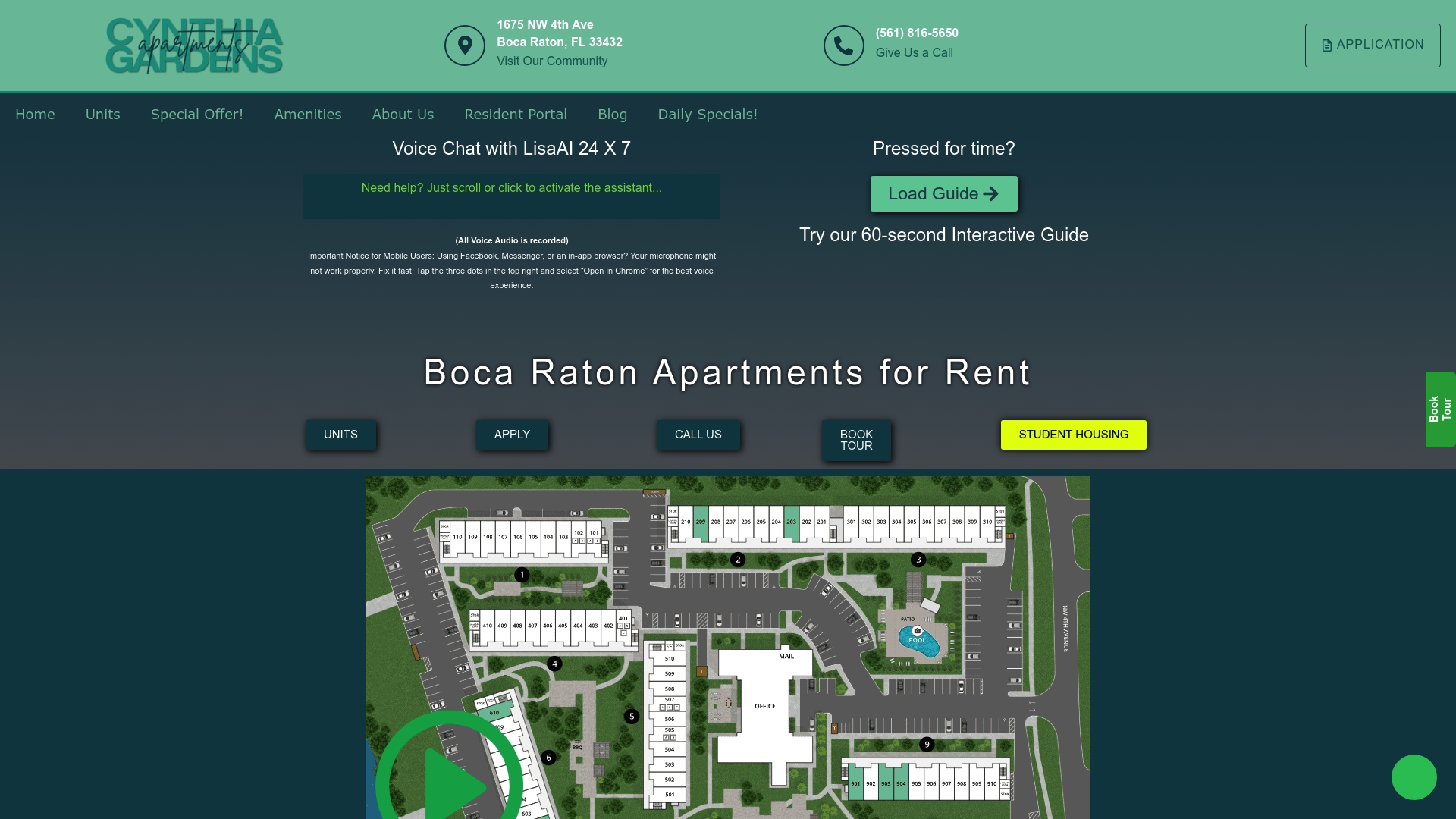
Explore how our modern Boca Raton community caters specifically to pet owners seeking affordable, one-bedroom apartments without compromises. Take advantage of a tech-forward leasing experience including AI chat support and virtual tours that empower you to find the perfect home confidently and quickly. Start your stress-free apartment search today at Cynthia Gardens and learn more about our commitment to transparent pricing and pet-friendly living at Affordable Housing for Pet Owners. Your ideal home and happy pet are waiting.
Frequently Asked Questions
What is considered affordable housing for pet owners?
Affordable housing for pet owners is defined as living spaces that accommodate individuals and families earning below specific income thresholds while also providing reasonable pet policies, such as limited fees and restrictions on pet types and sizes.
What types of pet-friendly housing options are available?
The primary types of pet-friendly housing include public housing, private apartment complexes, condominiums, townhouse communities, and single-family rental homes, each having distinct policies and regulations related to pets.
What should I look for in a pet-friendly apartment?
When searching for a pet-friendly apartment, prioritize features like scratch-resistant flooring, outdoor access to green spaces, adequate ventilation, and soundproofing to ensure a comfortable living environment for both you and your pet.
What are common hidden fees for pet owners in rental agreements?
Common hidden fees for pet owners can include upfront pet deposits, monthly pet rent, cleaning surcharges, and administrative fees. It’s important to request a comprehensive breakdown of all potential fees before signing any lease agreement.
Recommended
- how to find pet friendly apartments: A Quick Guide – Luxury Apartments for Rent in Boca Raton | Premium Boca Raton Apartments | Aapartments Boca Raton
- Premier Apartment Complex in Boca with Pet-Friendly Living – Luxury Apartments for Rent in Boca Raton | Premium Boca Raton Apartments | Aapartments Boca Raton
- Navigating Your Apartment Pet Policy – Luxury Apartments for Rent in Boca Raton | Premium Boca Raton Apartments | Aapartments Boca Raton
- Why Rent Pet-Friendly Apartments in Boca Raton
- House Apartments vs Traditional Homes: Which Is Better in 2025? – Guestly Homes
- AffordAssist Makes Buying a Brand New Home Easier From Just 5% Deposit – Mortgage Managers