
TL;DR:
- Service animals and ESAs are legally exempt from pet fees and restrictions in Florida.
- A pet agreement details allowed animals, fees, documentation, and tenant responsibilities.
- Building trust and communication with landlords enhances a smooth pet rental experience.
Most Boca Raton renters assume that a “pet-friendly” label on an apartment listing means their dog or cat is automatically welcome with no strings attached. That assumption leads to surprise fees, denied applications, and even lease violations. What catches many tenants off guard is a legal distinction that changes everything: service animals and emotional support animals (ESAs) are not pets under federal and Florida law. This guide breaks down what rental pet agreements actually contain, what fees are legal, and how to protect yourself as a tenant in Boca Raton, whether you have a rescue cat, a golden retriever, or an ESA helping you through a tough semester.
Table of Contents
- What is a rental pet agreement?
- Key elements every Boca Raton pet agreement should include
- Fees, deposits, and costs: What Boca renters should expect
- Tips for a smooth rental experience with pets
- What most guides miss about rental pet agreements
- Find your ideal pet-friendly apartment in Boca Raton
- Frequently asked questions
Key Takeaways
| Point | Details |
|---|---|
| Know your agreement | Understanding each pet clause prevents disputes and unexpected costs. |
| Document requirements | Be ready with vet records, licenses, and insurance to meet landlord expectations. |
| Service animal laws | Service animals and ESAs are legally protected and exempt from standard pet fees. |
| Fee comparison | Review all deposits, monthly rents, and non-refundable fees before signing. |
| Build transparent relationships | Honest, open communication with landlords makes for the smoothest pet-rental experience. |
What is a rental pet agreement?
A rental pet agreement is a legally binding addendum to your standard lease. It spells out the specific rules, responsibilities, and costs tied to having an animal in your unit. Think of it as a contract within a contract. Your main lease covers the basics of renting, while the pet agreement zooms in on everything animal-related.
Most apartment pet policies in Boca Raton cover the following core components:
- Permitted pet types: dogs, cats, birds, or small caged animals only
- Breed and weight restrictions: some communities cap dogs at 25 or 50 pounds
- Number of pets: typically one or two animals per unit
- Required documentation: vaccination records, city or county licensing
- Tenant responsibilities: cleaning up after pets, preventing noise complaints, covering damage costs
Here is where many renters get tripped up. Florida law draws a clear line between pets, service animals, and ESAs. Under the Fair Housing Act and Florida HB 1417, service animals and ESAs are not classified as pets. That means no pet fees, no pet deposits, and no breed or weight restrictions apply to them.
Important: A landlord can ask for a letter from a licensed mental health or medical provider confirming your need for an ESA. They cannot demand your full medical history, diagnosis details, or private records. That is a protected boundary under federal law.
Service animals, typically dogs trained to perform specific tasks for people with disabilities, carry even stronger protections. They are permitted in virtually all housing situations regardless of a building’s pet policy.
Where things get legally serious: misrepresenting a regular pet as an ESA in Florida is not just dishonest, it is a second-degree misdemeanor. The state takes fraudulent ESA claims seriously, and the penalties are real. If you genuinely qualify for an ESA, document it properly. If you do not, do not risk it.
Understanding this distinction before you sign anything is the single most important step you can take as a pet-owning renter in Boca Raton.
Key elements every Boca Raton pet agreement should include
Now that you know what a pet agreement is, let’s outline exactly what elements should be present to protect both you and your landlord. A well-written agreement removes ambiguity and prevents the kind of disputes that cost tenants their security deposits.
Here is a breakdown of the most important clauses:
| Element | What it covers | Why it matters |
|---|---|---|
| Pet deposit | Refundable amount held for potential damage | Protects both parties financially |
| Non-refundable pet fee | One-time charge for wear and tear | Sets expectations upfront |
| Monthly pet rent | Added to base rent each month | Budgeting clarity |
| Breed and weight limits | Specifies which animals are allowed | Prevents application surprises |
| Documentation requirements | Vaccines, licenses, insurance | Proves compliance |
| Damage liability | Who pays for what and how | Avoids end-of-lease disputes |
According to leasing experts, pet screening practices like reviewing vet records and conducting pet interviews create a fair balance between landlord protection and tenant clarity. Some Boca Raton communities also require proof of renters insurance that includes pet liability coverage, especially for larger breeds.
Here is a numbered checklist to use before signing any pet agreement:
- Confirm which pet types and sizes are explicitly allowed
- Review all fees (deposit, one-time fee, monthly rent) and get them in writing
- Ask whether a pet interview or temperament check is required
- Verify what documentation you need to submit before move-in
- Check if renters insurance with pet liability is mandatory
- Read the damage clause carefully to understand your financial exposure
Pro Tip: Before signing, ask your landlord for a written list of pre-existing damage in the unit. Photograph everything on move-in day. This protects you from being charged for damage your pet did not cause.
Understanding pet deposit rules before you start touring apartments saves you from sticker shock later. And if you are still finding a pet-friendly apartment in Boca Raton, knowing these elements helps you compare communities more effectively.

Fees, deposits, and costs: What Boca renters should expect
With agreement elements defined, let’s focus on the actual costs so you can budget and negotiate more effectively. Pet-related costs in Boca Raton rentals typically fall into three categories.
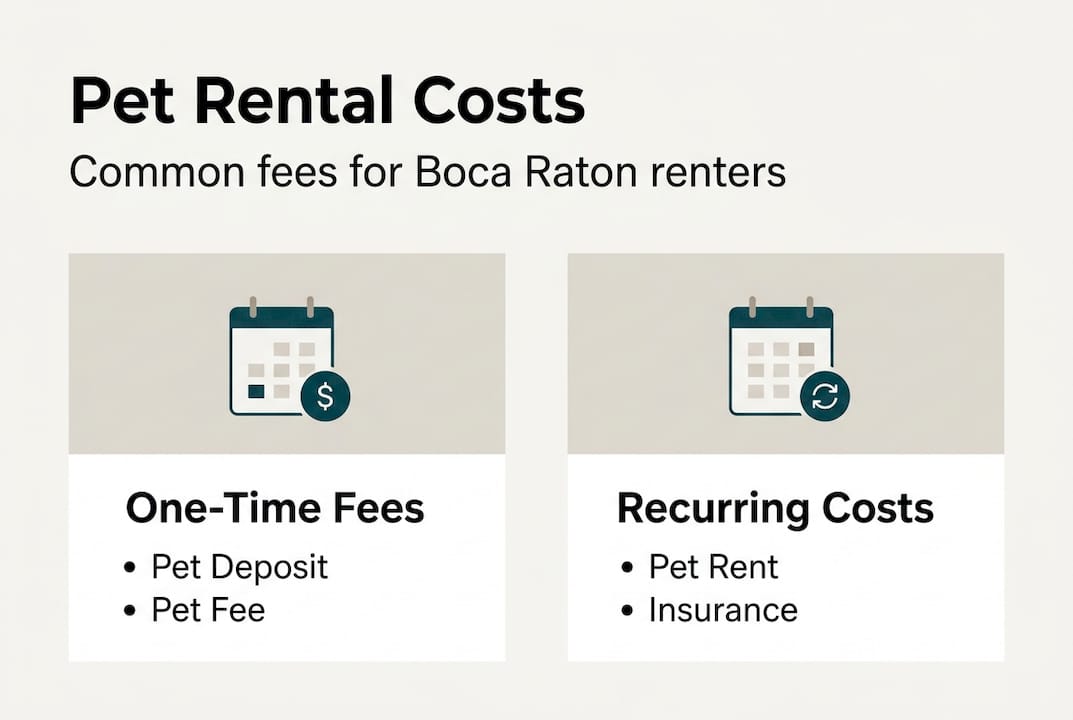
Refundable pet deposit: This is held by the landlord and returned at the end of your lease if there is no pet-related damage. Amounts typically range from $150 to $500 depending on the property and pet size.
Non-refundable pet fee: A one-time charge that covers general wear and tear. This is not returned regardless of the unit’s condition. Expect anywhere from $100 to $350.
Monthly pet rent: An ongoing charge added to your base rent. In Boca Raton, this commonly runs between $25 and $75 per month per pet.
Here is a quick comparison to clarify what applies to different animal types:
| Animal type | Pet deposit | Monthly pet rent | Documentation required |
|---|---|---|---|
| Standard pet | Yes | Yes | Vaccines, license |
| Service animal | None | None | Task training verification |
| ESA | None | None | Licensed provider letter |
As noted earlier, no fees apply to service animals or ESAs under the Fair Housing Act and Florida HB 1417. Any landlord attempting to charge pet fees for a properly documented ESA is violating federal and state law.
If you believe you are being charged unfairly, here is how to push back:
- Request a written explanation of every fee in your agreement
- Compare charges to your signed lease addendum
- If fees conflict with your ESA documentation, cite FHA protections in writing
- Contact the Florida Commission on Human Relations if violations persist
Reviewing pet deposit tips specific to Boca Raton can also help you understand what is standard versus what might be excessive in your local market.
Tips for a smooth rental experience with pets
Once you know the costs, use these strategies to make your pet rental experience hassle-free from day one. The goal is to protect your deposit, maintain a good relationship with property management, and keep your pet welcome throughout your lease.
- Document your pet’s health proactively. Keep vaccination records, vet visit summaries, and licensing paperwork organized and accessible. Submit updates to management before they ask.
- Introduce your pet to the community thoughtfully. Walk your dog during off-peak hours initially. Let neighbors see that your pet is calm and well-behaved. First impressions matter.
- Handle accidents and damage immediately. If your pet scratches a door or has an accident, address it right away. Report damage to management before move-out so there are no surprises.
- Communicate any changes in your pet situation. If you adopt a second animal, your pet gains significant weight, or there is a health change that affects behavior, tell your landlord. Hiding changes creates bigger problems later.
- Keep a written log of pet-related communications. Save emails, texts, or notes from conversations with property staff about your pet. This protects you if disputes arise.
Pro Tip: Ask your property manager what their preferred communication channel is for pet-related updates. Some prefer email for documentation purposes. Matching their preference builds goodwill.
Leasing experts consistently find that tenant transparency and proactive communication reduce disputes significantly. The landlords who feel informed are far less likely to scrutinize your pet at move-out.
If you are still searching, check out resources on finding affordable pet-friendly rentals and pet-friendly living tips specific to Boca Raton communities.
What most guides miss about rental pet agreements
Most pet agreement guides stop at the checklist. They tell you what forms to gather and what fees to expect, and then they send you on your way. What they rarely address is the human side of the equation, and in our experience leasing apartments in Boca Raton, the human side is where most problems actually start.
The tenants who have the smoothest experiences are not necessarily the ones with the most organized paperwork. They are the ones who build a real relationship with the leasing office from day one. They introduce themselves. They mention their pet early and honestly, including any quirks or challenges. They check in occasionally, not just when something goes wrong.
Landlords are more willing to work with tenants they trust. That trust is built through consistent, honest communication, not just legal compliance. Reviewing lease pet policies is a starting point, but treating leasing as a partnership rather than a transaction is what actually protects you long-term. The fine print matters. The relationship matters more.
Find your ideal pet-friendly apartment in Boca Raton
With these insights, you are ready to find an apartment community that supports responsible pet ownership and makes the process straightforward from application to move-in.
At Cynthia Gardens, we built our pet policies around clarity and fairness. No hidden fees, no vague language, and no surprises at move-out. You can explore our apartment styles and amenities to find a layout that works for you and your pet, and review our community rules for pet owners before you even schedule a tour. Our virtual tour and AI chat support make it easy to get answers fast, so you can spend less time guessing and more time planning your move.
Frequently asked questions
Do I have to pay a pet deposit for an emotional support animal in Boca Raton?
No. Under FHA and Florida HB 1417, pet fees, deposits, and monthly pet rent do not apply to ESAs when proper documentation from a licensed provider is submitted.
What documents do I need to rent with a pet in Boca Raton?
Most landlords require vaccination records, a municipal pet license, and sometimes proof of renters insurance. Some communities also conduct a pet screening that includes a temperament check or interview.
Can my landlord deny my pet even in a pet-friendly apartment?
Yes. Landlords can deny pets based on breed, size, number of animals, or failure to meet agreement requirements. The only exceptions are properly documented service animals and ESAs, which cannot be denied or charged fees.
What happens if I misrepresent a pet as an ESA in Florida?
Misrepresenting a pet as an ESA is a second-degree misdemeanor under Florida law, carrying real legal penalties. Always document ESA status legitimately through a licensed provider.
Are pet rental agreements different from standard lease agreements?
Yes. A pet agreement is a separate addendum that adds rules and financial terms specific to your animal. It works alongside your main lease and is legally binding on its own.
Recommended
- Understanding Pet Deposit Rules for Boca Raton Apartments: A Renter’s Guide – Luxury Apartments for Rent in Boca Raton | Premium Boca Raton Apartments | Aapartments Boca Raton
- 6 Essential Apartment Pet Policies List for Boca Raton
- Pet-friendly apartment tips for Boca Raton renters
- Pet Friendly Housing: Impact on Boca Raton Renters