Cynthia Gardens is a residential apartment community in Boca Raton, Florida, offering quiet, garden-style living near Florida Atlantic University, Mizner Park, and Boca Raton’s beaches at 1675 NW 4th Ave, Boca Raton, FL 33432.
TL;DR:
- Renters face a higher burglary risk, especially at entry points like doors and ground-floor windows.
- Enhancing security involves affordable measures such as upgraded locks, door bars, window hardware, and security cameras, along with daily habits.
- Building safety standards help, but individual proactive layers and neighbor awareness are crucial for true protection.
Renters face a real safety gap that most people don’t talk about openly. Renters experience burglary at 85% higher rates than homeowners, yet most apartment dwellers assume their building handles security for them. The security tips for apartment living that genuinely make a difference aren’t expensive or complicated. They combine smart, renter-friendly devices with daily habits that work together as layers. This guide covers both, so you walk away with a clear picture of what to do, what to buy, and what to stop assuming.
Table of Contents
- Key Takeaways
- 1. Understanding the real security risks for apartment residents
- 2. Upgrade your door locks before anything else
- 3. Add a door security bar as a backup barrier
- 4. Secure your windows with low-cost hardware
- 5. Use renter-friendly security cameras and doorbells
- 6. Install door and window alarms for instant alerts
- 7. Use motion-sensor lighting inside and outside
- 8. Build daily security habits that close the gaps
- 9. Know when to involve your landlord
- My honest take on apartment security
- How Cynthiagardens approaches apartment security in Boca Raton
- FAQ
Key Takeaways
| Point | Details |
|---|---|
| Renters are high-risk targets | Apartment residents face significantly higher burglary rates than homeowners, making personal security measures critical. |
| Front doors and windows matter most | The majority of break-ins happen through your front door or first-floor windows, so protect those first. |
| Renter-friendly devices exist | Affordable, no-drill security tools like door bars, window pins, and peel-and-stick alarms work without landlord permission. |
| Habits close the gaps technology leaves | Locking up, avoiding social media oversharing, and knowing your neighbors reduce risk more than any single device. |
| Layer your approach | Combining physical barriers, alarms, cameras, and behavioral awareness creates protection no single measure can match. |
1. Understanding the real security risks for apartment residents
Before you spend a dollar on security, you need to know where your actual vulnerabilities are. 34% of burglars enter through the front door, and 23% come through first-floor windows or sliding doors. That means almost six out of ten break-ins use the two entry points most renters think least about.
Your risk profile depends on more than just your front door, though. Consider:
- Floor level. Ground-floor and first-floor units carry higher risk due to easy window access.
- Building access control. Does your building have a key fob entry, a buzzer, or does anyone walk in freely?
- Common areas. Laundry rooms, parking garages, and hallways are frequent sites for package theft and opportunistic crime.
- Surrounding neighborhood. Check local crime data on your city’s police department website or apps like Neighbors to get a realistic picture.
- Your routine. If you leave at the same time every day and return late, a predictable schedule can make you a target.
Pro Tip: Walk your building perimeter as if you were a stranger looking for a way in. Note every unlocked gate, poorly lit corner, and ground-level window. What you spot in five minutes is exactly what an opportunistic criminal sees.
2. Upgrade your door locks before anything else
Your front door is your first line of defense, and the stock locks on most apartment doors are not impressive. Many units come with basic pin tumbler locks that offer minimal kick-in resistance. Upgrading to a Grade 1 deadbolt or a portable smart lock that doesn’t require drilling gives you significantly better protection without violating your lease.
A few specific options worth knowing about:
Smart locks that use an existing deadbolt adapter require no permanent installation. You swap the interior side of the lock, keep the exterior cylinder your landlord provided, and gain keypad or app access. When you move out, you swap it back in minutes.
If your lease doesn’t allow lock changes at all, a reinforced door frame strike plate is a legal upgrade in almost every situation. Most forced entries succeed not because the lock breaks, but because the door frame splinters. A three-inch steel strike plate with long screws anchored into the stud changes that equation completely.
The best locks for apartments are the ones that match your specific door and your landlord’s rules. When in doubt, ask in writing so you have a record.
3. Add a door security bar as a backup barrier
Even a great lock can be defeated with enough force. A door security bar sits at an angle from your door handle to the floor and absorbs kick-in energy instead of resisting it rigidly. Door security bars priced at $25 to $60 require zero installation and can be removed when you leave.
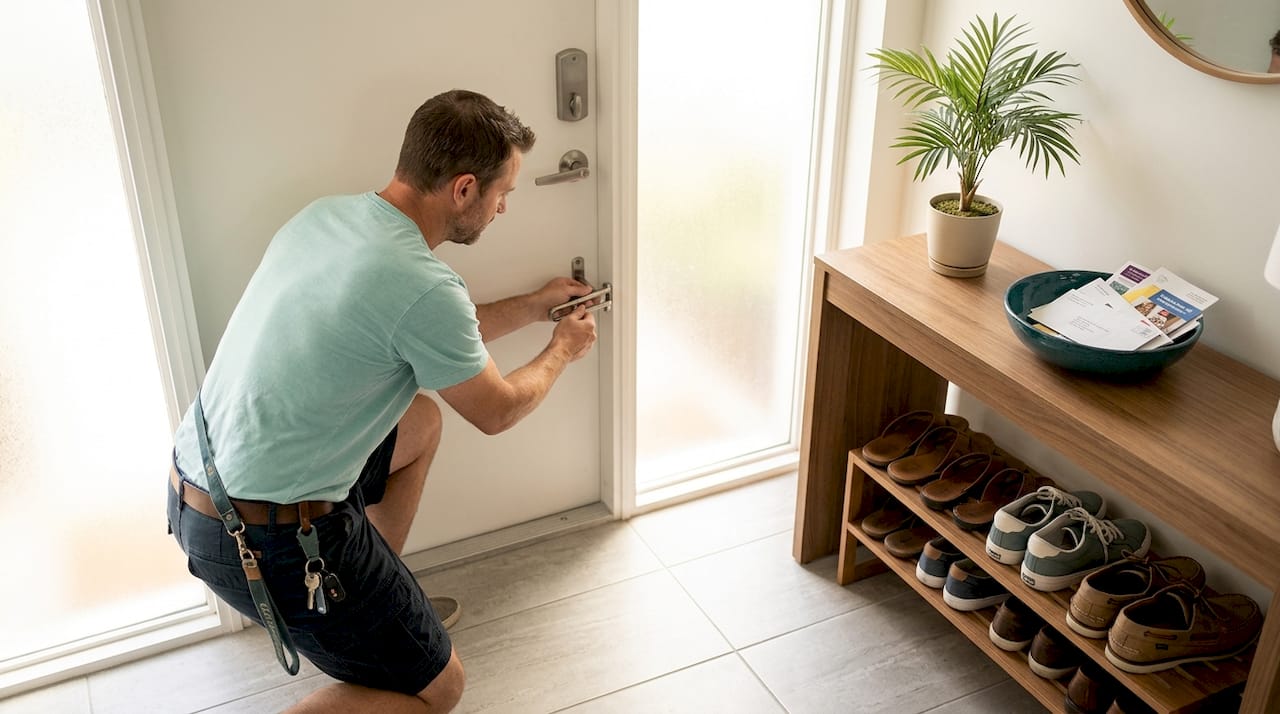
A door bar with a built-in alarm is even more effective. The moment someone forces the door inward, a loud siren triggers. That combination of physical resistance and noise is one of the most cost-effective apartment security measures available.
For sliding doors, the approach is slightly different. A cut-down wooden dowel or metal security bar dropped into the track stops the door from opening. What most people miss is that sliding doors can also be lifted out of their tracks entirely from outside. Sliding door security bars designed to prevent lifting close that vulnerability in a way a simple dowel cannot.
4. Secure your windows with low-cost hardware
Windows are the second most common entry point, and the fix costs almost nothing. Window pins and keyed window locks are available at any hardware store for under $10 and can be installed and removed without tools in most cases.
For sash windows, drilling a small angled hole through the interior frame and dropping in a removable pin locks both sashes together. For sliding windows, the same dowel trick that works on sliding doors applies here. Neither of these requires landlord permission because they leave no permanent marks.
Ground-floor windows facing an alley or side yard deserve extra attention. Consider adding window security film, which won’t stop entry but makes the glass far harder to break quickly. Noise and delay are powerful deterrents on their own.
5. Use renter-friendly security cameras and doorbells
Cameras serve two functions: they deter people who notice them, and they document incidents when deterrence fails. Visible cameras increase resident sense of safety and act as deterrents even without constant monitoring. For renters, the key is finding a camera that mounts without drilling.
Battery-powered cameras with adhesive mounts provide real-time alerts to your phone and work entirely without wiring. Most have motion detection zones you can customize to avoid false alerts from passing traffic.
Look for cameras with two-way audio capability. Being able to speak to someone at your door remotely, whether it’s a delivery person or an unrecognized visitor, is a practical safety feature that flat-out video recording doesn’t give you.
Pro Tip: Position your camera to capture faces, not just the top of heads. A 30-degree downward angle at chest height gives usable footage. A camera mounted too high is almost worthless for identification.
Here’s a quick comparison of camera types suited for renters:
| Camera Type | Installation | Average Cost | Best For |
|---|---|---|---|
| Battery-powered adhesive | No drilling needed | $40 to $80 | Front door, entry hallways |
| Wired plug-in indoor | Power outlet required | $25 to $50 | Living room, bedroom windows |
| Video doorbell (battery) | Adhesive or screw mount | $60 to $150 | Building entry, apartment door |
| Motion-sensor floodlight cam | Requires screws | $80 to $120 | Patio, ground-floor exterior |
6. Install door and window alarms for instant alerts
If cameras are passive, alarms are active. Peel-and-stick magnetic sensors cost under $10 for a set of four and take seconds to install. When a door or window opens, the magnetic connection breaks and the alarm sounds.
These sensors are genuinely underrated as apartment safety features. A 110-decibel alarm on your bedroom window at 2 a.m. will wake you, alert neighbors, and almost certainly cause an intruder to leave immediately. They also work when you’re home during the day and want to know if a child or pet has opened a door.
For front doors, combine a sensor alarm with a door handle alarm that triggers when the handle is turned. The layered noise from two alarms activating simultaneously is disorienting and effective.
7. Use motion-sensor lighting inside and outside
Lighting is a deterrent that works around the clock. Inside, smart timers set to random patterns make your apartment appear occupied even when you’re away, which matters because 65% of residential burglaries happen during daylight hours while residents are out.
Outside, if your patio, balcony, or entryway has an outlet, a plug-in motion-sensor light requires no installation and costs about $20. Motion lights startle anyone approaching in the dark and draw attention from neighbors and passersby.
Talk to your property management about exterior lighting if your building’s common areas are poorly lit. You have standing to request improvements, and many landlords will act when the request is framed around liability.
8. Build daily security habits that close the gaps
Devices only work when your behavior supports them. The most expensive camera on the market won’t help if you prop open the building entrance for convenience, which is one of the most common ways unauthorized people gain access to apartment buildings.
The habits that matter most:
- Lock your door every time you leave, even for a minute. Most renters who are burglarized report the door was unlocked or the lock was a basic knob lock.
- Never hide a spare key under a mat, above a door frame, or in a fake rock near the entrance. Those hiding spots are the first places anyone looks.
- Avoid posting vacation photos or location check-ins on social media while you’re away. Real-time absence broadcasts are free advertising for thieves.
- Get to know your immediate neighbors. A neighbor who knows your face and schedule will notice something wrong. Strangers don’t notice strangers.
- Pick up packages quickly or use a package locker if your building offers one.
Pro Tip: Set a phone reminder for a weekly “security sweep.” Check that all window locks are engaged, test your door and window alarms, and confirm your camera batteries are charged. Five minutes weekly catches most problems before they become vulnerabilities.
9. Know when to involve your landlord
71% of American renters believe their management should do more to improve safety. That sentiment is understandable, and it’s also a reason to take the initiative yourself. But there are specific situations where involving your landlord is the right move and, in some cases, legally their responsibility.
Request repairs or improvements in writing when: a door frame is visibly damaged or weak, a common-area lock is broken, exterior lighting is out and stays out, or a gate meant to restrict building access is propped open chronically. Document every request with dates and keep copies.
For improving apartment security through upgrades you want to make yourself, such as adding a deadbolt or a door reinforcement plate, get written permission first. A simple email exchange creates a paper trail that protects you at move-out. Most landlords will say yes to security upgrades when framed correctly, especially if you offer to restore the original hardware when you leave.
My honest take on apartment security
I’ve seen people spend hundreds of dollars on cameras and smart locks while leaving their bedroom window cracked open at ground level. The device spending feels like security. It often isn’t.
What I’ve learned from years of thinking seriously about this topic is that effective security depends on layering technology with human behavior. Neither alone is enough. A $25 door bar and the habit of actually using it every night is worth more than a $200 camera you check once a month.
The other misconception I want to push back on hard: building security is not your security. Your building’s front buzzer, lobby camera, and property manager’s office hours are a starting point. They are not protection. The residents I’ve seen handle safety well treat their individual unit as its own standalone security zone, regardless of what the building offers.
The good news is that the most effective safety tips for renters are genuinely cheap and simple. A window pin costs $3. A door bar costs $30. Telling a neighbor you’re going on vacation costs nothing. These tools work. The only thing they require is that you actually use them.
— Ayman
How Cynthiagardens approaches apartment security in Boca Raton
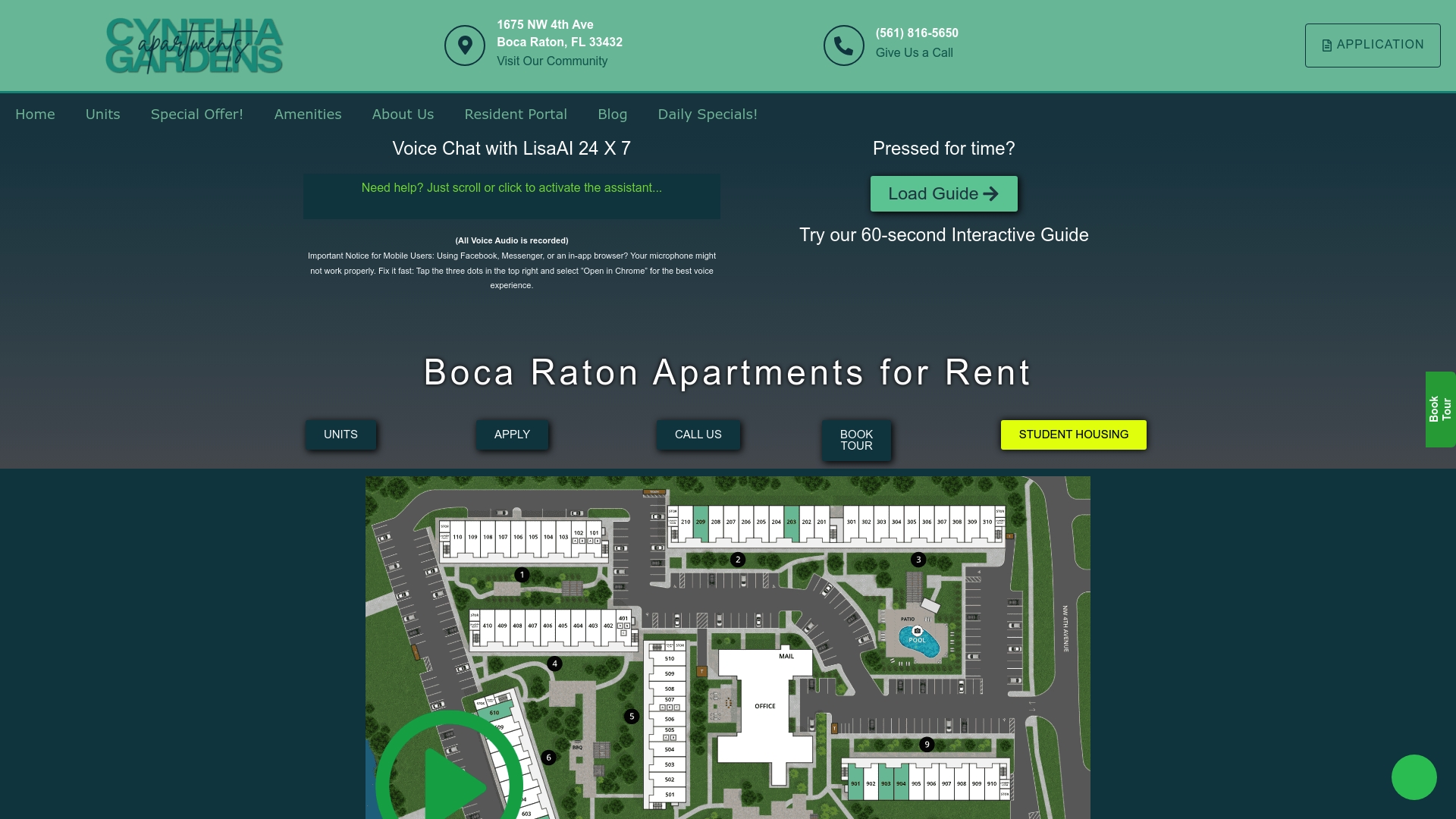
At Cynthiagardens, security isn’t an afterthought. Our Boca Raton apartments are built and managed with features that give residents a real starting point, including controlled access, well-maintained common areas, and community standards that keep the environment safe and comfortable.
That foundation matters because it means you’re layering your personal security measures on top of a property that already takes safety seriously. Explore our apartment styles and features to see exactly what’s included, and take a look at our community rules to understand how shared standards shape daily safety. If you want to experience the space before committing, our virtual tours and interactive property map make it easy to get a full picture from wherever you are.
FAQ
How can I secure my apartment without drilling?
Use adhesive-mounted cameras, peel-and-stick door and window alarms, and a portable door security bar. All of these provide real protection with zero permanent installation.
What are the best locks for apartments?
A Grade 1 deadbolt or a smart lock adapter that replaces only the interior cylinder offers strong security without permanent modification. Always confirm your lease allows changes before installing.
What should I do first to improve my apartment security?
Start with your front door and ground-floor windows. Add a door reinforcement bar and window pins before spending money on cameras or smart devices.
How much does renter-friendly security typically cost?
A solid basic setup, including a door bar, window pins, and four door and window alarms, costs well under $75. Battery-powered cameras add $40 to $100 more depending on the model.
Can I ask my landlord to improve building security?
Yes, and you should put the request in writing. Landlords have legal obligations around habitability that often include functional locks, lighting, and common-area security. Document every request with dates.
Recommended
- 9-Step Security 2026: Stay Safe in Your-boca-raton
- Apartment Viewing Checklist: 8 Tips for 2025 – Luxury Apartments for Rent in Boca Raton | Premium Boca Raton Apartments | Aapartments Boca Raton
- Apartment security essentials: What Boca renters should know
- apartment moving tips: 7 hacks for a smoother move – Luxury Apartments for Rent in Boca Raton | Premium Boca Raton Apartments | Aapartments Boca Raton