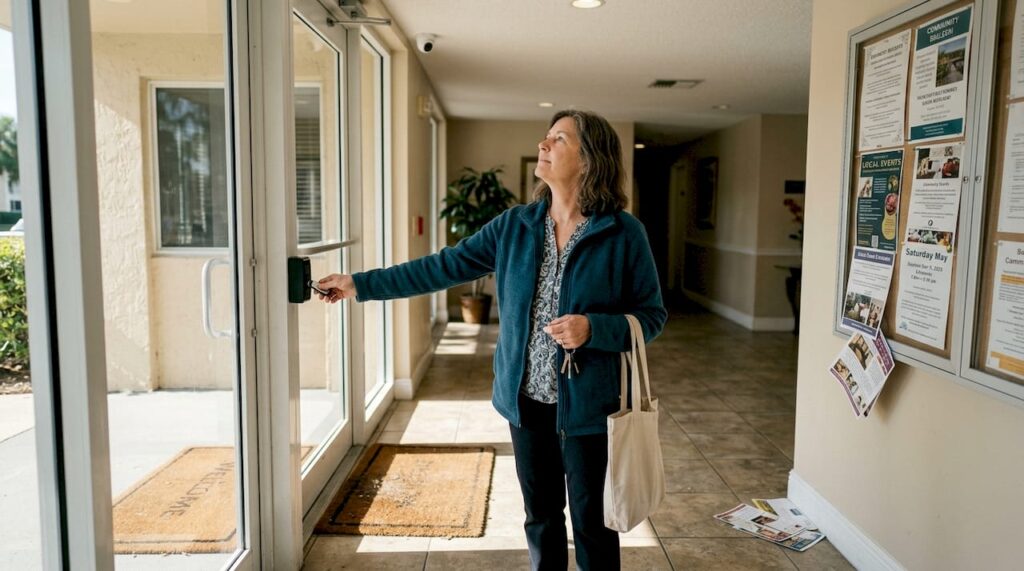
TL;DR:
- Effective apartment security relies on layered measures including physical barriers, technology, and community practices.
- Building culture and resident vigilance play a vital role in maintaining safety beyond hardware features.
- Prospective renters should assess security culture during tours and prioritize community responsiveness and proactive management.
Most renters assume that a camera above the front door and a keypad entry makes an apartment secure. That assumption is costing people their peace of mind and their property. Security in Boca Raton’s rental market is more layered than any single gadget can handle, especially for students living near FAU and young professionals renting close to busy commercial corridors. The real risks are specific, the solutions are practical, and the difference between feeling safe and actually being safe comes down to knowing what to look for before you sign a lease.
Table of Contents
- Why apartment security matters in Boca Raton
- Core security features to look for in apartments
- People power: Human factors in apartment security
- Layered security in action: How strategies combine for real protection
- What most renters miss about apartment security
- Find secure and affordable apartments in Boca Raton
- Frequently asked questions
Key Takeaways
| Point | Details |
|---|---|
| Crime trends matter | Understanding local crime data can help you choose safer apartments in Boca Raton. |
| Layered security wins | Combining physical, tech, and personal measures is most effective for apartment safety. |
| Habits make the difference | Simple routines like locking doors and knowing your neighbors boost your safety more than tech alone. |
| Ask the right questions | During tours, look beyond buzzwords and ask how security systems really work in practice. |
Why apartment security matters in Boca Raton
Boca Raton has a reputation as one of Florida’s safer cities, but that reputation can create a false sense of security for renters near high-traffic zones. Crime patterns near student housing and urban apartment clusters tell a more detailed story. Understanding local data is the first step toward making a smarter housing decision.
According to campus records, 576 crimes were reported at the FAU Boca Raton campus between 2022 and 2024, with car thefts climbing to 34 incidents in 2024 and drug violations reaching 24 in the same year. Burglary and assault numbers did decrease over that period, which is encouraging, but the rise in vehicle-related crime is a direct concern for anyone parking near student apartments.
For renters searching for apartments near FAU Boca Raton, these numbers are not abstract. They reflect what can happen in parking lots, common areas, and building entrances when security systems are incomplete or inconsistently enforced.
Top security concerns for Boca renters include:
- Car break-ins and vehicle theft in surface parking lots
- Property theft from unlocked common areas and mailrooms
- Unauthorized access through propped doors or broken entry systems
- Package theft at building entrances
Here is a snapshot of crime trends near student-heavy areas in Boca Raton:
| Crime type | 2022 count | 2024 count | Trend |
|---|---|---|---|
| Car theft | 18 | 34 | Rising |
| Drug violations | 14 | 24 | Rising |
| Burglary | 12 | 7 | Decreasing |
| Assault | 9 | 6 | Decreasing |
Understanding why apartment safety matters for Boca renters goes beyond reading statistics. It means recognizing that your parking situation, your building’s access points, and your neighbors’ habits all feed into your daily level of risk.
Core security features to look for in apartments
Faced with these risks, it’s important to know which features actually keep you safe in Boca apartments. Not all security features carry equal weight, and some that look impressive on a property listing do very little in practice.
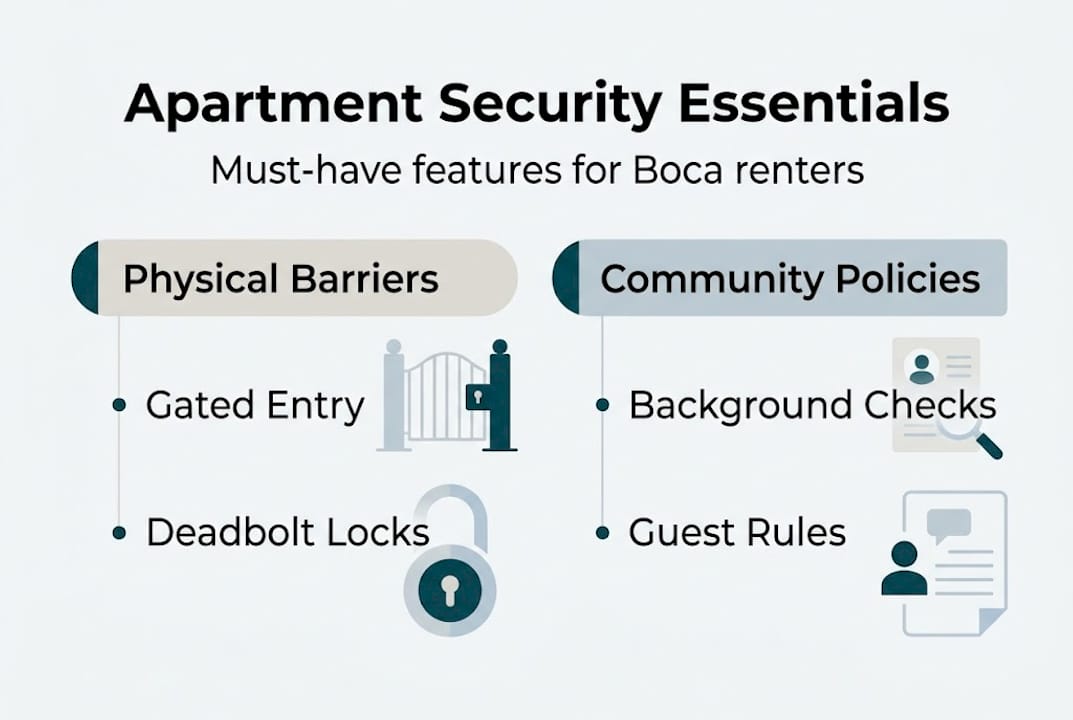
Research consistently shows that layered security combining access, lighting, and cameras is the most effective approach for reducing crime in multifamily housing. A single camera with no access control is like locking your front door but leaving the window open.
Physical security features that matter most:
- Gated entry with coded or key fob access
- Deadbolt locks on all unit doors
- Well-lit parking areas and walkways
- Secured mailroom and package lockers
- Intercom or video doorbell at building entrances
Tech-based features add a second layer, but they work best when physical barriers are already in place. Here is how the two approaches compare:
| Feature type | Examples | Effectiveness | Best use case |
|---|---|---|---|
| Physical barriers | Gated entry, deadbolts, fencing | High for deterrence | Perimeter and unit access |
| Technology | Cameras, alarms, smart locks | Moderate, best combined | Monitoring and documentation |
| Policy-based | Background checks, guest rules | High for community safety | Screening and accountability |
Background checks for residents and clear guest policies are often overlooked, but they are among the most powerful tools a property can use. A building that screens applicants carefully creates a community where everyone has a stake in keeping things safe. You can learn more about what secure apartment access looks like in practice when you tour a property.
When it comes to locks specifically, the quality of hardware matters enormously. Properties that work with professional locksmiths in landlord services tend to maintain better lock standards across units and common areas.
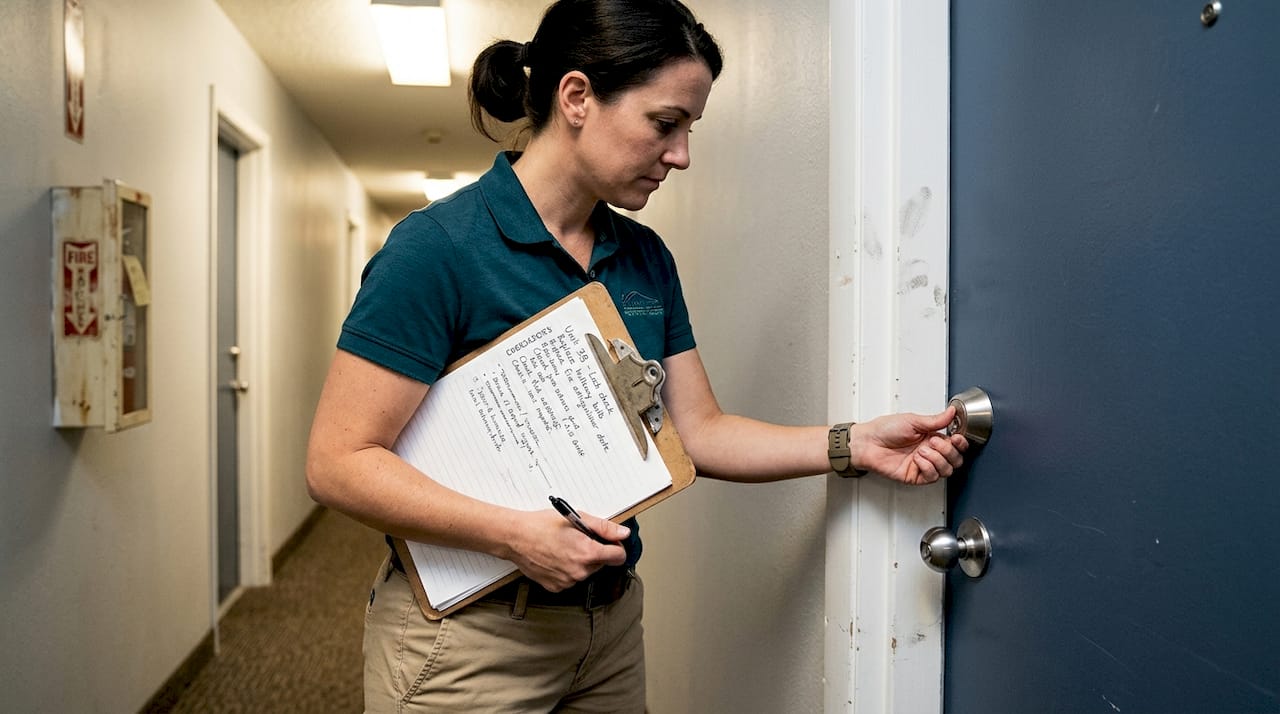
The features of standout complexes in Florida often combine all three columns in the table above rather than relying on one category alone.
Pro Tip: When you tour an apartment, ask the leasing agent to walk you through the full security system, not just the camera locations. Ask what happens when a gate malfunctions, who responds, and how fast. The answer tells you a lot about how seriously the property takes safety.
People power: Human factors in apartment security
Alongside features and gadgets, the people in your building have a huge impact on security. Technology can document a crime after it happens. People can prevent it from happening at all.
Studies show that human elements like guards and community vigilance are more reliable than any single piece of technology for preventing crime in apartment communities. Cameras deter some behavior, but a neighbor who notices something off and says something is worth more than a full camera grid.
“A secure building is not just a product of its hardware. It is a product of its culture. Residents who look out for each other create an environment that criminals actively avoid.”
Here is a practical list of daily habits that make a real difference:
- Lock your door every time you leave, even for five minutes
- Do not prop building doors open for strangers
- Report broken lights, damaged gates, or suspicious activity to management immediately
- Introduce yourself to neighbors so you recognize who belongs
- Avoid sharing access codes with people outside your household
Using an apartment viewing checklist when you tour properties helps you evaluate not just the physical setup but also the social environment. Does management seem responsive? Do current residents seem engaged? These signals matter.
Clear apartment community rules around guest access, noise, and shared space use also create accountability. When everyone knows the expectations, it is harder for unsafe behavior to go unnoticed.
Pro Tip: Spend a few minutes in the parking lot or common area during an evening visit to a property. The atmosphere after hours tells you more about community culture than any daytime tour ever will.
Layered security in action: How strategies combine for real protection
Bringing these concepts together, let’s see what happens when multiple strategies are combined. The results are not just additive. They are exponential.
A layered approach using perimeter access control, surveillance, and personal vigilance consistently outperforms any single measure in multifamily housing research. This is where CPTED comes in. CPTED stands for Crime Prevention Through Environmental Design. It is a planning method that uses physical layout, lighting, and landscaping to reduce crime passively, without requiring anyone to actively monitor anything.
Simple CPTED principles you will see in well-designed Boca apartments:
- Trimmed hedges near entrances so there are no hiding spots
- Parking lots positioned where they are visible from units
- Lighting that eliminates dark corners between buildings
- Clear sightlines from leasing offices to common areas
Here is how single versus layered approaches compare in real-world effectiveness:
| Approach | Example | Crime reduction potential |
|---|---|---|
| Single measure | Cameras only | Low to moderate |
| Dual measure | Cameras plus gated entry | Moderate |
| Layered approach | Access control plus lighting plus cameras plus community rules | High |
Complexes that combine background checks with security lighting and active management see meaningfully lower incident rates. It is not one thing doing the work. It is everything working together. If you are a student or young professional in Boca, the secure student housing guide breaks down what to look for in properties that take this approach seriously.
The NIJ review of apartment security reinforces that no single intervention is sufficient. The most protected communities treat security as a system, not a feature.
What most renters miss about apartment security
Here is a take you will not find in most security articles. Most renters walk into a tour, spot a camera, see a gate, and check security off their mental list. That is exactly the wrong way to evaluate a building.
The camera is visible. The culture is not. And culture is what actually keeps you safe. We have seen renters move into well-equipped buildings and feel unsafe because management never responded to maintenance requests, neighbors never acknowledged each other, and the gate was broken for weeks at a time with no fix in sight.
The renters who feel genuinely secure are the ones who ask hard questions during tours, walk the property after dark before signing, and make an effort to connect with neighbors in the first month. They treat safety as something they participate in, not something they purchase.
That mindset shift changes everything. Instead of asking “does this building have cameras,” ask “how does this building respond when something goes wrong.” Instead of checking a box, check the culture. Deeper safety insights come from understanding that your engagement level is as important as the building’s equipment list.
Find secure and affordable apartments in Boca Raton
Ready to put these safety tips into action? Start your Boca apartment search with security in mind.
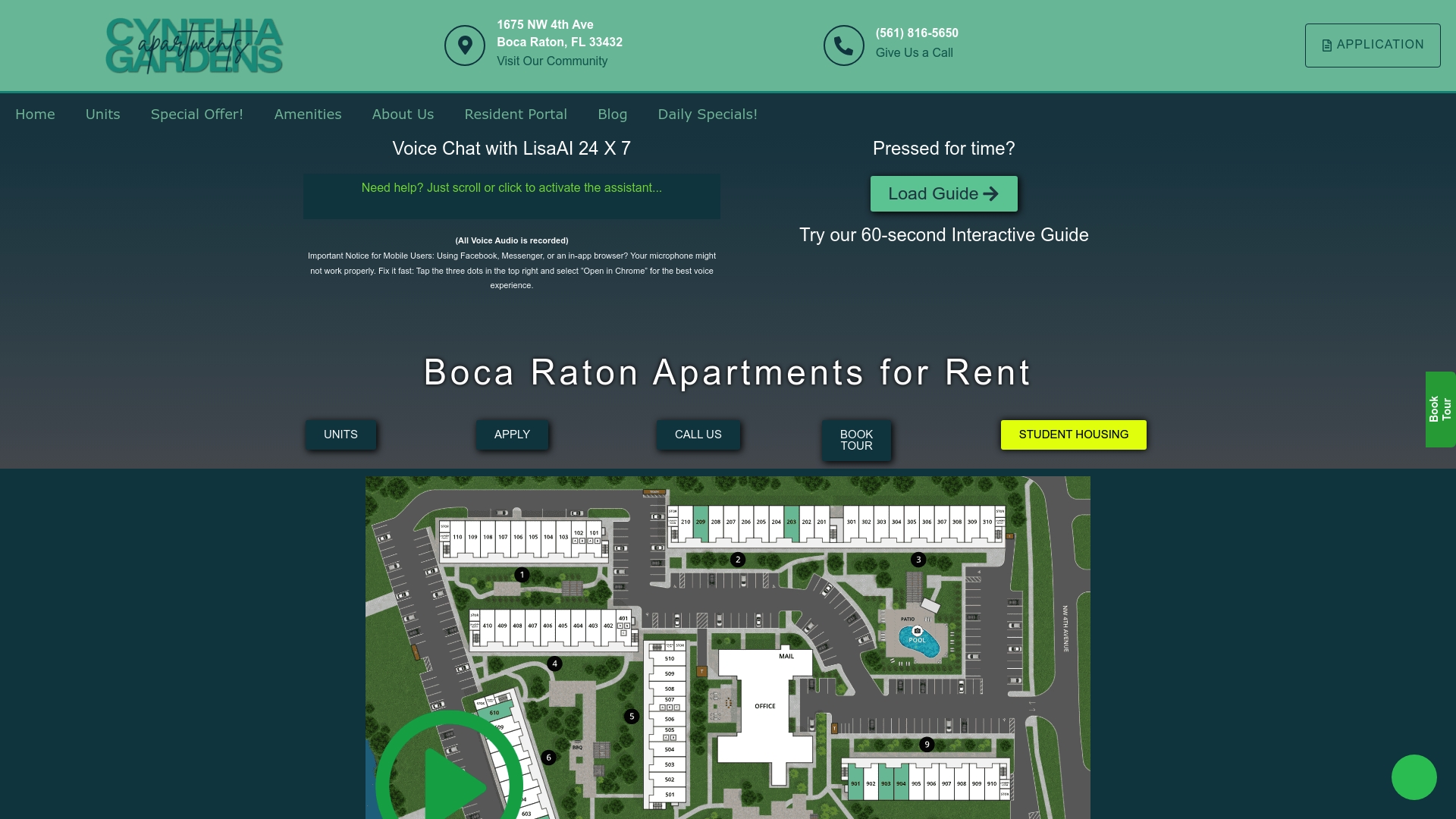
At Cynthia Gardens, we built our community around the security features that actually matter: gated entry, well-lit parking, background-checked residents, and responsive on-site management. We also know that safety and affordability should not be a trade-off. Our pet-friendly one-bedroom apartments are designed for young professionals and students who want to feel secure without paying luxury prices. Explore our apartment styles and features to see how we combine comfort with real security. If you have pets and want a community that welcomes them, our pet-friendly apartment complex page has everything you need to get started.
Frequently asked questions
What apartment security features should I prioritize near FAU?
Look for gated access, background-checked residents, cameras, and well-lit parking areas, as these have the best track record in student-heavy zones near campuses where crime patterns have shifted toward vehicle theft and drug violations.
Are cameras alone enough to keep Boca apartments safe?
No. Cameras work best when combined with access control, strong community rules, and active management, since layered security outperforms any single measure in reducing crime.
How can residents improve their own apartment security?
Simple habits like locking doors every time, knowing your neighbors, and reporting suspicious activity immediately make a significant difference, because human vigilance and daily habits are more reliable than technology alone.
What is CPTED and why is it important for apartments?
CPTED stands for Crime Prevention Through Environmental Design, a method that uses lighting, landscaping, and layout to deter crime passively. Buildings that apply CPTED design principles create safer environments without requiring constant active monitoring.