
TL;DR:
- Understanding rental agreements helps tenants avoid unexpected fees and legal disputes.
- Carefully read all lease sections, verify key elements, and get written clarifications before signing.
A rental agreement is a legally binding contract that defines the rights and responsibilities of both the tenant and the landlord before a single key is handed over. Knowing how to understand rental agreements protects you from unexpected fees, unclear rules, and clauses that could cost you money. The two most common formats are fixed-term leases and month-to-month agreements, and each carries different financial and legal implications. Resources like Zillow, Settl, and ReadYourLease.ai offer free guides that make interpreting lease agreements far less intimidating. This article breaks down every major section so you can sign with confidence.
What are the key components of a rental agreement?
Every rental agreement should contain specific, verifiable information before you consider signing. Missing or vague sections are not minor oversights. They are the source of most tenant-landlord disputes.
The ten essential elements every lease must include are:
- Full legal names of all tenants and the landlord or property management company
- Property address and description, including unit number and any included storage or parking
- Lease term: exact start and end dates, or a statement that the agreement is month-to-month
- Rent amount, the due date each month, accepted payment methods, and any grace period
- Late fee policy: the dollar amount and when it triggers
- Security deposit: the exact amount, the conditions under which it can be withheld, and the timeline for its return
- Maintenance responsibilities: what the landlord handles versus what falls on you
- Landlord entry notice: most states require 24 hours’ written notice before entry
- Pet, guest, smoking, and subletting policies
- Early termination clause: the notice period required and any financial penalties
Pay close attention to addenda. Lease addenda can override the main lease document, and pet addenda in particular often contain breed restrictions or damage liability clauses that contradict what the main lease implies. Read every attached document with the same care you give the main contract.
Understanding security deposit regulations before you sign prevents the most common post-move-out disputes.
Pro Tip: Create a simple checklist from the ten elements above and check off each one as you read. If any item is missing or unclear, flag it before you sign.
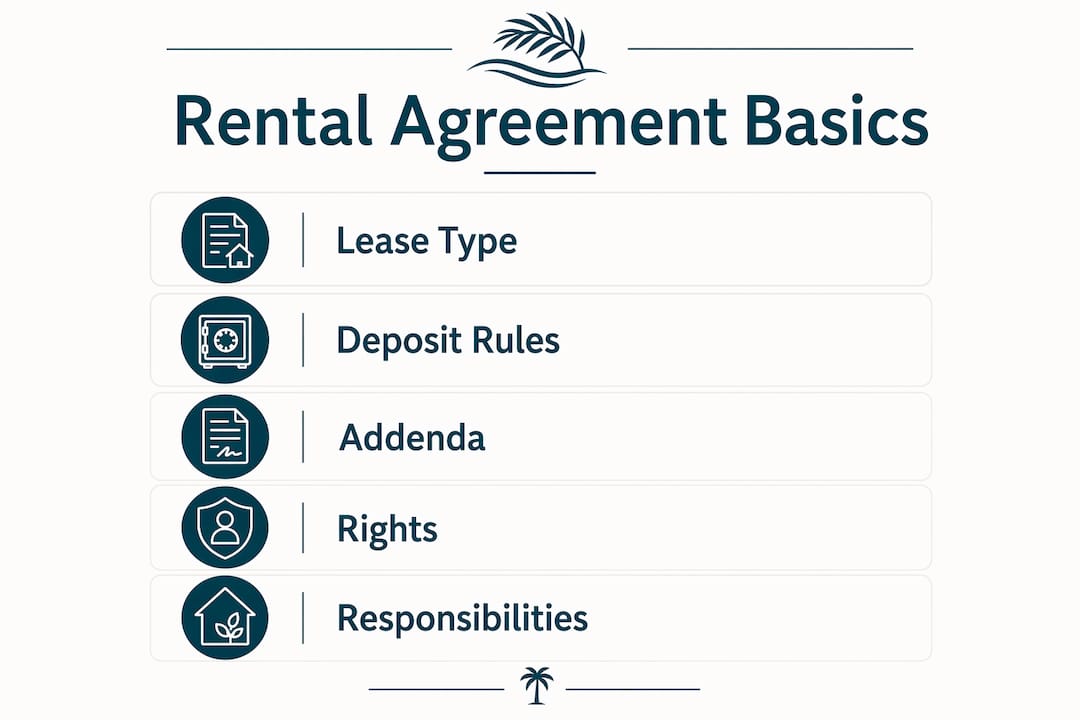
How to understand rental agreements by reading them carefully
Reading a lease is not a five-minute task. A standard residential lease runs 10–20 pages, and the clauses that matter most are often buried in the middle or attached as addenda.
- Read the entire document once, slowly. Do not skip sections labeled “standard” or “boilerplate.” Those sections contain late fee policies, entry rights, and termination penalties.
- Use a checklist. Cross-reference the ten key elements listed above against every page. Mark anything that is absent.
- Flag ambiguous language immediately. Ambiguity arises when a provision supports multiple interpretations. A clause that says “tenant is responsible for repairs” without a dollar threshold is ambiguous. Ask for a written definition before signing.
- Check every clause against state law. State and local laws supersede illegal contract clauses. A landlord cannot waive your rights under your state’s Residential Landlord-Tenant Act, even if the lease says otherwise.
- Get all verbal promises in writing. Verbal agreements made during tours are generally unenforceable unless documented in a signed addendum. If a leasing agent promises free parking or a repainted wall, that promise means nothing without a written amendment.
- Document every question via email. Email creates a time-stamped record. If a dispute arises later, that record can support your position.
- Negotiate unfavorable terms before signing. Early termination fees, pet fees, and move-in dates are all negotiable at many properties. Asking costs nothing.
Watch for these red flags: excessive penalties for minor violations, pressure to sign the same day you tour, and landlord entry clauses that do not specify required notice. Courts consider contextual information beyond the lease text when resolving disputes, which means documents and conversations from the negotiation phase can affect how a clause is interpreted.
Pro Tip: Ask the landlord to send the lease at least 48 hours before your scheduled signing appointment. That window gives you time to review it without pressure.

Fixed-term lease vs. month-to-month: which one fits you?
The lease type you choose shapes your financial flexibility for the entire tenancy. Neither option is universally better. The right choice depends on your timeline and risk tolerance.
| Feature | Fixed-term lease | Month-to-month agreement |
|---|---|---|
| Typical duration | 6–12 months | Renews monthly automatically |
| Rent stability | Locked in for the full term | Landlord can raise rent with 30 days’ notice |
| Flexibility | Early exit triggers a penalty | Either party can terminate with 30 days’ notice |
| Cost | Usually lower monthly rent | Often carries a premium monthly rate |
| Best for | Renters with stable plans | Renters in transition or testing a new city |
Fixed-term leases lock in rent and terms for a set period, which protects you from mid-year rent increases. Month-to-month agreements renew automatically each month and require only 30 days’ notice to terminate or change. That flexibility comes at a price: landlords typically charge more per month for month-to-month arrangements, and they can raise the rent with relatively short notice.
Local rent control laws affect both formats. Some cities cap how much a landlord can raise rent on a month-to-month agreement, while others impose no limits at all. Check your city or county ordinances before choosing. A lease agreement explained simply can help you compare both formats side by side before committing.
Common pitfalls when signing a rental agreement
Most lease mistakes are avoidable. They happen because renters move too fast or assume that standard language is harmless.
- Ignoring addenda. A pet addendum, parking addendum, or move-in special addendum can override terms in the main lease. Read every attached page.
- Signing under pressure. A landlord who insists you sign within hours of touring is a red flag. Request at least 24 hours to review and use that time fully.
- Missing the late fee structure. A lease without a clear grace period and a defined late fee amount leaves you exposed to arbitrary charges.
- Overlooking entry notice requirements. Most states require landlords to give 24 hours’ written notice before entering your unit. A lease that omits this or grants the landlord unrestricted access conflicts with tenant protection laws.
- Misreading pet policies. Pet addenda frequently contain clauses that override the main lease, including breed restrictions and damage liability. Review the rental pet agreement details carefully before assuming your pet qualifies.
- Trusting verbal promises. A leasing agent’s spoken assurance carries no legal weight. Every promise must appear in a signed document.
- Missing sublet and guest restrictions. Many leases prohibit subletting entirely or limit how long a guest can stay. Violating these terms can trigger eviction proceedings.
- Skipping the security deposit terms. Know the exact conditions under which your deposit can be withheld and the legal deadline for its return in your state.
How to ask questions and negotiate your rental agreement
Lease negotiation is not reserved for commercial tenants or high-value properties. Residential renters negotiate terms every day, and most landlords expect it.
- Identify your priorities before the conversation. Decide which terms matter most: move-in date, pet fee, early termination penalty, or parking. Focusing on two or three items is more effective than challenging every clause.
- Put every request in writing. Send your questions and proposed changes by email. This creates a record and signals that you are a serious, organized renter.
- Request formal amendments for any agreed changes. A verbal “yes” from a landlord is not binding. Landlords’ promises must be documented formally in a signed addendum to be legally enforceable.
- Know your leverage. A unit that has been vacant for several weeks gives you more room to negotiate than a property with a waiting list. Check local listing sites to gauge demand.
- Stay professional and timely. Respond to landlord communications promptly. A renter who is easy to work with before signing signals reliability for the full lease term.
Guidance on how to negotiate rent covers specific scripts and tactics that work in competitive rental markets like Boca Raton.
Key Takeaways
Understanding a rental agreement before signing is the single most effective way to avoid financial surprises and legal disputes during your tenancy.
| Point | Details |
|---|---|
| Read every page, including addenda | Addenda can override the main lease and often contain the most restrictive clauses. |
| Verify all ten key elements | Missing clauses on late fees or entry notice are the most common sources of disputes. |
| Know your lease type | Fixed-term leases lock in rent; month-to-month agreements offer flexibility at a higher cost. |
| Get all promises in writing | Verbal agreements are unenforceable; require a signed addendum for every landlord commitment. |
| Check state law | State tenant protection laws override any illegal lease clause, regardless of what the document says. |
What I’ve learned after years of watching renters sign the wrong lease
The single most common mistake I see is not a misread clause. It is the decision to sign without reading at all. Renters under time pressure, excited about a new apartment, hand over a security deposit on a document they have never fully reviewed. That decision creates problems that last the entire tenancy.
The second mistake is assuming that a “standard lease” is fair by default. Standard means common. It does not mean balanced or legal. I have seen standard leases that waived the landlord’s entry notice requirement, capped the security deposit return timeline at 90 days, and charged a two-month penalty for early termination. None of those terms are unusual. All of them are negotiable.
My advice is direct: treat every lease like a contract you are signing on behalf of your future self. Use a checklist. Send questions by email. Ask for 48 hours to review. If a clause confuses you, ask a tenant rights organization or a local housing attorney to explain it. Many offer free consultations. The cost of one hour of legal advice is far less than the cost of a disputed security deposit or an early termination fee you did not see coming.
Resources like Settl and Zillow publish free lease reading guides that cover most standard clauses. Use them. And if a landlord pressures you to sign immediately, that pressure itself is the answer to whether you should sign.
— Ayman
Cynthiagardens: transparent leases for Boca Raton renters
Cynthiagardens is a modern apartment community in Boca Raton built around one principle: renters should understand exactly what they are signing before they sign it.
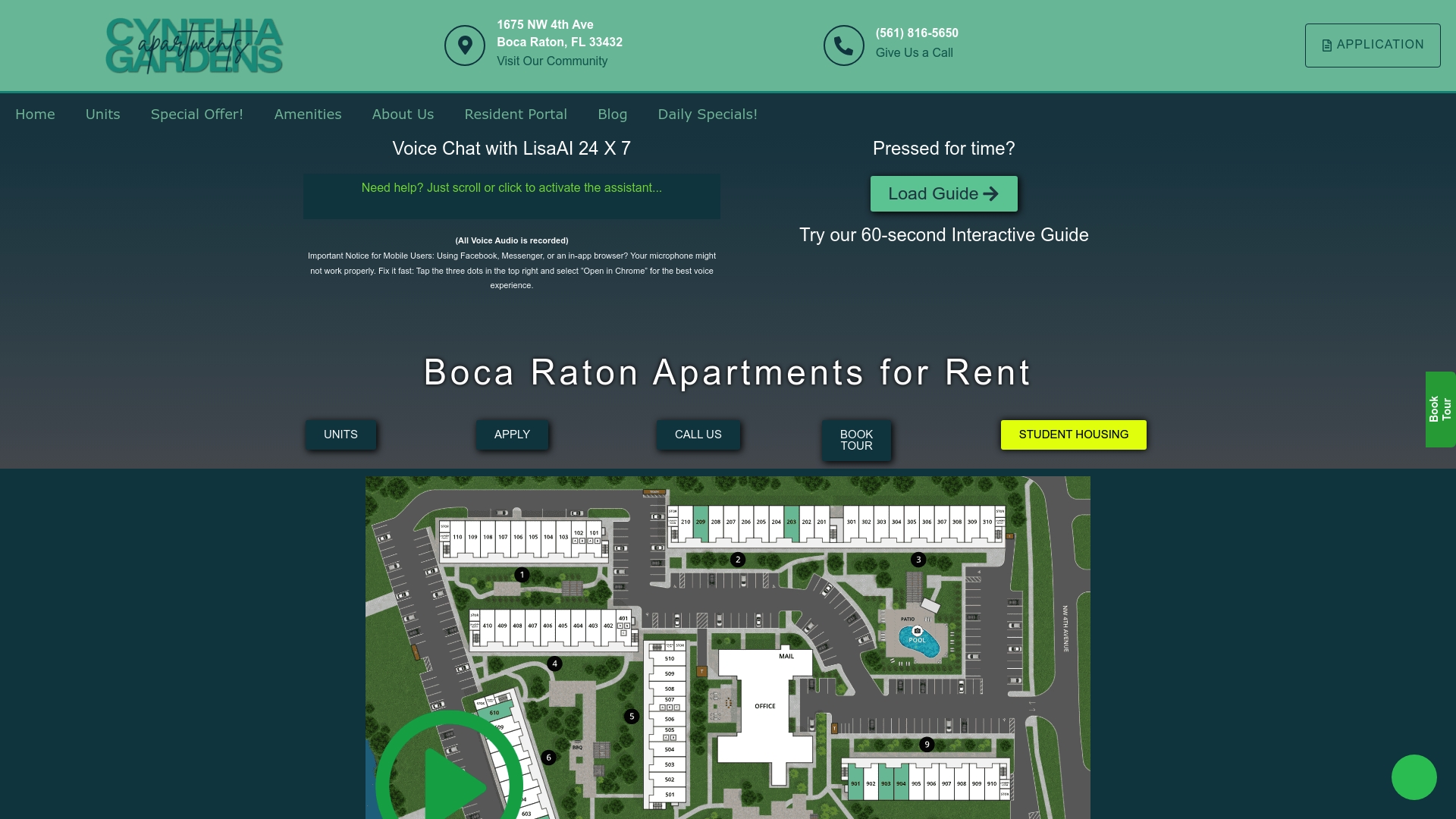
Every lease at Cynthiagardens is written in plain language with no hidden fees, clear pet policies, and defined payment terms. The community offers flexible lease options for young professionals, students, and pet owners who want stability without surprises. You can browse available apartment styles and features online, take a virtual tour, and review lease terms before your first in-person visit. The leasing team answers questions by email and AI chat so you have a written record of every conversation. Renting confidently starts with a landlord who makes the terms easy to read.
FAQ
What is the difference between a lease and a rental agreement?
A lease is a fixed-term contract, typically 6–12 months, that locks in rent and terms for the full period. A rental agreement is usually month-to-month and renews automatically, giving both parties more flexibility but less stability.
Can a landlord include any clause they want in a lease?
No. State and local tenant protection laws override illegal lease clauses. A landlord cannot waive your rights under your state’s Residential Landlord-Tenant Act, even if the lease document says otherwise.
Are verbal promises from a landlord legally binding?
Verbal promises made during tours or negotiations are generally unenforceable. Any commitment from a landlord must appear in a signed written addendum to carry legal weight.
What should I do if I find an unclear clause in my lease?
Flag the clause before signing and ask the landlord for a written clarification or amendment. If the language is technical or the stakes are high, consult a local tenant rights organization or housing attorney for a plain-language explanation.
How long should I take to review a lease before signing?
Request at least 24–48 hours to review the full document, including all addenda. Never sign a lease the same day you tour a unit without having read every page.
Recommended
- What to Look for in Rental Apartments: A 2026 Guide – Luxury Apartments for Rent in Boca Raton | Premium Boca Raton Apartments | Aapartments Boca Raton
- Apartment Lease Agreement Form A Clear Guide – Luxury Apartments for Rent in Boca Raton | Premium Boca Raton Apartments | Aapartments Boca Raton
- The Role of Transparent Lease Agreements for Renters
- What Is Rent Transparency? A Renter’s 2026 Guide