TL;DR:
- Parking reliability impacts daily stress, cost, and overall apartment satisfaction.
- Unbundled parking options can save renters money and increase flexibility.
- Asking detailed questions before signing ensures understanding of parking policies and avoids surprises.
Finding an apartment in Boca Raton feels exciting right up until you realize parking is where the real decisions live. Most renters scan listings for rent price, square footage, and whether pets are welcome. But parking? That gets a quick glance and a mental checkbox. That’s a mistake. Parking shapes your morning commute, your monthly budget, your stress levels on a Tuesday night when you’re running late. Whether you’re a student at FAU juggling class schedules or a young professional clocking early shifts, understanding exactly what you’re getting with apartment parking before you sign can be the difference between a home you love and one you regret.
Table of Contents
- How parking impacts your daily life and stress
- The cost and affordability of apartment parking
- What to look for in apartment parking: Rules, spots, and surprises
- Parking, affordability, and the bigger rental picture
- The overlooked lesson: Parking is part of your rental strategy
- Ready for hassle-free living? Explore your Boca apartment options
- Frequently asked questions
Key Takeaways
| Point | Details |
|---|---|
| Parking affects daily stress | Reliable apartment parking makes life easier and reduces time spent searching or worrying about tickets. |
| Parking policies impact cost | How parking is priced can significantly change your overall rent and affordability as a young renter in Boca Raton. |
| Not all parking access is equal | Check specific rules, assignments, and real availability before committing to a lease. |
| Parking reforms boost options | Cities that unbundle or reduce parking minimums can offer more flexible, affordable apartments. |
How parking impacts your daily life and stress
At first, it sounds like a small thing. You have a car. The apartment has parking. Done, right? Not quite. Convenient, accessible parking directly affects daily stress and whether residents can reliably avoid searching for spots, fighting tickets, or getting towed. That’s not an exaggeration. It’s the day-to-day reality for renters who didn’t ask the right questions before signing.
Consider what happens when supply doesn’t meet demand. Some student-heavy complexes in South Florida have had waiting lists of 200 or more residents competing for a limited number of spots. That means you could move into an apartment, assume parking is sorted, and then spend months circling the block or paying for a nearby garage just to get inside your own home.
The daily consequences add up fast. A missed lecture because you spent 20 minutes hunting for parking. A late arrival at work because there were no open spots after 8 a.m. A towing bill that blindsided you because you didn’t read the fine print about overnight guest restrictions or event-day lot closures. None of these feel like “parking problems” when they’re happening. They feel like your whole day falling apart.
Here are the stress factors renters most often experience when parking is unreliable:
- Inconsistent availability that forces you to leave earlier than necessary just to claim a spot
- Fines and towing from rules that weren’t clearly explained during the leasing process
- Conflict with neighbors over first-come spots that everyone assumes are theirs
- Anxiety about guests when visitor parking is scarce or restricted to short time windows
- Wasted money on monthly parking elsewhere when you already pay rent that supposedly includes parking
“The stress of not having a guaranteed spot hit immediately after move-in. I’d come home at 10 p.m. after a shift and have nowhere to park within two blocks.” — A sentiment shared across renter forums and local reviews for South Florida student complexes.
When you’re finding the perfect apartment, parking reliability deserves the same scrutiny as lease length or utility policies.
Pro Tip: Before touring, call the property and ask how many parking spots are available per unit, whether there’s a waiting list, and what happens during high-occupancy periods. A property that hesitates or gives a vague answer is telling you something important.
The cost and affordability of apartment parking
Once you understand how parking affects your daily life, the next question is: what is it actually costing you? This is where many renters in Boca Raton, especially students and first-time renters, get caught off guard.
Parking requirements can reduce housing affordability by increasing construction costs and forcing residents to pay for parking they may not even use. When parking is bundled into rent, it inflates your monthly cost regardless of whether you own a car, drive daily, or rely on transit and rideshare. You’re paying for concrete and maintenance whether you park there or not.
Bundled vs. unbundled parking: What’s the difference?
| Parking Type | What you pay | Flexibility | Best for |
|---|---|---|---|
| Bundled (included in rent) | Fixed, no choice | None | Daily drivers with one vehicle |
| Unbundled (billed separately) | Pay only for spots used | High | Low-car or transit-dependent renters |
| First-come, no extra cost | Shared from rent pool | Limited | Car owners okay with uncertainty |
| Paid reserved spot | Monthly add-on fee | Guaranteed access | Commuters needing certainty |
The data here is striking. Research shows that the average household uses 0.3 to 0.5 parking spaces, yet many apartment complexes require developers to build one or even two spaces per unit. That cost gets passed directly to you in the form of higher base rent, even if your household has no car at all.
Here’s how to compare the true monthly cost of any apartment you’re considering:
- Start with base rent. Write down the advertised figure without any additions.
- Add parking fees. If parking is listed separately, add the monthly amount. If bundled, ask what portion of the rent is tied to parking.
- Factor in alternatives. If parking isn’t included, look up nearby garage or street parking monthly rates in Boca Raton.
- Compare total cost across properties. A $1,350 apartment with $75 parking can be more expensive than a $1,400 apartment where parking is truly included.
- Ask about future increases. Parking fees often escalate annually and don’t carry the same notice requirements as rent increases.
Statistic callout: In some Boca Raton student complexes, tenants report paying an additional $75 to $150 per month for a reserved or guaranteed spot, on top of already competitive base rent rates.
For those exploring affordable housing apartments, bundled parking that you don’t need is a real financial drain. Renters who ask specifically about unbundled options, or choose communities that offer transparent, flexible pricing, often save hundreds of dollars per year. When you add that to a tight student budget, the savings matter. That’s exactly why reviewing affordable options for young renters often includes parking as a line item, not an afterthought.
What to look for in apartment parking: Rules, spots, and surprises
Knowing that parking matters is step one. Knowing what to look for is where renters actually protect themselves. Many issues come not from a complete lack of parking, but from operational limitations and unclear rules that create functional scarcity even when spaces technically exist.
For example, even with parking available on-site, shortages and restrictions can lead to real daily problems. FAU students experienced exactly this when administrative decisions suddenly removed access to spaces that residents had been counting on. The lesson: advertised parking and guaranteed parking are not always the same thing.
And the fine print matters equally. Evaluating whether parking is included or billed separately, whether spaces are assigned or first-come, and how management handles peak demand is the real homework you need to do before signing.
Comparison of common parking policies in Boca Raton apartments:
| Policy type | What it means for you | Risk level |
|---|---|---|
| Assigned reserved spot | Your spot, every night, guaranteed | Low |
| First-come, unassigned | No guarantee, especially after peak hours | Medium to high |
| Waiting list for spots | May wait weeks or months for access | High |
| Bundled (not itemized) | You pay regardless of use | Medium |
| Guest parking with time limits | Visitors may get towed after hours | Medium |
Pro Tip: When touring, don’t just look at the parking lot during the day. Drive by the property at night, ideally after 9 p.m., to see how full it actually is. Empty lots during tours mean nothing if residents come home from work and class to a packed lot.
Here’s a numbered checklist for confirming reliable parking before committing to a lease:
- Ask if your specific unit includes a spot or if you’re on a waiting list. Don’t assume.
- Confirm whether spots are assigned or shared. If shared, ask the average ratio of spaces to units.
- Ask about event and holiday restrictions. Some complexes restrict resident parking for community events.
- Clarify guest policies. Understand time limits, permit requirements, and tow enforcement schedules.
- Request the parking addendum in writing before signing the lease. If it’s not in writing, it’s not guaranteed.
- Check your apartment viewing checklist to ensure parking is captured alongside other critical property factors.
The broader Florida apartment complex guide includes parking review as a standard step for a reason. Surprises after move-in are avoidable with the right questions before the lease is signed.
Parking, affordability, and the bigger rental picture
Individual parking decisions don’t happen in a vacuum. They’re shaped by broader policies that determine what gets built, who pays, and how cities think about housing affordability. Understanding this gives Boca Raton renters a smarter lens for evaluating what they’re actually comparing when they look at two apartments with different parking situations.
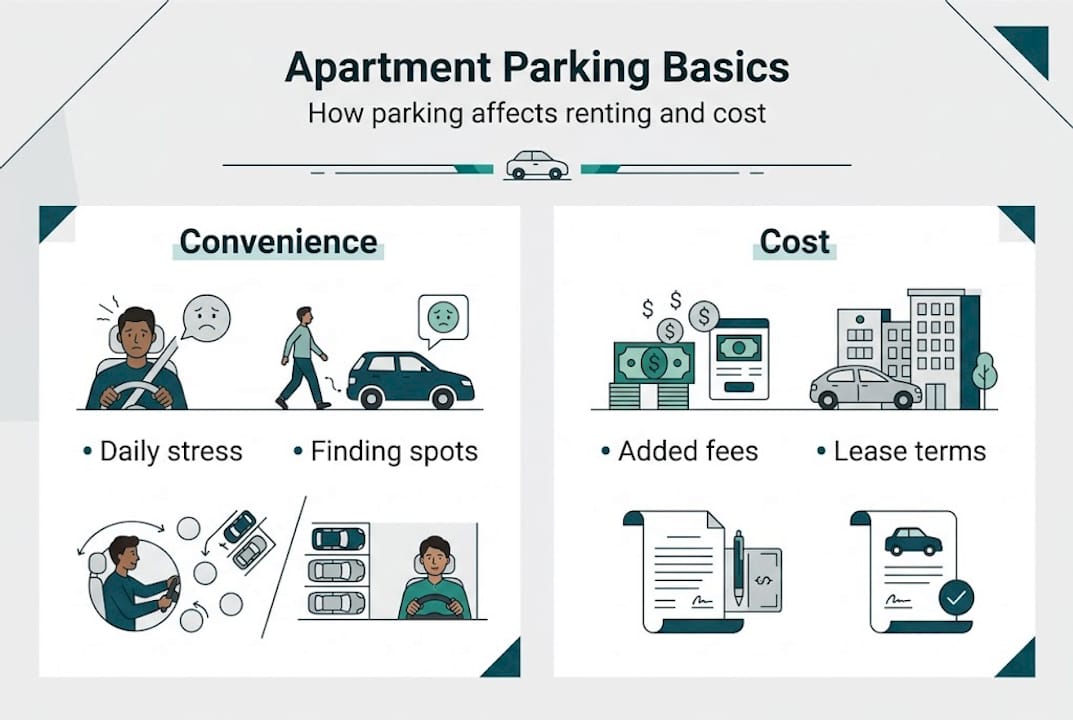
Parking policies can worsen affordability when they require more spaces than residents actually need. Cities and developers are increasingly pushing back on mandatory minimums, recognizing that forcing a two-space-per-unit requirement in a walkable neighborhood adds construction costs that flow directly to renters. Parking reform is reshaping how new developments are designed in cities across Florida and beyond.
When minimum parking requirements are reduced or eliminated for certain areas, the effects cascade in meaningful ways. Unbundling parking lets renters save, particularly in households with fewer vehicles or access to transit, rideshare, and bike-friendly streets.
Here’s who benefits most from communities where parking is flexible or reformed:
- Students who may not own cars but are often required to subsidize parking through bundled rent
- Young professionals using rideshare, transit, or bikes for daily commuting
- Low-income renters for whom $75 to $150 per month in parking fees represents a significant budget impact
- Pet owners who need unit flexibility but don’t necessarily need a parking space
- Households with one car who see no benefit in paying for two mandatory spots
Statistic callout: Studies on parking reform in cities similar to Boca Raton suggest that eliminating mandatory minimums can reduce per-unit construction costs by thousands of dollars, savings that can be passed on through lower rents or redirected to other amenities.
For renters with pets, this is especially relevant. Exploring affordable housing for pet owners often means finding communities where you’re not paying for extras you don’t need, and where the apartment pet policy is transparent rather than buried in fine print. The same transparency that matters for pet policies matters equally for parking.
Understanding parking policy at this level isn’t academic. It’s financial self-defense. When you know why one complex costs $100 more per month than another, you’re equipped to negotiate, compare, or walk away with confidence.
The overlooked lesson: Parking is part of your rental strategy
Here’s something most apartment guides won’t tell you: parking is the most common silent dealbreaker in the Boca Raton rental market. Not the rent. Not the square footage. Parking. Renters discover this not during the tour, but at 11 p.m. on a Wednesday when they circle their own complex for the third time with nowhere to put their car.
Most young professionals and students spend disproportionate mental energy comparing apartment features beyond amenities like gym equipment, pool size, and modern finishes. Those things feel tangible and exciting during a tour. Parking policy feels administrative and boring. That’s exactly why it gets ignored, and exactly why it causes the most friction after move-in.
Our take: parking should be a top-three evaluation factor before any lease is signed. Not because it’s glamorous, but because its absence, or its unclear terms, will cost you time, money, and daily aggravation in ways that no gym or rooftop can offset. A beautiful apartment with unpredictable parking is not a good deal.
Ready for hassle-free living? Explore your Boca apartment options
Smart parking decisions start with communities that are upfront about exactly what you’re getting. No buried policies. No waiting lists they forget to mention. No surprise towing notices.
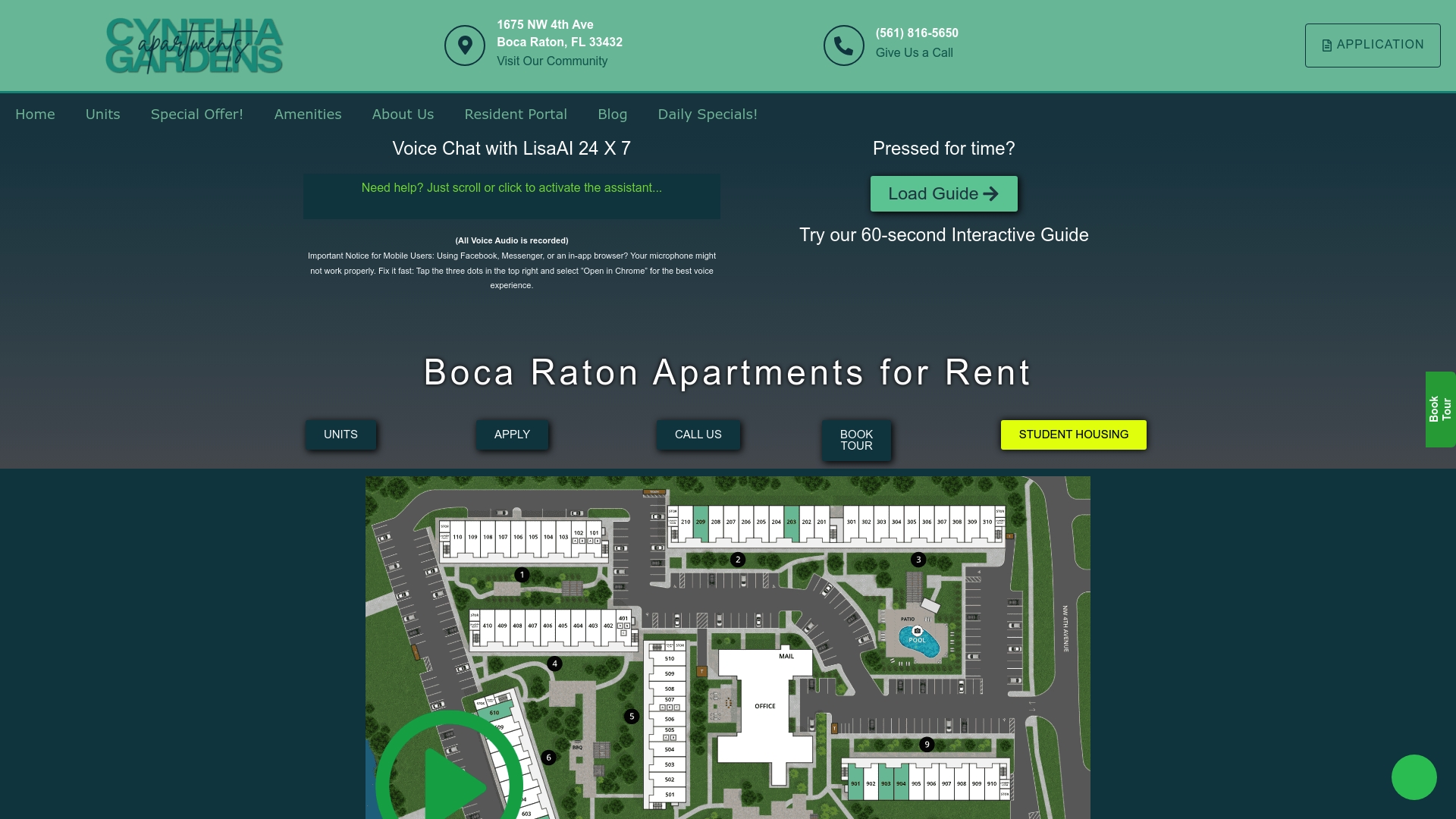
At Cynthia Gardens, we believe transparent pricing means parking clarity too. You can explore Boca apartment communities where policies are spelled out clearly, so you’re not piecing together the truth after signing. If you’re ready to start your search, our finding your new apartment guide walks you through every step with confidence. And when you want to compare layouts, amenities, and real-world features side by side, our overview of apartment features in Boca gives you the full picture. No guesswork. No surprises. Just a home that actually works for your lifestyle.
Frequently asked questions
What questions should I ask about apartment parking before signing a lease?
Ask if parking is included or paid separately, whether spots are assigned or first-come, and whether there are waiting lists or restrictions during busy periods. You should also confirm these details in writing as part of your lease or a separate parking addendum before signing.
How does parking affect the overall cost of renting an apartment?
Bundled parking raises your rent regardless of how often you drive, while unbundling lets you pay only for what you use. Parking requirements can reduce affordability by embedding construction and maintenance costs directly into rent, even for residents who don’t own a vehicle.
Why are parking shortages common in student apartments?
High demand, limited physical supply, and administrative decisions, like restricting previously available spaces, often create waiting lists and daily competition for spots. Some student-heavy complexes have had 200-plus waiting lists for reserved parking, leaving many residents without reliable access.
Is it better to choose an apartment with unbundled parking?
If you own no vehicle or drive infrequently, unbundled parking lets you save by opting out of a cost you don’t need. Unbundling parking allows for more efficient space management and gives low-car households real financial flexibility compared to complexes with mandatory bundled fees.
Recommended
- Unlock the role of convenience in apartment living
- Apartment vs Condo Which is Best For You – Luxury Apartments for Rent in Boca Raton | Premium Boca Raton Apartments | Aapartments Boca Raton
- 🏠 Apartment Styles & Features – Luxury Apartments for Rent in Boca Raton | Premium Boca Raton Apartments | Aapartments Boca Raton
- The Hidden Benefits of Choosing Apartments with Gardens: More Than Just Greenery – Luxury Apartments for Rent in Boca Raton | Premium Boca Raton Apartments | Aapartments Boca Raton