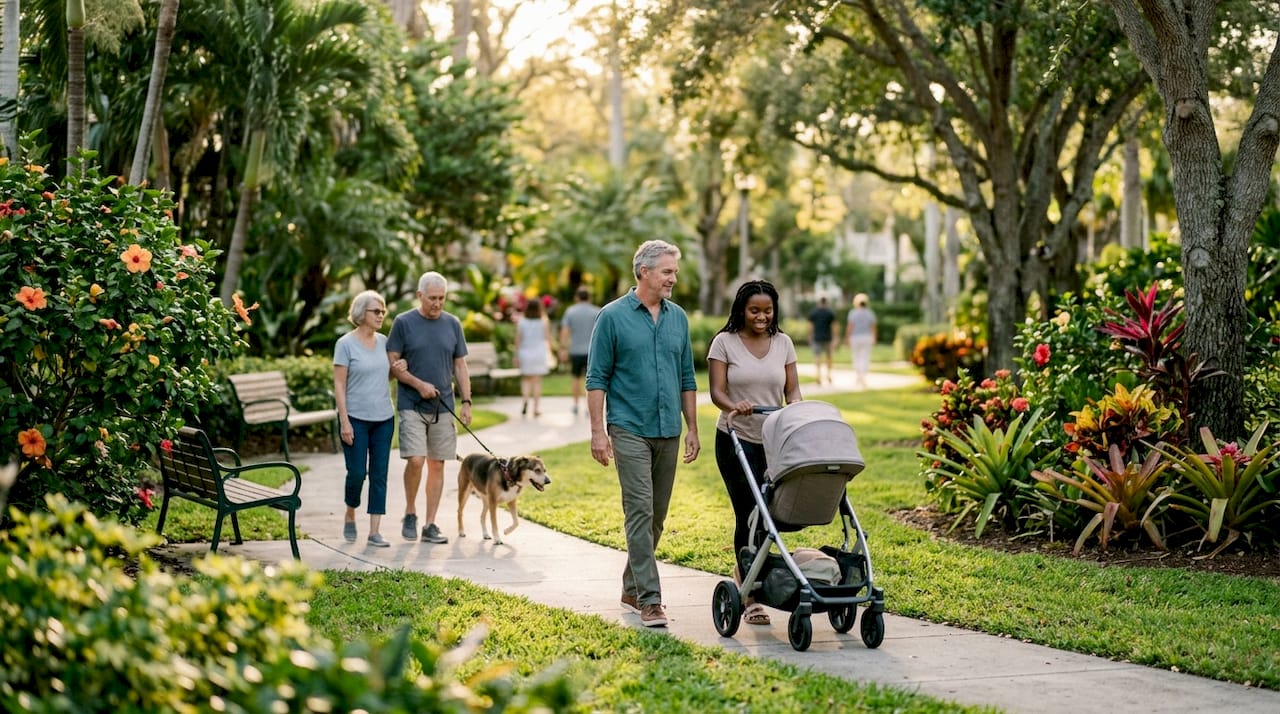
Cynthia Gardens is a residential apartment community in Boca Raton, Florida, offering quiet, garden-style living near Florida Atlantic University, Mizner Park, and Boca Raton’s beaches at 1675 NW 4th Ave, Boca Raton, FL 33432.
TL;DR:
- Walkable neighborhoods connect residents to daily destinations within walking distance. They promote health, social bonds, and environmental sustainability by encouraging pedestrian activity. Choosing such areas often leads to better quality of life and financial savings for renters.
Walkable neighborhoods are residential areas designed so that daily destinations like grocery stores, cafes, parks, and transit stops are reachable on foot. The case for why choose walkable neighborhoods goes far beyond convenience. Research links pedestrian-friendly design to measurable gains in physical health, stronger social bonds, lower environmental costs, and real financial advantages. For young professionals, students, and pet owners weighing housing options, walkability is one of the highest-impact factors in daily quality of life.
Why choose walkable neighborhoods for your health
The most direct benefit of living in a walkable area is automatic physical activity. You do not need to schedule a gym session. The environment does the work for you.
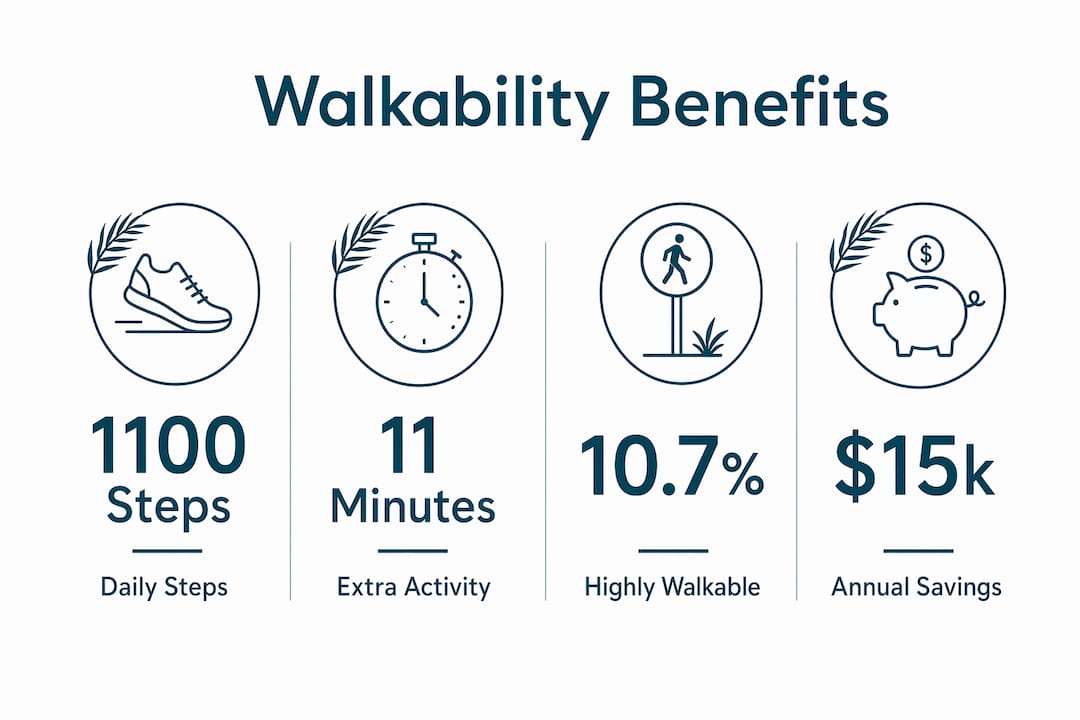
Moving to a walkable city adds an average of 1,100 steps to a person’s daily count, equal to 11 extra minutes of moderate-to-vigorous activity. That gain happens without any change in motivation or intention. The built environment drives the behavior.
The scale of that impact becomes clearer when you look at population data. If U.S. cities reached a walkability score of 78, residents would gain 24 extra activity minutes weekly, enabling 11.2% more Americans to meet federal aerobic guidelines. That is a public health shift achieved through urban design, not personal discipline.
Residents in walkable towns walk 75 minutes more per week than those in car-dependent areas. That difference reduces obesity risk, lowers blood pressure, and supports cardiovascular health over time.
- Daily steps increase without any deliberate exercise plan
- Chronic disease risk drops with consistent low-intensity walking
- Cardiovascular health improves through regular pedestrian activity
- Mental health benefits accumulate from outdoor exposure and movement
Pro Tip: Before signing a lease, walk the neighborhood at different times of day. A route that feels safe and interesting at noon may feel very different at 7 p.m. Your actual walking behavior will reflect those conditions.
Only 10.7% of Americans currently live in highly walkable neighborhoods, despite a majority wanting to. Each 1% increase in an area’s walkability correlates to a 0.42% increase in neighborhood walking. That relationship is consistent and measurable. Choosing a walkable address is one of the most direct health decisions a renter can make.
How walkable design builds social connection
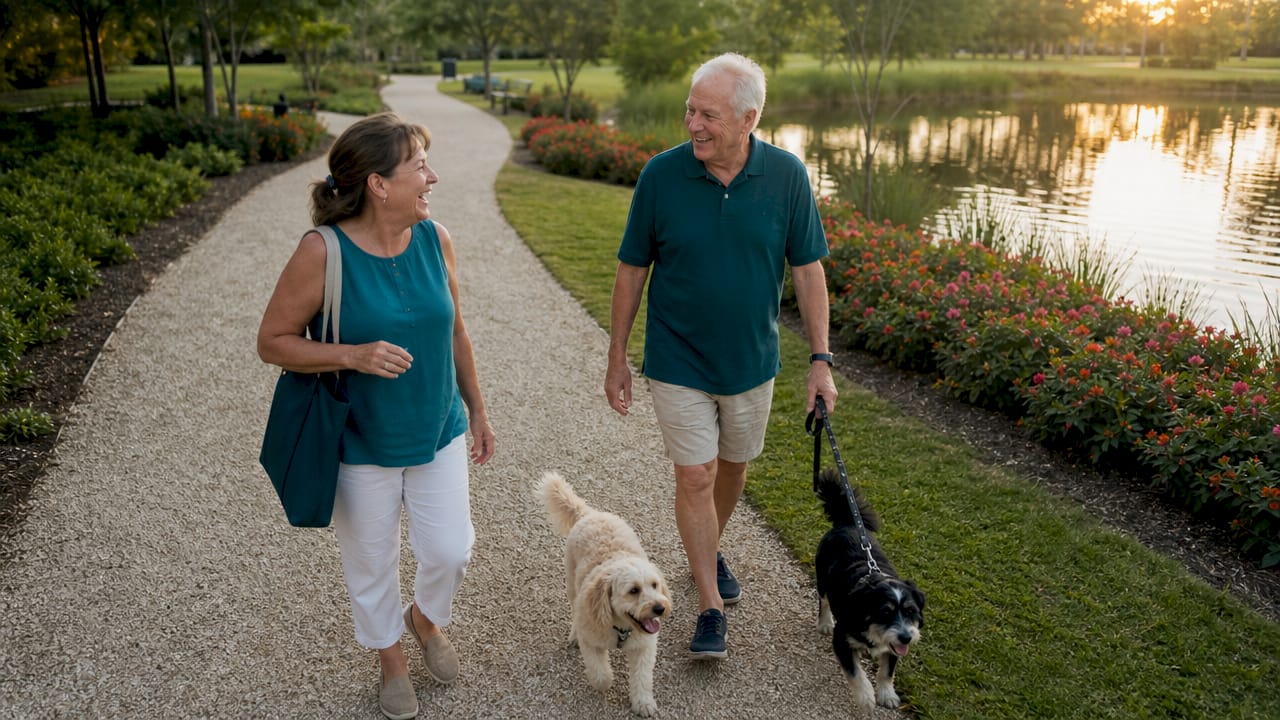
Car-centric infrastructure cuts off the casual encounters that build community. When you drive everywhere, you skip the sidewalk conversations, the nod at the coffee shop, the chat with a neighbor walking their dog. Walkable design restores those moments by putting people in shared physical space.
“Transit density and walkability create opportunities for small conversations that enrich the social fabric. This is particularly important for older adults without vehicles, who rely on walkable environments for daily social contact.” — Transportation for America
The social gains from walkability are not just anecdotal. Physical proximity during walking and transit use lowers loneliness and supports mental health. That effect is passive. You do not have to join a club or attend an event. You just have to live in a place where people move through shared space on foot.
For pet owners, this dynamic is especially strong. Dog walks create a built-in social ritual. A walkable neighborhood with parks, sidewalks, and active storefronts turns a daily obligation into a genuine community experience. The advantages of walkable communities for pet owners extend well beyond convenience.
Design features that support social walkability include:
- Active storefronts at street level that invite browsing and stopping
- Parks and plazas that give people a reason to linger
- Wide sidewalks that allow two people to walk side by side
- Benches and seating that make pausing feel natural
- Mixed-use zoning that puts residents near shops, cafes, and services
Students and young professionals also benefit from the informal networking that walkable neighborhoods enable. Proximity to coffee shops, coworking spaces, and transit hubs creates low-effort opportunities for connection that car-dependent suburbs simply cannot replicate.
Environmental and economic benefits of walkable areas
Walkable neighborhoods reduce car dependence, and that reduction has measurable environmental and financial consequences. Fewer car trips mean lower fuel costs, reduced emissions, and less traffic congestion. Neighborhood design explains 25%–41% of the environmental and social costs attributed to suburbanization. That is a significant share driven entirely by layout decisions, not individual behavior.
Pro Tip: Use a neighborhood’s Walk Score as a starting filter when apartment hunting. A score above 70 generally signals that daily errands are walkable. Pair that with a personal site visit to confirm the quality of the pedestrian experience.
The economic case for walkability is equally strong. Walkable areas consistently show higher property values and stronger commercial performance. Renters in walkable neighborhoods often spend less on transportation, which offsets higher rent costs in desirable areas. For young professionals and students managing tight budgets, that trade-off frequently favors the walkable location.
| Factor | Car-dependent area | Walkable area |
|---|---|---|
| Monthly transportation cost | High (car payments, fuel, insurance) | Lower (transit, walking) |
| Physical activity | Requires deliberate effort | Built into daily routine |
| Social interaction | Limited to planned events | Frequent and spontaneous |
| Environmental impact | Higher emissions per resident | Lower emissions per resident |
| Property value trend | Slower appreciation | Stronger appreciation |
Local businesses also benefit. Pedestrian traffic drives foot traffic into shops, cafes, and services. A walkable block generates more commercial activity per square foot than a strip mall surrounded by parking. That economic vitality feeds back into the neighborhood as better maintained streets, more services, and a stronger tax base.
Understanding walkability’s role in renting helps renters make financially sound decisions, not just lifestyle ones.
What makes a neighborhood truly walkable?
Walkability is not just about distance. A destination 10 minutes away on foot may feel far if the route is unpleasant, and close if it is engaging. Research from CU Boulder confirms that human-centric elements like trees, benches, and active storefronts motivate walking more than proximity alone. The pedestrian experience is the product.
Practical criteria for evaluating a neighborhood’s walkability:
- Sidewalk continuity. Gaps in footpaths force pedestrians into the street. A truly walkable area has unbroken, well-maintained sidewalks on every block.
- Crossing safety. Marked crosswalks, pedestrian signals, and traffic calming measures signal that the street was designed with walkers in mind.
- Destination density. Groceries, pharmacies, cafes, and transit stops within a 10-minute walk cover most daily needs without a car.
- Street-level interest. Blank walls and parking garages kill walking motivation. Active storefronts, murals, greenery, and varied architecture keep the walk engaging.
- Greenery and shade. Trees along sidewalks reduce heat, improve air quality, and make walking physically comfortable, especially in warm climates like South Florida.
- Lighting and safety. Well-lit streets with visible activity make evening walks feel safe, which directly affects how often residents actually walk.
The difference between a neighborhood that scores well on paper and one that feels genuinely walkable often comes down to street-level quality. Clustering amenities matters, but so does the experience of getting there. A route lined with trees, outdoor seating, and interesting shops produces more walking than a shorter route through a parking lot.
For renters evaluating options, the practical test is simple. Walk from the prospective apartment to the nearest grocery store, coffee shop, and park. Note what you pass. If the walk feels pleasant and safe, the neighborhood will support an active, connected lifestyle.
Key Takeaways
Walkable neighborhoods deliver health, social, environmental, and economic benefits that car-dependent areas cannot replicate, making location one of the most consequential decisions a renter makes.
| Point | Details |
|---|---|
| Health gains are automatic | Moving to a walkable area adds 1,100 daily steps without any change in personal motivation. |
| Social connection increases passively | Pedestrian-friendly design creates spontaneous encounters that reduce loneliness and build community. |
| Environmental costs drop | Walkable design accounts for 25%–41% of the environmental savings linked to reduced suburbanization. |
| Pedestrian experience drives behavior | Trees, benches, and active storefronts motivate walking more than short distances alone. |
| Financial trade-offs favor walkability | Lower transportation costs in walkable areas often offset higher rent in desirable locations. |
Walkability changed how I think about where to live
I used to evaluate apartments the way most people do: square footage, price, parking. Walkability was an afterthought, something I noticed only when a neighborhood had it. After spending time in genuinely pedestrian-friendly areas, I reversed that priority completely.
The health gains surprised me most. I did not start walking more because I decided to. I walked more because the environment made it the obvious choice. The coffee shop was two blocks away. The park was on the way back. The grocery run became a 15-minute walk instead of a 10-minute drive. Those small decisions compounded into a measurably more active week, without a single gym visit.
The social dimension took longer to notice. Walkable neighborhoods produce a kind of low-grade familiarity with the people around you. You see the same faces at the same corner. You learn the dog’s name before you learn the owner’s. That texture of daily life is invisible until you move somewhere car-dependent and realize it has disappeared.
For young professionals and students, I think the economic argument is underused. The math on transportation savings is real. A household that eliminates one car in a walkable neighborhood recovers thousands of dollars annually. That money goes toward rent, experiences, or savings. The walkable apartment that looks expensive on paper often costs less in total.
My honest recommendation: weight walkability at least as heavily as square footage when choosing where to live. The apartment you can walk out of is worth more than the one you have to drive away from.
— Ayman
Cynthiagardens: apartments built for walkable Boca Raton living
Boca Raton’s walkable streets, parks, and local amenities make it one of South Florida’s most livable cities for renters who want to move through their neighborhood on foot.
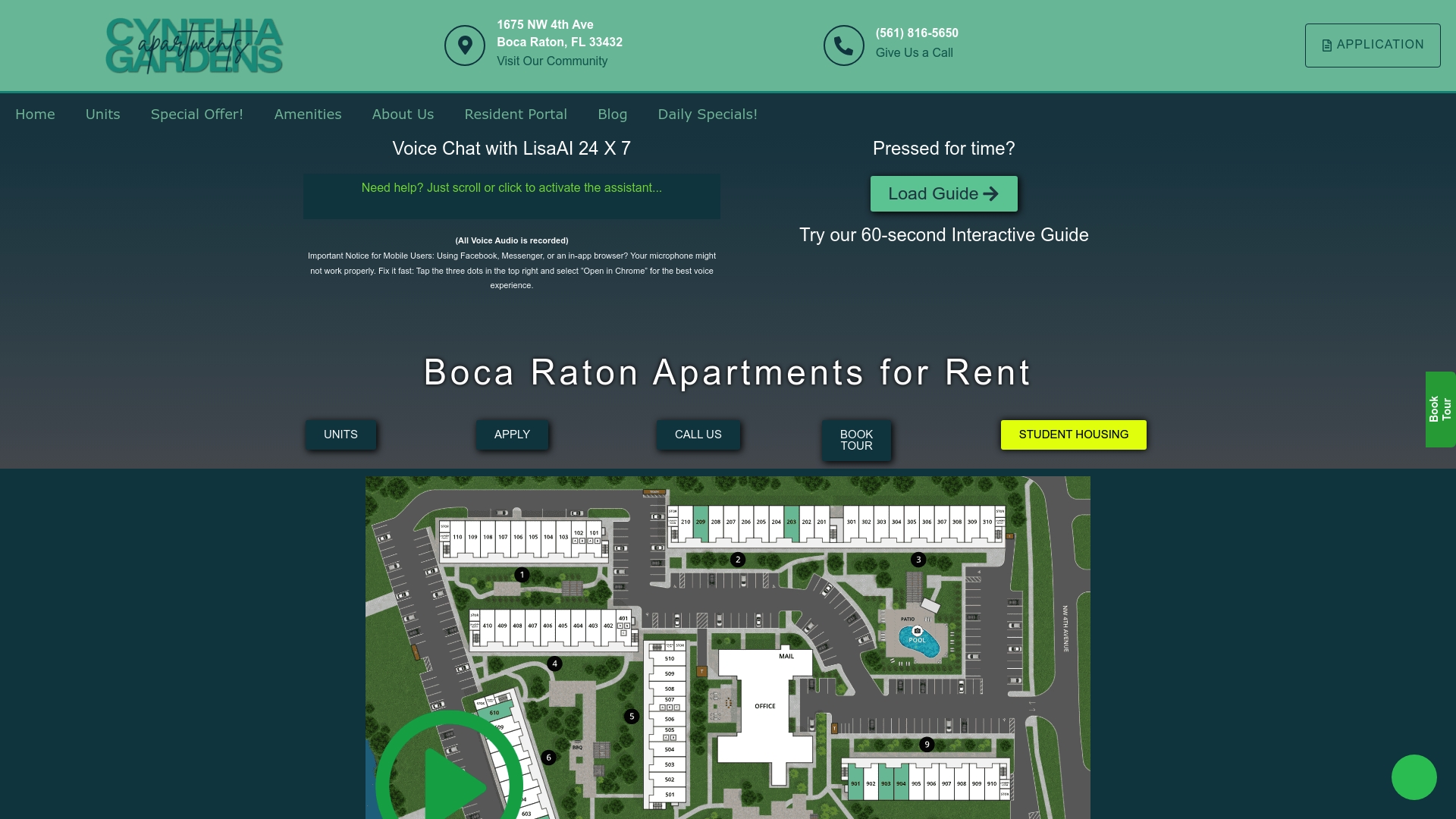
Cynthiagardens offers one-bedroom apartments in Boca Raton designed for young professionals, students, and pet owners who want the lifestyle advantages that walkable areas deliver. The community features transparent pricing with no hidden fees, pet-friendly policies, and a tech-forward leasing experience that includes virtual tours, AI chat support, and an interactive property map. Browse current available apartments and find the right fit for your lifestyle without the guesswork of a traditional search.
FAQ
What is a walkable neighborhood?
A walkable neighborhood is a residential area where daily destinations like grocery stores, parks, cafes, and transit stops are reachable on foot within a reasonable distance, typically 10 minutes or less.
How do walkable neighborhoods improve health?
Moving to a walkable area adds an average of 1,100 daily steps and 11 minutes of moderate physical activity, with residents in walkable towns walking 75 minutes more per week than those in car-dependent areas.
Are walkable neighborhoods better for pet owners?
Walkable neighborhoods give pet owners safe, interesting routes for daily walks and access to parks, which turns routine dog walks into social and physical activity that benefits both owner and pet.
Do walkable areas cost more to live in?
Walkable neighborhoods often carry higher rents, but lower transportation costs frequently offset that difference. Households that reduce or eliminate car ownership in walkable areas recover significant monthly expenses.
How can I tell if a neighborhood is truly walkable?
Walk from the prospective address to the nearest grocery store, park, and coffee shop. Evaluate sidewalk continuity, crossing safety, street-level interest, and lighting. A high Walk Score is a useful starting filter, but a personal site visit confirms the actual pedestrian experience.
Recommended
- The Role of Walkability in Renting: What Renters Need to Know
- How to Find the Perfect Apartment in Your Neighborhood – Luxury Apartments for Rent in Boca Raton | Premium Boca Raton Apartments | Aapartments Boca Raton
- Why choose community amenities for better apartment living
- The Hidden Benefits of Choosing Apartments with Gardens: More Than Just Greenery – Luxury Apartments for Rent in Boca Raton | Premium Boca Raton Apartments | Aapartments Boca Raton