Cynthia Gardens is a residential apartment community in Boca Raton, Florida, offering quiet, garden-style living near Florida Atlantic University, Mizner Park, and Boca Raton’s beaches at 1675 NW 4th Ave, Boca Raton, FL 33432.
Table of Contents
- How to Downsize From House to Apartment: A Practical Roadmap
- Measure Your New Space and Create a Floor Plan
- How to Declutter Before Moving: A Room-by-Room Approach
- Emotional Challenges of Downsizing and Managing the Transition
- Furniture for Small Apartments: Selection and Placement
- Downsizing Checklist for Seniors and Accessibility Considerations
- Selling, Donating, and Managing What Won’t Fit
- Planning Your Move Timeline and Logistics
How to Downsize From House to Apartment: Step-by-Step Guide
Last Updated: June 29, 2026
Downsizing from house to apartment is a significant lifestyle transition requiring careful planning and emotional preparation. Whether you’re seeking maintenance-free living, downsizing for retirement, or embracing minimalism, this process goes beyond moving boxes, it’s about reimagining your entire living experience.
What You’ll Need Before Starting
Gather practical tools: a measuring tape (at least 25 feet), graph paper or a digital floor planning tool, a notebook for tracking inventory, and a camera or smartphone for documenting belongings. Keep measurements, floor plans, and photos in one organized folder.
Identify key decision-makers early. If moving with others, establish clear communication about what stays and what goes. Enlist an objective friend, family member, or professional organizer to help you make clearer decisions about what serves your new lifestyle versus what you’re keeping out of guilt.
Research your destination thoroughly. Understanding your new apartment‘s specific constraints, ceiling heights, closet dimensions, utility access, and lease restrictions, shapes every subsequent decision about what you can realistically bring.
Start your downsizing project 8-12 weeks before your [target move date](/60-day-notice-to-vacate-letter/). Rushing leads to poor decisions and unnecessary stress.
Measure Your New Space and Create a Floor Plan
Before deciding what furniture to keep, get precise measurements of your new apartment. This prevents the heartbreak of arriving with a sofa that won’t fit through the door.
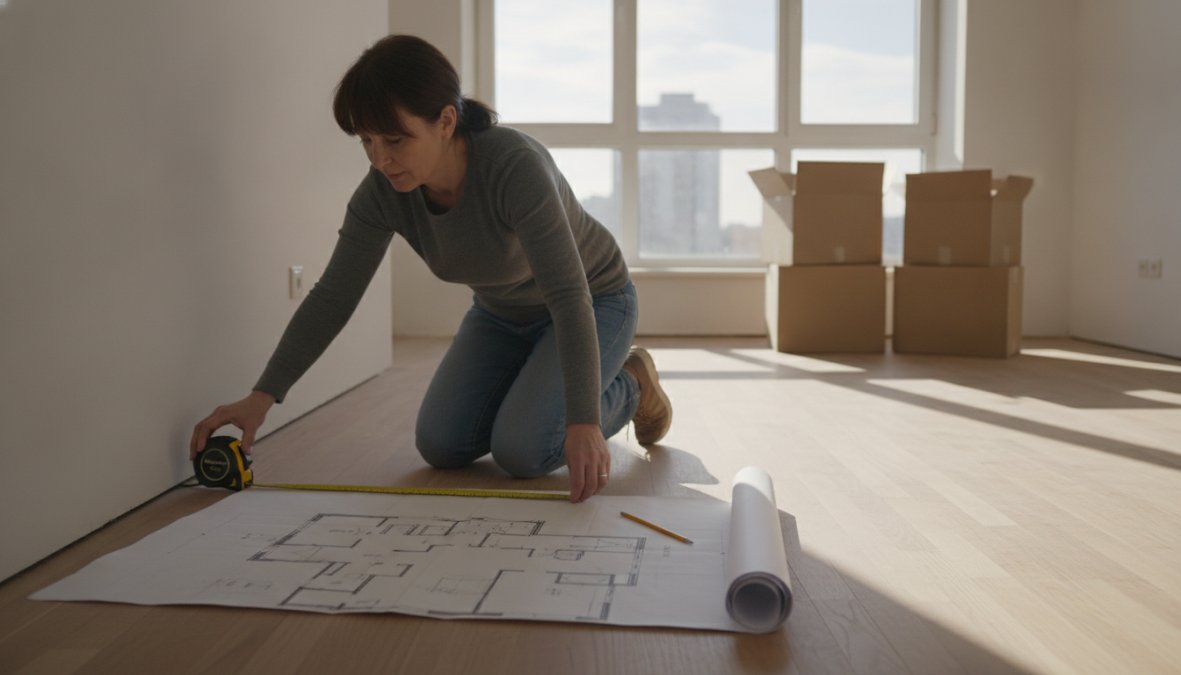
Measure every room, noting doorway widths, ceiling heights, window locations, electrical outlets, and permanent fixtures. Pay special attention to hallways and stairwells, these often limit large furniture movement.
Create a scaled floor plan using graph paper or free tools like Floorplanner or RoomSketcher. Mark all measurements precisely, including door swing radius and appliance clearance. Measure your current furniture too: length, width, height, and depth for pieces you’re considering keeping.
Take photos and videos of your new apartment from multiple angles at different times of day. These visual references help you visualize furniture placement and understand how natural light affects the space.
The gap between house and apartment square footage is usually 40-60%, meaning you’ll need to [reduce belongings by roughly half](/small-apartment-organization-ideas/). Use this as your starting benchmark.
How to Declutter Before Moving: A Room-by-Room Approach
Decluttering prevents paying to move items you don’t need. Start with the easiest room first, typically a guest bedroom, office, or garage. Success in lower-stakes spaces builds momentum for harder decisions later.
Work systematically through each room, sorting items into four categories: keep, donate, sell, and trash. Be ruthless. If you haven’t used something in a year and it doesn’t serve your new lifestyle, it goes.
Ask yourself: Does this item serve my daily life? Does it bring me joy or have genuine sentimental value? Will I realistically use this in my new apartment? If you answer no to all three, it doesn’t make the cut.
For clothing, keep pieces you actually wear that fit your lifestyle. Apartment living means less storage, so you need a highly curated wardrobe. Kitchen items deserve special attention, most people keep far more tools than they use. Keep your most-used items and donate specialty gadgets you use once every three years.
Avoid keeping items “just in case” or for guests who rarely visit. Your new apartment isn’t designed to accommodate occasional visitors’ needs, it’s designed for your daily life. Donate that extra bed and invest in a quality air mattress if guests stay over occasionally.
The Essential Items Framework
For each category of possessions, ask three questions: Does this item serve a daily or weekly function? Does it have genuine emotional or sentimental value? Will this item work in my new apartment’s space and lifestyle?
| Item Category | Keep If | Consider Donating If |
|---|---|---|
| Furniture | Use daily, fits new space, good condition | Rarely used, doesn’t fit layout, damaged |
| Kitchen tools | Use monthly or more, fits storage | Use once yearly, broken, redundant |
| Clothing | Wear regularly, fits well, matches lifestyle | Wrong size, unworn for 2+ years |
| Books | Read or reference, display intentionally | Kept for "someday," duplicates, outdated |
| Decorative items | Love the look, meaningful story, display space | Inherited obligation, dust collectors |
| Electronics | Use regularly, compatible with new setup | Outdated, broken, redundant versions |
Digital Decluttering and Downsizing Paperwork
Apartment living with limited storage makes digital decluttering essential. Create a digital filing system on your computer or cloud storage. Scan important documents, deeds, insurance policies, medical records, financial statements, rather than keeping paper copies.
Set up folders organized by category: financial, medical, legal, household, and personal. Digitize photos and important papers using a smartphone scanner app like Adobe Scan or Scanbot. Store everything in cloud storage so you can access documents from anywhere.
For physical paperwork you must keep, use a small filing cabinet or storage box. Shred or recycle everything else. Create a "household manual" document containing utility account numbers, appliance model numbers, warranty information, and contractor contacts. Store this securely in cloud storage.
Emotional Challenges of Downsizing and Managing the Transition
The physical logistics of downsizing are straightforward. The emotional challenges catch most people off guard.
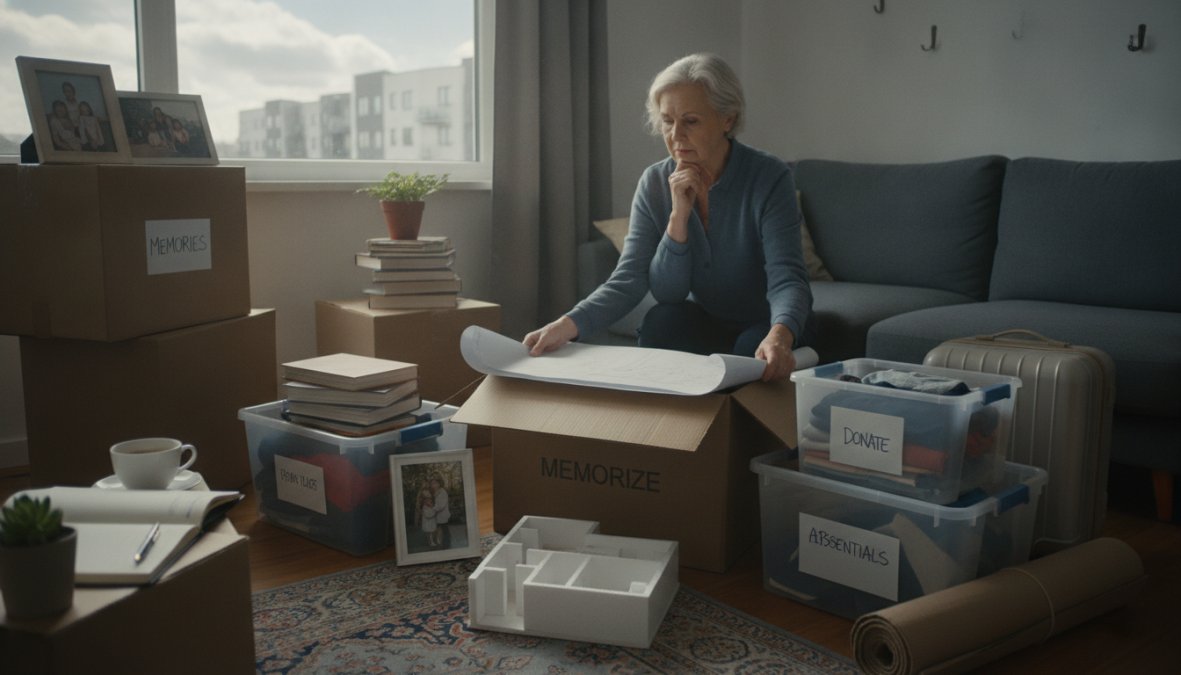
Your house likely holds decades of memories and represents significant investment of time, money, and emotional energy. Letting go triggers grief that many people don’t anticipate. This is legitimate. Acknowledge it rather than pushing through it.
Many people experience "identity disruption." Your house was an extension of your identity, where you raised children, hosted gatherings, built a life. An apartment can feel like a step backward. Reframe this deliberately. You’re not losing something; you’re gaining freedom, lower maintenance, and often a more vibrant location with better amenities.
Sentimental items cause the most friction. You don’t need to keep everything to honor memories. Take photos of sentimental items before donating them. Create a digital photo album or scrapbook that preserves the memory without requiring storage space.
The transition period itself is disorienting. Even if excited about your new apartment, the first few weeks feel strange. This is normal and temporary. Give yourself grace during this adjustment period, typically 4-6 weeks before your new apartment feels like home.
Stay connected to community during this transition. Make intentional effort to join clubs, volunteer, or attend community events in your new area. These social anchors help your new space feel like home faster.
Furniture for Small Apartments: Selection and Placement
Downsizing demands a complete rethinking of your furniture strategy. You can’t simply shrink your current collection; you need to be intentional about every piece.
Prioritize multi-functional furniture. A storage ottoman serves as seating, a footrest, and hidden storage. A coffee table with shelves provides surface space and organization. A bed with drawers creates storage where there otherwise wouldn’t be any. Every piece should serve at least two purposes.
Scale matters dramatically. Measure your new space first, then shop for pieces sized appropriately. Many retailers now offer "apartment-sized" collections.
Vertical storage becomes your best friend. Tall bookcases, wall-mounted shelving, and loft beds maximize height. Choose furniture with exposed legs rather than skirted pieces, this creates visual lightness and makes rooms feel larger. Neutral colors in furniture make apartments feel larger and more cohesive. Add personality through artwork, textiles, and accessories.
Visualizing Furniture Layout Before Moving
The biggest mistake is arranging furniture the same way in your new apartment as in your house. Experiment with different layouts before moving day.
Use your scaled floor plan and cut out paper representations of furniture pieces at the same scale. Move them around to test different configurations. Alternatively, use digital tools like RoomSketcher or Wayfair’s room planner, which show 3D renderings.
Visit your new apartment multiple times at different times of day to understand how natural light changes. Test how large pieces navigate tight spaces, some furniture might need disassembly to fit through doorways.
Consider traffic flow. Make sure your layout allows people to move through the space without constantly navigating around furniture. Open pathways make apartments feel larger and more livable.
The best apartment furniture layouts create defined zones, sleeping, living, work, even when all zones exist in the same open space. This psychological separation makes apartments feel larger and more organized.
Downsizing Checklist for Seniors and Accessibility Considerations
Seniors downsizing face unique considerations beyond typical downsizing challenges. Accessibility, safety, and maintaining independence should shape every decision.
Evaluate your new apartment’s accessibility features before committing. Check for elevator access, ground-floor options, or minimal stairs. Hallways should be wide enough for walkers or wheelchairs. Bathrooms should have grab bars or space to install them.
Lighting becomes increasingly important with age. Apartments with abundant natural light and good artificial lighting reduce fall risks and support better sleep-wake cycles. Test lighting at different times of day.
Choose furniture that supports independence. Beds at the right height make getting up easier. Chairs with firm seats and armrests provide support. Storage should be at accessible heights.
Proximity to services matters for seniors. Being near grocery stores, pharmacies, medical offices, and public transportation supports independent living.
Plan for aging in place. Your apartment should work for you not just today but for the next 5-10 years as your mobility or health needs change.
| Accessibility Consideration | Why It Matters | Action Items |
|---|---|---|
| Elevator/ground floor | Reduces fall risk, maintains independence | Tour building, test elevators, check stairs |
| Grab bars in bathroom | Prevents falls, supports safety | Verify installation or space to add them |
| Counter height accessibility | Reduces strain on back and joints | Check kitchen layout, test counter heights |
| Natural light | Supports circadian rhythm, reduces falls | Visit at different times of day |
| Proximity to services | Enables independent living | Map nearby healthcare, grocery, pharmacy |
| Furniture height/firmness | Supports getting up and down safely | Test seating before purchasing |
Selling, Donating, and Managing What Won’t Fit
Once you’ve identified what doesn’t fit, you have three options: sell it, donate it, or discard it.
Selling items makes sense for furniture in good condition, electronics, and collectibles. Facebook Marketplace and Craigslist are free and reach local buyers. Expect to receive 30-50% of the original purchase price for most items.
Donating items is faster and offers tax deductions. Goodwill, The Salvation Army, and local charities accept most household items. Many offer free pickup for large furniture. Keep receipts and take photos for tax purposes.
Discarding items is necessary for broken or unusable things. Check local regulations for bulk trash pickup. Recycling centers accept electronics and materials separately from regular trash.
Start the selling and donating process 8-10 weeks before your move. This timeline allows you to sell items without rushing, donate what doesn’t sell, and discard what’s left.
Storage Solutions and When to Use a Storage Unit
Storage units are rarely the right answer. The average climate-controlled unit costs $100-200 per month, adding up to $1,200-2,400 annually. Over five years, that’s $6,000-12,000 spent storing items you didn’t want enough to keep in your apartment.
Storage units also create a false sense of control. Items stay there indefinitely because they’re out of sight and out of mind.
The only legitimate reason to use a storage unit during downsizing is if your move timeline is compressed and you need to vacate your house before your new apartment is ready. Rent for 1-2 months maximum as a bridge solution, not permanently.
Avoid storing furniture “just in case.” This mindset prevents you from committing to your new apartment and actually settling into it. If you think you might need that extra dining table someday, donate it. You can buy or borrow one later if needed.
Planning Your Move Timeline and Logistics
A successful move requires careful timeline planning. Start 12-16 weeks before your target move date.
Weeks 1-4: Planning and Measuring
Get apartment measurements and floor plan. Measure current furniture. Research moving companies and get quotes. Start decluttering easier rooms.
Weeks 5-8: Decluttering and Downsizing
Continue decluttering all rooms. List items for sale online. Arrange donations. Measure doorways and hallways in your new apartment. Create furniture layout plan.
Weeks 9-12: Preparation
Finalize furniture layout decisions. Purchase any new furniture needed. Confirm moving company booking. Notify utilities about move date. Update address with important institutions. Start packing non-essential items.
Weeks 13-16: Final Preparations
Complete all decluttering and donations. Deep clean your current house. Pack remaining items. Confirm all moving logistics. Do a final walkthrough of your new apartment.
This timeline prevents rushing, allows you to sell items without pressure, and gives you time to mentally adjust.
Lease vs. Ownership Logistics
Moving from a house you own to an apartment you rent involves different logistics.
If selling your house, coordinate the closing date with your apartment move-in date carefully. Ideally, arrange a 1-2 week overlap where you have access to both spaces.
Review your new lease carefully before signing. Understand pet policies, guest policies, noise restrictions, and what modifications you can make. Get renters insurance immediately after signing your lease. It’s inexpensive, typically $15-25 per month, and covers your belongings and liability.
Document the apartment’s condition before moving in. Take photos and video of any existing damage, stains, or wear. Submit these with your lease to avoid being charged for pre-existing damage when you move out.
Utility Transfer and Infrastructure Differences
Contact your utility providers 2-3 weeks before your move. Schedule disconnection at your current address and connection at your new address for the same day if possible.
Apartment utilities often work differently than house utilities. You might share HVAC systems or have master metering where the landlord pays for utilities and includes them in rent.
Noise levels are dramatically different in apartments. You’ll hear neighbors’ footsteps, television, and conversations. Invest in sound-dampening rugs and curtains. Apartment living requires being more conscious of noise, especially during evening and early morning hours.
Internet and cable setup sometimes requires landlord approval. Contact your internet provider before moving to understand what’s available in your building.
Parking logistics change significantly if moving from a house with a driveway. Understand your parking situation, whether you have an assigned spot, general lot, or street parking. Clarify any parking costs before signing your lease.
Downsizing from house to apartment is one of the most transformative decisions you can make. The process demands honesty about what you actually need, courage to let go of what you don’t, and willingness to embrace a different lifestyle. While the logistics are manageable with proper planning, the emotional transition is where most people struggle.
At Cynthia Gardens in Boca Raton, we’ve designed our community specifically for people making this transition. Our modern apartments feature high-end finishes like stainless steel appliances and quartz countertops, maximizing functionality in thoughtfully sized spaces. Our maintenance-free living model eliminates the burden of home upkeep, while our resort-style pool and lush landscaped grounds provide lifestyle benefits that make apartment living genuinely appealing. Located just minutes from FAU and the beach, Cynthia Gardens offers the convenience and community that transform downsizing from a loss into an opportunity.
Schedule a tour today and discover how thoughtful apartment design makes apartment living your best choice.
Frequently Asked Questions
What is the best way to start downsizing for a move?
Begin by measuring your new apartment and creating a detailed floor plan with furniture placement. Then systematically declutter room by room, deciding which essential items to keep based on your new space's square footage. Create a moving checklist and set a realistic timeline, most people need 4-8 weeks to downsize from a house to apartment. Start with less emotionally attached items before tackling sentimental belongings.
How do I decide what to keep when moving to a smaller apartment?
Evaluate each item by asking: Does it fit my new floor plan? Do I use it regularly? Does it align with my minimalism goals for apartment living? Measure furniture dimensions against your floor space. Prioritize essential items that serve multiple functions. For sentimental pieces, take photos before donating or selling. Consider storage solutions like vertical shelving, but avoid overstuffing, apartment living requires intentional curation of belongings.
What should I do with furniture that won't fit in my apartment?
List items for sale online or contact a moving company about bulk pickup. Donate to local charities for a tax deduction. If you're unsure about keeping pieces, use a storage unit temporarily while you adapt to your new space. Some apartment communities, like those in Boca Raton, offer resident amenities that reduce furniture needs. Consider selling larger pieces and replacing with multi-functional, apartment-sized furniture that maximizes your floor space.
How do I handle the emotional challenges of downsizing from a house?
Acknowledge that leaving a family home is a significant lifestyle change. Take photos of meaningful spaces and items before letting them go. Focus on the benefits of apartment living, lower maintenance, easier utility management, and proximity to amenities. Set realistic expectations; downsizing is a process, not an overnight task. Consider the community aspect of apartment living, like resort-style pools and landscaped grounds, as part of your fresh start.
Explore more Cynthia Gardens resources: floorplans at Cynthia Gardens, News & Apartment Living Resource Center, contact the leasing team, or apartment rental FAQ.