
TL;DR:
- Flexible leases are shorter or more adaptable rental agreements that offer tenants exit options without heavy penalties. They include month-to-month, short-term fixed, and lease clauses with early termination, but often cost more and may include rent increases or automatic renewals. These leases suit renters with uncertain plans, such as job moves or housing transitions, and benefit from careful review of contract terms.
A flexible lease term is any rental agreement shorter or more adaptable than a standard 12-month fixed lease, giving renters the freedom to move or stay without being locked into a rigid contract. These agreements cover everything from month-to-month arrangements to short-term fixed leases of 3–6 months, plus fixed leases that include early termination or extension clauses. If your job, school schedule, or life plans could shift in the next year, understanding what is a flexible lease term could save you from costly penalties and unnecessary stress. Cynthiagardens, a modern apartment community in Boca Raton, Florida, offers lease options designed with exactly this kind of renter in mind.
What is a flexible lease term and how does it work?
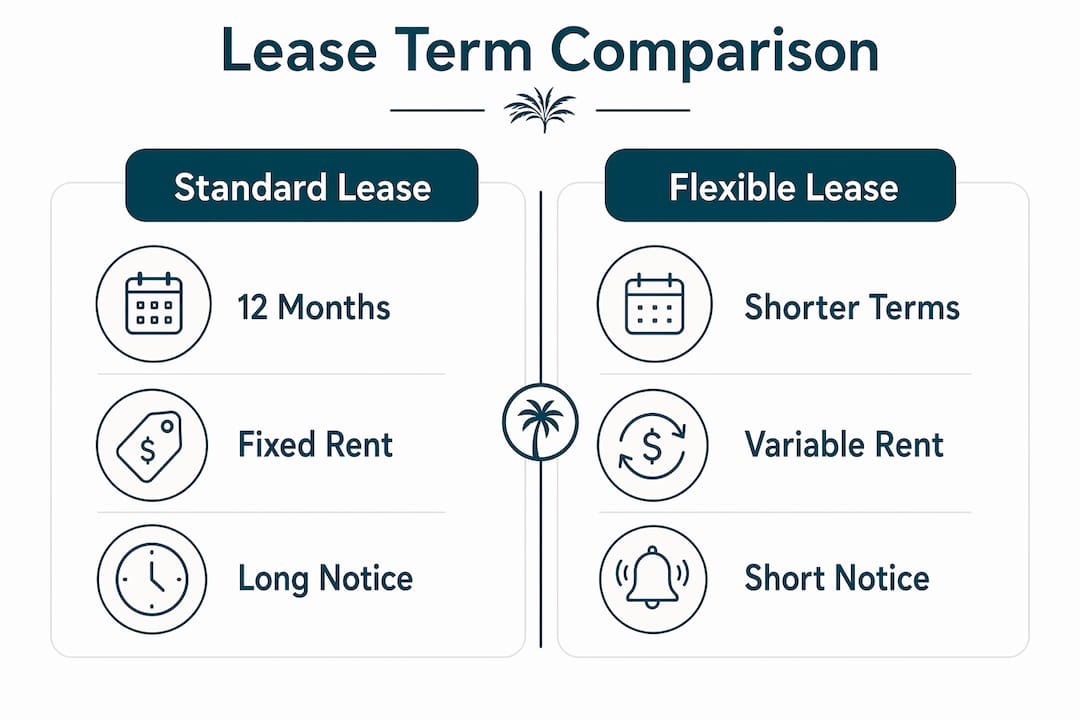
A flexible lease term is defined as any rental agreement that departs from the traditional fixed 12-month structure by offering shorter durations, adaptable renewal cycles, or built-in exit options. The industry also refers to these as flexible rental agreements or adaptable lease structures. The core feature that separates them from standard leases is the ability to end or modify the contract without heavy financial penalties.

Flexible leases typically allow ending a contract with 30–90 days’ notice, compared to fixed 12-month leases that often impose 1–3 months’ rent as an early termination fee. That difference is significant. A renter who needs to relocate for work can exit a flexible agreement cleanly, while breaking a fixed lease can cost thousands of dollars.
The three most common forms of flexible lease agreements are:
- Month-to-month leases: The lease renews monthly without a fixed end date, requiring typically 15–30 days’ notice to terminate.
- Short-term fixed leases: Set durations of 3–6 months with a defined end date, offering more predictability than month-to-month while still avoiding a full-year commitment.
- Fixed leases with flexible clauses: Standard 12-month leases that include negotiated early termination rights or extension options, giving renters a middle ground.
Here is a quick comparison of the main lease types:
| Lease Type | Typical Duration | Notice to Exit | Rent Stability |
|---|---|---|---|
| Standard fixed lease | 12 months | 1–3 months’ rent penalty | Locked for full term |
| Short-term fixed lease | 3–6 months | Per contract terms | Locked for short term |
| Month-to-month lease | Ongoing, monthly | 15–30 days | Can change with notice |
| Fixed lease with clauses | 12 months | Per negotiated terms | Largely stable |
What are the advantages and disadvantages of flexible lease terms?
Flexible leases trade long-term housing security and predictable rent for adaptability. That tradeoff works well for some renters and poorly for others. Knowing both sides helps you decide whether a flexible rental agreement fits your situation.
The advantages
- Freedom to move on short notice. A month-to-month lease lets you respond to a job offer, a breakup, or a family situation without paying a penalty.
- No long-term commitment. Short-term lease options work well for renters who are testing a new city or neighborhood before committing.
- Avoid costly early termination fees. Fixed leases often charge 1–3 months’ rent to break the contract early. Flexible leases eliminate or reduce that risk.
- Easier to align housing with life events. Waiting to close on a home purchase? A 3-month lease bridges that gap cleanly.
The disadvantages
- Higher monthly rent. Month-to-month leases often carry a “flexibility premium” of 20–40% above comparable fixed-term rates. That premium reflects the landlord’s higher vacancy and turnover risk.
- Rent can increase with short notice. Landlords may raise rent with as little as 30 days’ notice on month-to-month agreements, unlike fixed leases that lock in the rate for the full term.
- Less stability for budgeting. If your rent can change every month, financial planning becomes harder.
- Landlords may end the tenancy sooner. Month-to-month agreements give landlords the same short notice rights, meaning you could receive a notice to vacate with little warning.
Pro Tip: Calculate the total cost of a flexible lease over 6 months, including the premium, and compare it to a fixed-term lease with an early termination fee. The fixed lease often costs less if you stay longer than 4 months.
How do flexible leases fit different renter scenarios?
The best use of a flexible lease depends entirely on your situation. Renters with stable, long-term plans rarely benefit from paying the flexibility premium. But for renters in transition, the adaptability is worth the extra cost.
Here are the scenarios where flexible leases make the most sense:
- Job relocation or internship. You know you are moving to a city for 4–6 months but are unsure of the exact end date. A short-term fixed lease or month-to-month agreement covers you without locking you in.
- Waiting to buy a home. Your mortgage is in process, but closing dates shift. A flexible rental agreement lets you stay month-to-month until the deal closes.
- Testing a new neighborhood. Moving to Boca Raton from out of state? A 3-month lease lets you confirm the area fits your lifestyle before committing to a full year.
- Recovering from a major life change. Divorce, a family health situation, or a career shift can make a 12-month commitment feel impossible. A month-to-month lease removes that pressure.
- Students on academic calendars. A 9-month or semester-aligned lease matches school schedules better than a standard 12-month term.
Experienced renters often negotiate flexible provisions into fixed-term leases rather than signing pure month-to-month agreements. This hybrid approach locks in a stable monthly rate while adding an early termination or extension clause. The result is lower rent than a full month-to-month arrangement with most of the flexibility intact.
Pro Tip: When signing any lease, ask the landlord directly: “Can we add an early termination clause with 60 days’ notice?” Many landlords will agree, especially in slower rental markets. Get it in writing.
For renters navigating a job change or relocation, tech-savvy renting tips can also help you find and evaluate apartments faster, reducing the stress of a tight timeline.
What should renters watch for when signing a flexible lease?
Flexible leases contain specific clauses that can work against you if you do not read them carefully. The flexibility you expect may not be the flexibility the contract delivers.
The most critical items to check:
- Automatic renewal clauses. Automatic renewal clauses can bind renters to longer fixed terms if the notice-to-vacate deadline is missed. Mark that deadline in your calendar the day you sign.
- Notice period requirements. Some leases require 60 days’ notice even if they advertise as “flexible.” Confirm the exact number of days required to exit without penalty.
- Rent increase provisions. Month-to-month leases allow landlords to raise rent with as little as 30 days’ notice in many states. Check your local tenant protection laws for the minimum required notice in your area.
- Renewal terms. Some short-term leases automatically convert to 12-month fixed leases at expiration. Know what happens when your short-term period ends.
- Early termination fees. Even flexible leases sometimes include termination fees. Read the clause carefully to understand what triggers the fee and how much it costs.
Transparent lease agreements spell out every one of these terms clearly. If a lease document is vague about notice periods or renewal conditions, ask for clarification in writing before signing. Ambiguity in a lease almost always favors the landlord.
Property managers increasingly use flexible leasing models as a tool to maintain steady occupancy during market fluctuations. That means the flexibility is real, but it is priced and structured to protect the landlord’s revenue first. Reading the fine print protects your interests.
Key Takeaways
A flexible lease term gives renters adaptability at a cost, and understanding that tradeoff is the single most important step before signing.
| Point | Details |
|---|---|
| Flexible lease definition | Any rental agreement shorter or more adaptable than a standard 12-month fixed term. |
| Month-to-month premium | Monthly rent runs 20–40% higher than comparable fixed-term leases due to landlord turnover risk. |
| Notice periods vary | Exit notice requirements range from 15 to 90 days depending on lease type and local law. |
| Automatic renewals are a trap | Missed notice deadlines can lock renters into longer terms, eliminating the flexibility they paid for. |
| Hybrid leases save money | Negotiating early termination clauses into fixed leases combines rate stability with exit flexibility. |
Why flexible leases are misunderstood more than they are misused
I have watched renters sign month-to-month leases thinking they are getting the best of both worlds: freedom and fair rent. The freedom part is real. The fair rent part is not. The 20–40% flexibility premium is not a rounding error. Over six months, it can add up to the equivalent of a full month’s extra rent paid for the privilege of leaving early.
The renters who use flexible leases well are the ones who treat them as a specific tool for a specific window of time. They know exactly why they need flexibility, how long that window is, and what it will cost. They also read every clause before signing, not after a problem surfaces.
The more interesting trend I have noticed is the rise of the hybrid approach: negotiating flexible clauses into fixed-term leases. Most renters do not know this is possible. Most landlords will agree to it in a soft market. It is the single most underused tactic in renting, and it consistently delivers better outcomes than a pure month-to-month arrangement for anyone staying longer than three months.
The apartment lease vs. month-to-month comparison is worth studying before you commit to either structure. The right answer depends entirely on your timeline, not on which option sounds more appealing.
— Ayman
Flexible leasing at Cynthiagardens in Boca Raton
Cynthiagardens offers one-bedroom apartments in Boca Raton built for renters who need real options, not rigid contracts. Whether you are a young professional between assignments, a student on a semester schedule, or a pet owner who needs time to find the right fit, Cynthiagardens structures leasing around your timeline.
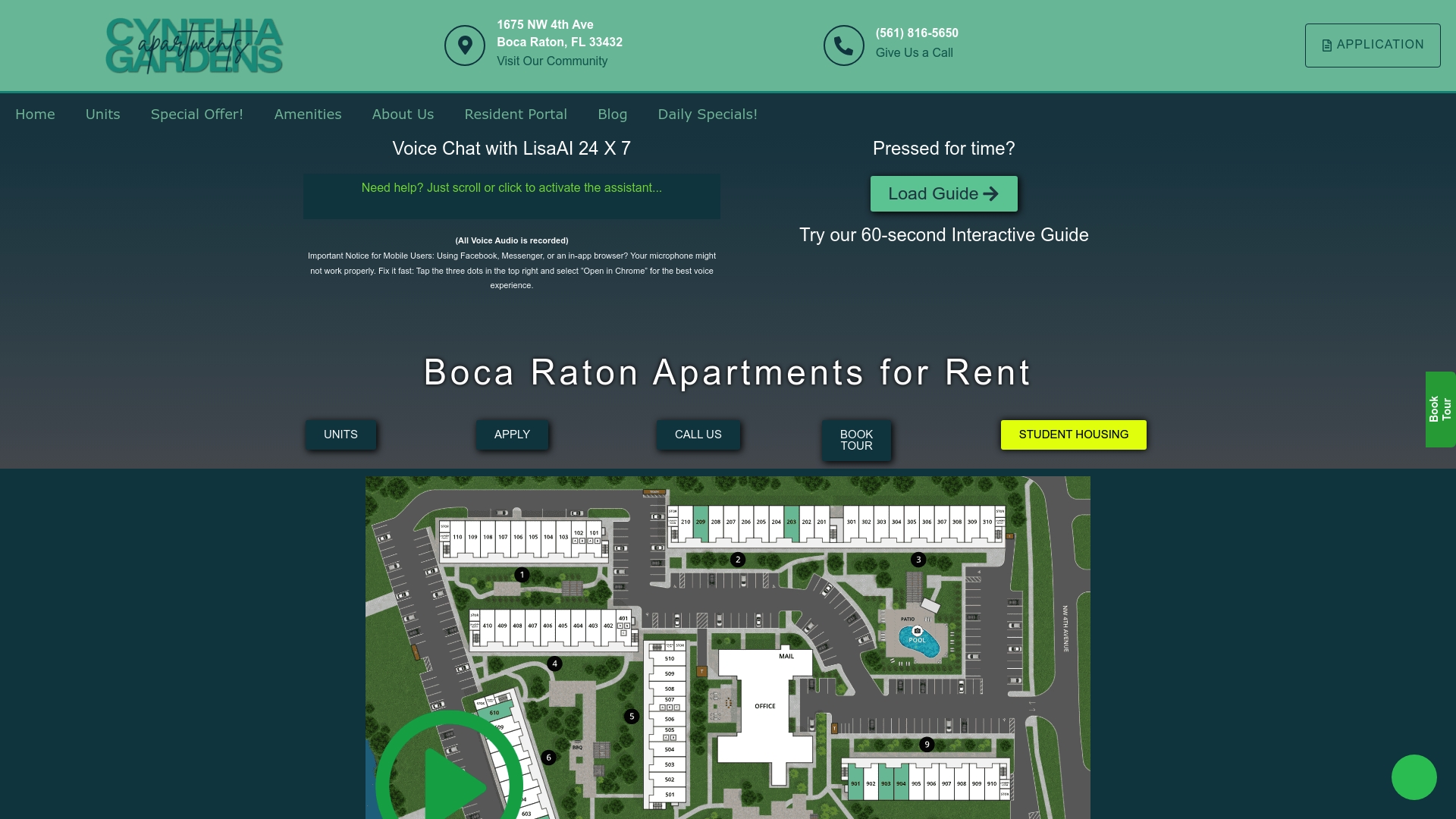
The community features transparent pricing with no hidden fees, AI chat support, virtual tours, and an interactive property map so you can evaluate your options quickly and confidently. Explore the full range of apartment styles and features at Cynthiagardens to find a lease structure that matches where you are in life right now.
FAQ
What is a flexible lease agreement?
A flexible lease agreement is any rental contract that allows shorter durations or easier exit options than a standard 12-month fixed lease, including month-to-month and short-term fixed arrangements.
How much more does a month-to-month lease cost?
Month-to-month leases typically cost 20–40% more per month than comparable fixed-term leases, reflecting the landlord’s higher vacancy and turnover risk.
Can a landlord raise rent on a flexible lease?
Yes. On month-to-month leases, landlords can raise rent with as little as 30 days’ notice in many states, unlike fixed leases that lock in the rate for the full term.
What is an automatic renewal clause in a lease?
An automatic renewal clause extends the lease for a new term if the renter does not submit written notice to vacate by a specific deadline. Missing that deadline can eliminate the flexibility the renter expected.
When does a flexible lease make the most sense?
Flexible leases work best for renters facing a job relocation, internship, home purchase delay, or other life transition where the exact move-out date is uncertain.