
TL;DR:
- Transparent lease agreements disclose all rental costs, fees, and obligations upfront, enabling accurate budgeting and comparison. New laws in Austin and San Francisco mandate standardized fee disclosures and itemized costs on the lease’s first page, protecting tenants from hidden charges. Evaluating leases early by requesting fee forms and checking for clear, itemized first-page costs ensures transparency before signing.
Transparent lease agreements are legally binding documents that clearly disclose all rental costs, fees, and tenant-landlord obligations before you sign, leaving no room for surprise charges after move-in. The role of transparent lease agreements has never been more relevant: 94% of renters believe fees should be clearly shown in listings, and new 2026 laws in cities like Austin and San Francisco are turning that expectation into a legal requirement. If you are apartment hunting right now, understanding what a transparent lease looks like, what it must contain, and how to verify one before you commit is the most practical thing you can do to protect your budget.
What the role of transparent lease agreements actually means
A transparent lease agreement, sometimes called a full-disclosure rental contract, is one that moves every cost from the fine print to the front page. The industry standard term for this practice is fee disclosure, and it covers base rent, fixed recurring charges, optional service fees, and all tenant obligations in one readable document. Transparency requirements move recurring fees from buried clauses to front-end disclosures specifically to reduce what regulators now call “hidden rent.”
The practical difference between a transparent lease and an opaque one is measurable. A non-transparent lease might list $1,400 per month as rent, then add $75 for pest control, $30 for trash, and $50 for a “community amenity fee” in separate addenda you receive on signing day. A transparent lease shows you $1,555 total monthly cost before you ever schedule a tour. That single shift in presentation changes your ability to compare apartments, set a real budget, and make a confident decision.
You can review a lease agreement explained simply to see what a well-structured document looks like before you start comparing offers.
What costs and terms should a transparent lease disclose?
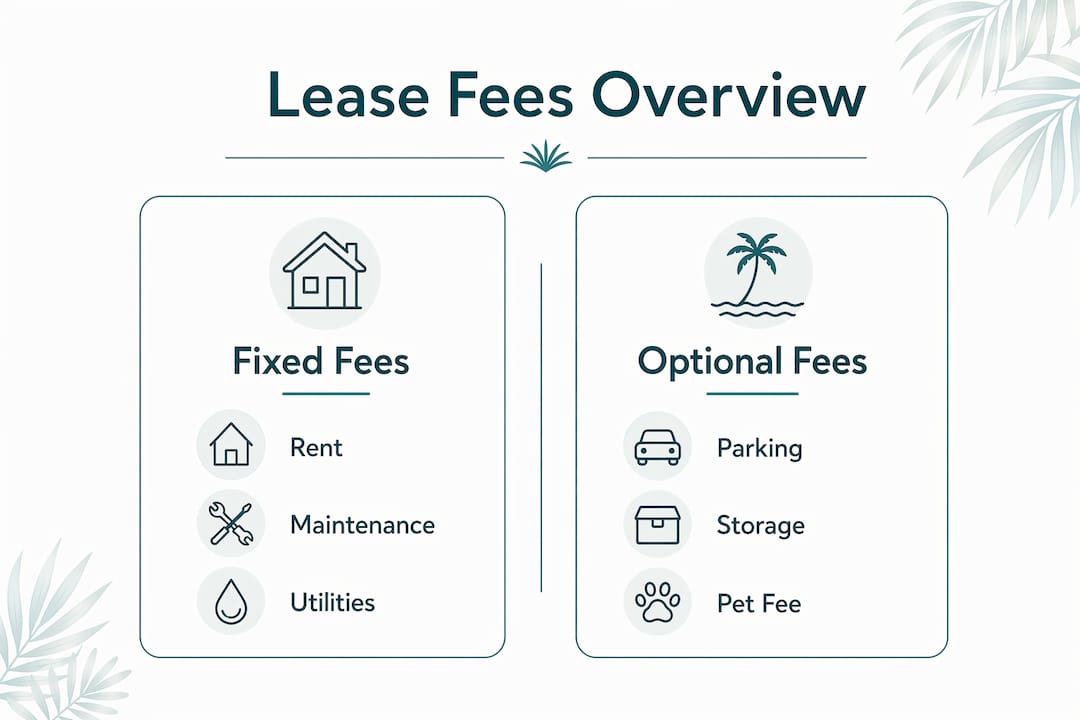
A transparent lease discloses costs in two clear categories: fixed recurring fees and optional fees. Knowing the difference protects you from underestimating your actual monthly payment.
Fixed recurring fees are charges you pay every month regardless of your behavior. These include:
- Base rent (the headline number)
- Pest control charges billed separately from rent
- Trash and recycling fees
- Pet rent (a flat monthly charge per pet, distinct from a one-time pet deposit)
- Mandatory amenity or community fees
- Utility billing administration fees
Optional fees are charges tied to specific services or situations. These include parking upgrades, storage unit rentals, late payment fees, and move-in or move-out scheduling fees. A transparent lease lists both categories but labels them clearly so you know which costs are unavoidable.
Fixed recurring fees are the primary drivers of monthly affordability, which is why Austin’s 2026 ordinance specifically targets them as the first category requiring standardized disclosure. That focus matters because fixed fees are the ones that destroy a budget. Optional fees hurt when they surprise you, but fixed fees hit you every single month.
Beyond costs, a transparent lease also spells out tenant duties (lawn care, pest reporting, renter’s insurance requirements) and landlord responsibilities (maintenance timelines, notice periods before entry). When both sides of the obligation are written in plain language, disputes drop significantly.
Pro Tip: Request an itemized fee schedule in writing before you tour an apartment. This creates a paper trail and signals to the landlord that you know your rights under current disclosure laws.
How 2026 laws are reshaping lease transparency requirements
Two major regulatory developments in 2026 have set a new baseline for what renters can legally expect from a lease agreement.

Austin’s ordinance, effective October 1, 2026, requires landlords operating 50 or more units to disclose all rental fees in a standardized form before signing. The ordinance targets “junk fees,” defined as mandatory monthly charges like pest control and trash collection that appear outside the advertised base rent. A second phase takes effect January 2027, tightening advertising practices so that listed prices must reflect total monthly costs. Austin’s cross-department process reviewed federal activity and existing legal cases to build formalized disclosure processes that are consistent across property types.
San Francisco’s proposed No Hidden Rent Act goes further. Under that proposal, total estimated rental costs must appear in listings, and itemized fees must appear on the lease’s first page. Application and screening fees require upfront disclosure. The most tenant-protective provision: renters can terminate a lease without penalty within six months if a landlord violates the disclosure rules.
| City / Jurisdiction | Key requirement | Effective date |
|---|---|---|
| Austin, TX | Standardized fee disclosure form for 50+ unit properties | October 1, 2026 |
| Austin, TX (phase 2) | Fee-inclusive advertising standards | January 2027 |
| San Francisco, CA (proposed) | Itemized fees on lease page one; listing total cost disclosure | Pending passage |
“Fee transparency is evolving from mere legal compliance into a critical business and reputational strategy for landlords.” — Multi-Housing News
These laws reflect a broader federal and state trend. The Consumer Financial Protection Bureau and the Federal Trade Commission have both flagged rental junk fees as a consumer harm priority, and several states are advancing their own disclosure bills. The direction is clear: full upfront disclosure is becoming the floor, not the ceiling.
What are the real benefits of transparent lease agreements?
The benefits of transparent rentals extend to both sides of the lease, though renters feel them most directly.
For you as a renter, the most immediate benefit is accurate budgeting. Nearly 60% of renters say seeing fees and lease terms upfront is essential to their leasing decision. When you know the true monthly cost before signing, you can compare two apartments on equal terms instead of discovering a $150 monthly fee gap after move-in. Hidden fees cause the sharpest financial stress for low and moderate income households, where a $75 monthly charge that was not disclosed represents a real budget disruption.
For landlords and property managers, transparent fee disclosures produce higher reputation scores and fewer disputes, improving resident satisfaction and retention. That is not just a feel-good outcome. In a competitive rental market, a property with a track record of honest pricing attracts better-qualified applicants and loses fewer residents at renewal time.
The trust dynamic also matters. When a landlord discloses every charge before you ask, it signals that the relationship will be handled professionally. When you have to dig through addenda to find what you actually owe, the relationship starts with suspicion. Transparent leases replace that suspicion with a clear, shared understanding of the agreement.
You can explore how transparent pricing benefits renters in practical terms before you start your search.
How to evaluate a lease for transparency before you sign
Evaluating a lease for transparency is a skill you can develop in under 30 minutes with the right checklist. Follow these steps before you commit to any rental.
-
Request the fee disclosure form before touring. Under Austin’s 2026 ordinance and similar laws, landlords with large portfolios must provide this form on request. Demand fee disclosure forms before tours or applications to establish a paper trail aligned with current transparency requirements.
-
Check the lease’s first page for a total monthly cost figure. A transparent lease, modeled on San Francisco’s proposed standard, places itemized fees on page one so you see the full picture immediately. If the first page shows only base rent, ask for a complete fee schedule in writing.
-
Separate fixed recurring fees from optional fees. Write out every fixed charge and add them to the base rent. That sum is your true monthly minimum. Optional fees are secondary. Effective disclosure requires separating fixed recurring fees from optional or situational charges to give you a clear affordability picture.
-
Verify landlord obligations in writing. Confirm that maintenance response timelines, notice-before-entry periods, and utility responsibilities are stated explicitly. Vague language like “reasonable time” is a red flag.
-
Ask directly about any fee not listed. If you see a line item labeled “administrative fee” or “processing fee” without a clear explanation, ask what it covers and whether it is mandatory. A landlord who cannot explain a fee in plain language is a landlord worth avoiding.
Pro Tip: Use the hidden rental fees guide from Cynthiagardens to cross-check your lease against common fee patterns in the Boca Raton market before signing.
Key takeaways
Transparent lease agreements protect renters by disclosing every fixed cost, obligation, and fee upfront, making accurate budgeting and fair comparison possible before you sign.
| Point | Details |
|---|---|
| Definition matters | A transparent lease discloses all fixed and optional fees before signing, not after. |
| 2026 laws set new standards | Austin’s October 2026 ordinance and SF’s No Hidden Rent Act define the new legal floor for disclosure. |
| Renter demand is high | 94% of renters expect fees to appear clearly in listings, making transparency a market expectation. |
| Benefits run both ways | Landlords with transparent leases earn higher satisfaction scores and retain residents longer. |
| Evaluate before you sign | Request fee disclosure forms, check page one for total costs, and separate fixed from optional fees. |
Why lease transparency is the single most underrated renter protection
I have reviewed hundreds of lease agreements over the years, and the pattern is consistent: the leases that cause the most disputes are not the ones with the highest rent. They are the ones where the true monthly cost was never clearly stated. A renter who signs a $1,400 lease and ends up paying $1,650 does not feel cheated because the rent was high. They feel cheated because they were not told.
The 2026 regulatory push in Austin and San Francisco is significant not because it invents a new concept, but because it forces landlords to do what good ones already do. Standardized disclosure forms and first-page fee schedules are not burdens on honest landlords. They are a floor that protects renters from the ones who are not honest.
What I find most encouraging is the shift in how landlords are responding to transparency requirements. The ones who treat disclosure as a competitive advantage, rather than a compliance cost, are the ones building long-term reputations. A property that shows you the full monthly cost before you ask is telling you something important about how it will treat you as a resident.
My advice: if a landlord resists providing a written fee schedule before your tour, treat that resistance as the most important data point in your apartment search. Transparency at the start of a lease relationship predicts transparency throughout it. The inverse is equally true.
— Ayman
Find your next apartment with full fee clarity at Cynthiagardens
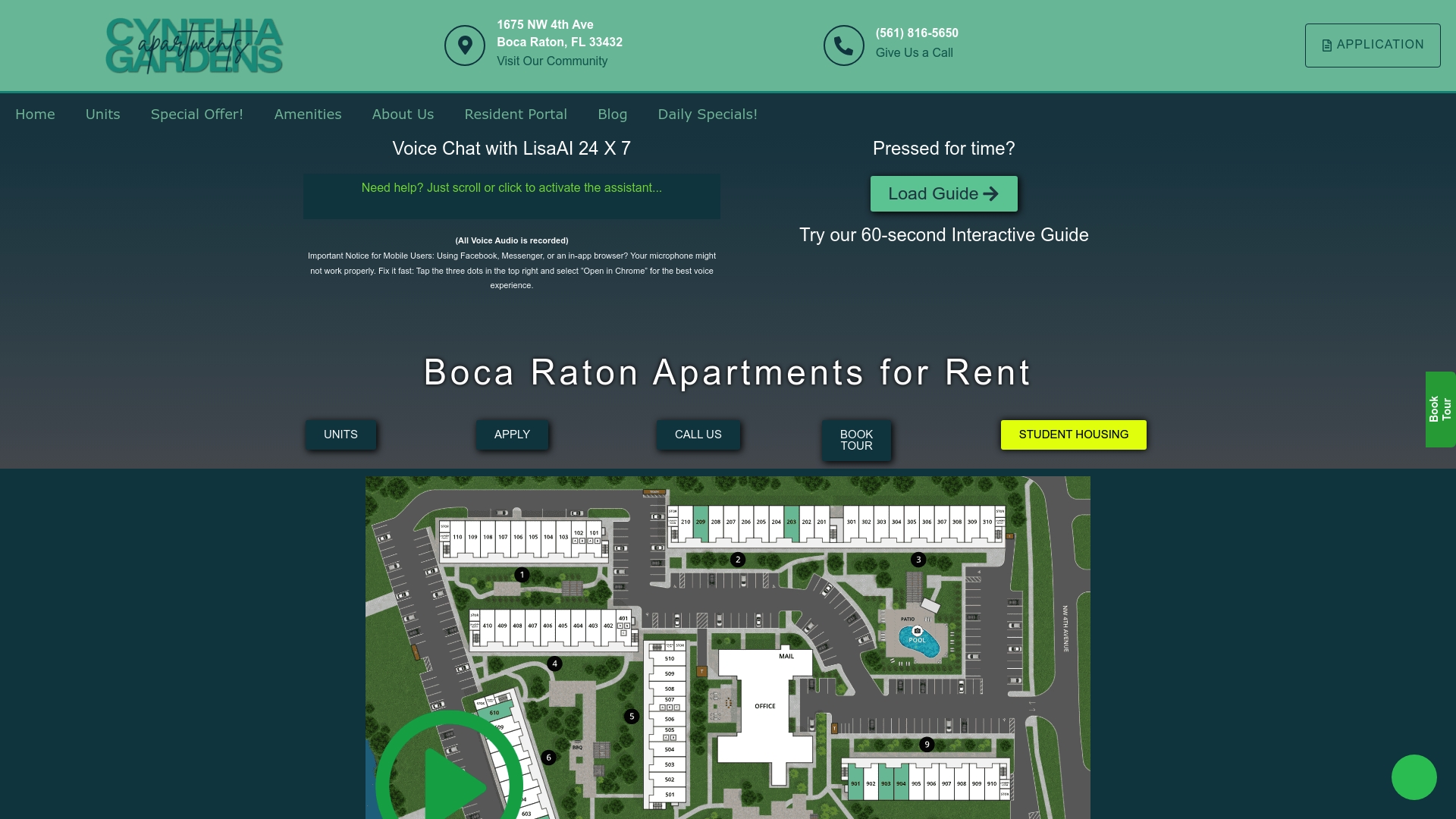
Cynthiagardens is a modern apartment community in Boca Raton, Florida built around one principle: you should know exactly what you owe before you sign anything. Every one-bedroom listing comes with upfront pricing, no hidden fees, and a leasing process designed for young professionals, students, and pet owners who want clarity, not surprises. From AI chat support and virtual tours to an interactive property map, the tools are there to help you compare options confidently. Start your search with the renter’s apartment guide to find listings that meet the transparency standard you deserve.
FAQ
What are transparent lease agreements?
Transparent lease agreements are rental contracts that disclose all costs, fees, and obligations upfront before signing. They include base rent, fixed recurring fees, optional charges, and both tenant and landlord responsibilities in plain language.
Why do transparent leases matter for budgeting?
Hidden fees are the leading cause of budget shortfalls for renters after move-in. When a lease shows the true monthly total upfront, you can compare apartments accurately and avoid financial surprises.
What does Austin’s 2026 ordinance require from landlords?
Austin’s ordinance, effective October 1, 2026, requires landlords with 50 or more units to provide a standardized fee disclosure form before signing, covering all mandatory monthly charges outside base rent.
How can I tell if a lease is truly transparent?
Check whether the first page lists an itemized fee schedule and a total monthly cost figure. If it shows only base rent, request a written fee breakdown before proceeding. A landlord who cannot provide one in writing is a warning sign.
What is the difference between fixed recurring fees and optional fees?
Fixed recurring fees are mandatory monthly charges you pay regardless of usage, such as pest control or trash fees. Optional fees apply only when you use a specific service, like a storage unit or premium parking. Transparent leases label both categories clearly.