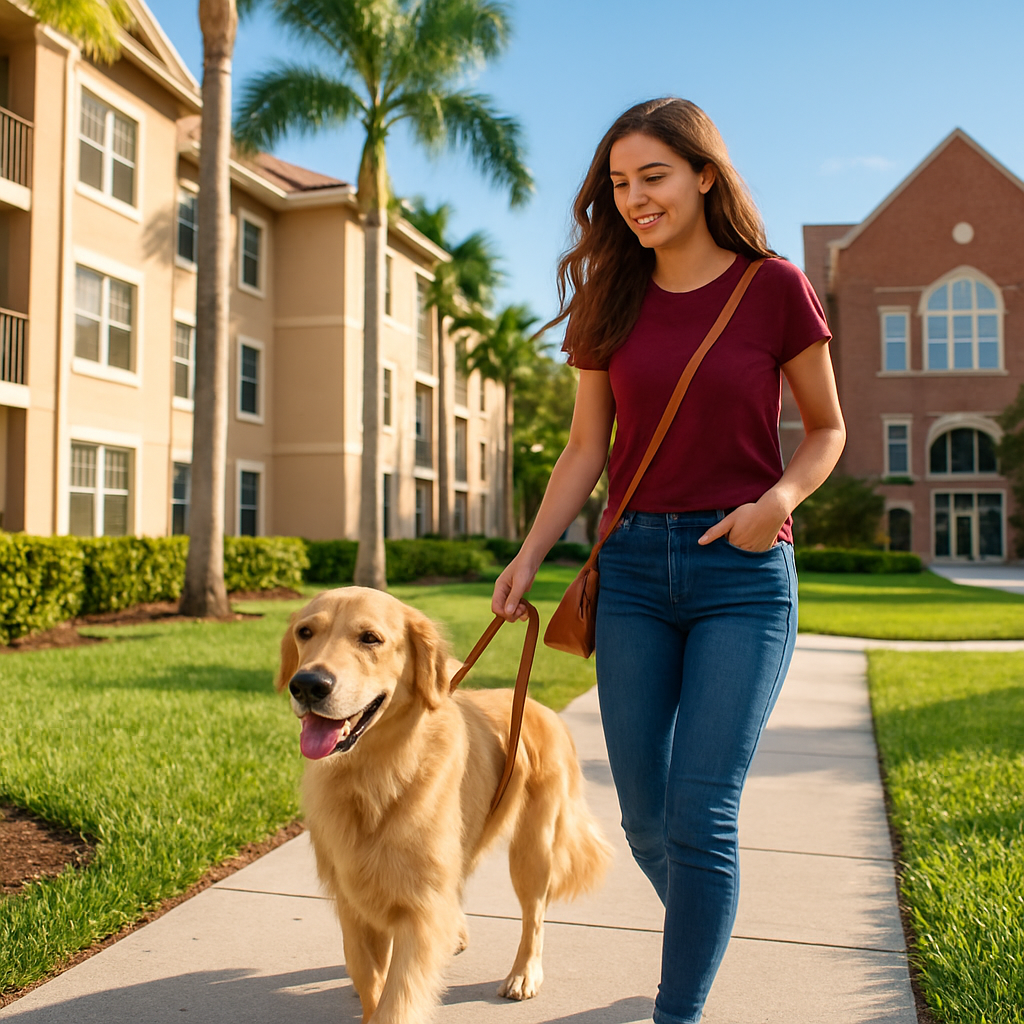
Pet‑Friendly Apartments Near Colleges in Boca Raton: Balancing Campus Access and Pet Care
If you are searching for pet friendly apartments near colleges boca raton, the right pick balances easy campus access with realistic pet care options, because short commutes matter just as much as midday dog walks, nearby parks, and clear lease pet policies. This guide walks through the lease clauses and monthly costs to check, how to compare walkability and pet infrastructure for FAU, Lynn, and Palm Beach State students, practical weekday routines, and a real-world example from Cynthia Gardens to help you weigh tradeoffs and decide.
Understand campus rules and why off campus rentals matter
Straight fact: most college residence halls in Boca Raton do not allow companion pets, so off campus rentals are the default route for students who will keep a dog or cat. Check the official guidance for Florida Atlantic University and Lynn University early in your search because exceptions are narrow and require documentation for service or emotional support animals. See Florida Atlantic University campus map and housing and Lynn University housing resources to confirm specific rules.
Why this matters for your apartment search: choosing off campus housing is not just about commute time. It forces you to compare lease rules, pet fees, and nearby pet infrastructure as part of the same decision you use to pick a unit. Lease timing matters too – many students sign a 12 month lease that runs across an academic year, so if campus housing changes or a class schedule shifts you will still be bound to your pet rules and payment schedule.
What to verify with campus housing and while touring off campus units
- Confirm campus exceptions: ask student housing whether approved service or emotional support animals need campus paperwork or a housing accommodation and get the contact for the housing office.
- Get pet policy language in writing: request the exact pet addendum before you sign so monthly pet rent, deposits, and breed or weight limits are explicit.
- Check move timing: confirm move in and move out windows versus your academic calendar to avoid paying a second rent term when you return to campus or move out for a semester.
- Map local pet infrastructure: note nearest dog parks, veterinary clinics, and grooming services using Walk Score and Google Maps during the tour.
Practical tradeoff to weigh: proximity to campus buys class convenience but not necessarily pet convenience. Being 10 to 15 minutes farther by car can place you next to a fenced off leash area, lower pet rent, and sidewalks that make daily routines easier. In practice many students overvalue a short walk to class and undervalue having a secure outdoor area for the pet – that mismatch increases daily friction and often leads to expensive last minute boarding or heavy reliance on paid walkers.
Concrete Example: A graduate student at Florida Atlantic University with a 30 pound dog toured two units. The unit next to campus saved a 10 minute walk each day but charged higher pet rent and had no on site green space. The student chose a unit a short drive away that included a fenced courtyard and lower pet fees, and scheduled weekday mid day walks through Rover when classes ran long.
Most campus dorms allow only service animals or documented emotional support animals – plan to secure off campus housing if you will keep a pet.
Next consideration: after you confirm campus rules and secure written pet policy language, move on to the lease checklist that compares monthly pet costs and local service options so you can balance daily pet care against campus access.
Checklist for evaluating pet policies in Boca Raton leases
Start with the lease language, not the listing blurb. Apartment listings often say pet friendly but the lease contains the rules that determine whether your dog or cat will actually be welcome. Read every clause that mentions pets, animals, animals on the premises, and any referenced pet addendum before you place a deposit.
Essential lease items to verify line by line
- Pet fee type: Is the fee a refundable deposit or a non refundable administrative fee? Non refundable fees are common; account for them as lost money when you move out.
- Monthly pet rent: Is there recurring pet rent and how is it billed? Confirm exact dollar amount and whether it is due with rent or separately.
- Weight and breed limits: Are there specific weight caps or banned breeds? Some complexes list breed examples but then allow manager discretion – get clarity in writing.
- Number of pets allowed: Does the lease limit you to one pet or allow multiple animals? If you plan to foster or adopt again, know the limit now.
- Vaccination, licensing, and paperwork: Which vaccines, proof of spay neuter, and city license are required? Boca Raton licensing is separate and you must comply with City of Boca Raton rules – see City of Boca Raton Animal Control.
- Pet screening and insurance: Does the landlord require third party screening, references, or renter liability pet insurance? If so, get the screening form and insurer details up front.
- Facility access and restrictions: Are there rules for common areas, leashing, noise complaints, and designated pet relief areas? Some properties restrict leashless play or have limited hours.
- Termination and removal clauses: Under what conditions can management require you to remove a pet? Vague or unilateral removal language is a red flag.
How to calculate the true recurring and upfront cost
Practical calculation: Add upfront fees, first months rent, and recurring pet rent to get your move in and monthly cost. For example, if pet deposit is 300 non refundable, monthly pet rent is 25, and your first months rent is 1,200 your first month cash outlay for housing will be 1,525. After move in the recurring monthly pet cost is 25 plus food and standard care.
Trade off to consider: A building that charges higher pet rent but includes utilities may still be cheaper overall for students on tight budgets because included utilities free money for pet daycare or vet visits. Do the math over six months before choosing proximity over total cost.
Red flags, negotiation safe asks, and one real world use case
- Vague clauses: Any clause that allows management to remove a pet for reasons not defined is a red flag – request specific triggers and a cure period for behavioral complaints.
- Hidden charges: Ask whether pet rent can change during the lease term. Fixed amounts are preferable.
- Unclear service animal policy: Landlords must follow federal and state rules but do not use broad language about service animals. For housing specifics, consult campus housing offices and avoid relying on verbal assurances.
- Safe ask: Request the exact pet addendum before you sign and ask management to initial the pet section on the lease.
Concrete example: A student touring Cynthia Gardens confirmed the pet addendum before paying a holding deposit and saved 300 because the advertised fee differed from the lease language. They also verified local dog walking options and found a mid day walker listed on Rover to cover class hours. That small verification avoided an unexpected charge and a week of last minute scrambling.
Next consideration: After you confirm the lease details, map nearby pet services and parks during your tour – knowing where to get a mid day walk or emergency vet will determine whether the apartment is workable with your class and work schedule.
Map proximity tradeoffs: campus access, transit, and pet infrastructure
Being closest to campus rarely solves pet ownership problems on its own. A unit two blocks from Florida Atlantic University might shave five minutes off a walk to class but if the complex has no fenced relief area, no nearby sidewalk shade, and limited parking for mid day drop offs you will pay for that convenience through daily friction and extra services.
Three mapping axes to evaluate every listing
- Campus access – Measure realistic commute time, not straight line distance. Use Walk Score and Google Maps at the hour you would travel. A 12 minute walk is very different from a 12 minute walk that crosses a highway with no crosswalk.
- Pet infrastructure – Check for fenced dog relief areas, nearby dog parks, veterinary clinics, and continuous sidewalks. Prioritize continuous sidewalk and shade over proximity by a block when summers make mid day walks unpleasant.
- Service availability – Confirm local dog walkers, daycare, and emergency vets within a 10 to 15 minute drive. If you rely on mid day walkers, predict cost and schedule reliability before signing.
Practical tradeoff to expect. Being within walking distance to a campus reduces commute stress, but it often comes with higher rent and smaller private outdoor space. Conversely, a unit 10 to 15 minutes by car from campus can offer on site grassy areas and lower monthly pet fees. The right choice depends on your weekly schedule and how often you can be home for a mid day break.
Concrete Example: A graduate student with an 11 AM seminar and a 3 PM lab found that living a 7 minute walk from campus required no sitter on most days. A classmate who saved on rent by moving 12 minutes farther by car ended up paying twice weekly for dog walking services at about 15 to 20 per visit. Over a semester those service costs exceeded the monthly rent savings.
What to test on a site visit
- Do a timed walk. Walk your route to campus and to the nearest park at the time you would normally go and note shade, traffic crossings, and noise.
- Find the nearest vet and daycare. Drive the route so you know peak traffic times; bookmark emergency clinics as contingency.
- Ask about enforcement. Confirm how the property enforces pet rules during peak hours and whether mid day deliveries or walkers face parking restrictions.
- Check micro features. Look for on site waste stations, leash hooks near entrances, and any small fenced area that lets a dog relieve without a long walk.
Judgment call renters miss. Many students treat Walk Score to campus as the primary metric and underweight micro infrastructure that determines daily life for a pet. In practice, a slightly longer commute plus reliable on site pet amenities and lower pet fees creates a lower stress, lower cost outcome most semesters.
Visit during the exact time you would need a mid day break. That one test reveals more than any listing photo.
Daily routines and contingency plans for students and professionals with pets
Plan fixed care windows first. Most successful student and early professional schedules start by locking two daily windows for pet needs: a morning walk or litter check and an early evening session. If classes or shifts break those windows, plan paid or community backups before committing to a lease.
Sample weekday schedules you can adapt
- Student with morning classes: Morning 7 30 to 8 00 walk, midday 12 30 personal check or 12 30 to 1 00 walk by a paid walker twice weekly, evening 6 30 to 7 00 play and feeding. Use a slow feeder and timed feeder for late nights.
- 9 to 5 professional: Morning 6 30 to 7 00 walk, midday paid dog walker or daycare three days per week, evening 6 00 to 7 00 walk and unwind. Keep morning feedings light if daycare covers midday.
- Evening classes or variable schedule: Morning long walk, midday nap in crate with enrichment toy, short neighborhood potty break before classes when possible, schedule a sitter on long exam days.
Tradeoff to accept. Relying on paid services buys your freedom but creates a recurring cost that often surprises students. Budget for at least two paid walks per week or one daycare day per week as a baseline and compare that against the cost of a slightly larger apartment with on site green space that reduces paid service needs.
Concrete example: A graduate student attending Florida Atlantic University with afternoon labs arranged two weekly midday visits from a walker on Rover and traded a weekend dog walk shift with a neighbor. The student met the walker for a meet and greet, left a written feeding and bathroom plan in the apartment, and kept a spare key with a trusted neighbor to avoid lockout delays.
Contingency plans that actually work
- Two backup walkers or sitters: Do not count on one roommate or neighbor. Maintain two vetted options through apps or local recommendations and rotate them so you never have last minute shortages.
- Emergency vet and documents packet: Keep vaccination records, microchip info, and primary vet phone number in a physical folder and a phone photo. Add City of Boca Raton Animal Control contact for stray or ordinance questions at myboca.us.
- Short notice boarding plan: Identify a nearby Petsmart PetsHotel or local daycare for exam weeks. Book a trial day well before you need it so the pet is not stressed by a new environment on a crisis day.
- Key exchange and access plan: Use a secure lockbox or a trusted neighbor to avoid missed sitter visits. Test access during the first month to work out timing and instructions.
What people get wrong. Students often rely on goodwill from roommates without formal agreements. In practice this leads to missed walks and relationship strain. Put expectations in writing and offer small paid compensation for consistent help.
Where property choice helps. Choosing a pet friendly community with on site green space cuts daily friction. For example, properties like Cynthia Gardens student apartments that offer gardens and short walks to parks let you swap paid midday walks for quick solo trips when schedules shift.
Secure backups before move in. Do not treat contingency planning as an afterthought.
Budgeting and value: why included utilities and community amenities matter for pet owners
Start with the math: included utilities and on site pet amenities are not perks – they are budget levers. For students and early professionals in Boca Raton, a property that bundles water, trash, and electricity into rent can free up predictable monthly cash for pet rent, food, and vet care. Conversely, a lower headline rent with separate utilities often hides variable costs that land on the tenant during summer months when A/C use spikes.
What to count in your pet ownership budget
- Fixed housing costs: base rent, monthly pet rent, and any non refundable pet fee or deposit.
- Utilities to add: electricity, water, sewer, trash, and internet; use recent utility bills or landlord averages if available.
- Pet recurring costs: food, routine vet visits, flea/tick prevention, and grooming.
- On demand services: dog walking, daycare, and occasional boarding – these scale with your class or work schedule.
Practical insight: community amenities directly reduce recurring out-of-pocket spending.** An on site dog run and designated pet relief area can replace paid mid day walks a few days a week. On site grooming partners or a vet within a five to ten minute drive reduces time cost and makes routine care less likely to be deferred.
Concrete example: Compare two realistic 6 month scenarios. Unit A (closer to campus) charges $1,700 rent, utilities average $200/month, pet rent $40/month and a $300 pet fee. Six months costs: (1,700 + 200 + 40) × 6 + 300 = $11,940. Unit B (a pet friendly property with utilities included such as Cynthia Gardens) charges $1,650 rent, pet rent $25/month and a $200 fee. Six months costs: (1,650 + 25) × 6 + 200 = $10,250. That $1,690 gap pays for local dog walking or a month of boarding when classes concentrate, and still leaves savings.
Tradeoff to watch: included utilities often come with built in limits or higher baseline rent.** Properties sometimes cap A/C usage or charge for excessive electricity. Always request the utility addendum and ask how overages are handled before assuming included utilities are a pure win.
- Run a 6 month affordability snapshot: add rent + utilities + pet rent, then include one realistic emergency vet visit amortized over months.
- Estimate substitution savings: identify which paid services an amenity replaces (example: dog run saves two paid walks/week × cost per walk).
- Check lease caveats: ask about utility caps, common-area pet rules, and whether amenities ever close for maintenance or private events.
If you want a quick reality check during tours, use Walk Score to confirm nearby parks and then compare the six month totals for candidate units. For fill‑in services when you are in class, check availability on Rover and local listings; knowing both the cost and response time will change how much value you place on on site amenities.
Cynthia Gardens as a practical example for pet friendly student living in Boca Raton
Cynthia Gardens demonstrates how a single property can reduce the daily friction of pet ownership without solving every campus-access tradeoff. The community packages included utilities, roomy one-bedroom layouts, and visible pet-friendly signals — fenced common areas, trash and waste stations, and staff used to renting to students — all of which matter more in practice than a marketing line that says pet friendly.
What Cynthia Gardens brings to the table
Practical conveniences: included utilities, on-site pool and maintained grounds, and apartment plans that leave space for a dog bed and litter setup. These conveniences cut the cognitive load on a busy student: fewer bills to track, fewer trips for basic maintenance, and more predictable budgeting for pet care.
Community-level support: Cynthia Gardens routinely rents to students and early career professionals, which usually means the office can recommend local dog walkers, vets, and daycare providers — a real time-saver when you need a same-day walker between classes. If you want those referrals in advance, ask leasing for a short list during your tour.
Limits and tradeoffs you should not ignore
Proximity is relative. Cynthia Gardens is convenient for errands, shopping, and beaches, but being pet-friendly does not automatically mean walkable to every campus building. If your schedule depends on walking to morning labs at Florida Atlantic University, verify the real walking time with Walk Score or FAU campus map before committing.
Policy details still matter. Even pet-friendly communities can have weight limits, breed restrictions, non-refundable fees, or monthly pet rent. Cynthia Gardens removes some friction with included utilities, but you still need the pet policy in writing and clarified up front — do not rely on verbal assurances from leasing staff.
- Tour checklist specific to Cynthia Gardens: Measure any on-site green area for quick breaks, ask when maintenance picks up pet waste, request the pet addendum, and get names of local walkers or vets the office recommends.
- Real cost check: Confirm whether included utilities really cover hot water and A/C load in summer — higher utility coverage means you can allocate more of your budget to pet care rather than unexpected bills.
- Noise and neighbor norms: Ask about past complaints and how the office enforces barking or nuisance rules; student-heavy properties tolerate different rhythms than family buildings.
Concrete example: A graduate student with a 10:00 AM seminar and a medium-sized dog found Cynthia Gardens workable because the unit layout allowed a compact pet corner and the leasing office provided contact info for a pre-vetted midday walker. For heavier schedules, the same student used a local Rover sitter on exam weeks — a cheaper, predictable option than last-minute kennels.
Judgment: Cynthia Gardens is a strong practical choice when you want low-administrative overhead and predictable monthly costs, but it is not the right move if your priority is zero-commute to a specific campus building. Treat Cynthia Gardens as an operational platform that lowers daily friction, not as a substitute for mapping your class and work rhythms first.
If you tour Cynthia Gardens, leave with the pet addendum in writing, two local service referrals, and a walked route to the nearest reliably sized green space.
For floorplans and to schedule a viewing see the Cynthia Gardens student apartments page and sample layouts: student apartments page, Bella Vista floorplan, and apartments with gardens.
Decision framework and final checklist to choose the right pet friendly apartment
Immediate rule: pick the apartment that minimizes friction day to day, not the one that looks best online. Proximity to campus matters only insofar as it reduces the number of times you must juggle classes, commute, and pet care in a single day. This framework turns those tradeoffs into measurable points you can use on tours and when comparing offers.
Scoring rubric to compare finalists
| Criteria | How to score (0-5) | Weight |
|---|---|---|
| Commute convenience to campus or workplace | 5 = walkable; 3 = short drive/transit; 0 = >30 minutes | 25% |
| Total monthly pet cost (pet rent + amortized fees) | 5 = <= $30/month extra; 3 = $31-60; 0 = > $60 | 20% |
| Access to pet infrastructure (on site green space, dog park within 10 minutes) | 5 = fenced on site yard or dedicated area; 3 = park within short drive; 0 = no nearby options | 20% |
| Community rules and enforcement friendliness | 5 = clear written policy and reasonable limits; 3 = vague but negotiable; 0 = strict or arbitrary enforcement | 20% |
| Included value (utilities, laundry, trash – reduces budget friction) | 5 = utilities included; 3 = partial; 0 = none | 15% |
How to use the rubric: score each candidate, multiply by weight, and rank the totals. Do not overweigh aesthetics. A slightly lower total that removes daily headaches is usually the better choice for students with pets.
Concrete example: If Unit A is 10 minutes from campus, charges $35/month pet rent plus a $300 non refundable fee, and has no on site green space, it might score 4 on commute, 3 on pet cost, and 2 on infrastructure. Unit B, 20 minutes away with utilities included and a small fenced courtyard but $20/month pet rent, may score 3, 4, and 5 respectively. Run the math and prefer the unit with higher weighted score for your priorities.
Final checklist to use during tours and before signing
- Get the pet addendum up front: request the exact lease language or pet addendum before you commit and save a copy.
- Calculate first month true cost: include first month rent, security deposit, pet deposit or non refundable fee, and first month pet rent so you know the initial outlay.
- Test a real walk route: walk from the unit to the nearest green space at the time you would use it and note lighting, shade, and cleanliness.
- Ask about enforcement scenarios: ask how noise complaints and waste violations are handled and whether written warnings precede fines or eviction actions.
- Locate emergency services: identify the nearest 24 hour vet and keep the phone number in your notes; check City of Boca Raton Animal Control for local rules.
- Confirm roommate approvals: if sharing, get a written roommate consent for your pet when possible and verify any roommate screening required by management.
- Photograph preexisting damage: document the unit condition with timestamps to avoid later disputes about pet related wear.
Practical limitation: a higher score does not guarantee a friendly community culture. Meet neighbors when you can and observe pet behavior at entryways and common areas during a visit.
Next step: after you pick a unit, verify commute times with Walk Score or FAU campus map and schedule a local walker or day care slot for move week via Rover so your first week is covered.