Table of Contents
- Before You Move: 6-12 Month Planning Timeline
- Cost of Living in Boca Raton: Budget Planning Guide
- Boca Raton Utility Setup Guide: Getting Connected
- Florida Driver’s License Requirements and Vehicle Registration
- 30-Day Pre-Move Checklist: Week-by-Week Logistics
- Finding Your Neighborhood: Schools, Safety, and Lifestyle
- Your First Week: Post-Move Setup and Community Integration
- Frequently Asked Questions
Last Updated: October 3, 2026
Before You Move: 6-12 Month Planning Timeline
A successful move to Boca Raton starts six to twelve months before you pack a single box. According to Karen Lee Diaz Real Estate relocation guidance, the best relocations follow a structured preparation schedule that accounts for everything from school district research to flood insurance requirements.
Start by setting a realistic budget. The average home value in Boca Raton is $558,294, but prices vary significantly by neighborhood and property type. If you’re renting, moving to Boca Raton requires understanding the local market velocity: homes typically go pending in approximately 51 days, which means competition moves fast.
By month three, secure your financing if buying, or get pre-approved for a mortgage. Research school districts if you have children, and start investigating flood insurance costs, a critical expense many relocators underestimate in South Florida. Month four through six should focus on narrowing down your top three neighborhoods and connecting with local real estate agents who understand the nuances of Boca Raton’s market.
The final three months before your move involve finalizing your housing decision, coordinating with movers, and handling administrative tasks like updating your address and researching utilities. A structured approach prevents last-minute scrambling and reduces moving stress significantly.
Cost of Living in Boca Raton: Budget Planning Guide
Understanding the cost of living in Boca Raton is essential before committing to a move. Beyond housing, you’ll encounter higher expenses for insurance, utilities, and lifestyle costs compared to many other U.S. markets. The current real estate market in Boca Raton shows a 94.5% sale-to-list ratio, indicating homes sell close to asking price, a sign of a competitive, expensive market.
Factor in these major cost categories: property taxes (approximately 0.83% of home value annually in Florida), homeowners insurance (significantly higher due to hurricane risk), flood insurance (mandatory for properties in flood zones), and utilities. Air conditioning runs year-round in South Florida, driving up electricity bills.
Create a detailed budget spreadsheet that includes housing, insurance, utilities, transportation, groceries, and lifestyle expenses. Many relocators find that their overall cost of living in Boca Raton exceeds their expectations once they account for hurricane preparedness, HOA fees, and the premium pricing that comes with living in a desirable South Florida community. Research specific neighborhoods carefully, costs vary dramatically between waterfront areas, golf communities, and inland residential zones.
Use online cost-of-living calculators to compare your current city with Boca Raton. Input your actual salary to see how far your money stretches, accounting for local taxes and expenses.
Boca Raton Utility Setup Guide: Getting Connected
Setting up utilities when moving to Boca Raton requires coordination with multiple providers. Florida Power & Light (FPL) handles electricity for most of the area, and you’ll need to schedule service activation before your move-in date. Call at least two weeks ahead to avoid delays, as summer demand peaks during the hottest months.
Water and sewer services depend on whether your property is within official Boca Raton city limits or unincorporated Palm Beach County, a distinction that affects service providers and costs. Verify this detail with your real estate agent or the county assessor’s office.
Internet and phone service deserve careful attention. Research providers in your neighborhood before moving, cable, fiber, and wireless options vary by location. Some newer communities may offer preferred vendor partnerships that simplify setup. Schedule internet installation for the day before or the morning of your move to maintain connectivity during the transition.
Don’t forget about waste management, recycling, and yard debris pickup. Boca Raton has specific collection schedules, and some properties include these services through HOA fees while others require separate arrangements. Set up all accounts online when possible, most utilities allow you to pre-schedule service activation before you arrive.
Delaying utility setup is the #1 moving mistake in Florida. Electricity and water activation can take 5-7 business days during peak season, leaving you without essentials on move-in day.
Florida Driver’s License Requirements and Vehicle Registration
Your out-of-state driver’s license remains valid for a limited time after you relocate to Boca Raton, but Florida law requires you to obtain a Florida driver’s license within 30 days of establishing residency.
Vehicle registration must also be updated. Florida requires new residents to register their vehicles within 30 days of moving. Bring your current registration, proof of insurance, and proof of residency to the DMV. Florida’s vehicle registration fees are lower than many states, but insurance costs are significantly higher due to hurricane and flood risk.
If you’re purchasing a vehicle in Florida, sales tax is 6% plus any local surtax (Palm Beach County adds an additional 0.5%). Budget accordingly if you plan to buy locally. Also note that Florida has no state income tax, which benefits relocators from high-tax states, but property insurance and vehicle registration still represent substantial ongoing costs.
Complete these administrative tasks early in your relocation timeline. Processing times at the DMV can stretch to several hours during peak times, so schedule an appointment online when possible. Many residents handle this during their first week in Boca Raton, but doing it before your move eliminates one task from an already hectic transition period.
30-Day Pre-Move Checklist: Week-by-Week Logistics
The final 30 days before moving to Boca Raton require a detailed, week-by-week plan to manage logistics smoothly. According to SafeBound Moving’s pre-move planning guide, a structured week-by-week approach significantly reduces moving day stress and ensures nothing falls through the cracks.
Week One: Confirm and Coordinate
- Finalize your moving date with your chosen moving company
- Confirm utility activation dates for electricity, water, gas, and internet
- Notify your current landlord or mortgage lender of your move-out date
- Update your address with your employer, bank, and insurance providers
- Begin sorting belongings and deciding what to keep, donate, or sell
Week Two: Administrative Tasks
- Request mail forwarding through USPS
- Transfer or cancel subscriptions and memberships
- Gather important documents (birth certificates, medical records, financial statements)
- Take photos of your current home’s condition for your security deposit
- Contact your current utility providers to schedule disconnection
Week Three: Packing and Preparation
- Pack non-essential items you won’t need before moving day
- Label boxes clearly with room and contents
- Confirm final details with your moving company (time, parking, elevator access)
- Drain gas from lawn equipment if you’re moving it
- Defrost and clean your refrigerator
Week Four: Final Steps
- Pack essential items last (medications, chargers, important documents)
- Do a final walkthrough of your current home
- Clean your current property thoroughly
- Confirm move-in time at your new Boca Raton residence
- Prepare a “first night” box with toiletries, phone chargers, and comfort items
| Week | Key Tasks | Duration |
|---|---|---|
| Week 1 | Confirm movers, utilities, address updates | 3-5 hours |
| Week 2 | Administrative notifications, document gathering | 4-6 hours |
| Week 3 | Packing non-essentials, labeling boxes | 8-12 hours |
| Week 4 | Final packing, cleaning, move-in prep | 6-10 hours |
The difference between a stressful move and a smooth one is preparation during the final month. Handling administrative tasks early prevents last-minute scrambling and missing critical deadlines.
Finding Your Neighborhood: Schools, Safety, and Lifestyle
Choosing the right neighborhood is the most important decision in your relocation to Boca Raton.
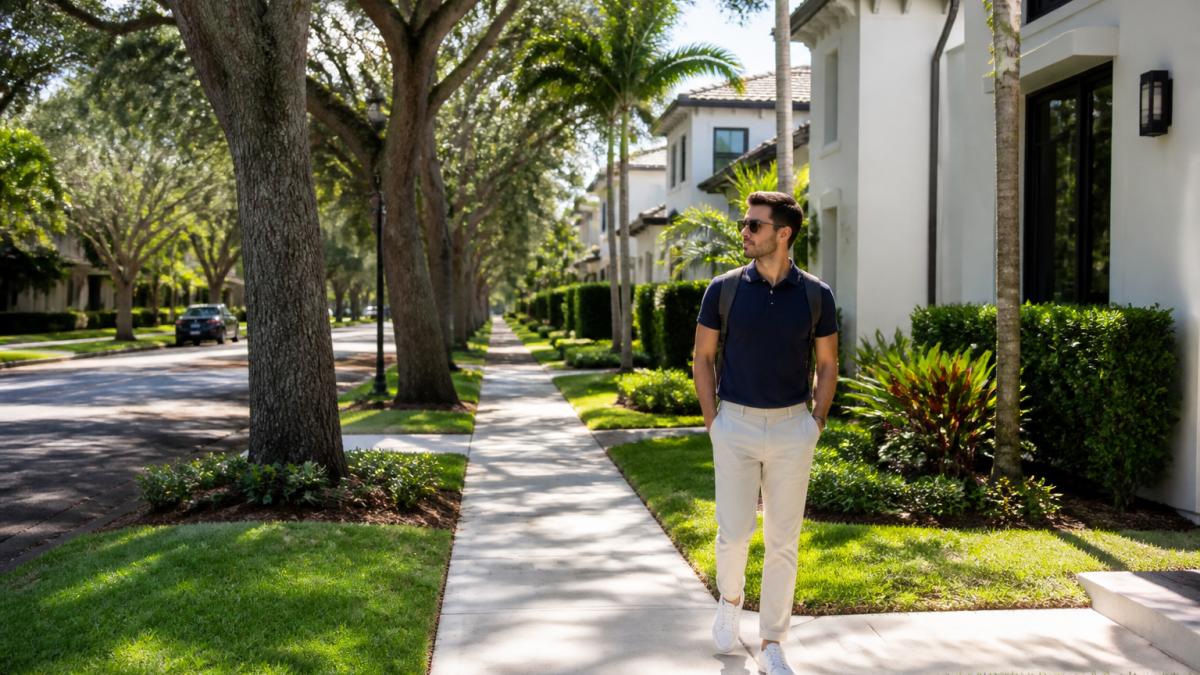
Research school districts if you have children, Boca Raton includes several A-rated schools that attract families to specific zones. Use the school district maps on the Palm Beach County Schools website to identify which schools serve your target neighborhoods.
Consider your commute carefully. If you work in Miami or elsewhere in South Florida, proximity to I-95 or Tri-Rail matters significantly. Tech and finance professionals often prioritize central Boca Raton locations for easier access to major employment hubs.
Pet owners need to verify pet policies in their target communities. Some neighborhoods have breed restrictions, size limits, or additional fees. If you own dogs or cats, confirm pet-friendly amenities and nearby parks.
Visit potential neighborhoods at different times, morning, afternoon, and evening, to experience traffic patterns and community activity. Talk to residents at coffee shops, parks, and community centers. This firsthand perspective reveals details that online research cannot capture.
Your First Week: Post-Move Setup and Community Integration
Your first week in Boca Raton sets the tone for your entire relocation experience. Prioritize basic setup tasks before exploring the community. Unpack essentials first, bedroom, bathroom, and kitchen items, so you can function comfortably while unpacking the rest gradually. Change your address with remaining service providers, update your voter registration, and confirm all utilities are functioning properly.
Meet your neighbors early. A simple introduction often leads to helpful local recommendations and a sense of community connection. Many Boca Raton neighborhoods host community events, HOA meetings, or social gatherings, attending one during your first month accelerates integration and helps you understand neighborhood culture.
Locate essential services immediately: nearest grocery store, pharmacy, gas station, and medical facilities. Identify your closest parks, libraries, and recreation centers. If you have children, visit their new school and introduce them to teachers and staff. These early actions reduce anxiety and help everyone adjust to their new environment.
Introduce yourself to your HOA management office during your first week. They can answer questions about community rules, maintenance requests, and neighborhood events that will help you settle in faster.
Explore your immediate area on foot and by car. Learn the best routes to work, identify your favorite coffee shops and restaurants, and discover local parks and recreation options. Many relocators report that the first month feels overwhelming, but establishing daily routines and familiar places dramatically improves the transition.
Moving to Boca Raton represents a significant life change, and preparation transforms that change from stressful to manageable. Our garden-style apartments offer the maintenance-free living, high-end finishes, and serene environment that make settling into Boca Raton feel like coming home. Located just minutes from FAU and the beach with a resort-style pool and lush landscaped grounds, Cynthia Gardens provides the comfortable, private living space professionals deserve. Schedule a tour with Cynthia Gardens today to discover how our community can make your relocation experience seamless and welcoming.
Frequently Asked Questions
What should I know before moving to Boca Raton?
Boca Raton is a growing market with an average home value of $558,294 and homes going pending in approximately 51 days. The market is not very competitive with a Compete Score of 25/100, meaning you may have more negotiating power. Verify whether your property is within official city limits or unincorporated Palm Beach County, as this affects municipal services. Plan a 6-to-12-month timeline for relocation, and prioritize researching flood insurance, HOA requirements, school districts, and your proximity to I-95 or Tri-Rail if you commute.
How do I set up utilities in Boca Raton, FL?
Contact Florida Power & Light (FPL) for electricity service at least 2-3 weeks before your move date. For water and sewer, reach out to the city or Palm Beach County depending on your location. Natural gas is available through FPL in some areas. Internet and cable providers include Comcast Xfinity, AT&T, and fiber options in newer developments. Schedule utility activation for your move-in date to avoid service gaps. Have your new address and estimated move-in date ready when you call.
What is the cost of living in Boca Raton compared to other Florida cities?
Boca Raton’s cost of living is higher than many Florida cities, reflected in its average home value of $558,294. Housing costs, property taxes, and insurance (especially flood insurance) are significant factors. However, Florida has no state income tax, which offsets some expenses for relocators from high-tax states. Groceries, utilities, and transportation costs are generally in line with South Florida averages. Budget for HOA fees if you’re considering a gated community or planned neighborhood, as these can range significantly.
What are the Florida driver’s license requirements after moving?
You must obtain a Florida driver’s license within 30 days of establishing residency. Visit your local Department of Motor Vehicles office with proof of identity (passport or out-of-state license), proof of residency (utility bill, lease, or mortgage statement), and proof of Social Security number. Florida recognizes valid out-of-state licenses for 30 days, so you can drive legally during this transition period. Your current license will be surrendered, and you’ll receive your Florida license. Vehicle registration must also be updated within 30 days of moving.
Is Boca Raton a good place to live for young professionals and renters?
Yes, Boca Raton is ideal for young professionals and renters seeking a quiet, well-established community with modern amenities. The area offers convenient access to I-95 and Tri-Rail for commuters working in tech or finance in Miami. Proximity to Florida Atlantic University and local beaches adds lifestyle appeal. Garden-style apartment communities like Cynthia Gardens provide maintenance-free living with high-end finishes and resort-style amenities.