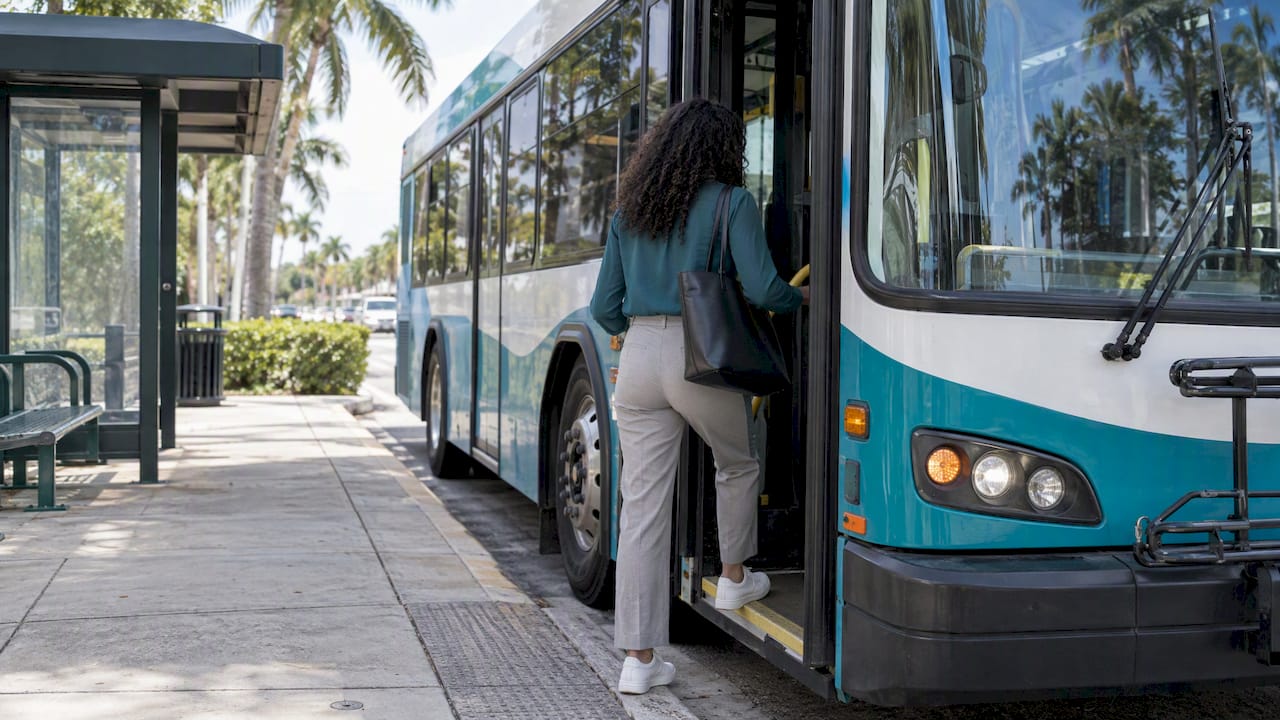
Boca Raton runs on three main services: Palm Tran buses for local trips, Tri-Rail for regional commuter rail, and Brightline for intercity travel. Transit works best for set corridors, like a Tri-Rail commute to Yamato Road or a Palm Tran ride to Town Center, rather than citywide errands, since much of Boca Raton still leans on cars. The sections below break down routes, fares and planning tools so you can build a realistic trip.
TL;DR:
- Most local trips in Boca Raton rely on Palm Tran, Tri-Rail, or Brightline, with each serving different travel needs and corridors.
- The Yamato Road station functions as a key multimodal hub, linking rail, buses, and shuttles with free parking and secure bike lockers.
- Transit is strongest around major hubs like Town Center, FAU, and the Tri-Rail station, but citywide access remains limited and often requires transfers.
- Shuttle services like TREX and the Town Center transit station operate mainly during peak hours and should be checked in advance for schedule changes.
- Renting near key transit points with transparent pricing can help reduce commuting time, especially when using property tools to assess proximity to transit routes.
Table of Contents
- Who runs transit in and around Boca Raton
- Palm Tran buses: routes, stops and how to pay
- Tri-Rail at Yamato Road: the region’s multimodal hub
- Brightline in Boca Raton: when intercity rail makes sense
- Local shuttles that cover the last mile
- Paratransit and accessibility for riders who need it
- Practical trip-planning: apps, fares and backup options
- Where transit works best in Boca Raton
- Renting with a commute in mind
- A housing option built around real commutes
- Official pages and timetables to bookmark
- Sources
- FAQ
Who runs transit in and around Boca Raton
Three agencies cover almost every public transit need in the city, and knowing which one handles which job saves time when you are planning a trip.
- Palm Tran operates the county bus system, handling local routes and crosstown connections within Boca Raton.
- Tri-Rail runs regional commuter rail with a stop at Yamato Road, linking Boca Raton to Miami, Fort Lauderdale and West Palm Beach.
- Brightline provides private intercity rail service from its Boca Raton station, aimed at longer trips along the Miami to Orlando corridor.
- Broward County Transit and South Florida Commuter Services extend regional connections and commuter programs like carpool matching across county lines.
The City of Boca Raton’s public transportation page lists all of these as the city’s core transit options, along with several shuttle services that fill in the last mile.
Palm Tran buses: routes, stops and how to pay
Palm Tran is the workhorse for anyone moving around Boca Raton without a car. The city highlights routes 1, 2, 3, 91, 92 and 94 as the core lines serving Boca, connecting Town Center, FAU and downtown corridors.
- Route 1 and Route 2 run along major north-south corridors through downtown.
- Route 3 links residential areas to shopping and employment centers.
- Routes 91, 92 and 94 connect Boca Raton to Tri-Rail and neighboring communities.
Payment works through the Paradise Pass smart card or its companion app, along with disposable single-ride passes, and fares cap automatically once you hit the daily or monthly maximum. Before heading out, check the iGo bus tracker for real-time arrivals and scan Palm Tran’s service updates for any 2026 route adjustments.
Palm Tran operates 29 routes and roughly 2,700 stops across Palm Beach County, giving riders a dense enough network to piece together most local trips with a transfer or two.
Tri-Rail at Yamato Road: the region’s multimodal hub
The Yamato Road station is arguably the single most useful transit asset in Boca Raton, because it ties together rail, bus and shuttle service in one place. Tri-Rail’s Boca Raton station offers free commuter parking, ticket vending machines and direct shuttle connections that extend its reach well past the platform.
- The BR-1 shuttle and Route 94 connect the station to nearby employers and residential pockets.
- Free shuttles run to the Boca Raton Innovation Campus, giving workers a no-cost link from the train to their office.
- A connection to Park at Broken Sound extends rail access to that business park’s tenants.
- Students and staff headed to FAU or PBSC can often use shuttle service tied to the station, cutting the need for a car on campus days.
Free parking and secure bike lockers at Yamato Road make it practical for commuters who drive partway and ride rail for the longer leg of a trip.
Brightline in Boca Raton: when intercity rail makes sense
Brightline’s Boca Raton station serves a different purpose than Palm Tran or Tri-Rail: it is built for trips between cities, not trips across town. The service offers two classes, Smart and Premium, with shuttle connections available at most stations for the first and last mile.
- Smart class covers standard seating for shorter or budget-conscious trips.
- Premium class adds more space and amenities for longer runs.
- Stations include ticketing kiosks, lounges and nearby rideshare pickup zones.
- Booking is done through the Brightline app or website, with defined luggage allowances per ticket.
If your trip is a daily commute within Boca Raton, consulting a Personal Injury Lawyer in Boca Raton can be helpful in case of any transit-related accidents, as Brightline is the wrong tool for such trips. It earns its keep on runs toward Miami, Fort Lauderdale or Orlando, where the time saved over driving adds up.
Local shuttles that cover the last mile
A lot of Boca Raton’s transit success depends on shuttles that never show up in a statewide transit map but matter enormously to the people who use them daily.
- TREX, the Boca Raton Innovation Campus Shuttle, runs free weekday service from Tri-Rail to the Innovation Campus, roughly 6:30 a.m. to 7:30 p.m.
- The Park at Broken Sound shuttle, sometimes called TPABS, links that business park to Tri-Rail for employees who do not drive.
- Town Center at Boca Raton operates a transit station connecting Palm Tran routes 2, 3, 91 and 92 with the Tri-Rail shuttle, and the mall’s transit programs include employee pass discounts.
Most of these shuttles focus on weekday commuting hours and cost nothing to ride, which makes them worth building a schedule around if your job or campus sits along one of these lines.
Pro Tip: Always check the shuttle schedule on the operator’s own site before you plan around it, since hours and stops can shift with the service updates agencies post throughout the year.
Paratransit and accessibility for riders who need it
Riders who cannot use fixed-route buses have a separate option through Palm Tran Connection, a door-to-door shared-ride paratransit service governed by ADA-based eligibility rules. Eligibility requires an application and typically some documentation of the condition that limits fixed-route use, and trips need to be booked in advance rather than requested on the spot.
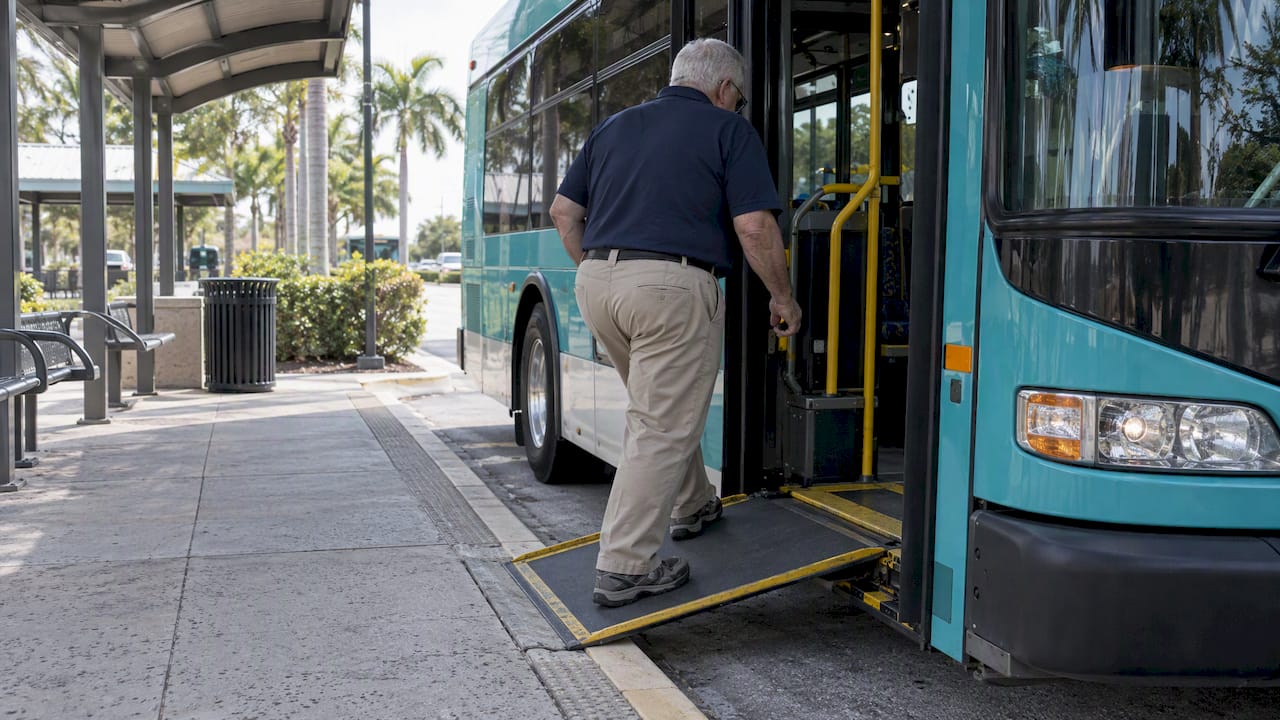
Accessible features extend to the fixed-route system too: Palm Tran buses include lifts or ramps, and major stations like Yamato Road are built with accessible boarding areas, so riders who qualify for Connection are not locked out of the regular network entirely.
Practical trip-planning: apps, fares and backup options
Planning a realistic trip in Boca Raton means checking a handful of tools before you leave the house, not after you miss a connection.
- Open the Paradise Pass app to load fare and check your balance before boarding a Palm Tran bus.
- Check the iGo tracker for live bus arrival times along your route.
- Review Tri-Rail’s schedule for your station and direction, since weekday and weekend frequencies differ.
- Use the Brightline app to book and manage intercity tickets in advance.
- Ask your employer or school about discount programs, since Town Center’s transit pass discounts and similar deals can cut monthly costs.
- Register for Guaranteed Ride Home through South Florida Commuter Services if you carpool, vanpool or take transit at least three days a week, so an unexpected emergency does not strand you.
- Keep a rideshare app on hand for the last-mile gap between a shuttle stop and your final destination.
Where transit works best in Boca Raton
Boca Raton carries an average Walk Score of 38, which puts it in the car-dependent category overall, though some neighborhoods score far higher. Pockets like Villa Rica reach into the 70s, making short walks to transit stops realistic in a way that is not true citywide.
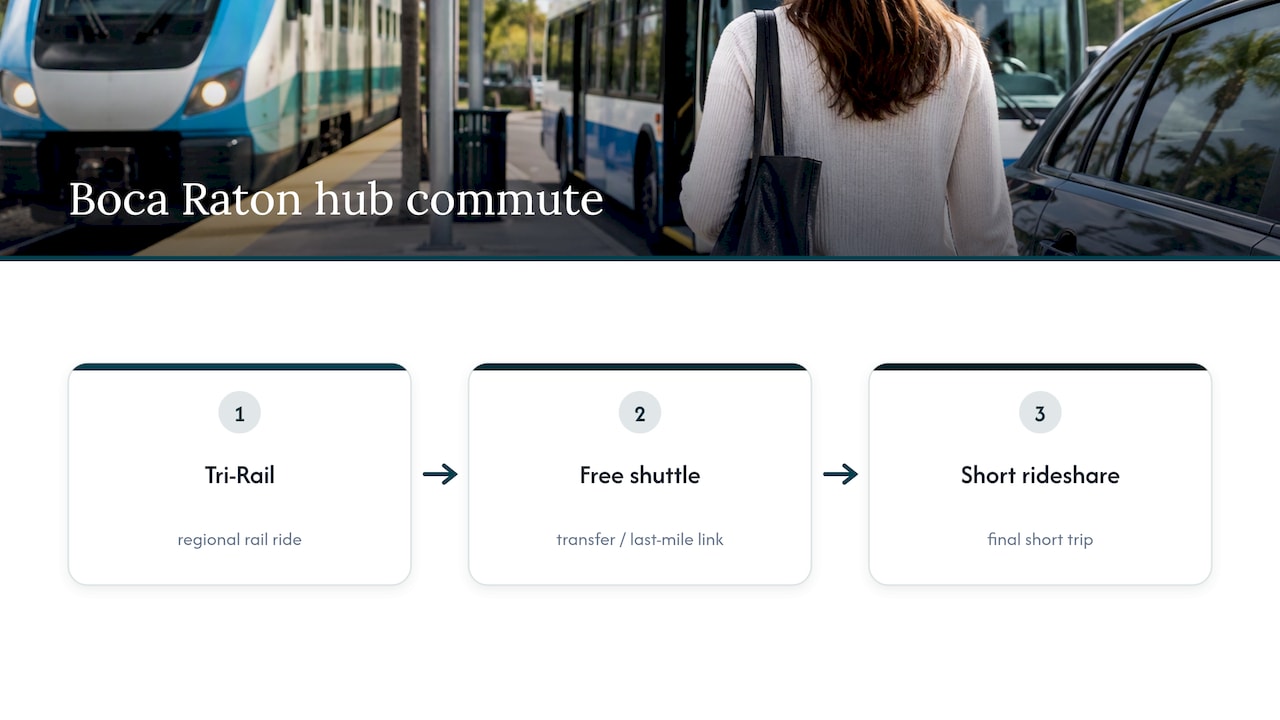
Transit is strongest around hub-oriented commutes: getting to Tri-Rail, reaching Town Center, or commuting to FAU. Most of these trips still involve a transfer or a short last-mile shuttle ride rather than a single direct route door to door. Combining modes, a Tri-Rail ride plus a free shuttle plus a short rideshare, tends to produce the most realistic commute in a city where a single bus rarely covers the whole trip.
Renting with a commute in mind
At Cynthia Gardens, we hear from students, young professionals and pet owners who want to know exactly how a commute will look before they sign a lease. Understanding which corridors Palm Tran and Tri-Rail actually serve, and where the gaps are, shapes where people choose to live. Our virtual tours and interactive property map let prospects check proximity to transit routes without a site visit first.
— Ayman
A housing option built around real commutes
One-bedroom apartments with transparent pricing and no hidden fees can matter when you are also budgeting for a monthly transit pass or a car payment. We are not a transit provider, but our location and tools are built with commuters in mind.
- One-bedroom apartments with transparent, upfront pricing and no hidden fees.
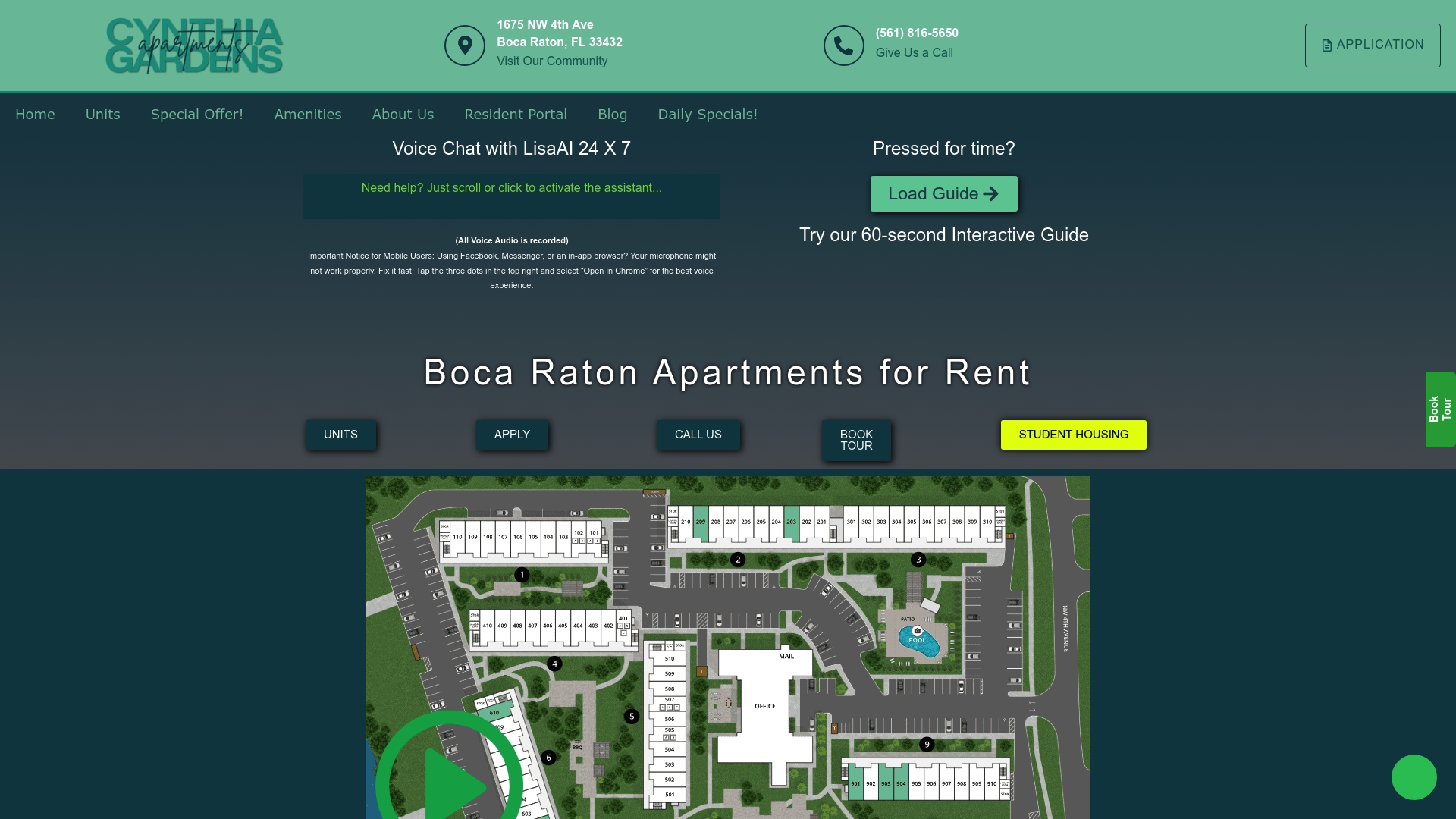
- Virtual tours and an interactive property map so you can judge proximity to bus and rail lines before visiting.
- Pet-friendly policies with a one-time fee instead of ongoing pet rent.
If a shorter commute to Tri-Rail, Town Center or FAU matters to you, browse available one-bedroom apartments and see what fits your route.
Official pages and timetables to bookmark
Check these before you travel, since schedules and routes can change without much notice.
- Palm Tran for routes, fares and the Paradise Pass.
- Tri-Rail’s Boca Raton station for schedules and parking.
- City of Boca Raton public transportation for a full list of local services.
- Walk Score for Boca Raton for neighborhood walkability data.
Sources
- Palm Tran — Home
- Tri-Rail — Boca Raton station
- Public Transportation | Boca Raton, FL
- Walk Score — Boca Raton, FL
FAQ
Is there public transportation in Boca Raton, Florida?
Yes, Boca Raton is served by Palm Tran buses, Tri-Rail commuter rail at the Yamato Road station, and Brightline intercity rail. Several free shuttles, including TREX and the Town Center transit station, add last-mile connections for commuters.
Is Boca Raton a wealthy part of Florida?
Boca Raton is generally known as one of the more affluent cities in Palm Beach County, though income levels vary by neighborhood. This wealth has not translated into citywide walkability, since the city’s Walk Score average sits at 38, meaning most errands still require a car.
Is there good public transportation in Florida?
Transit quality in Florida varies widely by city and is generally stronger in dense urban cores than in spread-out suburban areas. In Boca Raton specifically, Palm Tran, Tri-Rail and Brightline cover the major corridors well, but citywide coverage depends heavily on connecting shuttles and transfers.
What does it cost to rent near Tri-Rail in Boca Raton?
At Cynthia Gardens, one-bedroom apartments cost between 1990 and 2220 dollars per month as published on the leasing details page, with transparent pricing and no hidden fees. Additional one-time costs can include a 75 dollar application fee and a 300 dollar administration fee, both listed on the leasing details page.
Which is nicer, West Palm Beach or Boca Raton?
Both cities offer distinct advantages, and the better fit depends on what a renter values, such as proximity to specific employers, campuses or transit hubs. For commuters focused on Tri-Rail access and free shuttle connections, Boca Raton’s Yamato Road station and its surrounding services offer a clear anchor point for planning a car-light routine.