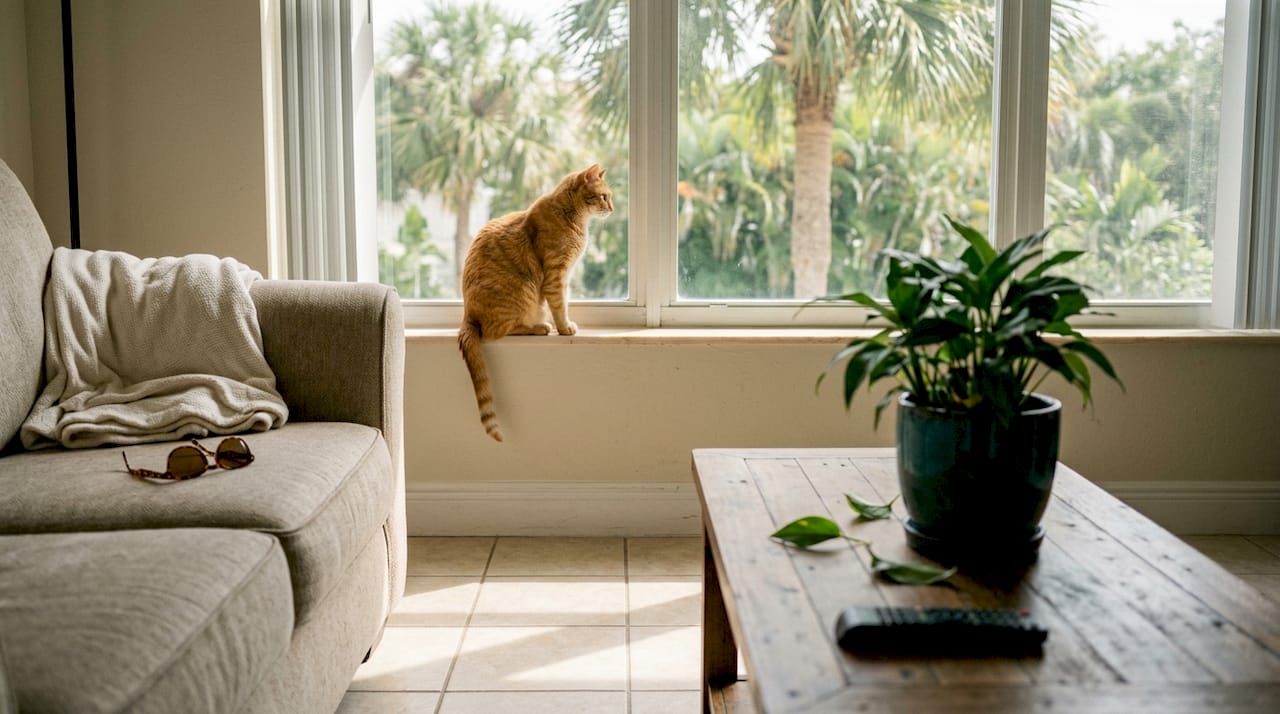
TL;DR:
- Cats face fewer restrictions and breed bans in Boca Raton apartments compared to dogs.
- Fees typically include a non-refundable pet fee, deposits, and optional monthly rent; emotional support cats are exempt.
- Proper communication and adherence to lease rules help avoid legal issues related to roaming or policy violations.
Most cat owners moving to Boca Raton assume their pet will face the same scrutiny as a large dog. That assumption causes real headaches at lease signing. The truth is that cats face fewer restrictions than dogs in most apartment communities, with no common weight limits or breed bans targeting felines. But simpler does not mean zero rules. You still need to understand fees, common area restrictions, and exemptions before you sign anything. This guide cuts through the confusion and gives Boca Raton cat owners a clear, practical picture of what to expect from apartment pet policies in 2026.
Table of Contents
- Understanding pet policies for cats in Boca Raton apartments
- Cat rules vs. dog restrictions: What’s the real difference?
- Fees, deposits, and exemptions: What Boca cat owners need to know
- Edge cases: Enforcement, common areas, and legal risks
- The real-life challenges and mistakes Boca cat owners face
- Find your perfect Boca Raton apartment for you and your cat
- Frequently asked questions
Key Takeaways
| Point | Details |
|---|---|
| Cats face fewer restrictions | Unlike dogs, apartments rarely limit cat size, breed, or number, making it easier for cat owners. |
| ESAs are legally protected | Emotional support cats with proper documentation are exempt from fees and restrictions under federal law. |
| Common area rules are strict | Cats must stay inside or leashed; roaming can lead to legal action from HOAs or property managers. |
| Financial rules vary | Regular pet owners pay deposits and fees, but ESAs and service animals are exempt by law. |
| Amenities improve cat life | Choosing apartments with cat-friendly features can make a big difference for both pets and owners. |
Understanding pet policies for cats in Boca Raton apartments
Pet policies exist because property owners and tenants have competing interests. Owners want to protect their investment from damage and liability. Tenants want to live comfortably with their animals. Apartment management teams write pet policies to strike a balance between both sides, and those policies vary widely from one community to the next.
Here is what most Boca Raton apartment pet policies actually cover:
- Number of pets allowed (commonly one or two cats per unit)
- Pet fees and deposits (more on exact amounts in the next section)
- Proof of current vaccinations and sometimes a recent vet record
- Behavioral expectations such as noise and damage prevention
- Restrictions on common areas, including hallways, pools, and courtyards
One thing you will rarely see in a cat-specific policy is a size or breed restriction. Cats are generally permitted without size limits, while restrictions targeting breed or weight almost always focus on dogs. This is a meaningful distinction that gives cat owners more flexibility when shopping for apartments in Boca Raton.
That said, flexibility does not mean you can skip the fine print. Our apartment pet policy guide walks through what each clause typically means in plain language. Before you tour any unit, scan the community’s pet policies list so you know exactly what questions to ask. Once you are inside, check our cat-friendly amenities guide to see which features will make day-to-day life easier for your cat.
Pro Tip: Never wait until lease signing to ask about pet rules. Request the full pet addendum by email during your first inquiry so you can compare communities side by side before committing.
Cat rules vs. dog restrictions: What’s the real difference?
With the basics in place, let’s directly compare how cat rules stack up against dog restrictions in typical Boca Raton apartment communities.
The table below shows the most common policy elements and how they typically apply to each type of pet.
| Policy element | Cats | Dogs |
|---|---|---|
| Weight limits | Almost never applied | Commonly capped at 25 to 40 lbs |
| Breed restrictions | Extremely rare | Frequent (pit bulls, Rottweilers, etc.) |
| Pet deposit | Yes, usually $200 to $500 | Yes, often higher |
| Vaccination proof | Required | Required |
| Leash rules in common areas | Required if outside unit | Required |
| Noise complaints | Less common | More common |
No weight limits or breed bans apply to cats, while dogs are frequently limited to under 40 lbs with additional breed restrictions layered on top. That single difference removes one of the biggest stressors cat owners face when apartment hunting.
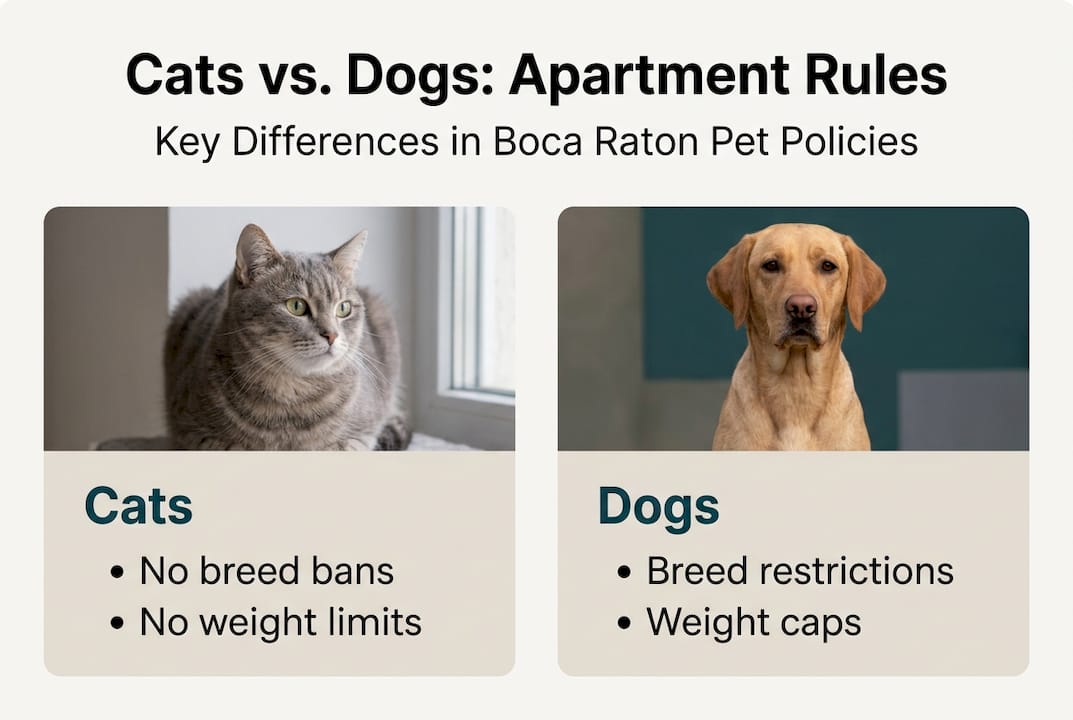
Why are cats simpler to accommodate? As Florida property law experts note, pet policies balance property risks and tenant rights, and cats carry less perceived damage potential than large dogs. Landlords are not acting out of preference. They are responding to real liability and repair cost data.
Here are the scenarios where this distinction matters most:
- You own a large Maine Coon (can exceed 18 lbs) and a dog of the same weight would be rejected outright
- You own multiple cats and the community caps dog ownership at one animal
- You are choosing apartments for cats specifically because other communities turned away your previous dog
- You want to move to a community marketed as a pet-friendly apartment complex but want to confirm cat-specific terms before visiting
Knowing these distinctions lets you negotiate or ask smarter questions before a lease is ever placed in front of you.
Fees, deposits, and exemptions: What Boca cat owners need to know
Knowing the rules isn’t enough. Financial realities and legal exemptions can make or break your cat ownership plans, so this section covers both.
Most Boca Raton apartments charge a combination of a one-time, non-refundable pet fee and a refundable pet deposit. The fee typically covers general wear, while the deposit protects against specific damage. Here is what a standard arrangement looks like in 2026:
| Charge type | Typical amount | Refundable? |
|---|---|---|
| Pet fee (one-time) | $150 to $400 | No |
| Pet deposit | $200 to $500 | Yes, if no damage |
| Monthly pet rent | $25 to $75 per month | N/A |
Review the pet deposit rules guide before signing anything so you know which charges are legally capped in Florida and which ones are not.
Now here is where it gets interesting. If your cat qualifies as an emotional support animal (ESA), the entire fee structure changes. ESAs are exempt from pet fees, deposits, and restrictions under the Fair Housing Act, provided you submit proper documentation. A standard cat with no ESA status pays fees and follows breed or number rules. An ESA-designated cat is exempt but must be verified through an official letter from a licensed mental health professional.
Here is how to secure ESA status for your cat:
- Consult a licensed therapist, psychologist, or psychiatrist
- Request a written ESA letter on official letterhead
- Confirm the letter is dated within the last 12 months
- Submit the letter to your apartment’s management team before or during the application
- Keep a copy for your own records
Pro Tip: Double-check whether your letter meets your specific community’s standards. Some properties verify credentials through a third-party service, so ask management exactly what format they accept before you pay for documentation.
For general amenities for cat owners that improve daily life beyond the financial side, it is also worth reviewing cat grooming tips to keep your unit cleaner and reduce deposit deductions at move-out.
Edge cases: Enforcement, common areas, and legal risks
Even when you follow the financial and basic pet rules, edge cases and enforcement risks can surprise unwary cat owners. This section covers the situations most articles skip entirely.
The most common mistake Boca Raton cat owners make is letting their cat roam freely in hallways, lobbies, or pool areas. It feels harmless. In practice, it is a policy violation with real legal consequences. A Boca Raton condo association sued a tenant for cats roaming common areas, citing nuisance and lease violations. That case is not an isolated incident. It reflects a pattern that Florida courts have consistently supported.
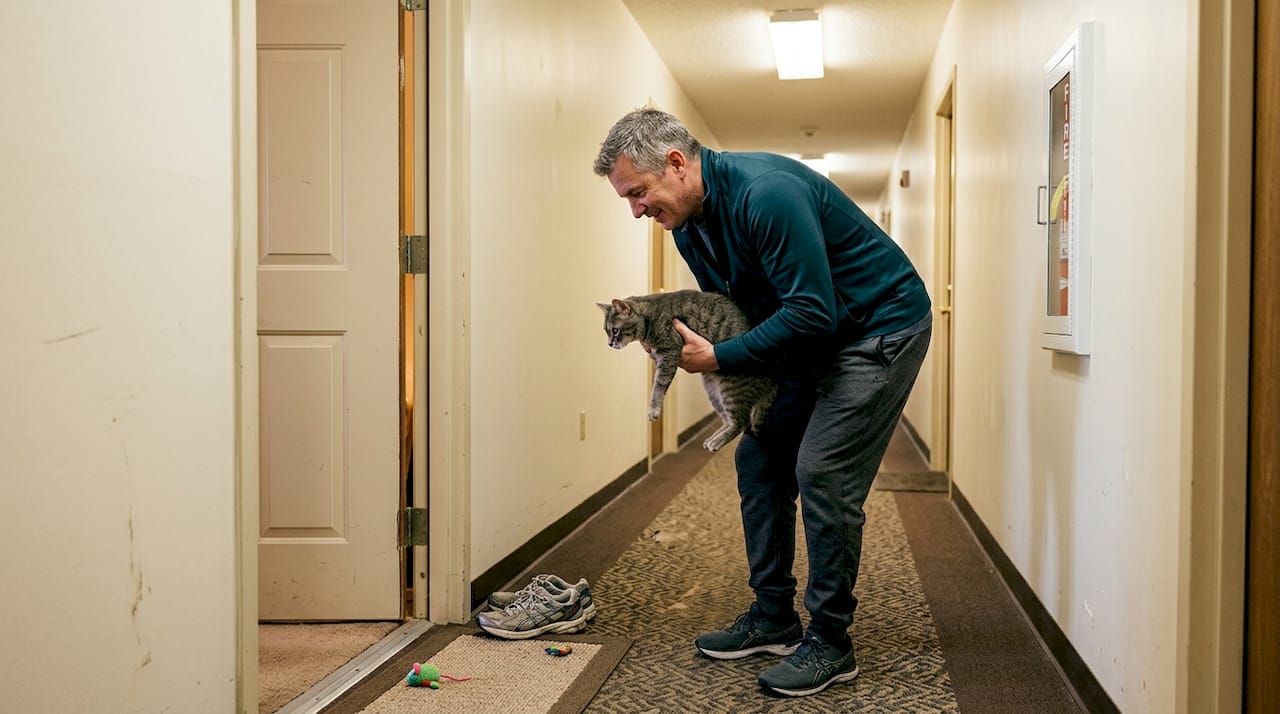
For HOA and condo rules to be legally enforceable, bylaws must be properly filed and recorded with the county. If your community’s rules meet that standard, management has every legal right to act on violations.
Here is how to stay on the right side of enforcement:
- Keep your cat indoors or use a leash and harness in any shared outdoor space
- Never prop open hallway doors, even briefly, if your cat is nearby
- Review your lease’s pet addendum for specific language about common areas
- Introduce yourself to building management early and establish a cooperative tone
- Report any neighbor complaints to management proactively rather than waiting to be cited
One more edge case worth knowing: grandfathering. If you have a cat that predates a newly adopted pet rule, you may be protected under a grandfathering clause. But this protection is rarely automatic. You typically need written confirmation from management that your existing pet is exempt from the new rule.
For stress-free planning before you even move in, the apartment viewing with cats guide covers exactly what to assess during a tour. And for practical day-to-day management, modern litter box solutions can reduce odors and mess in a smaller apartment unit significantly.
The real-life challenges and mistakes Boca cat owners face
Here is something most pet policy articles will not tell you: the legal text is rarely where cat owners get into trouble. The real problems happen in the gray areas.
Common area violations catch people off guard because they seem trivial. A cat sitting in a hallway for two minutes feels like nothing. But in a condo with strict bylaws, that sighting is documented, photographed, and sometimes submitted as evidence. The tenant who assumed “indoor only” meant “mostly indoor” is the one who ends up in front of a board.
Grandfathering is another area that trips people up. Management teams change, and verbal agreements from a previous leasing agent rarely hold up. If your cat was grandfathered under an old policy, get that in writing every time a new lease is signed.
Proactive communication with property management is genuinely underrated. Tenants who introduce themselves, ask smart questions early, and follow up in writing almost always have better outcomes than those who go silent and hope for the best. We have seen this play out repeatedly.
For student renters especially, building that relationship early makes renewals and pet-related negotiations far smoother.
Pro Tip: Document every conversation with management in writing. After any verbal discussion about your pet, send a follow-up email summarizing what was agreed. That paper trail protects you if management changes or a dispute arises later.
Find your perfect Boca Raton apartment for you and your cat
You now have a clear picture of how cat rules work in Boca Raton apartments, from fees and exemptions to enforcement risks and edge cases. The next step is finding a community that actually supports the way you and your cat want to live.
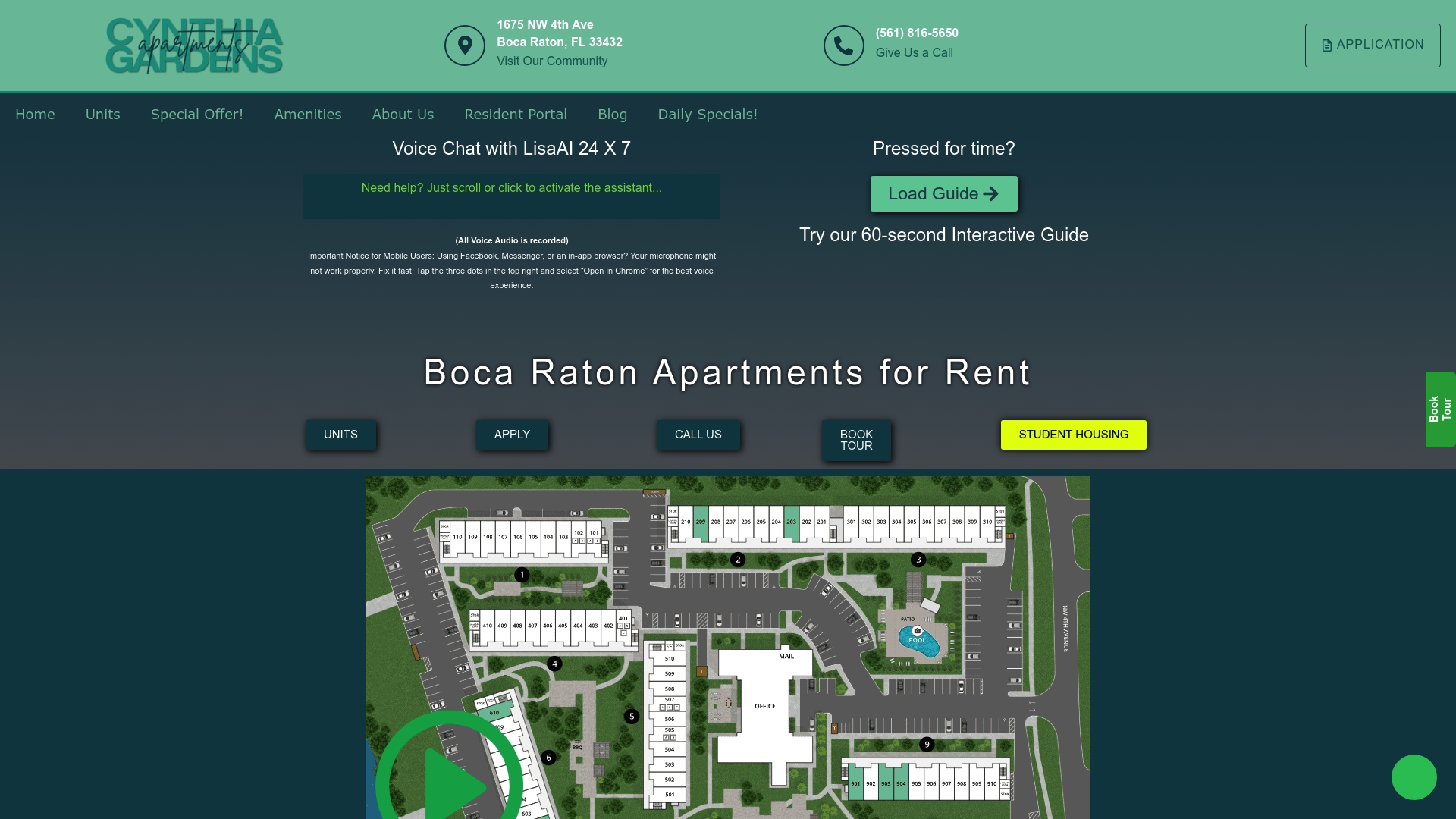
At Cynthia Gardens, we have built a pet-friendly Boca complex where cat owners are welcome without the usual runaround. Our Boca cat-friendly amenities are designed to make apartment life genuinely comfortable for your feline. When you are ready to explore specific units, browse our available pet-friendly one-bedroom options and take a virtual tour from wherever you are. No pressure, no hidden fees, and our AI chat support is available to answer your pet policy questions any time.
Frequently asked questions
Do Boca Raton apartments have breed or weight restrictions for cats?
No, most Boca Raton apartments do not impose breed or weight restrictions on cats. Apartments generally do not limit cat size or breed the way they routinely do for dogs.
Can I keep more than one cat in my Boca Raton apartment?
Usually, yes. Typical pet policies address the number of pets allowed, and cats are rarely restricted unless the policy explicitly states a limit, so always confirm before signing.
Are emotional support cats exempt from pet fees in Boca Raton apartments?
Yes. ESAs and service animals are exempt from pet fees and deposits under the Fair Housing Act as long as you provide valid documentation from a licensed mental health professional.
What happens if my cat roams outside my apartment in a Boca Raton complex?
Allowing your cat into common areas without a leash violates most pet policies. Roaming cats can result in fines, nuisance complaints, or even eviction proceedings, as Boca Raton case history shows.
Are there ways to keep my cat happy in an apartment setting?
Absolutely. Cat-friendly amenities like window perches, pet-safe flooring, and accessible litter solutions make a real difference in how comfortable your cat feels in a smaller living space.
Recommended
- Cat-friendly apartment amenities guide for Boca Raton
- Affordable cat-friendly apartments in Boca Raton 2026
- 6 Essential Apartment Pet Policies List for Boca Raton
- Apartment viewing with cats: stress-free guide for Boca pet owners
- Къщичка за Домашен любимец – за Куче/Коте – 35см/35см/40см – Кремаво-Шарена разцветка – Urban Pets – Petswin