
TL;DR:
- Renting in Boca Raton requires careful budgeting due to high costs, with rent often exceeding 35% of income. Flexibility and strong emergency savings are essential, and combining multiple budgeting strategies helps renters succeed in this competitive market. Knowing upfront expenses and utilizing rental assistance options support financial stability in this expensive city.
Renting in Boca Raton is not for the financially unprepared. The market is competitive, prices are above the national average, and the cost of just getting your keys can feel like a punch to the wallet. Whether you’re a young professional moving here for work or a student juggling tuition and rent, having solid budgeting tips for renters is not optional. It’s what separates people who thrive here from people who spend every month scrambling. This guide gives you the real numbers, the right frameworks, and the exact strategies that work in Boca Raton’s specific market.
Table of Contents
- Understand Boca Raton’s rental cost landscape
- Build your budget using proven frameworks
- Prepare financially for moving in: upfront costs and savings goals
- Control ongoing expenses: utilities, food, transportation, and miscellaneous spending
- Know your rental assistance options in Boca Raton
- Compare top budgeting strategies for renters in Boca Raton
- Why traditional budgeting rules need a Boca Raton twist
- Explore Boca Raton’s rental options and community features
- Frequently asked questions
Key Takeaways
| Point | Details |
|---|---|
| Understand local costs | Boca Raton’s rental market is expensive; awareness of all living costs is key to budgeting effectively. |
| Use flexible budgeting | Apply budgeting frameworks like 50/30/20 but adjust for high rent and prioritize emergency savings. |
| Save upfront costs early | Set aside 2-3 times your rent before moving in to cover deposits, fees, and initial payments. |
| Control monthly expenses | Manage utilities, groceries, and transportation costs carefully to maintain balance in your budget. |
| Explore assistance programs | Utilize local rental assistance options like SHIP and Section 8 if facing financial hardship. |
Understand Boca Raton’s rental cost landscape
Before you can budget, you need to know what you’re up against. Boca Raton’s housing costs run 15.1% above the national average, with average rent around $1,382 for a single person. That number climbs fast once you factor in location and unit type.
1-bedroom apartments range from $1,731 to $2,700 depending on where you are in the city. Centrally located units near FAU or downtown Boca command the higher end of that range. Studios start around $1,700. That is a significant baseline before you’ve paid for a single meal or tank of gas.
Here’s a breakdown of typical monthly costs for a single renter in Boca Raton:
| Expense category | Estimated monthly cost |
|---|---|
| Rent (1-bedroom) | $1,731 to $2,700 |
| Electricity (with AC) | ~$262 |
| Water, trash, and utilities | ~$280 total |
| Groceries | $400 to $550 |
| Transportation | $150 to $350 |
| Renter’s insurance | $15 to $30 |
| Estimated total | $2,838 to $4,172 |
Other costs to keep on your radar:
- Application fees typically run $75 to $100 per application
- Pet fees (if applicable) can add $50 to $100 per month
- Parking fees are common in mid-to-upscale communities
- Internet service averages around $60 to $80 per month
Understanding these affordable living hacks starts with knowing the true all-in cost of renting here, not just the advertised rent price.
Build your budget using proven frameworks
Now that you know how much rent and living costs can be, let’s explore how to prepare financially for renting in Boca Raton.
The 50/30/20 budgeting rule divides your take-home pay into three buckets: 50% for needs, 30% for wants, and 20% for savings. It’s a clean starting point. The problem in Boca Raton is that rent alone can eat up 35 to 45% of your take-home, which means something else has to shrink.
Here’s how to adjust the framework for this market:
- If rent exceeds 35% of income, reduce the “wants” bucket first, not the savings
- If savings must drop below 20%, maintain at least a small automated transfer every paycheck
- Track your actual spending for 30 days before finalizing any budget categories
- Automate both rent payment and savings transfers to prevent “borrowing” from yourself
The old 30% rent rule has real limits in expensive markets. Financial advisors increasingly say that emergency savings matter more than hitting a specific rent-to-income ratio. If you have three to six months of expenses saved, you have protection that a rigid percentage rule simply cannot provide.
Pro Tip: Use a free budgeting app to connect your bank accounts and automate expense categorization. Seeing your spending sorted by category in real time makes budget leaks obvious fast. Some of the best budgeting apps for renters include YNAB (You Need a Budget), Mint, and Copilot.
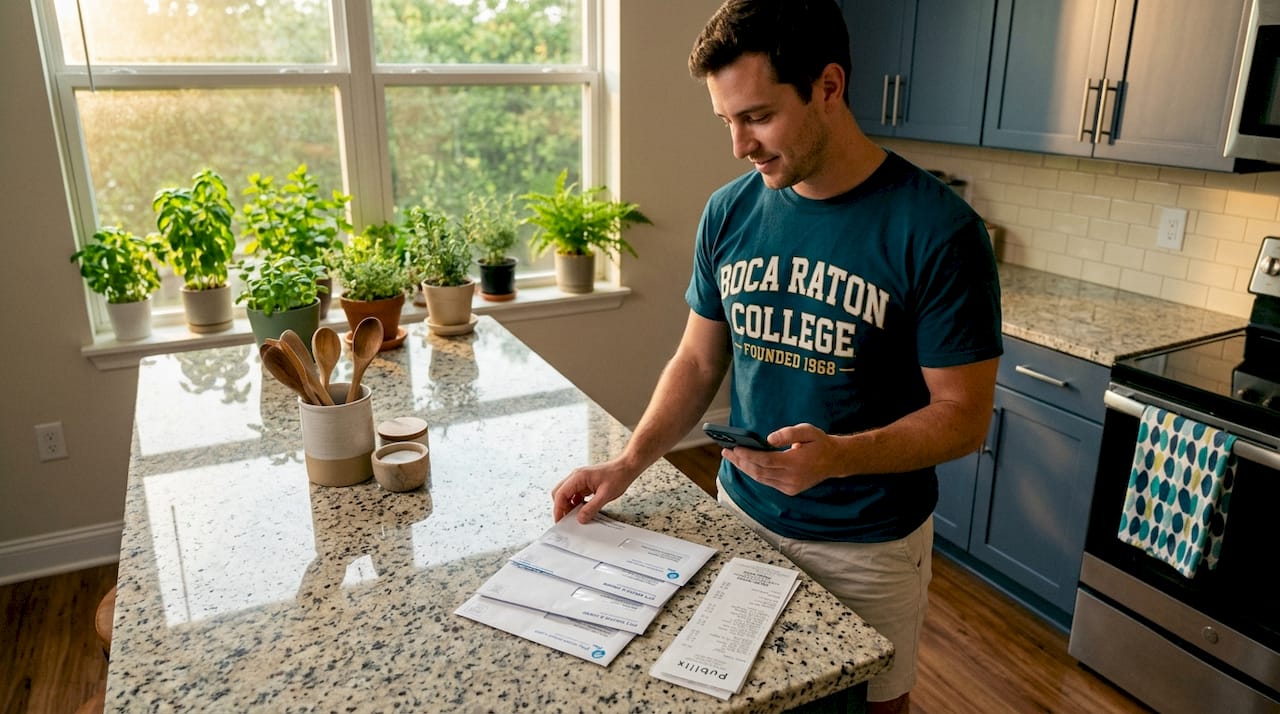
One of the most effective rent budget strategies is treating your savings target the same way you treat your rent. Non-negotiable. Automatic. Every month.
Prepare financially for moving in: upfront costs and savings goals
Besides upfront costs, controlling ongoing expenses helps maintain financial stability, which we’ll explore next. But first, you need to survive move-in day financially.
Renters should save 2 to 3 times the monthly rent before signing a lease. On a $1,900 apartment, that means having $3,800 to $5,700 ready before you move a single box. Here’s what that money covers:
- First month’s rent — due at or before lease signing
- Security deposit — usually equal to one month’s rent
- Last month’s rent — many Boca Raton landlords require this upfront
- Application fees — typically $75 to $100 per application, non-refundable
- Renter’s insurance — landlords often require this, and it runs $15 to $30 per month
Landlords in Boca Raton generally require proof of income showing you earn at least three times the monthly rent. For a $1,900 unit, that means demonstrating roughly $5,700 in monthly gross income. If you’re a student or recent grad who doesn’t meet that threshold, a co-signer is often an option.
Pro Tip: Start “paying rent” three months before your move-in date by transferring your target rent amount into a dedicated savings account every month. When move-in day arrives, you’ll have the upfront funds ready and you’ll have proven to yourself that you can afford the payment.
Review apartment insurance costs before finalizing your budget. In South Florida, renter’s insurance is especially valuable given the hurricane season risk. Most policies cost less per month than a single dinner out.
Control ongoing expenses: utilities, food, transportation, and miscellaneous spending
Florida summers are no joke for electricity bills. Monthly electricity bills average $262 due to heavy AC use, with total utilities including water and trash often reaching $280 or more. That’s a significant fixed cost, and it spikes in July and August.
Statistic: A renter in Boca Raton can expect to spend over $3,300 per year on utilities alone, even in a modest one-bedroom apartment. That’s roughly the equivalent of two full months of grocery bills.
Here’s how to keep ongoing expenses from quietly wrecking your budget:
Utilities and electricity:
- Set your thermostat to 78°F when home and 82°F when away
- Use ceiling fans to reduce how hard the AC works
- Ask your landlord if the unit has energy-efficient windows or appliances before you sign
Groceries and food:
- Budget $400 to $550 per month for groceries
- Shop at Aldi, Trader Joe’s, or Publix during weekly sales
- Meal prep on Sundays to cut down on expensive weeknight takeout
Transportation:
- Public transportation saves renters close to $1,000 per year compared to driving
- If you must drive, carpooling with coworkers or classmates cuts gas and parking costs
- Walking or biking to nearby errands saves money and actually saves time in traffic
Miscellaneous spending:
- Audit subscriptions every 90 days. Cancel anything you haven’t used in 30 days
- Replace one dining-out meal per week with a home-cooked version
- Redirect those savings directly into your emergency fund
These are the budget hacks for Boca Raton that move the needle. Not dramatic lifestyle changes, just consistent, specific decisions.
Know your rental assistance options in Boca Raton
Even with great planning, financial emergencies happen. Job loss, medical bills, and unexpected repairs can push any renter to the edge. Knowing what assistance exists before you need it is a smart part of any financial plan.
“Emergency rental assistance programs exist specifically for renters facing short-term hardship. Applying early and keeping clean records dramatically improves your outcome.”
Florida’s SHIP program offers up to 18 months of rental assistance for households under 80% of the area median income who face eviction risk. Applications are processed through Palm Beach County offices.
Section 8 vouchers provide subsidies for qualifying low-income renters, with processing times typically running two to four weeks through local Public Housing Authorities.
Key steps for applying successfully:
- Gather your documentation first: current lease, income verification, bank statements, and hardship letter
- Apply as early as possible since funds are limited and waitlists exist, especially for Section 8
- Keep copies of everything you submit, along with dates and contact names
- Follow up every two weeks to confirm your application status
The apartment rental guide for Boca Raton covers many of these resources in detail if you want a deeper dive into the local landscape.
Compare top budgeting strategies for renters in Boca Raton
After reviewing all the frameworks and tactics, it helps to see them side by side. Here’s how the main rent budget strategies stack up for Boca Raton renters:
| Strategy | Best for | Key benefit | Main limitation |
|---|---|---|---|
| 50/30/20 rule | First-time renters | Clear structure | Rent often exceeds 50% cap |
| 30% rent cap | Higher earners | Simple benchmark | Unrealistic in Boca’s market |
| Emergency fund focus | All renters | True financial resilience | Requires consistent discipline |
| Roommate arrangement | Students, young professionals | Cuts rent by 30 to 50% | Requires compatible living partners |
| Expense tracking first | New movers | Reveals real spending habits | Takes 30 days before budgeting |
| Automated transfers | Anyone prone to overspending | Removes willpower from equation | Requires stable income |
Tracking spending for 30 days before your move gives you real data instead of guesses. Most people underestimate their wants spending by 20 to 30%.
Simulating rent payments by transferring money monthly into savings trains discipline and builds the upfront funds you need. It also tells you, before you sign anything, whether the rent you’re targeting actually fits your lifestyle.
Additional tactics worth combining:
- Use cashback credit cards responsibly for groceries and gas
- Apply for the student rent budget programs if you’re an FAU student
- Review your budget quarterly, not just when something goes wrong
Pro Tip: The most financially stable renters in high-cost markets tend to use two or three of these strategies together, not just one. Pick the combination that matches your income stability and discipline level.
Why traditional budgeting rules need a Boca Raton twist
Most budgeting advice is written for an imaginary average city with average rent. Boca Raton is not that city. Applying cookie-cutter rules here without adjusting for local costs is how renters end up stressed, underfunded, and surprised every month.
The strict 30% rent rule is misleading in costly markets. In Boca Raton, following it rigidly could mean ruling out most decent one-bedroom apartments entirely. What matters more is whether you have a funded emergency account and a realistic read on your full monthly expenses.
One thing that consistently surprises new renters here is the hidden cost of lifestyle inflation. You move to a nice area, your social spending goes up, and suddenly your “wants” category is 40% of income instead of 30%. Tracking all expenses before budgeting reveals this pattern before it becomes a crisis. Subscriptions alone can inflate monthly spending by 20 to 30% without a single intentional purchase.
Our perspective, after watching renters succeed and struggle in this market: the renters who do best are the ones who automate everything and live slightly below their means. They don’t rely on willpower. They use smart budget hacks tailored to this specific city, this climate, and this market. They think about renter’s insurance before it’s required, not after a storm. And they treat their emergency fund like rent, because in this city, that fund IS your real safety net.
Explore Boca Raton’s rental options and community features
You now have the financial tips for renters and the monthly budgeting advice you need to approach Boca Raton’s market with confidence. The next step is finding a rental that actually fits your budget without hidden fees eating into it.
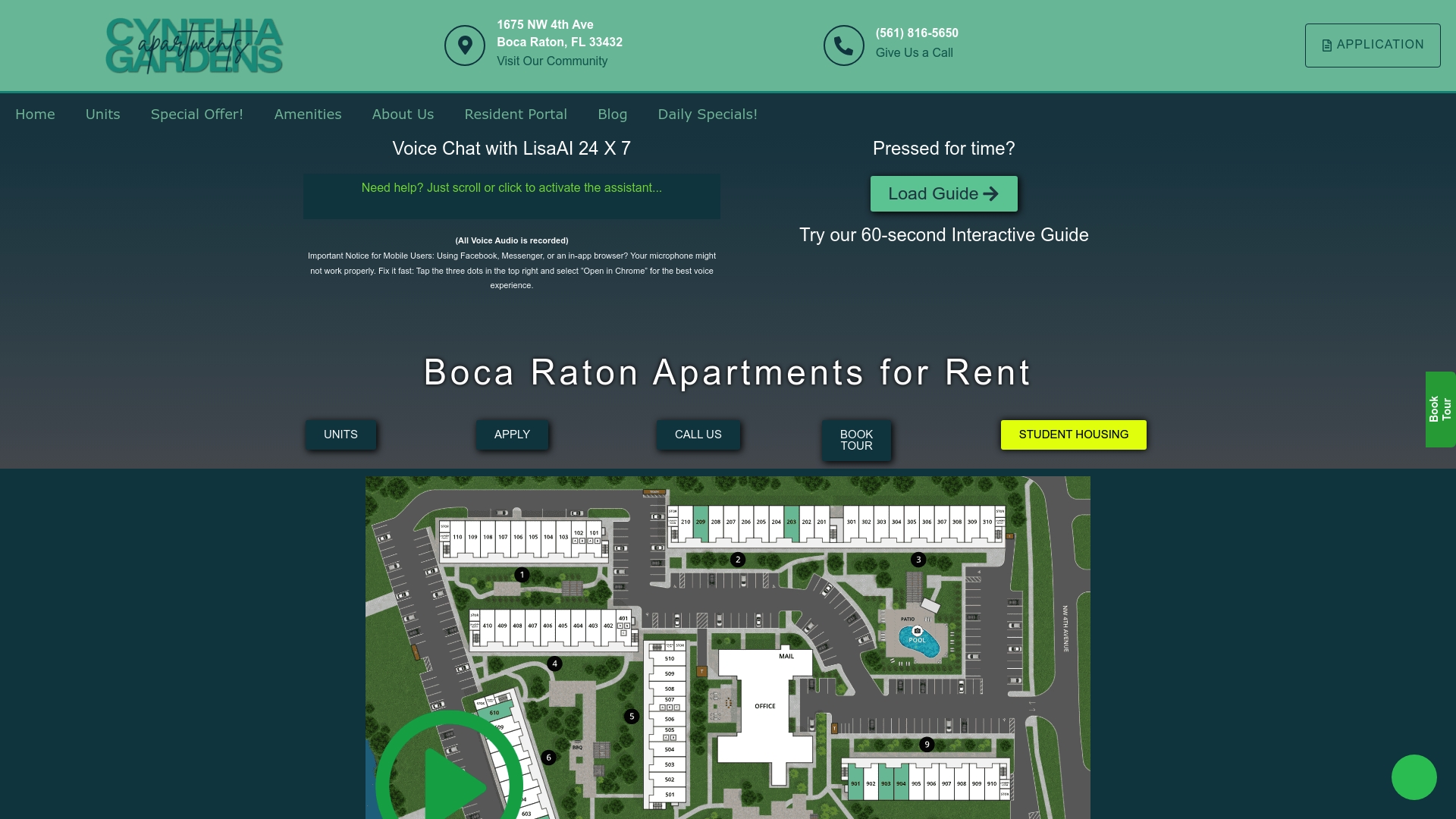
At Cynthia Gardens, we offer one-bedroom apartments built for young professionals, students, and pet owners who want transparent pricing and real amenities. You can browse apartment styles and features to find what fits your lifestyle and budget, review community rules in Boca Raton so there are no surprise fees after you move in, and take virtual tours from your phone before ever setting foot on the property. We also offer AI chat support and voice assistance to answer your leasing questions instantly. Pair your new budgeting strategy with a home that respects your finances from day one.
Frequently asked questions
How much should I ideally spend on rent in Boca Raton?
Experts recommend capping rent at 30 to 35% of your take-home pay, but given Boca Raton’s high-cost market, having a funded emergency account covering three to six months of expenses is equally important as hitting that percentage.
What upfront costs should I expect when renting in Boca Raton?
You should have two to three times the monthly rent saved before signing a lease. Renters typically need funds to cover first and last month’s rent, a security deposit, application fees, and initial renter’s insurance.
Are there rental assistance programs available for Boca Raton renters?
Yes. Florida’s SHIP program and Section 8 both provide emergency rental assistance and subsidies for qualifying renters, processed through Palm Beach County offices and local Public Housing Authorities.
How can I save money on utilities in Boca Raton?
Reducing AC use, setting smart thermostat schedules, and choosing apartments with energy-efficient appliances all help. Florida’s average electricity bill hits around $262 per month in summer, so small adjustments add up to real annual savings.
What budgeting framework works best for first-time renters?
The 50/30/20 rule is the best starting framework, but in Boca Raton you will likely need to adjust the percentages since rent often pushes needs above 50% of income. Treat it as a guide, not a rigid rule.
Recommended
- Smart budget hacks for affordable living in Boca Raton
- Proven ways to save on rent in Boca Raton: 2026 guide
- Smart Renting: Tips for Finding the Best Boca Apartment Deals – Luxury Apartments for Rent in Boca Raton | Premium Boca Raton Apartments | Aapartments Boca Raton
- How to Find Affordable Apartments in Boca Raton Without Sacrificing Comfort – Luxury Apartments for Rent in Boca Raton | Premium Boca Raton Apartments | Aapartments Boca Raton