TL;DR:
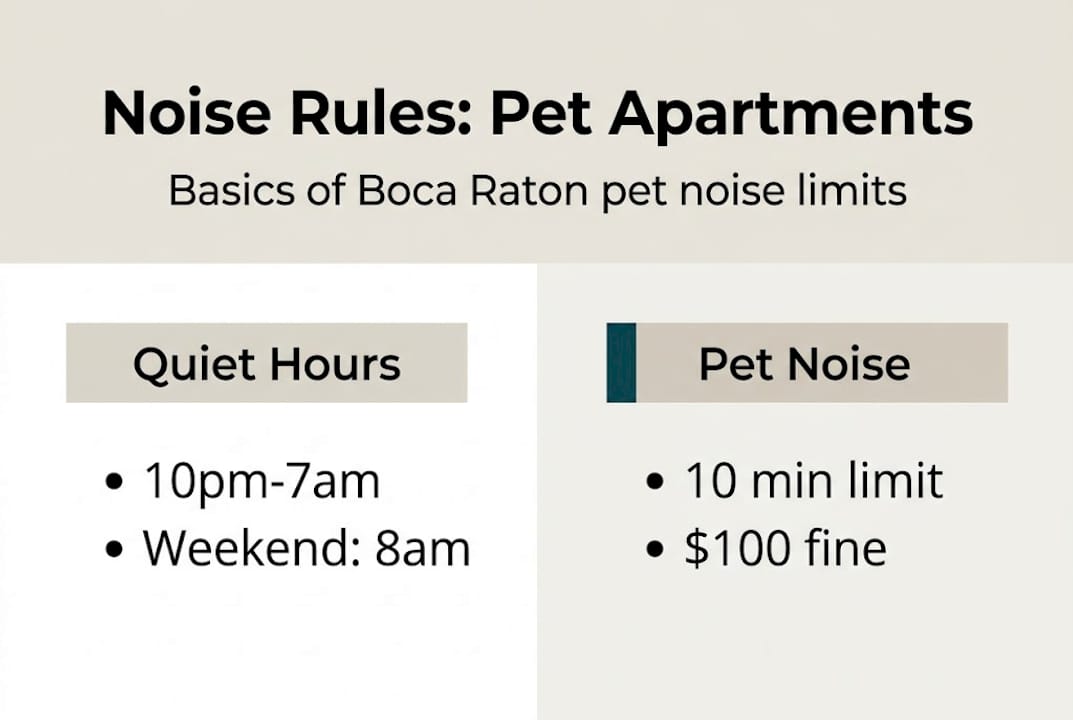
- Boca Raton enforces strict noise regulations, with quiet hours from 10 PM to 7 or 8 AM.
- Continuous barking over 10 minutes or intermittent barking totaling 30+ minutes daily is a violation.
- Clear, documented pet noise policies help tenants manage expectations and prevent conflicts.
A dog that barks every afternoon might seem harmless until your landlord slides a violation notice under your door. Many pet owners in Boca Raton discover too late that a “pet-friendly” label on a listing says nothing about how the community handles noise. Florida’s rules are specific, apartment leases are binding, and the gap between what you assumed and what’s written can cost you real money or even your home. This guide breaks down local noise laws, how they show up in leases, and exactly what you can do to keep your pet and your apartment without the stress.
Table of Contents
- Understanding noise regulations in Boca Raton
- How apartment noise policies are created and enforced
- Common pet noise scenarios and real-life solutions
- Tips for finding the right pet-friendly, affordable apartment
- Why pet noise policy clarity is a game-changer for Boca renters
- Next steps: Where to find Boca Raton’s best pet-friendly, quiet apartments
- Frequently asked questions
Key Takeaways
| Point | Details |
|---|---|
| Strict quiet hours | Boca Raton enforces 10 PM to 7 or 8 AM quiet hours affecting all apartment residents. |
| Clear pet noise limits | Ten minutes of continuous barking or thirty minutes of intermittent barking can result in a violation. |
| Lease terms matter | Apartment leases combine city noise rules and property management enforcement, so read every clause. |
| Solutions available | Common noise issues have practical fixes, from exercise routines to soundproofing, helping maintain community harmony. |
| Be proactive | Understanding policies and asking questions before you rent sets you up for pet-friendly living success. |
Understanding noise regulations in Boca Raton
Boca Raton is a well-managed city with a reputation for orderly neighborhoods, and that reputation comes with rules. Before you sign a lease with your dog or cat in tow, understanding the noise framework here is not optional. It directly affects whether your pet can comfortably exist in your apartment without becoming a liability.
The city draws a clear line when it comes to time. Quiet hours are enforced from 10 PM to 7 AM on weekdays and from 10 PM to 8 AM on weekends. During those hours, noise that can be plainly heard at the property line is a violation. Your neighbor does not need to record your dog or file a formal report. If a code officer can hear it from outside your unit, you are already in breach.
Barking specifically has its own standard. Under barking dog rules, continuous barking for 10 or more minutes is a nuisance, as is intermittent barking that adds up to 30 or more minutes within any 24-hour period. That second rule catches a lot of pet owners off guard. A dog that barks for two or three minutes at a time, multiple times a day, can still put you in violation territory.
Key noise thresholds at a glance:
| Scenario | Threshold | Status |
|---|---|---|
| Continuous barking | 10+ minutes | Violation |
| Intermittent barking | 30+ min per 24 hrs | Violation |
| Nighttime noise (weekdays) | After 10 PM | Restricted |
| Nighttime noise (weekends) | After 10 PM | Restricted |
| Noise at property line | Plainly audible | Prohibited |
Pet noise consistently ranks among the top apartment complaints nationwide, and high-decibel barking typically falls between 80 and 90 dB, which is loud enough to be heard clearly through walls and across yards. To put that in perspective, 85 dB is roughly the volume of a lawn mower.
Statistic: Dog barking is one of the most reported noise complaints in multifamily housing, and noise violations are among the leading reasons pet owners lose their leases.
Understanding apartment pet policies before you move in is the clearest way to avoid surprises. Many communities also publish essential apartment pet policy tips that spell out exactly what is expected. If you are still evaluating whether a property is right for you, reading about pet-friendly apartments explained can save you from a mismatched lease.
How apartment noise policies are created and enforced
City ordinances set the floor, but your lease is the document that controls your daily life. Most Boca Raton apartment communities build local noise rules directly into their lease agreements. That means breaking a city noise ordinance is often also a lease violation, giving management two separate grounds to act.
Here is how the enforcement process typically unfolds:
- A neighbor files a complaint with building management or directly with the city.
- Management sends a written notice to the resident, documenting the complaint.
- If the issue continues, a second notice may include a fine or formal warning.
- Repeated violations can escalate to eviction proceedings.
- City code officers can also respond independently, issuing fines separate from any landlord action.
Fines often start at $100 per violation and can increase with each repeat offense. Most enforcement is complaint-driven, meaning management reacts to reports rather than monitoring residents proactively. But that also means a single unhappy neighbor can set the process in motion quickly.
Comparison: City enforcement vs. building enforcement
| Factor | City ordinance | Building lease |
|---|---|---|
| Who enforces it | Code officers | Property management |
| Trigger | Complaint or observation | Neighbor complaint |
| Penalty | Fines starting at $100 | Notices, fines, eviction |
| Appeals process | City hearing | Management review |
One important edge case: service animals and emotional support animals (ESAs) are not pets under federal law. Properties cannot apply a no-pet policy to them, and they cannot charge pet deposits for them. However, that protection does not extend to noise. If your ESA barks through the night, you are still subject to the same noise rules as every other resident.
Pro Tip: Ask your property manager for a written copy of their noise complaint process before you sign. Knowing the exact steps protects you if a complaint is ever filed unfairly.
Familiarizing yourself with apartment noise laws gives you a baseline for evaluating any building. Choosing a pet-friendly property management team that has experience with pet owners also makes a real difference when gray-area situations come up.
Common pet noise scenarios and real-life solutions
Most noise violations do not happen because a pet owner is careless. They happen because everyday situations create noise in ways people did not anticipate. Here are the scenarios that come up most often and what actually works.
The most common situations:
- A dog left alone during work hours barks for hours out of anxiety.
- A new pet in the apartment has not yet adjusted to the environment.
- A dog reacts to hallway sounds, other pets, or foot traffic outside the door.
- A cat or small dog triggers noise complaints from downstairs neighbors through impact sounds.
When a dog is left alone, separation anxiety is usually the root cause. Regular morning exercise before you leave reduces restlessness and cuts barking significantly. A tired dog is a quiet dog. Interactive toys, background noise from a TV or fan, and gradual alone-time training all help over the first few weeks.
“Barking dogs are a nuisance violation if continuous for 10 or more minutes or intermittent for 30 or more minutes in any 24-hour period in Boca Raton.”
If you receive a noise warning, respond the same day. Acknowledge the concern in writing, explain what steps you are taking, and follow through. Management respects residents who engage quickly. Ignoring a notice almost always speeds up the escalation.

Pro Tip: Set a phone alarm for 9:45 PM as a reminder to settle your pet for the night before quiet hours begin. It sounds simple, but building that habit prevents most late-night complaints.
Understanding the benefits of pet-friendly apartments goes beyond just being allowed to have a pet. It means the building is set up in a way that reduces friction for you and your neighbors. Exploring pet-friendly one-bedroom options that are built with pet owners in mind makes day-to-day life much easier.
Tips for finding the right pet-friendly, affordable apartment
Once you know the rules, your apartment search becomes a lot more focused. You are not just looking for a building that allows pets. You are looking for one where the noise policies are clear, the community is compatible with your lifestyle, and the price does not bury you in hidden fees.
Steps to evaluate any apartment before signing:
- Ask for the written noise policy, not just a verbal summary.
- Read the pet addendum carefully for deposit amounts, breed restrictions, and behavioral expectations.
- Walk the property at different times of day to gauge overall noise levels.
- Ask about the complaint process and how management handles disputes.
- Check whether common areas like hallways and laundry rooms are soundproofed or carpeted.
On lease language specifically, watch for vague phrases like “excessive noise” with no defined threshold. A strong lease defines what counts as a violation, how it is reported, and what happens next. Ambiguity always works against tenants because management can interpret it broadly.
Florida law also distinguishes service animals from standard pets when it comes to deposits and access, but tenants remain liable for any damage or noise those animals cause. Know where your protections start and stop.
Checklist for noise risk in a new apartment:
- Is the unit on an interior hallway or facing a busy street?
- Are floors hardwood (higher impact noise) or carpeted?
- How thick are the walls between units?
- Are there dedicated pet relief areas away from neighbor windows?
- Does the building have a dog park or outdoor space for exercise?
Pro Tip: When touring, knock on the wall between units. A hollow sound means thinner drywall and more sound transmission. A dull thud means denser construction and better sound isolation.
Resources like finding pet-friendly apartments walk you through what questions to prioritize. For budget-conscious renters, affordable housing tips for pet owners help you balance cost with the features that actually matter for comfortable pet living.
Why pet noise policy clarity is a game-changer for Boca renters
Most apartment searches start and end with one question: does the building accept pets? That is the wrong question. A building that accepts your dog but has vague or aggressively enforced noise rules puts you in a fragile position from the moment you sign.
Ambiguous noise policies create tension between neighbors and management. When nobody knows where the line is, every complaint feels personal and every response feels arbitrary. That environment drives turnover. Residents leave, buildings lose reliable tenants, and nobody wins.
Clear policies do the opposite. They set shared expectations before conflict starts. A resident who knows that continuous barking over 10 minutes is a violation can actually plan around that. They can invest in training, adjust routines, and manage their pet with confidence. Transparency removes guesswork.
We believe the renters who thrive long-term are those who engage with navigating pet policies before there is ever an issue, not after. That proactive mindset is what separates a smooth lease from a stressful one. Do not wait for a notice. Know your policy, know your city’s rules, and build your habits around them.
Next steps: Where to find Boca Raton’s best pet-friendly, quiet apartments
If you are ready to apply these insights, finding the right property is simpler than you think.
At Cynthia Gardens, we built our community around the kind of transparency that makes pet ownership in an apartment actually work. That means clear noise policies, written pet rules with no hidden fees, and a leasing team that gives you real answers.
Browse affordable Boca apartments for pet owners and see which floor plans fit your lifestyle. If you want a comfortable space for you and your pet, check out our pet-friendly one-bedroom apartments or explore all leading pet-friendly communities in Boca Raton that prioritize a peaceful, well-managed environment for residents and their animals.
Frequently asked questions
What are Boca Raton’s quiet hours for apartment noise?
Quiet hours run from 10 PM to 7 AM on weekdays and 10 PM to 8 AM on weekends, during which noise plainly audible at the property line is prohibited.
How long can my dog bark before it’s a violation in Boca Raton?
Continuous barking over 10 minutes or intermittent barking totaling 30 minutes in a single day both qualify as a nuisance violation under city rules.
Are service and emotional support animals treated differently from pets under noise policies?
Florida law exempts service and emotional support animals from no-pet policies and deposits, but those animals are still fully subject to noise rules and the tenant remains liable.
What penalties can I face for repeated pet noise complaints?
Repeated violations typically result in escalating fines starting at $100, formal management notices, and in serious cases, eviction proceedings.
How do I check if an apartment’s noise policy is suitable for a pet owner?
Request the written noise policy during your tour, look for defined thresholds rather than vague language, and ask the property manager directly how complaints are handled and resolved.
Recommended
- What Is a Pet-Friendly Apartment in Boca Raton?
- 6 Essential Apartment Pet Policies List for Boca Raton
- Premier Apartment Complex in Boca with Pet-Friendly Living – Luxury Apartments for Rent in Boca Raton | Premium Boca Raton Apartments | Aapartments Boca Raton
- Pet-Friendly One-Bedroom Apartments in Boca Raton: Comfort for You and Your Pet – Luxury Apartments for Rent in Boca Raton | Premium Boca Raton Apartments | Aapartments Boca Raton