
Last Updated: November 18, 2026
Quick Summary
The best apartment floor for less noise is carpet with dense padding, which absorbs footstep impact better than any hard surface. If you prefer hard flooring, choose rigid-core vinyl or laminate over acoustic underlayment, and add thick rugs with felt pads. Flooring reduces impact noise, not airborne noise like voices.
- Read IIC ratings first for footsteps and STC ratings first for voices.
- Padding density matters more than carpet color or style for cutting footstep noise.
- Floating floors reduce sound bridging, while glued or nailed floors transmit vibration.
- Foam acoustic panels absorb echo but do not stop impact or airborne noise.
- The top floor eliminates overhead footstep noise but adds heat gain and roof-leak risk.
Table of Contents
- Impact Noise vs. Airborne Noise: What Flooring Can and Cannot Fix
- Best Flooring for Noise Reduction: Comparing Materials and Sound Ratings
- Carpet and Padding: The Quietest Option for Footstep Noise
- Hard-Surface Flooring and Underlayment: Vinyl, Laminate, and Hardwood
- Soundproof Flooring for Apartments: What Actually Works Underfoot
- How to Reduce Walking Noise From Upstairs Floors DIY
- Which Apartment Floor Level Is Quietest in Boca Raton Buildings
- Tour a Quiet Boca Raton Apartment at Cynthia Gardens
- Frequently Asked Questions
Impact Noise vs. Airborne Noise: What Flooring Can and Cannot Fix
Choosing the best apartment floor for less noise starts with one distinction: impact noise and airborne noise behave differently, and flooring only solves one of them well. Impact noise is physical contact, like footsteps, dropped objects, or a chair dragging across a floor. Airborne noise is sound traveling through the air, like voices, televisions, or music. That distinction decides whether a new floor helps at all.
Flooring is a sound absorption tool for impact noise. Carpet, padding, and underlayment cushion the strike of a foot and reduce the vibration that travels into the floor-ceiling assembly below. No floor covering stops airborne noise. If voices carry through a shared wall, a rug will not fix it.
Here is the practical takeaway: fix impact noise from below with floor materials, and treat airborne noise with wall and ceiling solutions outside your control.
Best Flooring for Noise Reduction: Comparing Materials and Sound Ratings
The best flooring for noise reduction in an apartment is carpet with thick padding, followed by hard flooring installed over acoustic underlayment. Bare hardwood and tile rank last unless you add a rug or cushioning layer.
Sound ratings make these comparisons concrete. Two numbers matter:
- STC (Sound Transmission Class) measures how well a floor-ceiling assembly blocks airborne noise.
- IIC (Impact Insulation Class) measures how well it resists impact noise, which is the footstep problem.
Higher numbers mean better performance. As SG Carpet’s guide to quiet flooring explains, both ratings apply to flooring choices for apartments and condos, and comparing materials without them is guesswork.
| Flooring Type | Impact Noise (IIC) | Airborne Noise (STC) | Best For |
|---|---|---|---|
| Carpet + thick padding | Highest | Moderate | Bedrooms, upstairs units |
| Carpet tile + cushion | High | Moderate | Rental-friendly upgrades |
| Rigid-core vinyl + underlayment | Moderate | Moderate | Kitchens, living areas |
| Laminate + acoustic underlay | Moderate | Moderate | Budget hard-surface option |
| Hardwood (floating) | Low | Low to moderate | Style-first, rug-dependent |
| Tile and stone | Lowest | Low | Bathrooms, entries |
Reading STC and IIC Ratings Before You Choose
Read IIC first if footsteps are your complaint, and STC first if voices are. A floor with a strong IIC score still lets conversation through, and a wall with good STC does nothing for a dropped dumbbell. Ask the leasing office for the assembly rating, not just the flooring name. Ask whether the building publishes a minimum IIC for upper-floor units.
Carpet and Padding: The Quietest Option for Footstep Noise
Carpet with dense padding is the quietest floor covering for footstep noise, full stop. The pile absorbs the strike, the padding absorbs the vibration, and the combination cuts the sound that reaches the unit below more than any hard surface can match.
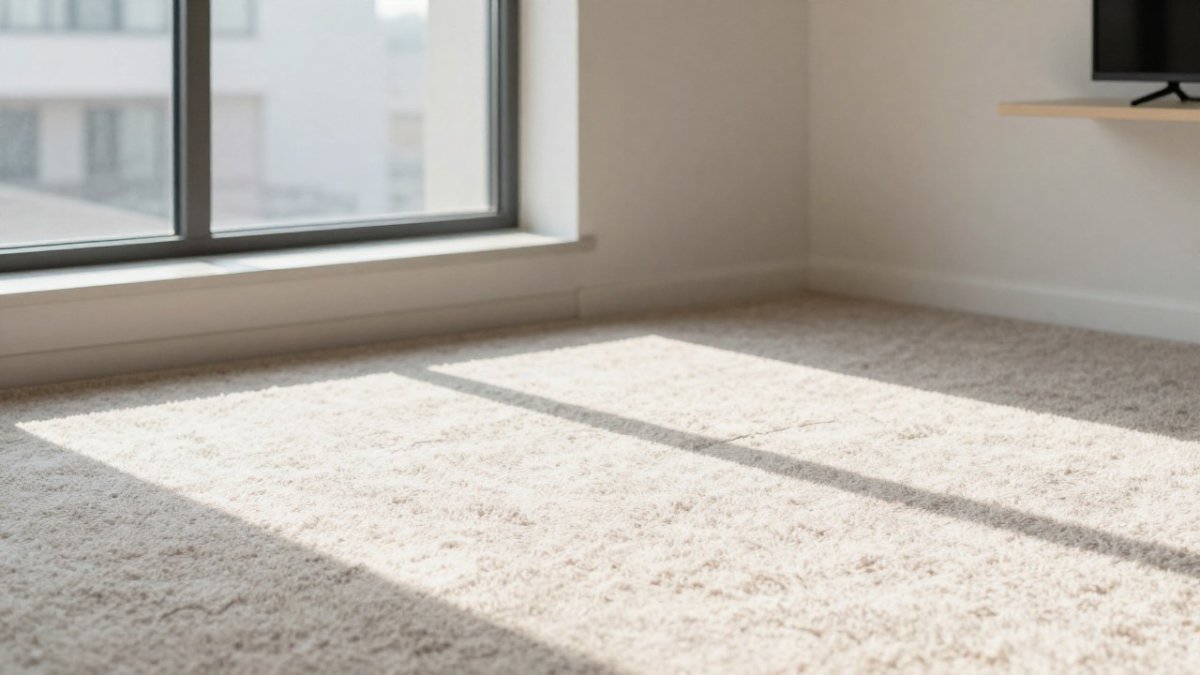
Padding density matters more than carpet color or style. A thin, cheap pad under premium carpet still transfers thuds. Our guide to carpet damage charges in Florida breaks down how age lowers the bill and how photos protect your deposit.
Watch out: carpet in a bathroom or entry collects moisture and mildew in Florida humidity, and the replacement cost lands on you. Keep carpet in bedrooms and living areas.
Hard-Surface Flooring and Underlayment: Vinyl, Laminate, and Hardwood
Hard-surface flooring can work in an apartment, but only with the right underlayment underneath. Rigid-core vinyl and quality laminate paired with acoustic underlayment are the practical middle ground, and both appear in McMillan Floors’ guide to apartment and condo flooring as quieter hard-surface options.
The underlayment does the sound work. Rubber underlayment and foam underlay each reduce impact noise by decoupling the finished floor from the subfloor and absorbing vibration. Cork is a third option, and Greatmats’ soundproof flooring overview covers cork and rubber rolled goods for exactly this purpose. Because impact noise travels through the floor assembly, shock-absorbing floor underlayment can help limit vibration before it reaches the room below.
Installation method changes the result:
- Floating floors rest on the underlayment without fasteners, which reduces sound bridging.
- Glued or nailed floors transmit vibration directly into the structure.
- A gap at the perimeter lets the floor move without pressing into walls.
If you are coming from carpet, expect a floating vinyl plank over rubber underlayment to feel harder and sound sharper underfoot, even when the unit below hears less.
Soundproof Flooring for Apartments: What Actually Works Underfoot
Soundproof flooring for apartments works when it targets vibration, not just surface softness. Three layers do the real work: a cushioning layer under the finished floor, a dense mass layer that blocks transmission, and a sealed perimeter that stops sound from leaking around the edges.
Acoustical Solutions’ guide to soundproofing materials notes that hard surfaces such as tile and hardwood amplify sound, and that thick rugs or carpets reduce footstep noise over hard floors. That is the cheapest fix available: a thick rug with a felt pad over existing hard flooring.
What most guides miss is that a sound-control system fails at the edges. If the underlayment stops short of the wall or the baseboard presses the floor down, vibration bridges straight into the structure and the rating collapses. Installation details matter as much as the material label.
How to Reduce Walking Noise From Upstairs Floors DIY
You cannot change your upstairs neighbor’s floor, but you can reduce how much of their walking noise reaches your unit.
- Add mass to your ceiling. A heavy rug or acoustic panel mounted on the ceiling absorbs some impact noise before it radiates into your room. Mass-loaded vinyl is the most effective renter-friendly option, but it is heavy and requires ceiling mounting, so confirm your lease allows it.
- Use a ceiling cloud or suspended panel. A suspended acoustic panel decouples slightly from the ceiling and interrupts the vibration path. This is more effective than foam panels pressed directly against the ceiling.
- Add soft furnishings below the noise path. A thick rug with a felt pad, upholstered furniture, and heavy curtains absorb sound inside your unit and reduce the echo that makes footsteps sound louder.
For airborne noise (voices, televisions, music). Airborne noise travels through the air and through gaps, so the fixes that work are the ones that seal and add mass to the boundaries.
- Seal the gaps. Weatherstripping around your door, outlet gaskets on shared walls, and door sweeps cut the airborne component that travels with footsteps. A common pattern is that sealing a door gap reduces perceived neighbor noise more than adding a rug.
- Add mass to shared walls. A bookshelf packed with books against a shared wall adds mass and absorbs sound. Hanging a heavy tapestry or acoustic panel on the shared wall works the same way.
What does not work. Foam acoustic panels absorb echo inside a room. They do not stop impact noise coming through a ceiling, and they do not block airborne noise through a wall.
Document and report. If the noise is persistent and unreasonable, your lease and local law may give you options. Our guide to apartment noise laws and tenant rights explains how to file a complaint and what a landlord must do.
Watch out: do not install permanent ceiling fixtures or drill into a ceiling you do not own without written permission. A deposit dispute over ceiling damage can cost more than the noise reduction is worth.
Which Apartment Floor Level Is Quietest in Boca Raton Buildings
Most renters searching for the best apartment floor for less noise are really asking which floor level to rent. No single level wins on every noise source, because each level trades one kind of noise for another.
Top floor. The top floor eliminates overhead footstep noise entirely, which is the single most common complaint renters report. That advantage is real in both concrete and wood-frame buildings.
Middle floor. A mid-floor unit sits between two neighbors, so you inherit impact noise from above and generate it for the unit below. The upside is that you are buffered from street-level traffic, parking-lot activity, and ground-floor entry doors.
Ground floor. Ground-floor units trade overhead footsteps for street-level and common-area noise: parking-lot doors, landscaping equipment, pool activity, mailroom traffic, and, in Florida, more humidity and pest pressure.
Match the floor level to your main noise source. If overhead footsteps are your trigger, prioritize the top floor. If street and parking noise bother you, prioritize a mid or upper floor away from the parking lot.
Verify before you sign. Ask the leasing office three questions: what the building is constructed of, what the floor-ceiling assembly’s IIC and STC ratings are, and which units in the building have logged noise complaints in the past year. For a closer look at how to find quiet apartments for professionals in Boca Raton, review our guide to neighborhood, construction, and noise assessment. A property manager who can answer those questions is telling you the building was designed with sound in mind. A property manager who cannot is telling you something too.
Tour a Quiet Boca Raton Apartment at Cynthia Gardens
Quiet is a design decision, and it starts with the building. Cynthia Gardens is a garden-style community in Boca Raton, Florida, with landscaped grounds. Our modern one-bedroom apartments feature stainless steel appliances and quartz countertops, and residents enjoy a resort-style pool and maintenance-free living.
If you are searching for a quiet apartment near me in Boca Raton, start with a tour and listen for yourself. Browse our shortlist of quiet apartments for rent in Boca Raton, then come see the grounds in person.
The right floor reduces footstep noise, but the right building reduces the noise you never have to think about. Cynthia Gardens pairs garden-style construction with landscaped grounds, a resort-style pool, and maintenance-free one-bedroom apartments near FAU and the beach. Get started with Cynthia Gardens and schedule a tour to hear the difference for yourself.
Frequently Asked Questions
What floor is the quietest in an apartment?
Floor level alone does not decide quiet. A top-floor unit removes footsteps from above but can still receive sound through shared walls and from below, and sound can still transmit from underneath. Ground-floor units avoid downstairs neighbors but sit closer to parking and outdoor noise. Ask about the floor-ceiling assembly and sound ratings, then tour at a busy hour to hear the building for yourself.
Does carpet reduce noise between apartment floors?
Carpet with thick padding is the most effective common floor covering for absorbing footstep and impact noise. Hard surfaces such as tile and hardwood can amplify sound, while thick rugs or carpets help reduce noise from them. For renters who cannot replace flooring, a dense rug pad under a large area rug is the lowest-cost way to soften impact noise without touching the subfloor.
What is the best soundproof flooring for apartments?
For soundproof flooring for apartments, the material matters less than the assembly. Carpet and padding lead on impact noise. If you want a hard surface, rigid-core SPC vinyl or quality laminate paired with an acoustic underlayment is the practical route, . Cork and rubber rolled goods are another option. Check your lease and HOA rules first, since many buildings restrict hard flooring without approved underlayment.
How can I tell if an apartment will be noisy before I rent it?
Tour during a busy hour, ideally early evening when neighbors are home. Stand still and listen for footsteps above, plumbing, and hallway noise. Ask the leasing team what the floor-ceiling assembly is, whether the building is wood or concrete construction, and what flooring rules apply. Open windows to gauge street and parking noise. A short checklist on the tour beats any marketing claim about a quiet community.
