Table of Contents
- Why Downtown Boca Raton Ranks Among Florida’s Top Cities
- The Pros: Walkability, Culture, and Property Value
- The Cons: Cost of Living in Boca Raton and Density Trade-Offs
- Apartments for Rent in Boca Raton: What to Expect
- Commuting from Downtown: Brightline, I-95, and Tri-Rail Access
- Who Thrives in Downtown Boca Raton (And Who Doesn’t)
- Frequently Asked Questions
Last Updated: September 21, 2026
Why Downtown Boca Raton Ranks Among Florida’s Top Cities
Boca Raton took the number one spot among 39 Florida cities in the 2026 Ocity livability study, scoring 76 out of 100 overall and 83 out of 100 for safety, according to Ocity’s 2026 city ranking. That result surprises people who still picture this city as a quiet retirement town. The pros and cons of living in downtown Boca Raton come down to one trade-off: you pay a premium for walkability, culture, and safety, and you accept heat, density, and a higher grocery bill in return. This guide from Cynthia Gardens breaks down both sides honestly, so you can decide whether downtown fits your life. Below, we cover what your money actually buys, how commuting works, and who tends to thrive here.
The Pros: Walkability, Culture, and Property Value
Walkability is downtown Boca Raton‘s strongest selling point, and it centers on a compact core rather than the whole city. The Koolik Group’s 2026 neighborhood guide identifies Downtown Boca Raton and Mizner Park as the primary hubs for walkable living and cultural access, which sets them apart from the beach-first lifestyle of East Boca Raton. That distinction matters when you’re choosing where to sign a lease.

Mizner Park and the Walkable Core
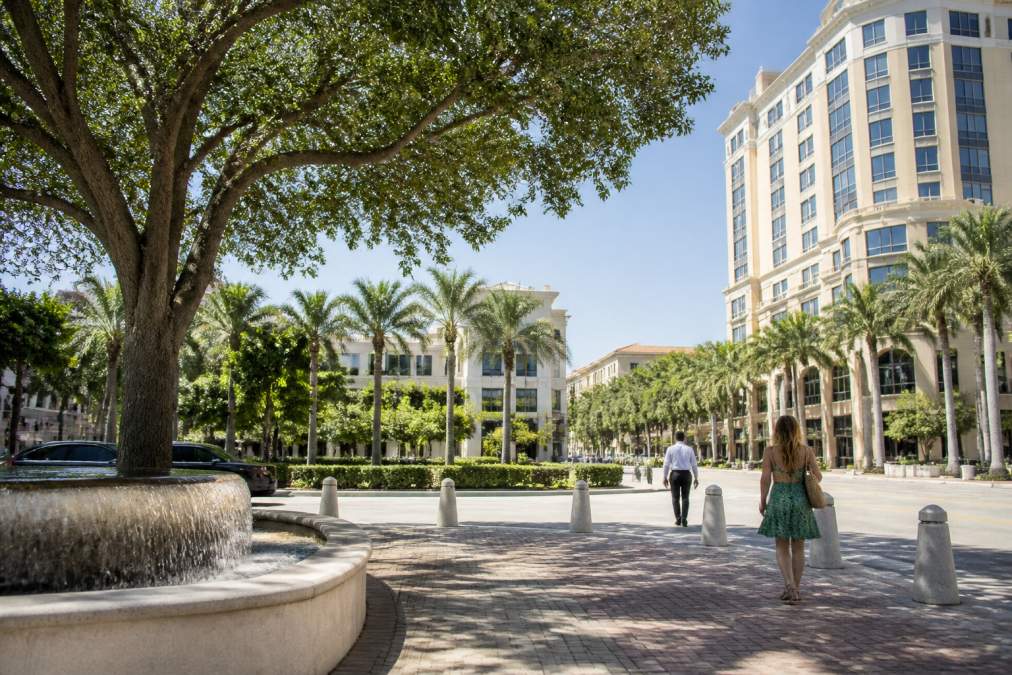
Mizner Park is the anchor of downtown life: an open-air promenade of shops, restaurants, and the Boca Raton Museum of Art, plus an amphitheater for concerts and community events. Residents walk to dinner, catch a show, and browse a farmers market without touching a car. The catch is crowds. Mizner Park fills up fast during events and peak weekend hours, so a “walkable” address near the core also means noise and foot traffic on those nights.
Safety Scores and Community Stability
Safety is where downtown Boca Raton earns its premium. The city’s 83/100 safety score reflects relatively low levels of violent crime (Ocity, 2026), and the National Research Center at Polco’s National Community Survey framework defines livability as a place that is not just habitable but genuinely desirable (City of Boca Raton community survey resources). Property value retention reinforces that stability: Echo Fine Properties cites strong market performance and Florida’s lack of a state income tax as core advantages for buyers (Echo Fine Properties 2026 Boca Raton guide).
Downtown’s premium buys three things you can’t easily replicate elsewhere: a walkable core, low violent crime, and property values that hold. If those matter less to you than square footage, the suburbs win on price.
The Cons: Cost of Living in Boca Raton and Density Trade-Offs
The cost of living in Boca Raton runs 14 to 20 percent above the national average, with a cost of living index between 116 and 120, according to Palm Paradise Realty’s 2026 moving guide. Groceries and gas sit above the national baseline too. Downtown addresses carry the steepest premiums, and that’s before you factor in parking, which is scarce and often paid near the core.
What Your Dollar Actually Buys
Renters and buyers trading into downtown are paying for location, not space. A downtown one-bedroom often costs more than a larger unit a few miles west. That math works if you value walking and short commutes. It works against you if you need a home office, a second bedroom, or storage.
Heat, Humidity, and Crowding
Residents on r/BocaRaton community threads point to three consistent drawbacks: flat terrain, high humidity, and growing crowds. Summer heat limits outdoor time from roughly May through September, and downtown’s popularity means restaurants, garages, and the beach parks fill quickly. None of this is deal-breaking, but it’s real, and it shapes daily routines more than brochures suggest.
| Trade-Off | What You Gain | What It Costs |
|---|---|---|
| Walkable core | Car-free errands and nights out | Crowds during events |
| Safety and stability | Low violent crime, strong resale | Higher entry price |
| Downtown location | Short commutes, culture nearby | Less space per dollar |
| Coastal lifestyle | Beach and parks minutes away | Summer heat and humidity |
Apartments for Rent in Boca Raton: What to Expect
Apartments for rent in Boca Raton split into two camps: high-rise towers with big amenity lists and garden-style communities with quieter grounds. The second option suits people who want calm more than a rooftop pool scene. Garden-style layouts typically sit lower to the ground with more space between buildings, which cuts down on shared-wall noise and hallway traffic. These lower-density floor plans often feature more compact kitchens that require clever space saving tools to maintain an organized and functional culinary environment.
That’s the model at Cynthia Gardens, a garden-style community minutes from FAU and the beach. One-bedroom residences come with stainless steel appliances, quartz countertops, and a resort-style pool set among landscaped grounds. Maintenance-free living is the point: just a private, settled environment. Pricing varies by unit and availability, so it’s worth asking directly rather than guessing from listings. For anyone searching “apartments for rent near me” in the downtown orbit, the honest advice is to tour both a tower and a garden community before deciding. They feel completely different once you’re standing in them.
Tour in the late afternoon on a weekday. That’s when you’ll hear actual traffic, see how full the parking gets, and get a real sense of noise levels that a weekend showing hides.
Commuting from Downtown: Brightline, I-95, and Tri-Rail Access
Commuting is downtown’s quiet advantage. Brightline runs high-speed service from its downtown Boca Raton station to Miami, Fort Lauderdale, and West Palm Beach, with reserved seating, power outlets, and free Wi-Fi on board. Ticket costs add up for daily riders, but avoiding I-95 at rush hour is often worth it. Tri-Rail and I-95 access round out the options for drivers and transit users alike.
The employment side matters too. The Boca Raton Innovation Campus (BRIC) anchors the city’s tech and corporate job base, and FAU’s shuttle services connect campus to the downtown area. If you work in tech or finance and split time between Boca Raton and Miami, a downtown address puts you minutes from the station instead of 20 minutes of surface streets away.
Who Thrives in Downtown Boca Raton (And Who Doesn’t)
Downtown Boca Raton suits young professionals, graduate students, and remote workers who want walkability, safety, and a short trip to the train. It also fits pet owners and single renters who prioritize a quiet, well-kept environment over nightlife. The people who struggle here are those who need maximum square footage per dollar, hate humidity, or want a car-first suburban layout with a big yard.
A quick way to decide:
- You’ll use the walkable core at least weekly
- You value safety and low crime over space
- Your commute benefits from Brightline, Tri-Rail, or I-95
- You’re fine with heat from May through September
- You’d rather pay for location than square footage
Three or more checks means downtown is likely a good fit. Two or fewer, and you’ll probably get more value a few miles west.
Downtown Boca Raton rewards renters who want walkability, safety, and easy transit, and it charges accordingly. If that trade-off sounds right, the next step is finding a community that delivers calm rather than chaos. Cynthia Gardens offers modern one-bedroom apartments with stainless steel appliances and quartz countertops, a resort-style pool, and landscaped grounds minutes from FAU and the beach, all with maintenance-free living built in. Schedule a tour today and see whether a garden-style community fits the downtown lifestyle you’re after.
Frequently Asked Questions
Is downtown Boca Raton walkable?
Downtown Boca Raton and Mizner Park are the city’s primary hubs for walkability and culture, per Koolik Group’s 2026 neighborhood guide. Residents can walk to restaurants, retail, the Boca Raton Museum of Art, and the amphitheater without a car. That said, walkability is concentrated in the downtown core; daily errands outside that zone, like grocery runs or beach trips, usually still require a vehicle or rideshare.
What is the cost of living in Boca Raton compared to the suburbs?
The cost of living in Boca Raton runs 14 to 20 percent above the national average, with a cost of living index between 116 and 120, according to Palm Paradise Realty’s 2026 data. Groceries and gas are specifically cited as higher than the national baseline. Downtown addresses typically sit at the upper end of that range because of proximity to Mizner Park, the beach, and transit. There is no state income tax, which offsets some of the difference.
Is downtown Boca Raton safe for families?
Boca Raton earned an 83/100 safety score in Ocity’s 2026 ranking of 39 Florida cities, with the study citing low levels of violent crime. That score reflects the city overall, and downtown benefits from active street life, well-lit public spaces, and regular foot traffic around Mizner Park. Families should still evaluate specific blocks and buildings, but the broader safety picture is a genuine strength of the area.
How close is downtown Boca Raton to the beach and FAU?
Downtown Boca Raton sits roughly two miles from the ocean, putting Red Reef Park and the city’s beachfront within a short drive or bike ride. Florida Atlantic University is also minutes away, with FAU Transit shuttles connecting campus to the downtown area. That dual proximity is a major reason apartments for rent in Boca Raton near the downtown core attract graduate students and young professionals who want both beach access and a short campus commute.