
TL;DR:
- A comprehensive guest pet policy protects properties, ensures legal compliance, and maintains guest satisfaction. It covers access zones, breed and size restrictions, health documentation, fees, and procedures for assistance animals, especially in light of the 2026 fair housing enforcement shift. Regular policy reviews and consistent staff enforcement are crucial for effective pet management and legal risk mitigation.
A guest pet policy is a formal set of rules governing whether pets are allowed on a property, where they can go, how they must behave, and what fees or health requirements apply. For rental and hospitality hosts in the US, a well-drafted policy does three things at once: it protects your property, sets clear expectations for guests, and keeps you on the right side of federal fair housing law. Getting it wrong costs money. Getting it right keeps both pet owners and non-pet guests satisfied.
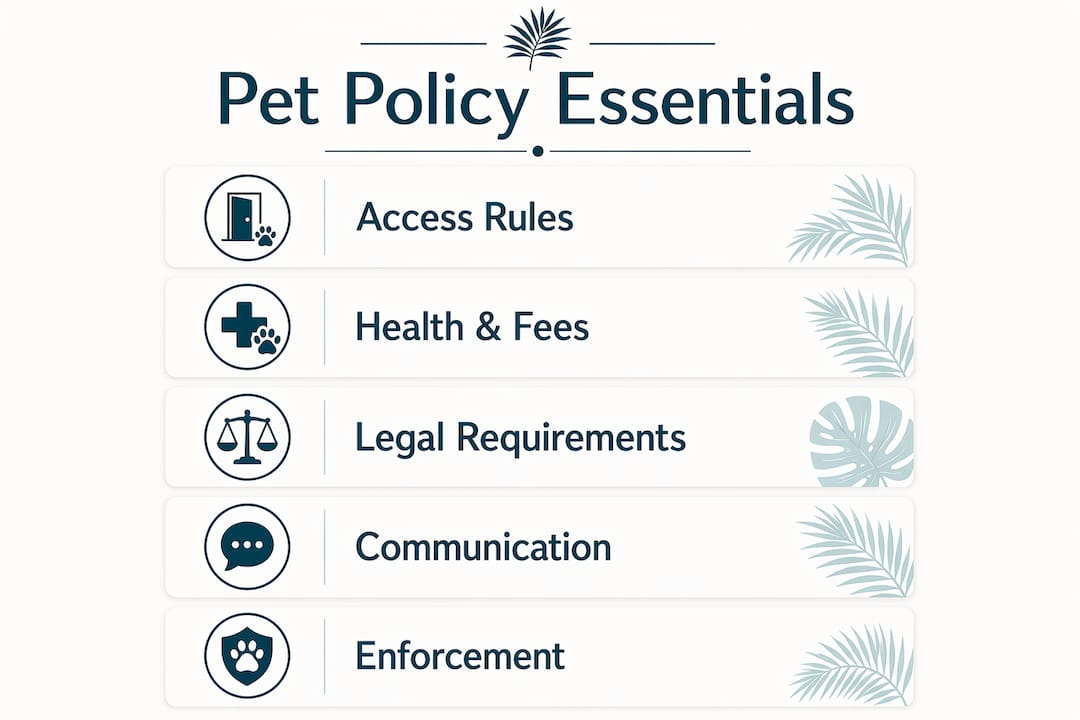
Every solid pet policy covers at least these core elements:
- Permitted animals: species, breeds, sizes, and maximum number allowed
- Access zones: which areas are pet-friendly and which are off-limits
- Health requirements: proof of current vaccinations, flea prevention, and licensing
- Fees and deposits: pet deposits, one-time fees, or monthly pet rent, with clear refund terms
- Behavioral standards: leash rules, noise limits, waste disposal obligations
- Assistance animal procedures: a separate workflow for service animals and emotional support animals (ESAs) under the Fair Housing Act (FHA)
- Enforcement steps: notice periods, cure timelines, and escalation paths up to lease termination
The 2026 legal context adds one critical update: HUD’s Office of Fair Housing and Equal Opportunity (FHEO) has shifted enforcement focus to animals individually trained for disability-related tasks, pulling back from the broader ESA framework that dominated the past decade. That shift changes how hosts should structure their accommodation workflows right now.
1. Where are pets allowed, and which pets qualify?
Access rules are the backbone of any pet policy. Without them, guests assume their 120-pound Rottweiler is welcome in the lobby, the pool deck, and the elevator. Spell out every zone explicitly.
Designated pet-friendly areas typically include individual units, ground-floor patios, and designated outdoor relief areas. Common restricted zones include pools, fitness centers, leasing offices, and any shared indoor space where allergens or sanitation are a concern. Post physical signage at entry points to restricted areas so the rule is visible, not just buried in a lease addendum.
Pet eligibility criteria should address:
- Species: dogs and cats are standard; exotic animals, reptiles, and farm animals typically require explicit exclusion
- Size and weight: a weight cap (commonly 25–50 lbs) is enforceable and easy to verify
- Number: most residential policies cap pets at one or two per unit
- Breed restrictions: use these carefully
On breed restrictions specifically, overly strict breed bans can backfire. Responsible owners of restricted breeds may simply hide their pets rather than disclose them, which makes enforcement harder and creates undocumented liability. A risk-based approach, focusing on documented behavior history and requiring liability insurance, tends to produce better outcomes than a blanket ban on a list of breeds.
Behavioral rules belong in this section too. Require leashes in all common areas, prohibit pets from being left unattended in shared spaces, and set clear noise standards tied to your local noise ordinance. For multi-unit buildings, noise policies for pet-friendly apartments deserve their own clause because barking complaints are among the most common tenant disputes.
2. Health requirements and pet fees: what to charge and how to say it
Health documentation protects every resident on the property, not just the pet owner. Require proof of current rabies vaccination, distemper, and any other shots mandated by your city or county. Flea and tick prevention records are worth requesting too, particularly in warm climates like Florida where year-round infestations are a real risk. Some policies also require spay or neuter status, which can reduce roaming and territorial behavior in shared spaces.
Types of pet fees you can charge for approved pets (not assistance animals) include:
- Refundable pet deposit: covers potential damage; typically held in escrow and returned after move-out inspection
- Non-refundable pet fee: a one-time charge for wear-and-tear that falls outside normal security deposit coverage
- Monthly pet rent: an ongoing charge added to base rent, often ranging from a modest flat rate per pet
State law governs how much you can hold in total deposits, so check your jurisdiction before setting amounts. In Florida, for example, there is no statutory cap on pet deposits separate from the security deposit, but the total must be disclosed clearly in writing.
Pro Tip: Structure fees by risk tier. A small, older, neutered dog in a ground-floor unit poses a different risk profile than two large, young, unneutered dogs in a carpeted upper unit. Modern multi-tier pet applications that collect breed, age, weight, and behavior history let you set differentiated fees that reflect actual risk rather than a flat rate that either overcharges low-risk owners or undercharges high-risk ones.

Always state fee policies in plain language in the lease addendum. Guests should know before they sign exactly what they owe, when it is due, and under what conditions any refundable portion is returned.
3. What the law actually requires for service animals and ESAs
This is where most hosts make expensive mistakes. The legal framework distinguishes three categories, and treating them the same creates fair housing liability.
Pets are animals kept for companionship or pleasure. You can restrict, charge fees for, or prohibit them entirely, subject to your lease terms.
Service animals under the FHA are animals individually trained to perform disability-related tasks, such as guiding a blind resident or alerting a deaf resident to sounds. You cannot charge pet fees for service animals, cannot apply breed or size restrictions to them, and cannot require certification or registration. The only documentation you may request is confirmation that the animal is needed due to a disability and what work it performs.
Emotional support animals (ESAs) are untrained animals that provide comfort by their presence. They occupy a legally murkier space, and that space just got significantly narrower.
Effective immediately, FHEO will find reasonable cause and recommend charges only for those cases involving animals trained to provide disability-related assistance. A significant portion of FHEO’s fair housing complaints have involved untrained ESAs, a trend that is now being addressed.
— Craig W. Trainor, Assistant Secretary for Fair Housing and Equal Opportunity, HUD Enforcement Guidance, May 22, 2026
What this means practically: FHEO has rescinded its 2020 guidance that broadly protected untrained ESAs and has refocused enforcement on trained service animals. Hosts who deny a reasonable accommodation for a trained service animal still face full enforcement exposure. Hosts who decline an untrained ESA request are now in a much stronger legal position than they were two years ago, though state law may still impose obligations, so consult local counsel before updating your policy.
Assistance animals are not pets and require a completely separate accommodation workflow. A no-pet policy does not eliminate your obligation to evaluate service animal requests. Build a written intake process for accommodation requests that is separate from your standard pet application, and apply it consistently to every request.
The FHA’s reasonable accommodation standard requires that you waive a no-pet rule when a trained service animal is necessary for a disabled person to use and enjoy the dwelling. Refusing that request, or applying it inconsistently, is a fair housing violation regardless of what your lease says.
4. How to communicate your pet policy so guests actually follow it
A policy that lives only in a PDF no one reads is not a policy. It is a liability. Clear communication at every touchpoint is what turns written rules into actual behavior.
At lease signing or booking confirmation:
- Provide a standalone pet addendum that guests sign separately from the main lease
- Review key rules verbally or via video walkthrough so there is no “I didn’t know” defense
- Confirm the pet fee structure in writing before any payment is collected
Throughout the tenancy or stay:
- Post signage at designated pet areas and restricted zones
- Include pet rules in a guest handbook or welcome packet for short-term rentals
- Send a written reminder when renewing leases, since pet addendums signed at every renewal significantly reduce enforcement disputes
For assistance animal requests:
- Provide a written accommodation request form that is separate from the pet application
- Explain the process clearly so residents know what to expect and how long review takes
- Never ask for medical records; you may only ask whether the animal is needed for a disability and what task it performs
One practical note on mid-tenancy policy changes: if you decide to go pet-free after a tenant already has an approved pet, that pet is grandfathered under the existing lease addendum until renewal. You cannot enforce a new no-pet rule against a current tenant mid-lease. Plan policy updates around renewal cycles.
5. How to train staff to enforce pet rules consistently and fairly
Inconsistent enforcement is the fastest path to a fair housing complaint. If one resident gets a warning for an unauthorized pet and another gets an immediate eviction notice for the same violation, you have created a discrimination claim even if no bias was intended. Consistent application of pet policies across all residents is both a legal requirement and a practical protection.
Staff training should cover:
- Fair housing fundamentals: which animal categories exist, what accommodations are legally required, and what questions staff may and may not ask
- Documentation protocols: how to log a pet policy complaint, photograph a violation, and create a written record that holds up in court
- Guest interaction scripts: how to address a pet dispute professionally without making statements that could be construed as discriminatory
- Accommodation request handling: the step-by-step intake process for service animal and ESA requests, including who reviews them and in what timeframe
- Escalation paths: when to involve property management, legal counsel, or local animal control
Run scenario-based training at least once a year. A staff member who has practiced the conversation about an unauthorized pet is far less likely to handle it in a way that creates liability. Refresher sessions after any policy update, including the 2026 HUD guidance shift, keep everyone current.
Document every training session with a sign-in sheet and a summary of topics covered. That record matters if a fair housing complaint is ever filed.
6. Enforcement procedures: from first notice to final resolution
Progressive enforcement protects you legally and gives residents a fair chance to comply. Skipping steps, particularly the cure period, can invalidate an eviction action entirely.
Step-by-step enforcement framework:
- Document the violation: photograph the unauthorized pet, note the date and time, and record witness names if applicable
- Issue a written notice: deliver a formal “Cure or Quit” notice to the resident, specifying the violation and the required remedy
- Allow a cure period: 3–10 days is the standard range for pet-related violations; check your state’s landlord-tenant statute for the minimum required
- Verify compliance: confirm the pet has been removed or a proper pet addendum has been signed and fees paid
- Escalate if needed: if the resident does not cure within the notice period, issue a lease termination notice per your state’s requirements
- Pursue legal remedies: file for eviction only after all notice and cure requirements are met; failing to include a cure period before eviction can invalidate the entire action
For ongoing tenancies, require renter’s insurance with an animal liability rider. Naming the landlord as an Additional Interested Party on the policy means you receive automatic notification if coverage lapses, which closes a gap that catches many hosts off guard.
Keep a dedicated enforcement log for every pet-related incident, even minor ones. A pattern of documented warnings supports a lease termination far more convincingly than a single complaint. For a practical pet policy checklist that covers documentation and enforcement steps, Cynthiagardens has published a detailed resource specific to Florida rental contexts.
7. Designated pet areas and amenities that make policies work
Physical infrastructure shapes compliance as much as written rules do. When pet owners have clearly marked, well-maintained spaces for their animals, they are more likely to use them and less likely to create problems in restricted areas.
Recommended pet-friendly infrastructure:
- Outdoor relief areas: a fenced, gravel or mulch-surfaced area with waste bag dispensers and a covered bin reduces lawn damage and keeps waste out of common walkways
- Pet washing stations: a ground-level wash station near the pet area prevents muddy paws from tracking through lobbies and hallways
- Signage at every transition point: clear signs at elevator banks, pool gates, and fitness center entrances eliminate the “I didn’t see a sign” defense
- Separate entry paths: where the building layout allows, a pet-friendly entrance route keeps pet traffic out of the main lobby during peak hours
For hospitality settings, a pet welcome packet left in the room, covering local walking routes, nearby veterinary clinics, and in-property pet rules, signals that you have thought this through. Guests who feel welcomed are more likely to follow the rules.
Balancing pet-friendly guests with non-pet guests comes down to zoning. Designate specific floors or building wings as pet-friendly and market them that way. Guests with allergies or animal phobias can book non-pet floors with confidence, and pet owners know exactly where they stand. This approach also makes housekeeping protocols easier to manage since deep-cleaning schedules can be concentrated in pet-designated areas.

8. Balancing pet-friendly policies with non-pet guest comfort
A pet-friendly property that ignores non-pet guests will eventually lose both groups. Guests with allergies, phobias, or simply a preference for pet-free spaces need assurance that your policy protects them as well.
The most effective tool here is physical separation. Assign pet-friendly rooms or units to a specific section of the property and keep that section consistent. Never place a guest with a documented allergy in a room that previously housed a pet without a full allergen-reduction cleaning protocol, which typically includes HEPA vacuuming, air filtration, and hard-surface sanitizing.
Housekeeping standards for pet-designated rooms should be written into your operations manual, not left to individual staff judgment. Specify the cleaning products, the sequence of tasks, and the inspection checklist before the room is released for the next guest. A guest who checks into a room that smells like a previous tenant’s dog will not return, and they will say so publicly.
For long-term rentals, community pet policies that address shared amenity use, quiet hours, and waste management protect the experience of every resident, not just pet owners. When non-pet residents see that the rules are enforced, their tolerance for pet-friendly neighbors increases considerably.
9. Handling pet-related damage and deposit management
Pet damage claims are the most common source of disputes between hosts and guests at move-out. A clear, documented process before, during, and after the tenancy is the only reliable defense.
Conduct a move-in inspection with the resident present, photograph every surface, and have both parties sign the inspection report. Do the same at move-out. The difference between those two records is your evidence for any damage claim. Without the move-in baseline, a resident can argue that the damage was pre-existing, and they are often right.
For refundable pet deposits, state law governs how quickly you must return them and what documentation you must provide for any deductions. In Florida, you have 15 days to return a deposit with no deductions, or 30 days to send a written notice of intended deductions. Missing those deadlines forfeits your right to make any claim against the deposit.
Non-refundable pet fees cover anticipated wear-and-tear and do not require itemized accounting at move-out. Be explicit in the lease about which fee is refundable and which is not. Ambiguity here is the single most common trigger for small claims disputes. When drafting your lease agreement language, use plain terms: “This $300 fee is non-refundable and covers general pet-related wear. It does not limit your liability for damage beyond normal wear.”
10. Screening pet owners before approving pets
A formal pet application process catches problems before they become lease violations. Collecting information upfront also gives you the documentation you need if a dispute arises later.
A thorough pet application should request:
- Pet’s name, species, breed, age, weight, and color
- Current vaccination records and veterinary contact
- Spay or neuter status
- Behavioral history, including any bite incidents or noise complaints
- Previous landlord references for the pet specifically
- Proof of renter’s insurance with animal liability coverage
This is not bureaucratic overkill. A resident who has never had a pet-related complaint from a previous landlord is a meaningfully lower risk than one who cannot provide a reference. The 2026 leasing checklist from Cynthiagardens walks through exactly these screening questions in a format you can adapt for your own property.
Pro Tip: Ask for a photo of the pet at application. It creates a record of the animal’s size and appearance, which matters if a resident later shows up with a different or additional animal. A photo on file is far easier to reference than a written description when you are trying to verify compliance.
11. Reviewing and updating your pet policy regularly
A pet policy written in 2020 is not a 2026 pet policy. Laws change, HUD guidance shifts, local ordinances evolve, and your property’s own experience with pet-related incidents should inform updates.
Schedule a formal policy review at least once a year, ideally before your peak lease renewal period. Review your enforcement log for the past year and identify any patterns: which rules generated the most violations, which fee structures caused the most disputes, and whether your designated pet areas are actually being used. That data tells you where the policy is working and where it needs adjustment.
When you update the policy, communicate changes to current residents in writing with reasonable advance notice, typically 30 days. Residents with existing pet addendums keep their current terms until renewal, as noted earlier. New terms take effect at signing of the renewed lease.
Stay current on state and local law. Florida, for example, has specific statutes governing security deposit handling, notice periods for lease violations, and landlord entry rights that interact directly with pet policy enforcement. A policy that complies with federal fair housing law but violates a Florida landlord-tenant statute is still a liability. Annual review with a local real estate attorney is a worthwhile investment for any multi-unit property.
Cynthiagardens: a pet-friendly community built on clear policies
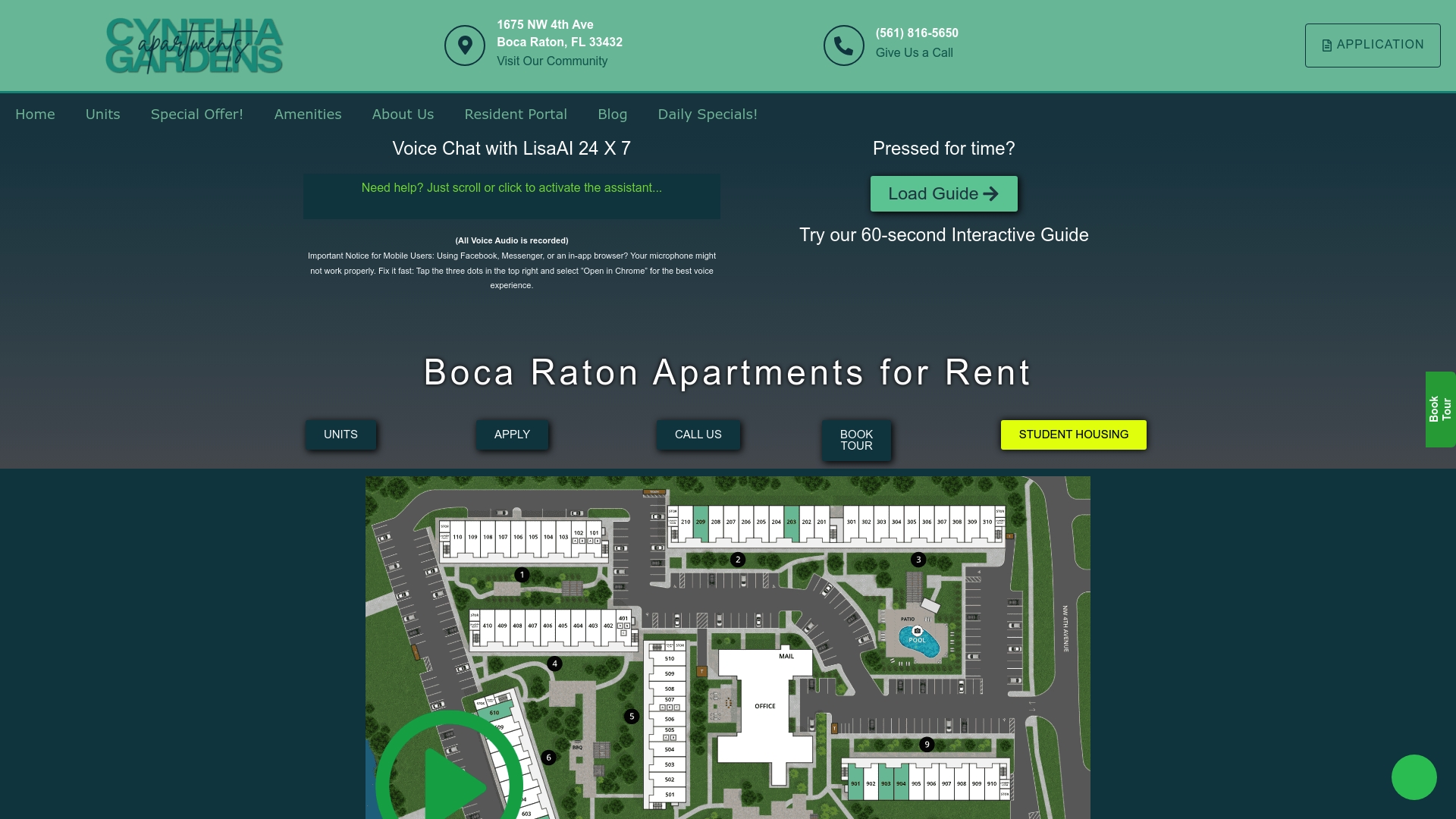
At Cynthiagardens in Boca Raton, Florida, transparent pet policies are part of how we lease from day one. Our one-bedroom apartments are designed with pet owners in mind, and our leasing process makes the rules clear before you sign, not after. No hidden fees, no ambiguous addendums.
If you are a property owner looking for a model of how pet-friendly living and clear community standards work together, explore our apartment styles and features or review our community rules for Boca Raton residents to see how we structure policies that protect both the property and the people who live here.
Key Takeaways
A well-drafted guest pet policy protects your property, satisfies guests, and keeps you legally compliant, provided it covers access rules, fees, health requirements, assistance animal procedures, and a documented enforcement process.
| Point | Details |
|---|---|
| Separate pets from assistance animals | Service animals require a distinct accommodation workflow; no fees or breed restrictions apply to them. |
| Use progressive enforcement | Issue a written cure notice with a 3–10 day remedy period before escalating to lease termination. |
| HUD’s 2026 enforcement shift | FHEO now prioritizes trained service animals over untrained ESAs; update your accommodation process accordingly. |
| Require renter’s insurance | Mandate an animal liability rider and name yourself as an Additional Interested Party to close coverage gaps. |
| Review policies annually | Enforcement logs, legal updates, and lease renewal cycles should all drive regular policy revisions. |