
TL;DR:
- Reliable internet access has become as essential as air conditioning and laundry in rental properties. Renters now view high-speed connectivity as a core utility that influences their choice of residence and satisfaction.
Reliable internet access is now a must-have utility for renters, ranked just behind air conditioning and in-unit laundry as the most demanded apartment feature. Understanding why renters need internet access means recognizing that connectivity now functions as the fourth utility alongside electricity, water, and gas. Remote work, online learning, smart home devices, and streaming services all depend on a stable connection. Renters who overlook internet quality when choosing an apartment often pay for it in lost productivity and daily frustration. Getting this right before you sign a lease is far easier than fixing it after move-in.
Why renters need internet access: remote work, learning, and daily life
Internet connectivity is no longer optional for renters. It is the backbone of how most people work, study, and live. The shift to remote and hybrid work means a dropped connection is not just annoying. It costs you billable hours, missed meetings, and professional credibility.
The core reasons renters depend on reliable internet fall into three clear categories:
- Remote work and telecommuting. Video calls on Zoom or Microsoft Teams, cloud file access through Google Drive or Dropbox, and VPN connections to employer networks all require consistent upload and download speeds. A single dropped call during a client presentation is the kind of thing that sticks.
- Online learning. Students enrolled in programs through institutions like Florida Atlantic University or taking courses on platforms like Coursera need stable connections for live lectures, video assignments, and timed exams. A spotty signal during a final exam is not an excuse most professors accept.
- Streaming, smart devices, and communication. Netflix, Hulu, and Spotify are table stakes. Beyond entertainment, smart thermostats, video doorbells, and voice assistants like Amazon Alexa all run on your home network. Add a few roommates or family members, and bandwidth demand multiplies fast.
Connectivity also directly affects how long renters stay in a property. Reliable high-speed internet increases resident retention by creating a soft switching cost. Disconnecting and reconnecting services is a real hassle, and renters who are already satisfied with their connection have one less reason to move.
Pro Tip: Before signing any lease, ask the property manager which internet service providers serve the building and whether any pre-installed infrastructure is already in place. This one question can save you weeks of setup headaches.

How renter expectations for internet shape leasing decisions
Renter preferences around connectivity have shifted dramatically. 91.7% of renters consider high-speed internet an important factor when choosing where to live. That number puts internet access ahead of almost every other amenity except air conditioning and in-unit laundry. The expectation is no longer “nice to have.” It is a baseline requirement.
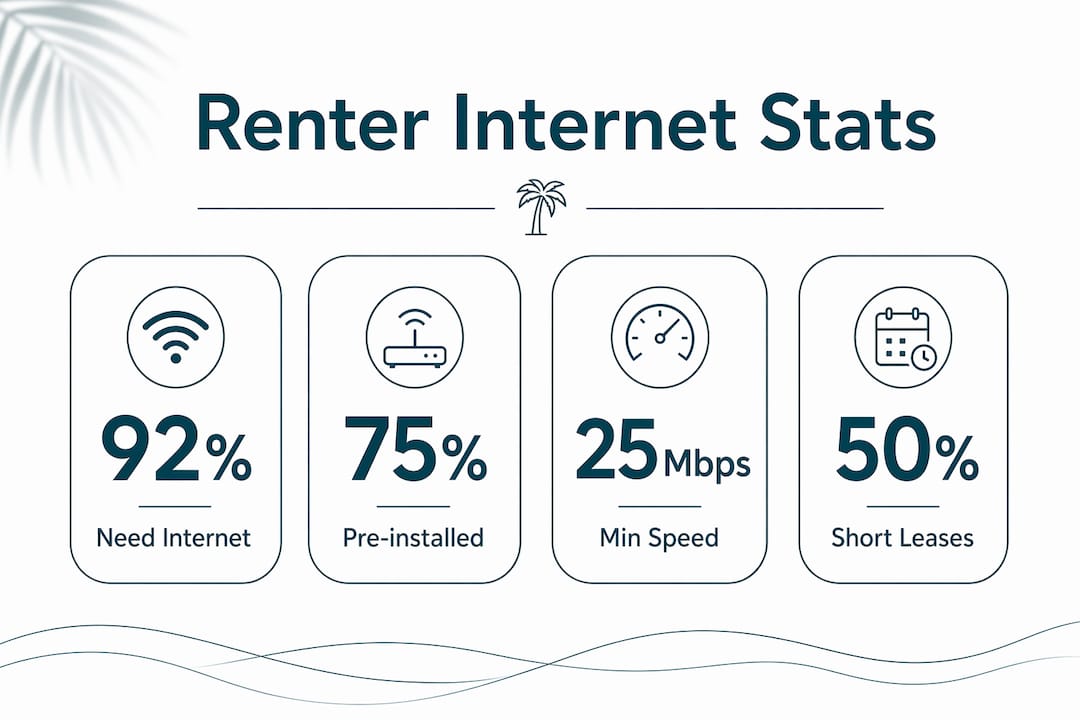
The demand goes further than just having internet available. 74.8% of renters want internet service pre-installed and ready to use the moment they move in. That means no waiting for a technician, no scheduling installation windows, and no days without a connection while you unpack. Renters view move-in day connectivity the same way they view having working lights and running water.
| Renter priority | Share of renters who rate it as must-have |
|---|---|
| Air conditioning | Ranked #1 |
| In-unit laundry | Ranked #2 |
| High-speed internet | 90% rate it must-have |
| Pre-installed internet at move-in | 74.8% demand it |
Properties that deliver on connectivity quality gain a real advantage. Property managers who fail to provide high-quality pre-installed connectivity are at a competitive disadvantage in 2026, because renters now equate connectivity quality with overall living value. That is a direct link between internet service and whether a renter chooses your building or the next one.
“Connectivity is now a foundational part of apartment living and impacts overall resident satisfaction and retention significantly.” — Industry analysis on multifamily housing trends
Understanding apartment amenities for modern renters means treating internet access as infrastructure, not a perk. The renters who know this going in are the ones who negotiate better and move into better-prepared units.
What are your internet service options as a renter?
Renters face a specific challenge that homeowners do not. You cannot always drill walls, mount equipment, or sign long-term contracts tied to a property you may leave in 12 months. Knowing your options before you move in puts you in control.
Building-wide pre-installed networks
Many apartment buildings come prewired with a preferred internet service provider already in place. Apartment buildings often have prewired ISP networks that are the easiest option, but renters should verify whether that provider is exclusive. Exclusivity means you cannot bring in a competing provider, even if their speeds or prices are better. Some managed media packages bundle internet with cable TV, which sounds convenient but can mean slower speeds and less control over your plan.
Managed media packages in apartments can be costly and restrict tenant choice. When many residents share the same router or building network, congestion during peak hours is common. If you work from home, shared congestion at 9 a.m. is a real problem.
Individual ISP setups: fiber, cable, and DSL
If your building allows it, setting up your own internet service gives you full control over speed tiers, equipment, and billing. Fiber optic internet from providers like AT&T Fiber or Google Fiber delivers the fastest and most consistent speeds. Cable internet from providers like Xfinity is widely available and reliable for most use cases. DSL is slower and increasingly rare in urban markets, but it remains an option in some areas.
5G home internet and fixed wireless
5G home internet is the best option for renters with short leases or buildings with strict installation rules. Installation-friendly options like 5G home internet avoid lease violations and hidden fees from drilling or mounting equipment. Providers like T-Mobile Home Internet and Verizon Home Internet offer plug-and-play devices that require no technician visit. Fixed wireless access works similarly, using a receiver that sits near a window rather than requiring any wall modifications.
Pro Tip: If your lease restricts permanent installations, 5G home internet is your cleanest path to fast, reliable connectivity. It sets up in minutes and moves with you when your lease ends.
How to set up reliable internet in your rental
Getting connected in a new apartment takes more planning than most renters expect. Follow these steps to avoid downtime and hidden costs.
-
Read your lease before anything else. Lease language often excludes landlord obligation to provide internet and may restrict your choice of provider or installation method. Know what you are allowed to do before you call any ISP. Check the lease agreement details carefully for any clauses about drilling, mounting, or provider exclusivity.
-
Calculate your bandwidth needs. Renters need to consider specific usage needs such as remote work, online gaming, and multiple devices when selecting a plan. A single remote worker needs at least 25 Mbps upload. Add a student streaming lectures and a smart TV, and you need 100 Mbps or more. Do the math before you pick a plan.
-
Ask about pre-installed infrastructure. Contact the property manager before move-in day. Find out which providers serve the building, whether any wiring is already in place, and whether the building has a preferred or exclusive ISP arrangement. This one conversation can save you days of setup time.
-
Consider 5G home internet if installations are restricted. If your lease limits what you can install, self-install portable options like 5G home internet suit renters with short leases or restrictive installation policies. These devices plug into a standard outlet and connect in minutes.
-
Schedule installation early. ISP technician appointments often book out one to two weeks. Schedule your installation before your move-in date, not after. Arriving in a new apartment without internet for a week is a productivity loss you do not need.
-
Watch for hidden fees and contract terms. Some ISPs charge equipment rental fees, early termination fees, and promotional rate expiration clauses. Read the full service agreement, not just the advertised monthly price. The role of convenience in apartment living includes knowing exactly what you are paying for from day one.
Key Takeaways
Reliable internet access is the single most critical utility renters must secure before move-in, directly affecting work, learning, satisfaction, and lease renewal decisions.
| Point | Details |
|---|---|
| Internet is a must-have utility | 90% of renters rate high-speed internet as a must-have, behind only air conditioning and laundry. |
| Pre-installed connectivity matters | 74.8% of renters want internet ready at move-in, making it a key factor in choosing a property. |
| Know your installation options | Fiber, cable, and 5G home internet each suit different lease types and building restrictions. |
| Read your lease first | Landlords have no legal obligation to provide internet; lease terms may restrict provider choice or installation. |
| Plan ahead to avoid downtime | Schedule ISP installation before move-in day and calculate bandwidth needs based on actual device usage. |
Internet access in rentals: what I’ve learned after years of watching renters get this wrong
The renters who struggle most with connectivity are the ones who treat internet like a detail to sort out after they move in. They sign the lease, show up on move-in day, and then realize the building’s pre-installed network is shared by 80 units on a single router. Or they find out their lease prohibits any ISP except one that charges twice the market rate for half the speed.
What I’ve observed consistently is that connectivity frustration is almost entirely preventable. The information is available before you sign. The questions are simple. But renters are often so focused on rent price, square footage, and location that internet quality becomes an afterthought. Then it becomes the thing they complain about every single day.
The shift to treating internet as the fourth utility is not a trend. It is a permanent change in how people live and work. A renter who works from home and loses connectivity for three days because of a building-wide outage is not just inconvenienced. They are losing income. A student who cannot access their university’s learning management system during finals week faces real academic consequences.
My honest advice: treat internet quality with the same seriousness you give to rent price. Ask for the building’s ISP options in writing. Test the connection speed during your apartment tour if you can. And if the building’s only option is a managed media package with shared bandwidth, factor that into your decision the same way you would factor in a broken HVAC system. The tech-enhanced apartment features that matter most are the ones that affect your daily life, and nothing affects daily life more than your internet connection.
— Ayman
Apartments in Boca Raton built for connected living
Cynthiagardens is a modern apartment community in Boca Raton, Florida, designed with young professionals, students, and pet owners in mind. The tech-forward leasing experience includes AI chat support, virtual tours, and an interactive property map so you can find the right unit without wasting time.
If reliable connectivity and transparent pricing matter to you, Cynthiagardens delivers both. Explore the full range of apartment styles and features to see how modern infrastructure and no-hidden-fee pricing come together in one Boca Raton community. For renters who want a modern apartment community that treats connectivity as a core part of the living experience, Cynthiagardens is worth a close look.
FAQ
Is a landlord required to provide internet service?
Landlords have no legal obligation to provide internet service. Renters must arrange and pay for their own connection unless the lease explicitly states otherwise.
What internet type works best for renters with short leases?
5G home internet is the best fit for short-term renters. It requires no professional installation, no wall modifications, and moves with you when your lease ends.
How much internet speed do renters actually need?
A single remote worker needs at least 25 Mbps upload speed. Add streaming, smart devices, and multiple users, and a plan with 100 Mbps or more becomes the practical minimum.
Can a building’s pre-installed internet restrict my provider choice?
Yes. Some buildings have exclusive ISP agreements that prevent renters from choosing a competing provider. Always ask about exclusivity before signing a lease.
How does internet quality affect tenant satisfaction?
Connectivity is foundational to resident satisfaction and retention. Poor internet quality is one of the top reasons renters choose not to renew their lease.