
TL;DR:
- First-time renters should budget carefully, gather complete documents, and document move-in conditions to avoid costly mistakes. Using the 30% rule, saving 2-4 months of rent, and starting early improve rental success. Recording move-in condition and ensuring all promises are in writing protect your security deposit.
A first-time renter guide is a step-by-step practical roadmap that takes you from apartment search to move-in day without costly mistakes. Renting your first apartment in 2025 means navigating credit checks, lease agreements, and upfront costs that can catch beginners off guard. This guide covers every stage: budgeting with the 30% rule, assembling your rental application documents, choosing the right neighborhood, understanding your lease, and protecting your security deposit. Tools like ApartmentList, resources like AnnualCreditReport.com, and platforms like FareRent make the process faster when you know exactly what to prepare.
How should you budget for your first apartment in 2025?
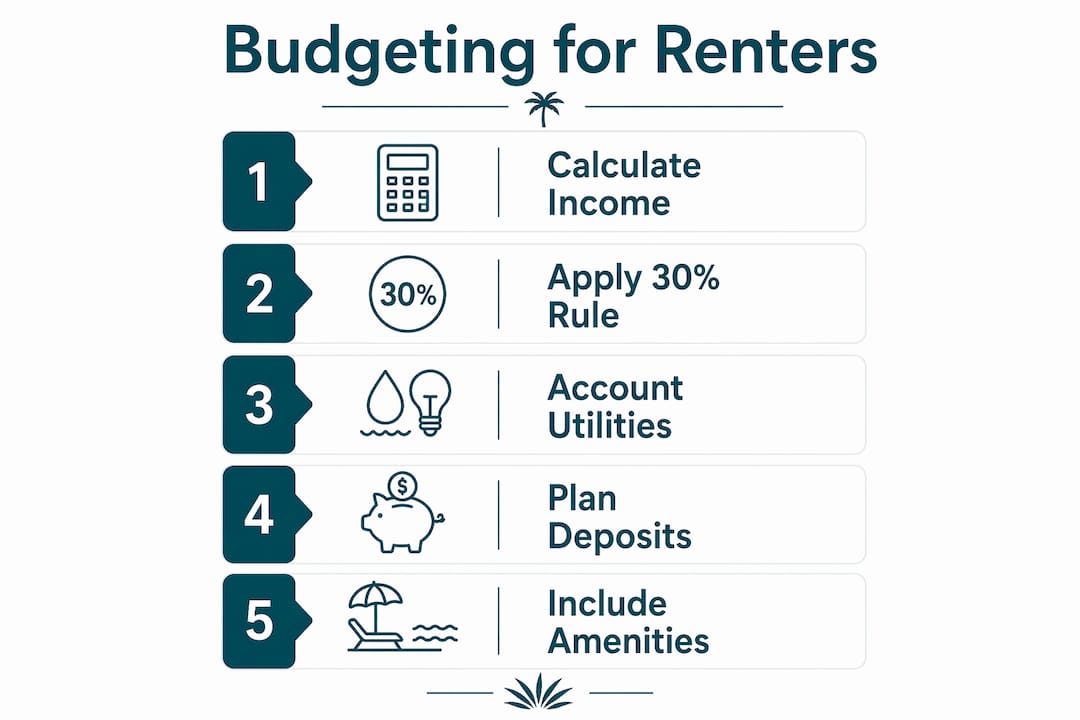
The 30% rule is the standard budgeting benchmark for renters: your monthly rent plus housing costs should not exceed 30% of your gross monthly income. On a $3,500 monthly income, that means keeping total housing costs at or below $1,050. This rule keeps you financially stable and leaves room for savings, food, and transportation.

Hidden costs catch most first-time renters off guard. Beyond rent, you will pay for utilities, internet, and parking. Renter’s insurance costs $10–$20 per month and protects your personal belongings, covers liability, and pays for temporary housing if your unit becomes uninhabitable. That is a small monthly cost that prevents a major financial loss.
Upfront costs are the biggest financial hurdle. Most landlords require a security deposit equal to one or two months’ rent, plus first and last month’s rent at signing. Save 2–4 months of rent before you start touring apartments. That buffer covers deposits, moving costs, and any surprise fees.
For Boca Raton renters specifically, check out these rental budgeting tips to understand local pricing and what your dollar actually buys in the South Florida market.
Pro Tip: Amenity fees for pools, gyms, and clubhouses are often charged separately from rent. Evaluate honestly whether you will use those features before agreeing to pay extra each month.
What documents do you need to secure your first rental?
Landlords in competitive markets make decisions fast. Having your documents ready before you tour apartments puts you ahead of other applicants. The core documents every landlord expects are:
- Credit report from AnnualCreditReport.com (free once per year; aim for a score above 620)
- Proof of income: two to three recent pay stubs and your most recent W-2
- Photo ID: a government-issued driver’s license or passport
- Reference letters: one from an employer and one from a personal reference
- Rental history: contact information for previous landlords, if applicable
A rental resume packages all of these into one organized document. Think of it as a job application for an apartment. It signals to landlords that you are prepared and serious. In fast markets like Boca Raton, a polished rental application can be the difference between getting the unit and losing it to another applicant.
If your credit score is thin or your income is low, a cosigner strengthens your application significantly. A cosigner agrees to cover rent if you cannot. Alternatively, offering a larger security deposit or prepaying two to three months of rent upfront can overcome a weak credit profile.
Start your apartment search 60–90 days before your target move-in date. That window gives you time to pull your credit report, gather income documents, request reference letters, and still have time to tour multiple units without rushing.
Pro Tip: Pull your credit report from AnnualCreditReport.com at least 30 days before applying. Errors on credit reports are common, and disputing them takes time.
How do you choose the right neighborhood and apartment?
The right apartment is not just about square footage. Location determines your daily quality of life, commute time, and long-term costs. Before touring any unit, rank your priorities clearly.
| Feature | Need vs. Nice-to-Have | Typical Extra Cost |
|---|---|---|
| In-unit washer/dryer | Need for most renters | Often included or $50–$100/month |
| Covered parking | Need in Florida heat | $50–$150/month extra |
| Pool/gym access | Nice-to-have | $25–$75/month amenity fee |
| Pet-friendly policy | Need if you have pets | $25–$75/month pet rent |
| High-speed internet | Need for remote workers | $50–$80/month if not included |
Safety, commute, and transit access are non-negotiable factors. Research neighborhood crime data through local police department websites before committing. Calculate your actual commute time during rush hour, not on a Sunday afternoon. Proximity to grocery stores, pharmacies, and public transit adds real daily value that a nicer kitchen does not replace.
Ask landlords direct questions before signing anything:
- Are utilities included, or are they billed separately?
- What is the average monthly electric bill in summer?
- Is parking assigned or first-come, first-served?
- What is the guest parking policy?
- Are there quiet hours or noise restrictions?
Knowing what to look for in rental apartments before you tour saves you from falling in love with a unit that does not fit your actual lifestyle.
What should you know about lease agreements before signing?
A lease is a legally binding contract. Every word in it carries weight, and anything not written in the lease does not exist legally. Read the entire document before you sign, not just the rent amount and move-in date.
Watch for these specific terms in every lease:
- Lease duration: month-to-month vs. 12-month fixed term and what happens at renewal
- Rent increase policy: how much notice the landlord must give before raising rent
- Pet fees: one-time pet deposit vs. monthly pet rent (both may apply)
- Maintenance responsibilities: what the landlord fixes vs. what falls on you
- Early termination clause: the penalty for breaking the lease before it ends
- Subletting rules: whether you can have a roommate or sublet the unit
Verbal promises by landlords hold no legal weight. If a landlord says they will paint the walls, replace the appliances, or fix the broken blinds before you move in, get it in writing. A signed email or a written addendum to the lease makes it enforceable.
“If it’s not in the lease, it didn’t happen. Never move forward based on a landlord’s word alone.”
Rent negotiation is possible more often than first-time renters realize. Negotiating even $50 off monthly rent saves $600 over a 12-month lease. If a unit has been vacant for a while or your credit is strong, ask for waived pet fees, free parking, or a reduced security deposit. Landlords often prefer a reliable tenant over holding out for full price.
For a plain-language breakdown of what every clause means, read this lease agreement explained resource before you sit down to sign.
How do you prepare for move-in day and protect your security deposit?
Move-in day is chaotic by default. Preparation turns it into a manageable process. Follow these steps in order:
- Pack an essentials box with toilet paper, phone charger, a change of clothes, basic tools, and snacks. Keep it accessible, not buried in the moving truck.
- Reserve your moving parking spot in advance. Some buildings require advance reservation for moving trucks or loading docks. Confirm this with management at least one week before your move.
- Document the apartment condition before you unpack a single item. Record a timestamped video of move-in condition covering every room, every wall, every appliance, and every floor. This is your primary defense against unfair security deposit deductions.
- Complete the move-in checklist provided by your landlord. Note every scratch, stain, and broken fixture in writing. Sign it and keep a copy.
- Connect utilities and services on or before move-in day. Electricity, water, internet, and renter’s insurance should all be active when you walk in.
Many first-time renters assume the landlord’s building insurance covers their belongings. It does not. Landlord insurance covers only the building structure. Your furniture, electronics, clothing, and personal items require a separate renter’s insurance policy. At $10–$20 per month, it is one of the most cost-effective protections available.
Use this apartment move-in inspection checklist to document every detail systematically and protect your deposit from day one.
Pro Tip: Email your timestamped photos and video to yourself and your landlord on move-in day. That creates a date-stamped digital record that is nearly impossible to dispute later.
Key takeaways
First-time renters who budget correctly, prepare complete documents, and document move-in conditions avoid the most common and costly rental mistakes.
| Point | Details |
|---|---|
| Apply the 30% rule | Keep total monthly housing costs at or below 30% of your gross income. |
| Save 2–4 months of rent | Cover security deposits, first and last month’s rent, and moving costs before you apply. |
| Start searching 60–90 days early | Give yourself time to gather documents, tour units, and review leases without pressure. |
| Get all promises in writing | Verbal landlord commitments are unenforceable; require a signed lease addendum or email. |
| Document move-in with video | Timestamped footage protects your security deposit against unfair deductions at move-out. |
What I’ve learned from watching first-time renters get it wrong
Most first-time renters lose money not because they chose a bad apartment, but because they skipped the paperwork. I have seen renters lose their full security deposit over damage that was there when they moved in, simply because they never documented it. A five-minute video walkthrough on move-in day would have saved them hundreds of dollars.
The second most common mistake is signing a lease without reading it. Renters focus on the rent number and the move-in date, then get blindsided by a $150/month parking fee buried in section 12. Read every line. If a clause confuses you, ask the landlord to explain it in writing.
Negotiation makes more people uncomfortable than it should. Landlords expect it. A vacant unit costs them money every day. Asking for a $50 rent reduction, waived pet fees, or a free parking spot is a normal part of the process. The worst answer you will get is no.
My strongest advice: treat your first rental like a business transaction. Document everything, confirm everything in writing, and buy renter’s insurance before your first night in the unit. The renters who do these three things almost never have serious problems.
— Ayman
Ready to rent your first Boca Raton apartment?
Cynthiagardens offers one-bedroom apartments in Boca Raton built specifically for young professionals, students, and pet owners who want transparent pricing and no hidden fees. Every unit comes with clear lease terms, and the leasing process includes virtual tours, AI chat support, and an interactive property map so you can explore your options confidently before committing.
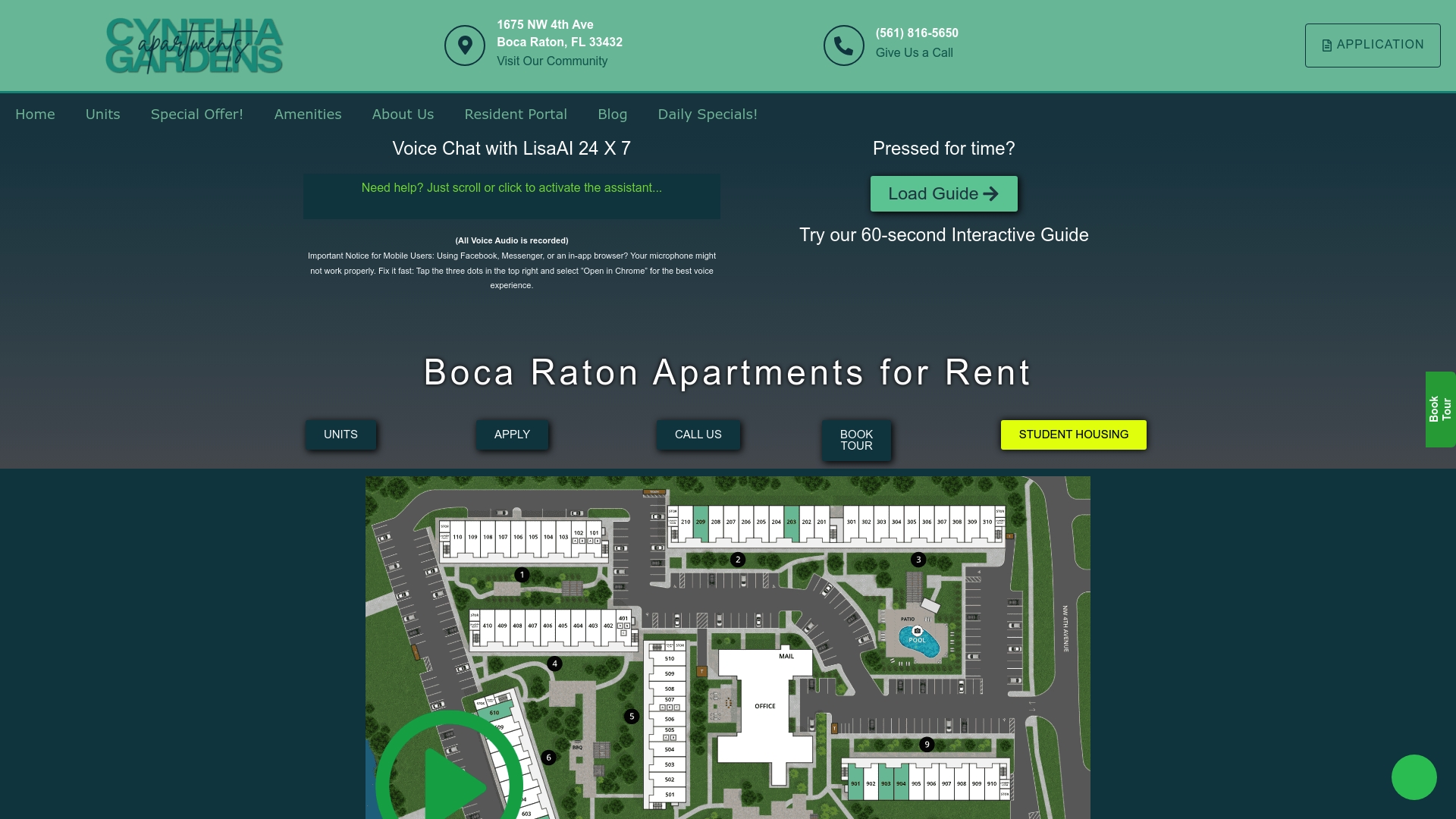
Browse apartment styles and features to see what is available right now. If you want to tour from home first, Cynthiagardens makes it easy to tour apartments virtually before scheduling an in-person visit. First-time renters get the full checklist, transparent lease documents, and a leasing team that answers questions directly.
FAQ
What is the 30% rule for renters?
The 30% rule states that your monthly rent and housing costs should not exceed 30% of your gross monthly income. On a $3,500 monthly income, that means keeping housing costs at or below $1,050.
How much money should I save before renting my first apartment?
Save 2–4 months of rent before applying. That amount covers a security deposit, first and last month’s rent, and moving costs without putting you in financial stress.
What documents do I need to rent my first apartment?
Most landlords require a credit report, recent pay stubs, a W-2, a government-issued photo ID, and one or two reference letters. Having these ready before you tour speeds up the application process significantly.
Does my landlord’s insurance cover my belongings?
No. Landlord insurance covers only the building structure. Your personal belongings require a separate renter’s insurance policy, which typically costs $10–$20 per month.
Can I negotiate rent as a first-time renter?
Yes. If a unit has been vacant or your credit profile is strong, landlords will often accept a modest rent reduction or offer non-monetary perks like waived pet fees or free parking.
Recommended
- What to Look for in Rental Apartments: A 2026 Guide – Luxury Apartments for Rent in Boca Raton | Premium Boca Raton Apartments | Aapartments Boca Raton
- How to Find Affordable Apartments A Renter’s Guide – Luxury Apartments for Rent in Boca Raton | Premium Boca Raton Apartments | Aapartments Boca Raton
- What Is Rent Transparency? A Renter’s 2026 Guide
- Apartment Finding Sites The Ultimate Renter’s Guide – Luxury Apartments for Rent in Boca Raton | Premium Boca Raton Apartments | Aapartments Boca Raton