Cynthia Gardens is a residential apartment community in Boca Raton, Florida, offering quiet, garden-style living near Florida Atlantic University, Mizner Park, and Boca Raton’s beaches at 1675 NW 4th Ave, Boca Raton, FL 33432.
TL;DR:
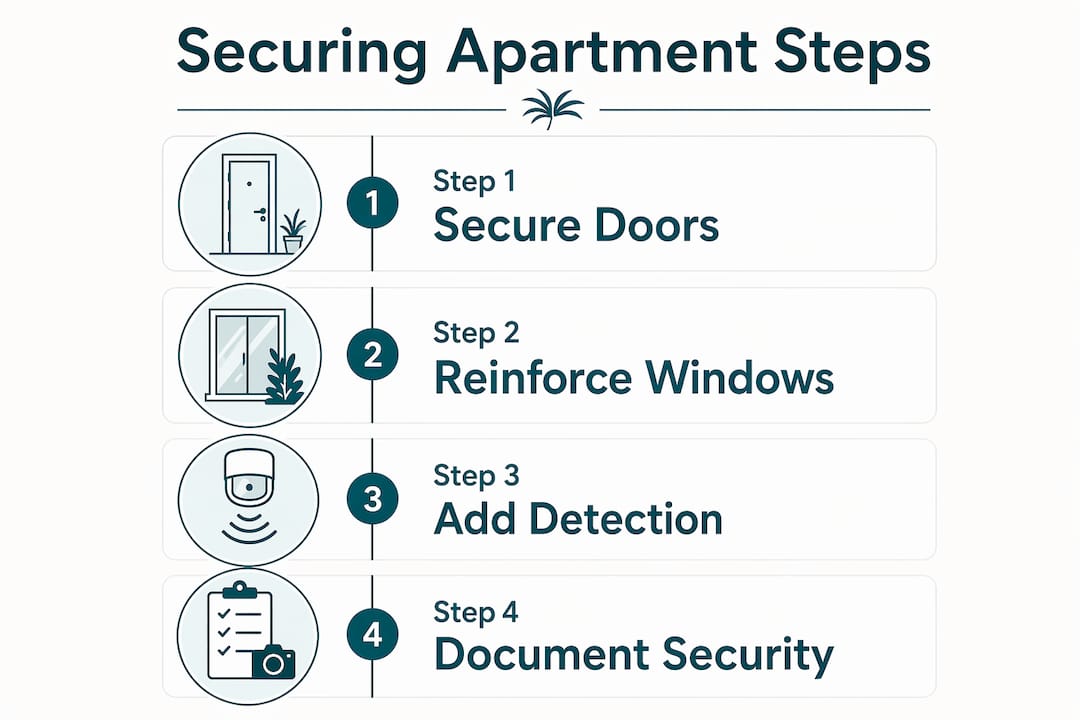
- Securing an apartment involves layered, reversible measures focused on doors, windows, detection, and emergency readiness to prevent break-ins. Proper documentation, such as move-in photos and sealed inspection reports, protects your deposit and clarifies property condition throughout your tenancy. Consistent testing and maintenance of security devices create an ongoing habit of ensuring safety without violating lease terms.
Securing your apartment step by step means applying reversible, lease-safe measures focused on doors, windows, detection, and emergency readiness. Most break-ins exploit the same three entry points, and renters have more protection options than they realize without ever touching a drill. The approach covered here treats apartment security as a layered system, not a single device purchase. Whether you are moving into your first place in Boca Raton or upgrading a lease you have held for a year, these steps give you a clear, practical path to improving apartment safety without risking your deposit.
What you need before you start securing your apartment
Knowing what tools and information you need before you act saves time and prevents lease violations. The first thing to pull out is your lease agreement. Read the modification clause carefully. Most leases prohibit permanent changes like drilling into walls or replacing deadbolts outright, but they allow removable devices, adhesive mounts, and portable alarms. Understanding that boundary before you buy anything protects you from both your landlord and wasted money.
Once you know your limits, gather the right tools. The table below shows the most practical security devices for renters, rated by how lease-friendly they are:
| Tool | Purpose | Lease-friendly? |
|---|---|---|
| Door security bar or brace | Blocks door from opening inward | Yes, no installation needed |
| Retrofit smart lock | Adds smartphone control without replacing the deadbolt | Yes, replaces interior parts only |
| Window track bar | Prevents sliding windows from opening | Yes, removable |
| Adhesive door and window alarm | Triggers loud alert on contact | Yes, adhesive mount |
| Battery-powered indoor camera | Monitors entry points without drilling | Yes, adhesive or magnetic mount |
| Portable door stop alarm | Wedges under door, sounds on pressure | Yes, no installation |
Pro Tip: Before you buy a single device, photograph every lock, window latch, and door frame in the apartment on move-in day. This documentation protects your deposit and establishes the baseline condition you are responsible for maintaining.
A move-in inspection checklist is the most underused security tool renters have. Signed inspection reports with timestamped photos reduce deposit disputes by creating clear evidence of pre-existing conditions. Some states require written condition statements within 5 to 15 days of move-in, which means this step is not just smart. It is often legally required.
Step 1: Secure your apartment’s doors first
Doors are the primary target. About 34% of residential burglaries happen through the front door, making it the single most important point to address. That statistic means one in three break-ins walks right through the entrance you use every day. Reinforcing that door is not paranoia. It is math.
Follow these steps in order:
- Test the existing lock on move-in day. Wiggle the handle, check the deadbolt throw, and look at the strike plate. If anything feels loose or the lock does not engage cleanly, submit a written maintenance request the same day. Documenting this immediately protects you if the issue is later disputed.
- Request a rekey or lock change. All exterior locks should be rekeyed between tenants as standard practice. If your landlord has not done this, ask in writing. You do not know who held a copy of the previous key.
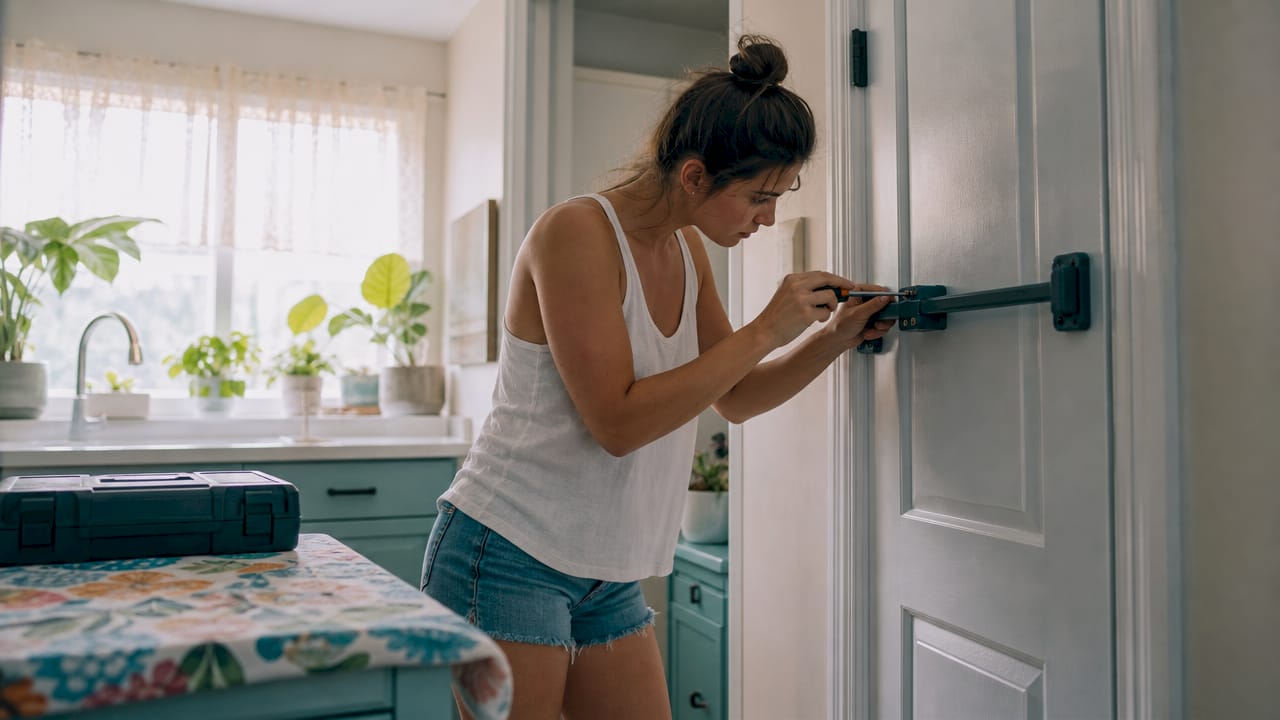
- Install a door security bar or brace. These require zero tools and cost between $20 and $60. A bar braced under the handle prevents the door from swinging inward even if the lock is defeated. This is the single highest-value purchase for most renters.
- Upgrade the strike plate screws if your lease allows it. Replacing short factory screws with 3-inch screws anchors the strike plate into the wall stud rather than just the door frame. Keep the original screws in a labeled bag so you can restore the door at move-out.
- Add a door stop alarm or peephole camera. A door stop alarm wedges under the door and sounds at 120 decibels if pressure is applied. A peephole camera like those compatible with Apple Home Key lets you see who is outside without opening the door.
Pro Tip: Retrofit smart locks, which replace only the interior thumb-turn mechanism, add smartphone control without requiring you to swap the full deadbolt. They preserve your physical key and are fully reversible at move-out.
The layered approach here matters. A single deadbolt is a single point of failure. A deadbolt plus a door brace plus a door stop alarm creates three separate obstacles. Each one adds seconds, and seconds are what deter opportunistic intruders.
Step 2: Reinforce windows and other accessible entry points
Windows are the second most common entry point. About 23% of burglaries enter through first-floor windows, which means any window a person can reach from the ground or a fire escape needs attention. Prioritize those before touching any window above the second floor.
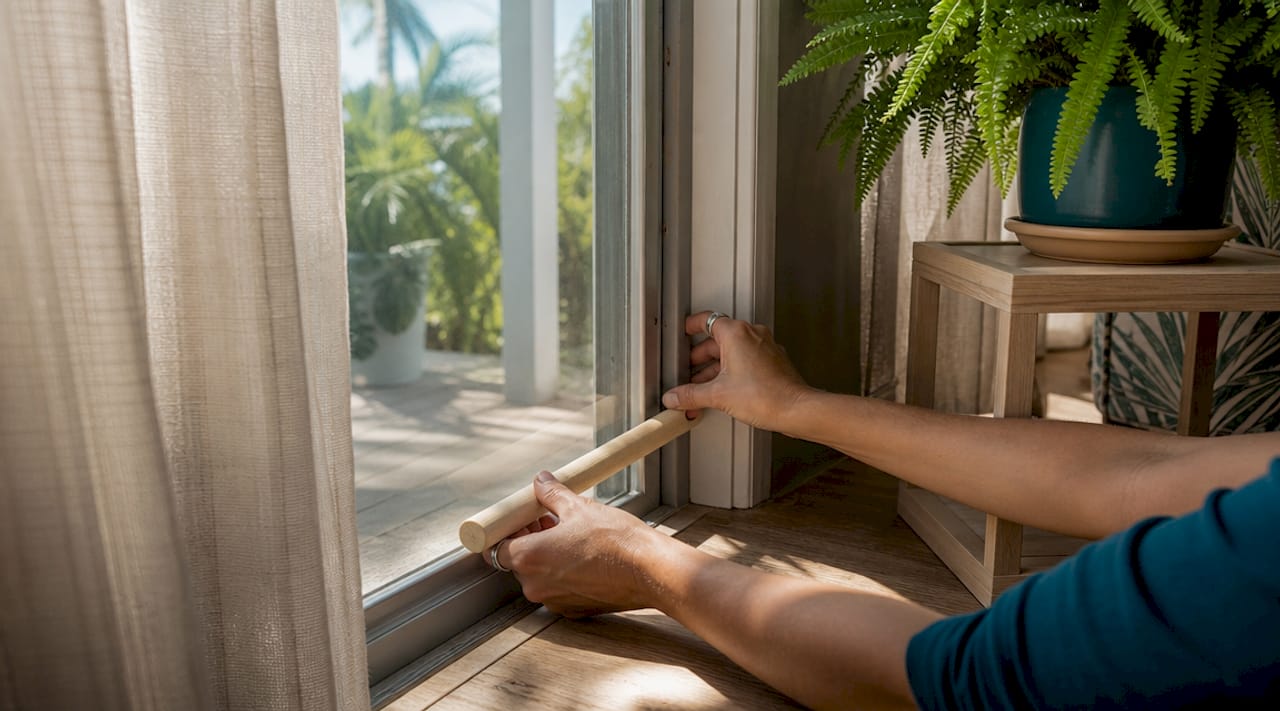
For sliding windows and glass doors, a track security bar is the most effective renter-safe option. Cut a wooden dowel or buy an adjustable aluminum bar and drop it into the track. The window cannot slide open even if the latch is defeated. This costs under $10 and takes 30 seconds to install.
The table below compares the most practical window security tools for renters:
| Tool | Best for | Cost range | Reversible? |
|---|---|---|---|
| Track security bar | Sliding windows and patio doors | $5 to $15 | Yes |
| Clamp-style window lock | Double-hung windows | $10 to $25 | Yes |
| Adhesive window alarm | Any window, detection layer | $8 to $20 | Yes |
| Window security film | Slows glass breakage, adds privacy | $20 to $60 | No (adhesive) |
| Motion-sensor light | Exterior windows, deterrence | $15 to $40 | Yes |
Adhesive window alarms from brands like Doberman Security or Sabre attach to the frame and trigger when the window opens or the glass vibrates. They add a detection layer without any drilling. Pair them with a motion-sensor light near accessible windows to reduce the chance an intruder even attempts entry. Lighting is one of the most underrated deterrents in apartment security. A dark window at ground level is an invitation. A lit one is a risk.
For apartment security tips specific to ground-floor units, consider window privacy film as well. It limits visibility from outside during daylight hours without blocking your view out. This removes the ability to case your apartment before attempting entry.
Step 3: Add detection and emergency preparedness
Physical barriers slow an intruder down. Detection and emergency readiness determine what happens next. Renter security works best as four layers: deter, delay, detect, and dispatch. The first two steps covered deterrence and delay. This step covers the final two.
Here is how to build out your detection and dispatch stack:
- Set up a battery-powered indoor camera. Cameras on adhesive mounts positioned to face the entry door give you real-time alerts without violating lease terms. Brands like Blink, Wyze, and Arlo all offer no-drill options with cloud storage.
- Install a wireless alarm system. Wireless, no-drill apartment security systems use door and window sensors and cost under $300 for a basic kit. Professional monitoring runs $6 to $20 per month, which is less than a streaming subscription.
- Keep your phone charged near your bed. This sounds obvious, but it is the most commonly skipped step. A dead phone at 2 a.m. eliminates your ability to call 911, contact a neighbor, or trigger a remote alarm.
- Identify a trusted neighbor. Give them your number and ask them to text if they notice anything unusual. This costs nothing and creates a human detection layer that no device can replicate.
- Secure your smart devices on a separate network. If your camera or alarm connects to Wi-Fi, put it on a guest network isolated from your laptop and phone. This prevents a compromised device from exposing your other data.
Pro Tip: Test every alarm and replace batteries on the first of each month. A door sensor with a dead battery is decoration, not security.
Emergency preparedness also means knowing your building’s layout. Identify the secondary exit from your floor, know which neighbors are home during the day, and keep a small flashlight accessible. These habits cost nothing and matter significantly when seconds count.
Step 4: Document and maintain security throughout your tenancy
Documentation is the part of apartment security most renters skip entirely, and it is the part that protects your money. Move-in inspection reports with timestamped photos create clear evidence of pre-existing conditions. Without them, any damage found at move-out becomes your financial responsibility by default.
Follow this documentation sequence throughout your lease:
- Complete a written move-in inspection on day one. Photograph every wall, floor, lock, window, and appliance. Send the photos to your landlord by email the same day so the timestamp is on record.
- Submit all maintenance requests in writing. A verbal request does not exist legally. Use email or your building’s app so you have a paper trail of what you reported and when your landlord responded.
- Schedule a mid-lease walkthrough. Mid-lease inspections with written notice create ongoing proof of condition and security status. Take new photos and compare them to your move-in set. Note any changes to locks, windows, or common areas.
- Log every security device you install and remove. Keep a simple list of what you added, when you added it, and what condition the original hardware was in. This makes move-out restoration straightforward and dispute-free.
Treating move-in security as a combination of physical upgrades and a documented paper trail is the professional standard. The documentation does not just protect your deposit. It also creates a record that your landlord maintained the property, which matters if you ever need to make a legal claim.
Key takeaways
Securing an apartment requires layering reversible physical barriers, detection tools, and thorough documentation from move-in day through the end of your lease.
| Point | Details |
|---|---|
| Start with doors | Front doors account for 34% of break-ins; address them before any other entry point. |
| Layer your defenses | Combine a door brace, window bar, and alarm system rather than relying on one device. |
| Choose reversible tools | Use adhesive mounts, removable bars, and retrofit locks to stay lease-compliant. |
| Document everything | Timestamped move-in photos and written maintenance requests protect your deposit. |
| Maintain your system | Test alarms monthly and replace batteries to keep detection layers functional. |
What I have learned from watching renters get this wrong
Most renters I have seen approach apartment security in one of two ways. They either buy one expensive smart lock and call it done, or they do nothing because they assume the building handles it. Both approaches leave serious gaps.
The renters who actually feel safe are the ones who treat security as a habit, not a purchase. They spend $80 total on a door brace, two window bars, and a pair of adhesive alarms. Then they spend five minutes a month testing those devices. That is it. No fortress mentality. No $500 camera system. Just consistent, layered attention to the three or four points that actually matter.
The lease-friendly framing also matters more than people expect. When you choose reversible reinforcement methods, you remove the mental barrier of “I cannot do anything because my landlord will charge me.” You can do quite a lot. You just have to pick the right tools. A door security bar is more effective than most deadbolt upgrades and costs a fraction of the price. A window track bar takes 10 seconds to place and 10 seconds to remove.
The documentation habit is the one I push hardest. I have talked to renters who lost hundreds of dollars at move-out over damage they did not cause, simply because they had no photos from move-in day. That is an entirely preventable loss. Take the photos. Send the email. Keep the record. Security is not just about keeping intruders out. It is about protecting yourself from every financial risk that comes with renting.
— Ayman
Find an apartment where security starts before you move in
At Cynthiagardens, security is built into the community design, not added as an afterthought. Our Boca Raton apartments feature controlled-access entry, well-lit common areas, and community rules that create a safer living environment for every resident.
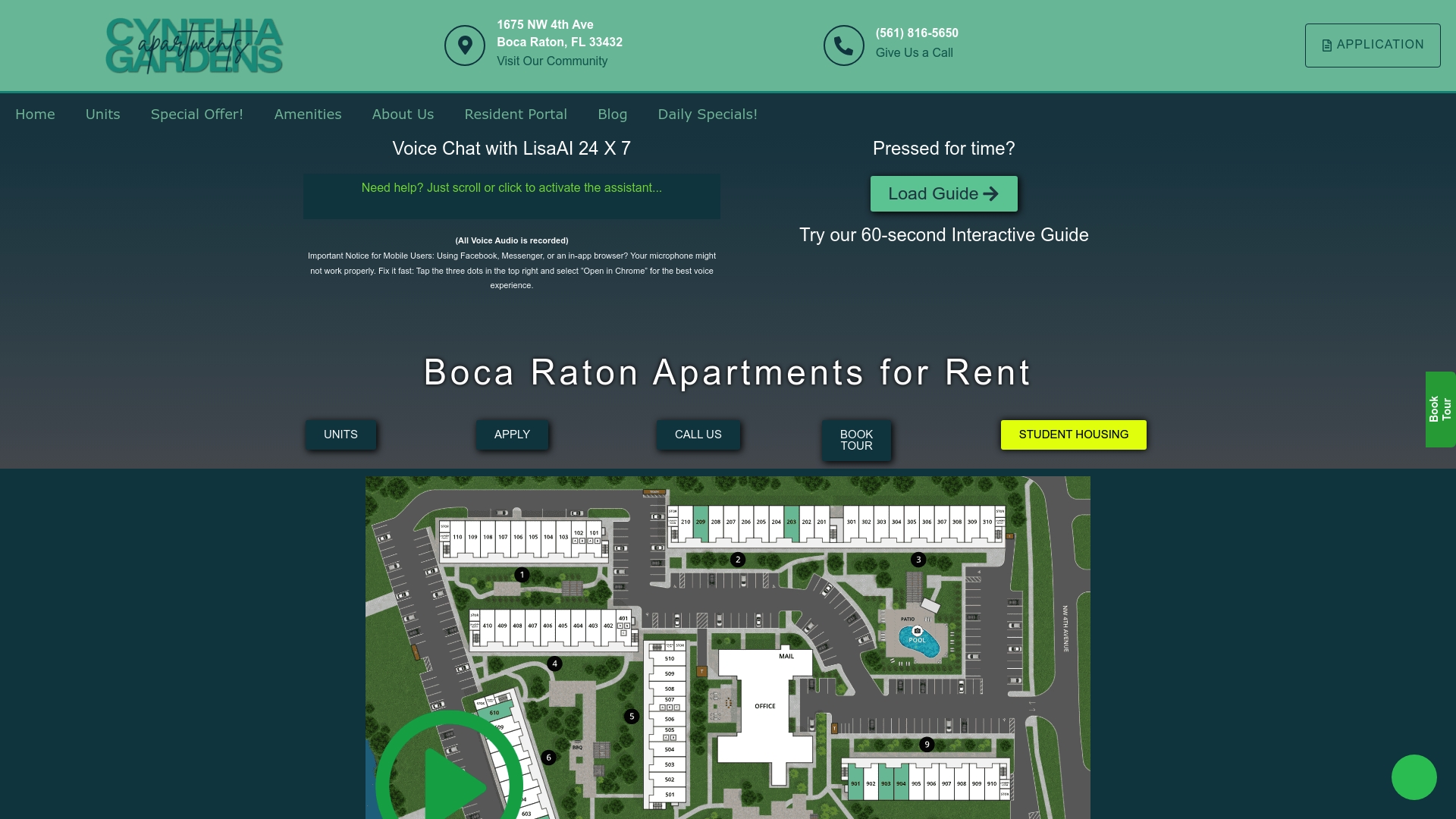
If you are a first-time renter or a young professional looking for a place where the foundation is already solid, explore our apartment styles and features to see what modern, secure apartment living looks like in practice. You can take a virtual tour, chat with our AI leasing assistant, or browse our interactive property map without leaving your couch. Learn how our community rules shape daily living and why that matters for your peace of mind. Transparent pricing, no hidden fees, and a tech-forward leasing experience make finding the right apartment straightforward.
FAQ
What is the first step to secure an apartment?
The first step is to test all existing door locks on move-in day and submit a written maintenance request for any defects. Then install a door security bar or brace, which requires no tools and immediately reinforces your main entry point.
What are the best locks for apartments?
Retrofit smart locks that replace only the interior mechanism are the best locks for apartments because they add smartphone control and keypad access without replacing the full deadbolt or violating most lease agreements. Brands like Level and Schlage offer renter-compatible options.
Can I install a security system without drilling?
Yes. Wireless, no-drill security systems use adhesive door and window sensors and cost under $300 for a basic kit. Professional monitoring is available for $6 to $20 per month with no permanent installation required.
How do I secure windows in an apartment?
Place a track security bar or cut wooden dowel in the sliding window track to prevent it from opening. Add adhesive window alarms from brands like Doberman Security for a detection layer that triggers if the window is opened or struck.
Why does move-in documentation matter for security?
Signed move-in inspection reports with timestamped photos protect you from being charged for pre-existing damage at move-out. Some states legally require written condition statements within 5 to 15 days of move-in, making this step both a financial and a legal safeguard.