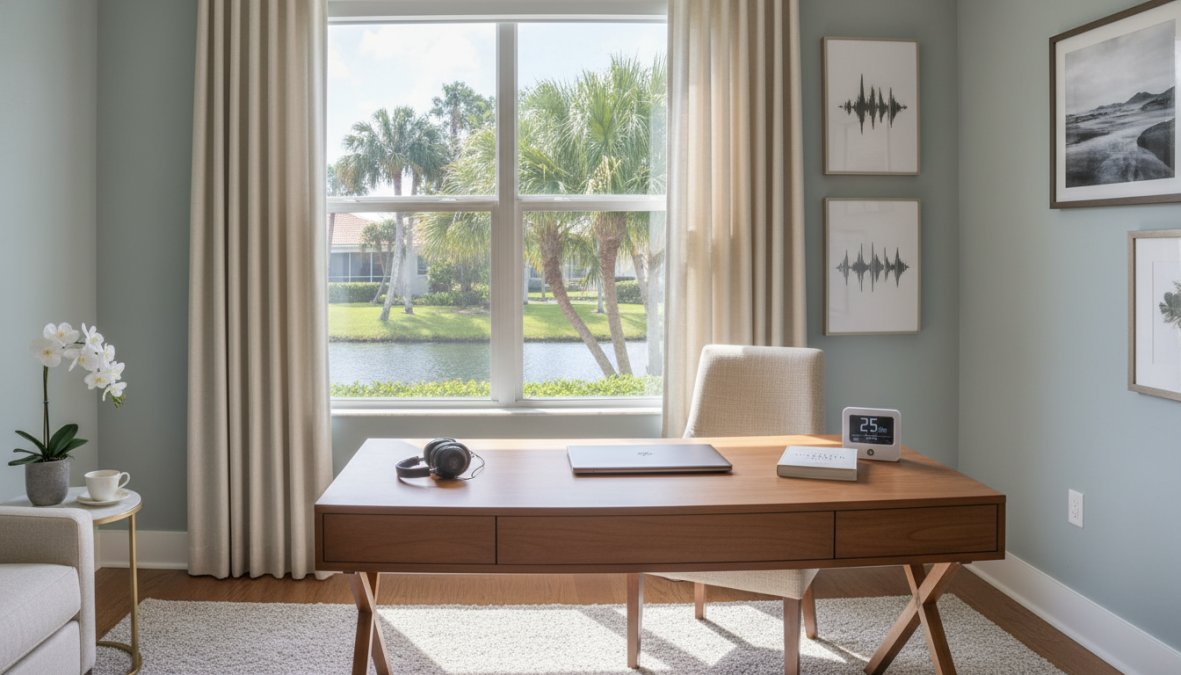
Cynthia Gardens is a residential apartment community in Boca Raton, Florida, offering quiet, garden-style living near Florida Atlantic University, Mizner Park, and Boca Raton’s beaches at 1675 NW 4th Ave, Boca Raton, FL 33432.
Table of Contents
- Why Professionals Prioritize Quiet Apartments in Boca Raton
- Best Neighborhoods in Boca Raton for Professionals Seeking Peace
- Building Construction and Soundproofing Specifications to Look For
- How to Assess Apartment Noise Levels Before Signing a Lease
- Apartment Hunting Checklist for Remote Workers in Boca Raton
- Private Landlord Rentals in Boca Raton: Pros, Cons, and How to Find Them
- How to Find Quiet Apartments for Professionals in Boca Raton: A Step-by-Step Process
- Conclusion
Last Updated: June 6, 2026
Quiet apartments are harder to find than most rental listings suggest, and knowing how to find quiet apartments for professionals in Boca Raton requires more than a quick search on a rental directory. At Cynthia Gardens, we work with professionals and graduate students every day who arrive expecting a peaceful home environment and discover a market full of trade-offs between location, price, and noise. With the right framework, you can filter out the noise before you ever sign a lease.
Here’s what most guides get wrong: they treat "quiet" as a subjective preference rather than a measurable, verifiable quality. Quiet is a function of building materials, unit placement, neighborhood traffic patterns, and community management policies, each of which can be assessed before you commit.
Why Professionals Prioritize Quiet Apartments in Boca Raton
Professionals seeking quiet apartments in Boca Raton are not simply being picky. The demand reflects a structural shift in how and where knowledge workers live and operate.
The Rise of Remote Work and the Need for Tranquility
Remote work has permanently changed the relationship between home and office. Many professionals now spend the majority of their working hours inside their apartments, which means ambient noise directly affects productivity, focus, and health. Background traffic, thin walls, or noisy neighbors is no longer just an inconvenience, it is an active interference with the workday itself.
Boca Raton’s proximity to Florida Atlantic University, its growing financial services sector, and its appeal to remote workers in tech and consulting have created a competitive rental market where quiet apartments command genuine premium interest. Professionals are searching for functional tranquility, and the two often overlap.
How High-Density Living Affects Noise Levels
High-density living is one of the most underappreciated noise sources in apartment hunting. The more units per building, the more shared walls, ceilings, hallways, and amenities, each adding potential sound transmission pathways.
According to the U.S. Department of Housing and Urban Development’s guidance on residential noise, noise from adjacent units is among the most common complaints in multi-family housing. Garden-style communities spread units across lower-rise buildings with more separation between neighbors, structurally reducing this problem compared to high-rise towers. Crucially, the impact is not just about volume but frequency and predictability, professionals tolerate occasional noise far better than constant, unpredictable interruptions.
Best Neighborhoods in Boca Raton for Professionals Seeking Peace
Noise levels vary significantly across Boca Raton‘s neighborhoods, and understanding that variation before you start touring saves weeks of wasted effort.
Noise-Mapping Boca Raton: Which Areas Are Truly Quiet
Boca Raton is not uniformly quiet. Areas adjacent to I-95 and US-1 carry consistent traffic noise that penetrates even well-constructed buildings. The corridor around downtown Boca along Mizner Boulevard sees elevated activity on evenings and weekends.
The quietest residential zones cluster west of Dixie Highway and south of Glades Road, where garden-style communities sit on landscaped grounds with natural buffering from roadway noise. Neighborhoods near FAU’s campus offer a more residential environment with lower through-traffic. Proximity to the beach cuts both ways: ocean breezes reduce ambient noise, but A1A carries consistent traffic and seasonal congestion.
A practical approach: use the EPA’s noise mapping resources for residential areas alongside Google Street View to assess proximity to major roads, commercial zones, and transit corridors before scheduling a single tour.
Garden-Style Communities vs. Downtown High-Rises
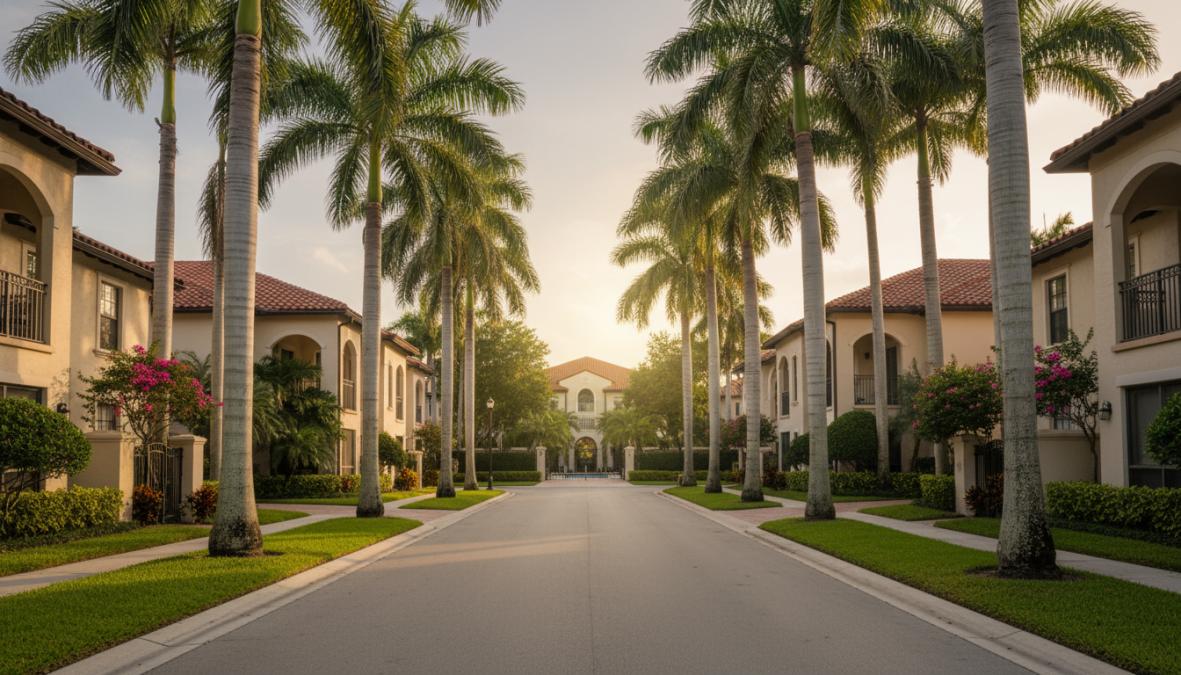
Garden-style apartments are structurally better suited to quiet living than downtown high-rises. Lower density, more green space between buildings, and fewer shared vertical surfaces all reduce sound transmission. Downtown high-rises offer walkability and views, but elevator banks, shared corridors, and stacked unit configurations create persistent low-level noise incompatible with focused work. Garden-style communities allow for landscaped buffers, natural sound absorption from mature trees, and a community atmosphere that attracts quieter, longer-term residents.
When comparing garden-style versus high-rise options, ask property management for the average lease length of current residents. Communities with longer average tenancies tend to have more stable, quieter neighbors than buildings with high turnover.
Building Construction and Soundproofing Specifications to Look For
Most renters never ask about soundproofing specifications. That is a significant oversight, because construction quality is the single biggest determinant of how much noise transfers between units.
Concrete Construction, Double-Pane Windows, and STC Ratings
Sound Transmission Class (STC) measures how much sound a wall, floor, or ceiling assembly blocks. For residential apartments, an STC rating of 50 or above is considered good; ratings below 45 are common in older wood-frame construction and will transmit normal conversation between units.
Concrete construction significantly outperforms wood-frame in sound isolation, absorbing a broader range of frequencies including low-frequency bass. When touring, ask directly: "Is this building concrete construction or wood-frame?" Property managers know the answer, and it tells you more than any marketing brochure. Double-pane windows address external noise from traffic and urban activity, a meaningful upgrade for units facing streets or parking areas, compared to the single-pane windows common in older Florida apartment stock.
Top-Floor Units and Layout Choices That Reduce Noise
Top-floor units eliminate ceiling noise from upstairs neighbors, one of the most disruptive sources in multi-family housing. Units at the end of a hallway have fewer shared walls than center units; corner units share walls on only two sides. Units above parking structures avoid the constant sound of arriving and departing vehicles.
Avoid ground-floor units facing parking areas or dumpster enclosures. Trash collection typically happens between 6 and 7 AM and is one of the most consistently disruptive noise sources in residential communities, a detail that rarely appears in listing descriptions but comes up immediately once you move in.
How to Assess Apartment Noise Levels Before Signing a Lease
Assessing apartment noise levels before signing is a skill, not an instinct. Most people tour at convenient times and in favorable conditions. A more deliberate approach reveals what you actually need to know.
What to Listen and Look for During an Apartment Tour
Visit the apartment at multiple times of day. A Tuesday morning tour tells you almost nothing about Friday evening noise or Saturday morning lawn maintenance. If possible, visit once on a weekday morning, once on a weekday evening, and once on a weekend.
During the tour, conduct these specific checks:
- Stand in silence for 60 seconds. Turn off any ambient music. Listen for HVAC noise, neighbor voices, footsteps above, and traffic from windows.
- Test the windows. Open and close each window and assess how much external noise changes.
- Check wall thickness. Knock on shared walls. A hollow sound indicates lightweight construction; a dense, dull thud suggests concrete or masonry.
- Walk the parking area. Note how close parking is to bedroom windows.
- Ask about neighbor turnover. A long-vacant unit may have been listed because the previous tenant found it too noisy.
- Check the community rules. Ask to see the lease addendum on noise and quiet hours.
Lease Clauses for Noise Complaints and Quiet Enjoyment Rights
The legal concept of quiet enjoyment is the tenant’s right to use and occupy a rental property without interference from the landlord or other tenants. Most Florida residential leases include a quiet enjoyment clause, but enforceability varies considerably.
Before signing, review the lease for:
- Defined quiet hours: Specific time windows (typically 10 PM to 8 AM) during which noise restrictions apply.
- Noise complaint procedures: How complaints are submitted and what response time is expected from management.
- Lease termination rights: Some leases allow tenants to terminate if documented complaints go unresolved after a defined period.
- Guest and visitor policies: Unrestricted guest access with no noise accountability creates persistent problems in otherwise quiet communities.
According to Florida’s residential landlord and tenant statutes, persistent unaddressed noise disturbances can constitute a breach of the implied warranty of habitability. Understanding this before you sign gives you documented recourse if problems arise.
Apartment Hunting Checklist for Remote Workers in Boca Raton
Remote workers have a distinct set of requirements that go beyond a standard apartment hunting checklist. Noise is the headline concern, but not the only one.
Remote Work Infrastructure: Internet, Dedicated Space, and Amenities
Before Touring:
- Confirm building construction type (concrete preferred)
- Check proximity to I-95, US-1, and major commercial zones
- Research average lease length and tenant turnover for the community
- Review the community’s noise policy online or by phone
During the Tour:
- Test windows for external noise attenuation
- Request STC ratings for walls and floors if available
- Confirm unit position (top floor, corner, end of hallway preferred)
- Ask about internet service providers available in the building
- Check cell signal in the unit (critical for video calls)
- Assess natural light in your planned workspace
- Walk the grounds to assess landscaping as a sound buffer
Before Signing:
- Read the quiet hours clause in the lease
- Confirm noise complaint procedures in writing
- Ask management how noise complaints have been handled in the past 12 months
- Verify internet speeds available from the building’s ISP options
Internet reliability is non-negotiable for remote work. Fiber connectivity is increasingly available in Boca Raton’s established communities, but availability varies by building. Confirm directly with the provider, not just the leasing agent.
The single most overlooked item on any apartment hunting checklist for remote workers is cell signal strength inside the unit. Dead zones in a bedroom or home office will disrupt video calls regardless of how strong your Wi-Fi connection is.
Private Landlord Rentals in Boca Raton: Pros, Cons, and How to Find Them
Private landlord rentals in Boca Raton represent a distinct market segment with real advantages and real risks for professionals seeking quiet apartments.
The primary advantage is flexibility. Private landlords often manage smaller buildings or individual units, meaning lower density, less foot traffic, and more direct communication when issues arise. A landlord who owns four units and lives nearby has a strong personal incentive to maintain quiet tenancy standards. The risks are equally real: private landlords vary widely in professionalism, lease documentation, and responsiveness. Quiet enjoyment clauses and noise policies may be vague or absent.
To find private landlord rentals in Boca Raton, search Zillow’s rental listings for Boca Raton and filter by individual landlord versus managed community listings. Local Facebook groups and the FAU off-campus housing board also surface private listings that never appear on major directories. When contacting a private landlord, ask directly about building construction, neighbor demographics, and how noise complaints have been handled, the quality of that conversation tells you as much as the unit itself.
How to Find Quiet Apartments for Professionals in Boca Raton: A Step-by-Step Process
Knowing how to find quiet apartments for professionals in Boca Raton is most useful when it follows a repeatable process.
Step 1: Define your noise tolerance threshold. Remote workers on video calls all day have different requirements than professionals who leave for an office. Be specific about what "quiet" means for your actual lifestyle.
Step 2: Map your target neighborhoods. Eliminate high-traffic corridors before you start touring. Focus on garden-style communities west of Dixie Highway and in established residential zones near FAU.
Step 3: Filter by building construction. Call ahead and ask whether each community is concrete or wood-frame. Remove wood-frame buildings from your shortlist unless the price or location is exceptional.
Step 4: Schedule multi-time tours. Book at least two visits to your top candidates at different times of day. One visit is not enough data.
Step 5: Conduct the noise audit. Use the checklist above during each tour. Document what you hear and observe, not just what the leasing agent tells you.
Step 6: Review the lease for quiet enjoyment provisions. A community with clear, enforceable noise policies is a fundamentally different living environment than one without them.
Step 7: Confirm remote work infrastructure. Verify internet provider options and speeds before signing. This is the step most professionals skip and most frequently regret.
Cynthia Gardens is designed around exactly this profile: a garden-style community in Boca Raton, FL with landscaped grounds that provide natural sound buffering, a residential atmosphere that attracts professionals and long-term tenants, and maintenance-free management that handles issues promptly. Its location near FAU and the beach places it in one of Boca Raton’s more established residential corridors, away from the high-traffic commercial zones that generate the most persistent noise.
A quiet apartment is not found by accident. It is found by asking the right questions, visiting at the right times, and understanding that construction quality and community management are the two variables that matter most.
Frequently Asked Questions
What are the quietest neighborhoods in Boca Raton for professionals?
Areas away from downtown Boca and major traffic corridors, such as neighborhoods near Florida Atlantic University and established residential communities west of US-1, tend to offer lower ambient noise. Garden-style communities with landscaped grounds and low-density building layouts naturally buffer street noise. When searching for quiet apartments for professionals in Boca Raton, prioritize neighborhoods with tree-lined streets, limited commercial traffic, and buildings set back from main roads.
How can I tell if an apartment in Boca Raton is soundproof before signing a lease?
Visit the unit at different times of day, including evenings and weekends. Knock on walls to check for hollow drywall versus solid concrete construction. Ask the property manager about STC (Sound Transmission Class) ratings, whether double-pane windows are installed, and how floors are insulated between units. Reviewing the lease for a quiet enjoyment clause and noise complaint procedures also gives you legal recourse if noise becomes an issue after move-in.
What should remote workers include on their apartment hunting checklist for Boca Raton?
Remote workers searching for quiet apartments in Boca Raton should verify: high-speed internet availability and provider options, a dedicated space or den for a home office, soundproofing features like concrete walls and double-pane windows, proximity to FAU or business districts for networking, and community rules on noise hours. Also confirm that the building's amenities, such as a resort-style pool or landscaped grounds, are positioned away from your unit to minimize daytime disruption.
Are private landlord rentals in Boca Raton a good option for finding quieter apartments?
Private landlord rentals in Boca Raton can offer quieter living because smaller buildings typically have fewer units and less foot traffic than large complexes. However, they may lack formal noise policies or professional property management to enforce quiet hours. Always review the lease carefully for noise and quiet enjoyment clauses. For guaranteed amenities, soundproofing standards, and responsive management, a professionally managed community often provides more consistent tranquility.
Is a condo or an apartment better for quiet living in Boca Raton?
Both can be quiet depending on construction quality and community rules. Condos often feature concrete construction and stricter HOA noise regulations, which can work in your favor. However, well-managed garden-style apartment communities with concrete builds, double-pane windows, and enforced quiet hours can match or exceed condo noise standards. The key factors are building materials, floor plan placement, and the property management team's commitment to maintaining a peaceful residential environment.
Finding a genuinely quiet apartment in Boca Raton requires more deliberate evaluation than most rental searches allow for. Cynthia Gardens offers professionals a garden-style community with lush, landscaped grounds, modern one-bedroom apartments with high-end finishes, and a maintenance-free living environment designed to support both focused work and genuine rest. Schedule a tour today and experience the difference that thoughtful community design makes in your daily quality of life.
Explore more Cynthia Gardens resources: dedicated quiet apartments landing page, floorplans at Cynthia Gardens, News & Apartment Living Resource Center, or contact the leasing team.
This article was written using GrandRanker