TL;DR:
- Virtual tours have become essential tools for renters, saving time, increasing listing views, and enabling efficient property screening. They provide accurate spatial data but cannot replicate sensory experiences or neighborhood atmosphere, so in-person visits remain important for final validation. Using a hybrid approach of virtual tours and physical visits helps renters make smarter, faster leasing decisions.
Virtual tours are not just a nicer version of property photos. The role of virtual tours in renting has quietly shifted from a marketing novelty to a practical decision-making tool that saves renters real time and real money. If you’ve ever driven across town to see an apartment that looked nothing like its listing photos, you already understand why this matters. This article breaks down how virtual tours work, what they can and cannot tell you, and exactly how to use them to make a faster, smarter rental decision.
Table of Contents
- Key takeaways
- The role of virtual tours in renting today
- Why virtual tours genuinely help renters
- What virtual tours cannot show you
- How to get the most out of virtual tours
- The measurable impact on the rental market
- My honest take on virtual tours
- Explore Cynthiagardens virtually before you visit
- FAQ
Key takeaways
| Point | Details |
|---|---|
| Virtual tours save serious time | They act as a filter that cuts unnecessary in-person visits by up to 40%. |
| Engagement and views spike | Listings with virtual tours get 87% more views than those without. |
| 3D tours beat video walkthroughs | Digital twin models let you measure rooms and understand floor flow before ever visiting. |
| Sensory gaps still exist | Virtual tours cannot replicate noise, smells, or neighborhood atmosphere. |
| Hybrid approach wins | Use virtual tours to shortlist, then visit your top one or two picks in person. |
The role of virtual tours in renting today
Think of virtual tours as your first-round interview with an apartment. They let you walk the space, check room proportions, look out virtual windows, and spot red flags before you ever schedule a showing. That is a significant shift from scrolling through a dozen flat photos and guessing whether the bedroom actually fits a queen bed.
There are three main types of virtual tours you will encounter when searching for rentals.
- 360° panoramic tours: A series of still images stitched together so you can drag the view in any direction. They are the most common format and the easiest to produce on a budget.
- 3D digital twin models: Created using tools like Matterport, these are fully navigable, spatially accurate reproductions of the real unit. You can move through the apartment, switch to a dollhouse overhead view, and even use a built-in measuring tool.
- Live virtual tours: A leasing agent or property manager walks through the unit on a video call while you watch and ask questions in real time. Less polished, but highly interactive.
- Video walkthroughs: A pre-recorded video tour, usually shot with a smartphone. Quality varies widely, and you lose the ability to control the view.
Professional 3D virtual tours typically cost property owners between $150 and $500 per unit, and they boost booking conversion rates by 10 to 30 percent. That cost context matters to you as a renter because it signals whether a landlord or community is serious about transparency. A property that invests in a proper 3D tour is usually also investing in the overall leasing experience.
The technology behind these tours has become accessible enough that most mid-size and larger apartment communities now offer them. Platforms like a-du.homes integrate virtual tour hosting directly into leasing workflows, which means you can often access tours 24 hours a day without waiting for a leasing office to open.
Why virtual tours genuinely help renters
The benefits go well beyond convenience. Here is what actually changes about your apartment search when you use virtual tours properly.
- You tour more properties in less time. Physically visiting five apartments in a weekend is exhausting. Virtually touring fifteen in a single evening is not. You cover more ground without burning out.
- You filter out unsuitable options early. Virtual tours help renters eliminate apartments with awkward layouts, poor natural light, or condition issues before committing to a visit. That is the real value, not the novelty of the technology.
- You share the decision with others. Send a virtual tour link to your partner, roommate, or parent. They can explore the space on their own time and give informed feedback without everyone needing to schedule a joint visit.
- You access listings on your schedule. Leasing offices have limited hours. Virtual tours do not. You can revisit the same unit at midnight if you want to double-check closet space.
- You build real confidence before signing. Unit-level virtual tours build renter confidence by showing the exact space being offered, not a model unit or a representative floor plan.
Pro Tip: When you find a listing you like, watch the virtual tour twice. The first time, get an emotional feel for the space. The second time, slow down and specifically check storage, natural light at different points in the unit, and whether the kitchen and bathroom look well-maintained.
The impact on tenant engagement is not subtle. Listings featuring virtual tours get 87% more views and hold visitor attention five to ten times longer than listings without them. From your side of the search, that means more engaged landlords and communities are using virtual tours, making it a reliable signal of a professionally managed property.
What virtual tours cannot show you
This is the part most articles gloss over. Understanding the limits of virtual property tours is just as important as understanding their benefits.
A well-produced 3D tour is spatially accurate. But it cannot tell you that the building is next to a highway that rumbles every twenty minutes, or that the hallway smells like cigarettes, or that the neighborhood feels unsafe after dark. Virtual tours cannot replicate sensory experiences like noise, smells, and neighborhood atmosphere. Those elements are not visible in any format.
There are also subtler perceptual gaps. Wide-angle camera lenses, which are standard in most 3D tour setups, make rooms appear larger than they are. A living room that looks spacious in a virtual tour might feel tight once your furniture is inside. Lighting in tours is usually optimized and consistent, which means you will not see how dark a unit gets on a cloudy afternoon or how direct the western sun is in July.
“Virtual tours act as an efficient filter to reduce viewing tourism and ensure only serious prospects visit.” — Visualista research
The social environment of a building is also invisible in any virtual format. You cannot tell from a tour whether the neighbors are friendly, whether the building manager is responsive, or whether the common areas are actually used and maintained. These things matter for long-term satisfaction, and they only reveal themselves in person.
The takeaway is not that virtual tours are unreliable. It is that they answer specific questions really well and leave other questions unanswered. Use them accordingly.
How to get the most out of virtual tours
Getting real value from a virtual tour requires a bit of intention. Here is a practical process that works.
- Prioritize listings with 3D digital twin tours. A proper 3D model lets you measure spaces and understand floor flow accurately. Simple video walkthroughs give you an impression. 3D tours give you data.
- Use the measurement tool if available. Matterport and similar platforms include a built-in tape measure. Use it on the bedroom before you assume your bed fits. Measure the kitchen counter run. Check whether your desk will fit under the window.
- Watch the tour with your checklist open. Before you start, write down your non-negotiables: in-unit laundry, adequate storage, a dedicated workspace area. Check each item deliberately during the tour rather than getting swept up in the aesthetics.
- Share and review together. If anyone else will live in or help pay for the apartment, send the link before you discuss it verbally. Let them form their own impressions first. The conversation that follows is much more useful.
- Compile a shortlist of two or three finalists. Use virtual tours to get from ten prospects down to two or three. Then visit those in person. 60% of consumers who used virtual tours found them extremely helpful but still valued a physical visit for the final decision.
- Prepare targeted questions for the in-person visit. The virtual tour will surface specific questions: Why does that corner of the ceiling look discolored? What is behind that door? Is that window on a courtyard or a street? Write those down and ask them during the physical showing.
Pro Tip: If a listing does not offer a virtual tour, ask the leasing office or landlord to do a live video walkthrough with you before scheduling an in-person visit. Most are willing, and it replicates much of the benefit.
Learning how to tour apartments remotely is a skill that pays off across your entire rental search, not just for one property.
The measurable impact on the rental market
The data behind virtual tours is not ambiguous. Communities and landlords that invest in them see concrete results, and those results flow downstream to renters in the form of better-quality listings and faster leasing processes.
| Metric | Impact | Source |
|---|---|---|
| Listing views | 87% more views with virtual tours | Panoee, 2026 |
| Rent revenue per community | 2.5% increase, averaging $174,904 more annually | LCP Media study |
| Physical viewing reduction | Up to 40% fewer unnecessary showings | Panoee, 2026 |
| Booking conversion rate | 10–30% improvement with 3D tours | Hostaway |
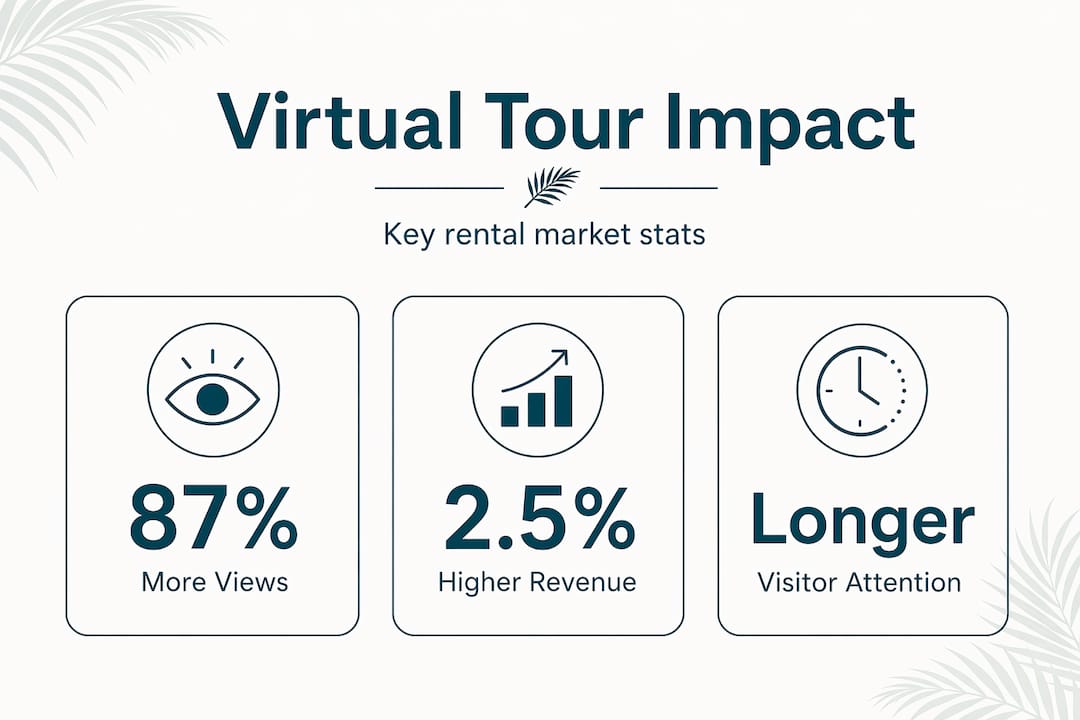
The impact of virtual tours on renting extends beyond convenience. When a community achieves 2.5% higher rent revenue through unit-level virtual tours, it reflects a leasing process that attracts better-matched residents. Those residents are less likely to be disappointed after move-in because their expectations were set accurately from the beginning.
Virtual tours also reduce the friction of renting from a distance. Relocating students, remote workers, and professionals moving to a new city used to have to either fly out for tours or sign leases sight unseen. Virtual tours give that segment a middle path that is both practical and reliable. The reduction in unnecessary physical showings by up to 40 percent means leasing teams can focus their time on prospects who are genuinely ready to move, which shortens wait times for everyone.
My honest take on virtual tours
I have watched the conversation around virtual tours shift from “nice to have” to genuinely standard practice over the past few years. And I think most renters are still underusing them.
The most common mistake I see is treating a virtual tour like a movie trailer rather than a tool. People watch it once, get a general vibe, and move on. The renters who get the most out of virtual tours treat them more like a floor plan walk-through. They pause, measure, revisit, and use the experience to generate specific questions rather than general impressions.
There is also a persistent misconception that a virtual tour means you do not need to visit at all. That is only true for the apartments you are ruling out. For the apartments you are seriously considering, an in-person visit still matters, mostly for the sensory and social context that no camera can capture. The hybrid approach of virtual tours for early screening and physical visits for final validation is not a compromise. It is genuinely the most efficient path.
What excites me about where this technology is heading is the integration with tools like interactive maps and AI chat. When you can virtually tour a unit, see its exact location within the building, check what floor it is on, and ask real-time questions without waiting for a callback, the entire search experience changes. That is not hypothetical. It is already happening at forward-thinking communities. Renters who learn to use these tools together will consistently make better decisions with less stress.
— Ayman
Explore Cynthiagardens virtually before you visit
If you are searching for a one-bedroom apartment in Boca Raton, Cynthiagardens was built with exactly this kind of tech-forward search experience in mind.
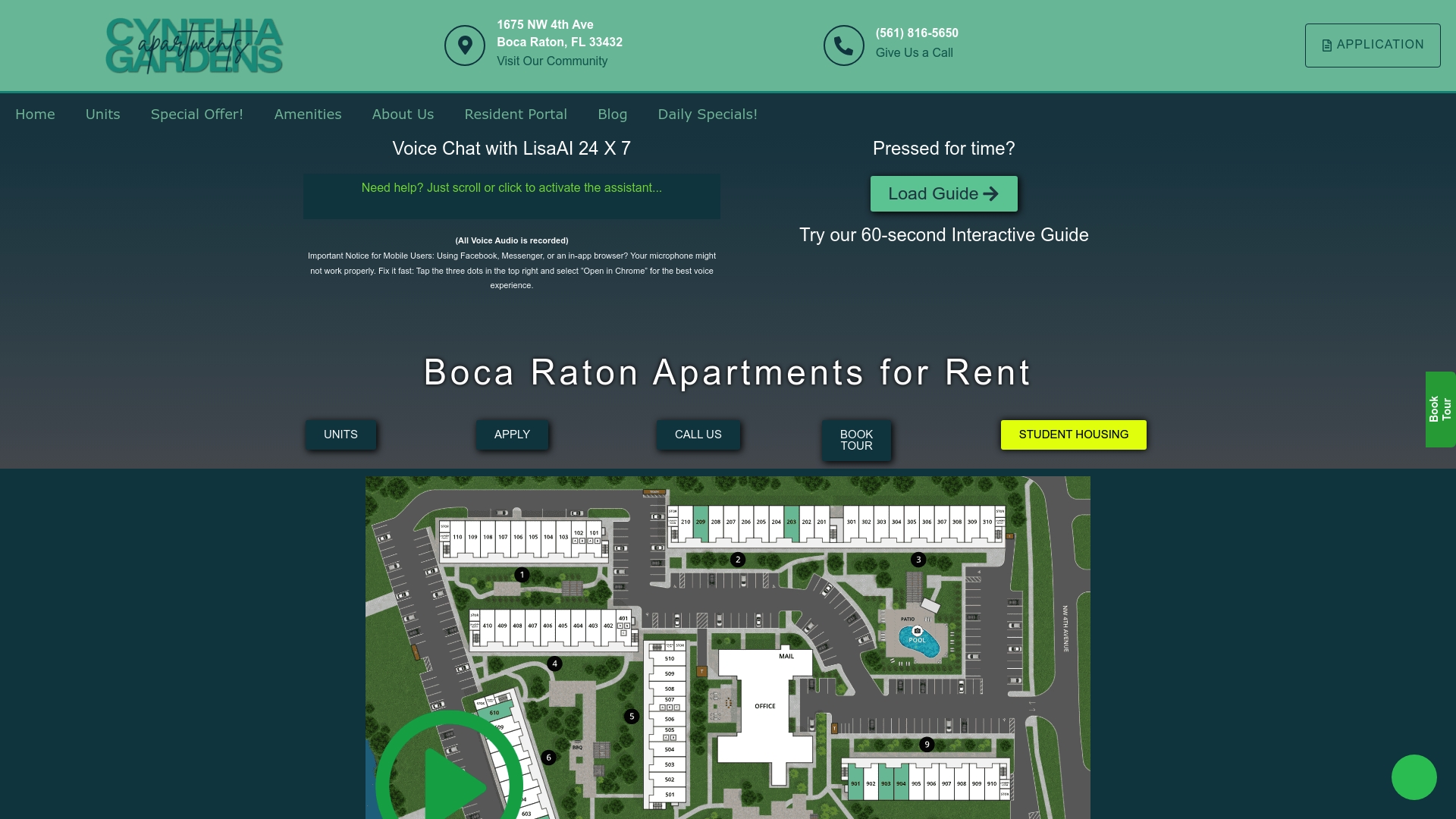
Cynthiagardens offers virtual tours alongside an interactive property map, AI chat support, and transparent pricing with no hidden fees. You can explore apartment styles and features from wherever you are right now, whether that is across town or across the country. The community is pet-friendly and designed specifically for young professionals and students who want a clear, honest leasing experience. Take a virtual tour first, build your shortlist, and when you are ready to visit in person, you will already know exactly what questions to ask. That is how smart renting works in 2026. Cynthiagardens makes it easy to start today using tools built for renters who value their time. You can also check out the leasing technology platform that powers this kind of modern rental experience.
FAQ
What is the main role of virtual tours in renting?
Virtual tours serve primarily as an efficient screening tool, allowing renters to evaluate multiple properties remotely and eliminate unsuitable options before committing to in-person visits. Studies show they reduce unnecessary showings by up to 40 percent.
Are virtual tours accurate enough to rely on for apartment decisions?
3D digital twin tours provide accurate spatial data including room measurements, but they cannot convey noise levels, smells, or neighborhood atmosphere. They work best when combined with at least one in-person visit for final decisions.
Do virtual tours really improve rental listings?
Yes. Listings with virtual tours receive 87% more views and hold visitor attention significantly longer than listings without them, making them a measurable advantage in competitive rental markets.
Can I use virtual tours to rent an apartment without visiting in person?
You can rule out apartments without visiting, but most housing experts recommend at least one in-person visit before signing a lease. 60% of renters who used virtual tours still found an in-person visit valuable for the final decision.
What type of virtual tour is most useful for renters?
3D digital twin models are the most useful because they allow you to navigate freely, understand spatial flow, and measure rooms. Simple video walkthroughs offer less control and are harder to use for detailed evaluation.