TL;DR:
- Not all pet-friendly floors are equally durable, with choices like LVP offering full waterproofing and scratch resistance. Flooring with a high wear layer, textured surfaces, and seam sealing protects pets and saves money on repairs in apartments. Soft, slip-resistant, and easy-to-maintain surfaces like textured LVP or sealed tile enhance pet safety, comfort, and hygiene.
Not all pet-friendly floors are created equal, and the differences in flooring for pet apartments go much deeper than scratch resistance ratings on a box. The wrong choice can mean warped planks after a single accident, or a dog slipping on polished tile and injuring a hip. The right choice protects your deposit, keeps your pet comfortable, and saves you from expensive repairs. This guide cuts through the marketing noise and breaks down exactly what sets each flooring type apart, so you can make a confident decision before you sign a lease or move a single piece of furniture.
Table of Contents
- Key Takeaways
- Differences in flooring for pet apartments: a full breakdown
- Durability and waterproofing under real pet conditions
- Pet safety and comfort on different floor surfaces
- Maintenance, hygiene, and odor control
- Budgeting and making the final call
- My honest take on choosing pet apartment flooring
- Find a pet-ready apartment at Cynthiagardens
- FAQ
Key Takeaways
| Point | Details |
|---|---|
| LVP leads for most pet owners | Luxury vinyl plank offers full waterproofing, scratch resistance, and plank-level replacement at moderate cost. |
| Wear layer thickness matters | A 20 mil or higher wear layer is the real spec to check, not just the brand name on the label. |
| Carpet is the worst choice | It traps urine, odor, and allergens at a level that regular cleaning cannot fix in a pet apartment. |
| Traction beats aesthetics | Glossy, slick finishes look sharp but create real slip-and-fall injury risks for dogs and cats. |
| Seam sealing protects your floor | Tight click-lock installation with seam sealant prevents liquid from reaching the core and causing irreversible damage. |
Differences in flooring for pet apartments: a full breakdown
Walk into any flooring store and you will find at least six different material categories pitched as “pet-friendly.” The reality is that each one performs very differently depending on your pet type, your apartment layout, and how many accidents you expect per month.
Luxury vinyl plank and tile (LVP/LVT)
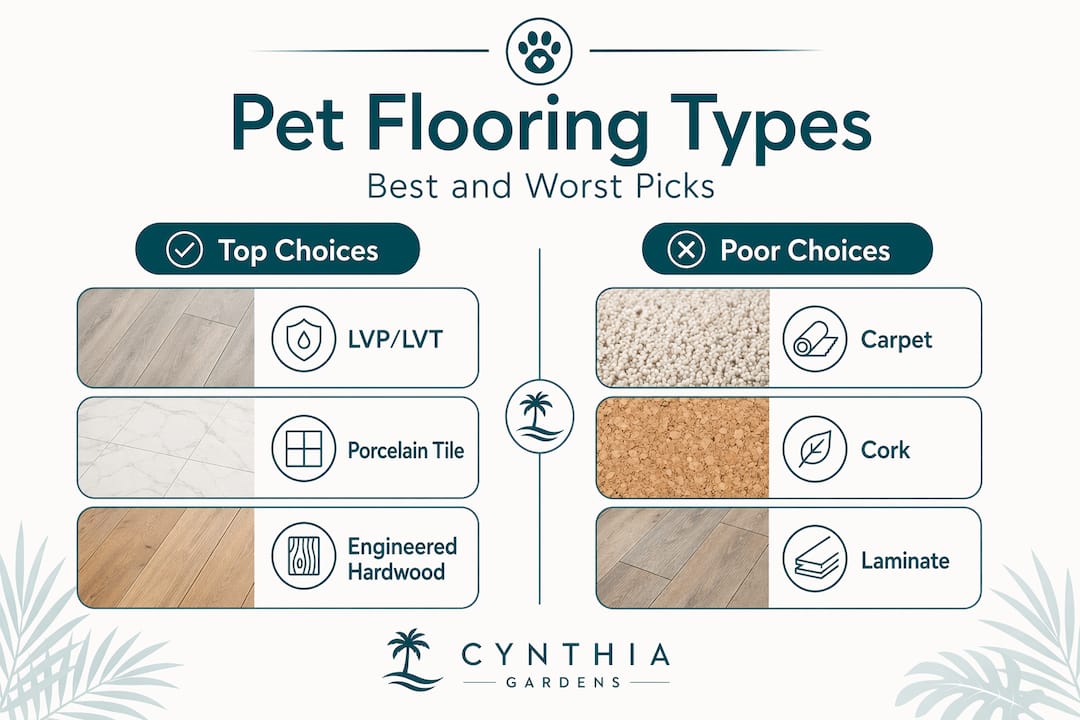
LVP and LVT are the most recommended flooring options for pet apartments right now, and the reasons are specific. Waterproof and scratch-resistant LVP with a 20 to 40 mil wear layer handles frequent pet accidents, heavy paw traffic, and multi-pet households without breaking down. The textured surface options add traction, and the click-lock plank system means you can replace one damaged plank without tearing up the whole floor.
Cost runs roughly $4 to $7 per square foot installed for mid-range LVP, which makes it one of the more practical flooring choices for apartments where you want durability without overspending.
Porcelain and ceramic tile
Tile is the most waterproof option available, full stop. It cannot absorb urine, it does not warp, and it cleans quickly. The downside is temperature and hardness. Tile stays cold, which matters if your dog spends time lying on the floor. It is also genuinely loud. Every toenail click echoes off ceramic.
The bigger issue is traction. Glossy tile turns into a skating rink for excited or wet-pawed dogs. Textured porcelain tile that meets U.S. DCOF slip-resistance standards is the only version you should consider in a pet apartment.
Laminate flooring
Laminate is often the budget pick, and it looks convincingly like hardwood. But it has a structural weakness that matters enormously in pet apartments. Even water-resistant laminate is vulnerable when moisture reaches the seams. Once liquid gets into the fiberboard core, it swells and the damage is permanent. Laminate works in apartments with very well-trained pets and zero accidents, but that is a high-risk assumption.
Engineered hardwood
Engineered hardwood earns points for aesthetics and feels premium underfoot. It handles light scratches better than solid hardwood because of its layered construction. But engineered hardwood is water-resistant, not waterproof, which is a meaningful distinction. A single accident that sits unnoticed can still penetrate and stain the core, requiring expensive refinishing. This is a better fit for cat households or older, accident-free dogs.
Carpet and cork
Both deserve a quick note because both get recommended in some pet flooring guides, and both are poor choices for pet apartments. Carpet traps odors, urine, and hair at a depth that regular vacuuming and steam cleaning cannot fully clear. Over time, the subfloor absorbs the damage even after the carpet is replaced. Cork is softer and warmer, but it absorbs moisture and stains easily, and it is not built for the sustained traffic or accidents that pets produce.
| Flooring Type | Waterproof | Scratch Resistant | Best For |
|---|---|---|---|
| LVP/LVT | Yes (fully) | High (20+ mil) | Dogs, multi-pet homes |
| Porcelain tile | Yes (fully) | Very high | Low-traffic rooms, cats |
| Laminate | No (seam risk) | Moderate | Light-use, trained pets only |
| Engineered hardwood | No (resistant only) | Moderate | Cats, older dogs |
| Carpet | No | Low | Not recommended for pets |
| Cork | No | Low | Not recommended for pets |
Durability and waterproofing under real pet conditions
The marketing term “pet-proof” does not mean much without specifics. Here is how each material actually holds up when your dog has an accident, your cat knocks over a water bowl, or muddy paws come in from outside.
-
LVP with a 20 to 40 mil wear layer resists surface scratches from dog nails and fully blocks liquid from reaching the core. Tight click-lock systems with seam sealants create near-seamless surfaces that stop liquid infiltration entirely.
-
Porcelain tile has zero absorption. Urine stays on the surface and wipes clean. The grout lines are the only vulnerability, so sealing grout regularly is non-negotiable in a pet apartment.
-
Laminate ranks lowest for waterproofing. Water sitting on a seam for even a few hours can cause irreversible swelling. The core is fiberboard, and fiberboard and moisture do not coexist.
-
Engineered hardwood holds up to surface moisture better than solid hardwood, but fluid that reaches the seams or sits on the surface for a long period still penetrates and damages the inner layers.
-
Repairability tips the scales further toward LVP. Modular flooring with plank replacement lets you swap out damaged sections without a full floor overhaul, which is a significant cost advantage in long-term rentals.
Pro Tip: When shopping for LVP, skip the brand name and look directly at the specification sheet. A 12 mil wear layer is fine for light use, but if you have a large dog or multiple pets, 20 mil is the minimum worth buying.
Pet safety and comfort on different floor surfaces
This is where most flooring guides go shallow. Durability matters, but a floor that injures your dog or causes chronic joint pain is not a success, even if it looks perfect after three years.
-
Slip resistance on glossy or polished surfaces is a real injury risk for dogs, particularly larger breeds or seniors. Matte and textured finishes with proper DCOF ratings provide the micro-grip that paws need. Textured LVP and matte-finish porcelain tile both perform well here.
-
Noise transmission affects both pets and neighbors in apartment buildings. Hard tile and hardwood amplify every nail click, which can stress noise-sensitive dogs and create friction with the unit below. LVP with attached cork underlayment significantly reduces sound compared to tile or solid hardwood.
-
Temperature and hardness matter for pets that spend time on the floor. Cold tile can be uncomfortable for dogs resting on their joints, especially in older animals prone to arthritis. LVP stays closer to room temperature and has slightly more give underfoot than tile.
-
Paw health is tied to surface texture. Floors with too much friction can wear paw pads over time, while floors with too little cause overextension and slipping. Textured LVP and porcelain tile meeting DCOF standards strike the right balance for most dogs and cats.
For pet owners who want to go further on pet comfort, reviewing a solid pet owner apartment checklist covers flooring alongside other apartment safety factors worth evaluating before you commit.
Pro Tip: Place area rugs with non-slip pads on high-traffic paths between tile or LVP sections, especially near food and water bowls where splashing happens. This small addition protects joint health without replacing your floor.
Maintenance, hygiene, and odor control
A floor that looks great on move-in day but turns into a hygiene problem by year two is not pet-friendly. It is just a delayed problem.
-
LVP and tile are the easiest to maintain. Both non-porous surfaces repel pet odors and stains. A damp mop handles urine, and there is no absorption. The difference is that tile requires grout sealing every six to twelve months, while LVP needs nothing beyond regular mopping.
-
Carpet absorbs everything. Carpet traps odors and hair deeply in ways that standard cleaning cannot reverse. Even professional-grade steam cleaning does not fully neutralize urine compounds once they reach the backing and subfloor. This is the flooring to avoid in any pet apartment.
-
Laminate and engineered hardwood sit in the middle. Neither traps odors the way carpet does, but both can hold bacteria in micro-scratches and seams over time if not maintained carefully.
-
Indoor air quality improves with non-porous floors. Carpet is the primary culprit for allergen buildup in apartments, trapping dander, dust mites, and mold spores that hard floors simply do not.
| Floor Type | Cleaning Effort | Odor Risk | Allergen Buildup |
|---|---|---|---|
| LVP/LVT | Low | Very low | Minimal |
| Porcelain tile | Low (grout sealing needed) | Very low | Minimal |
| Laminate | Moderate | Low to moderate | Low |
| Engineered hardwood | Moderate | Moderate | Low |
| Carpet | High | High | Severe |
Budgeting and making the final call
Choosing the best flooring for pets does not require the most expensive option. It requires matching the right material to your pet type, lifestyle, and budget.
-
LVP sits at the sweet spot. Mid-range LVP costs $4 to $7 per square foot installed and delivers waterproofing, scratch resistance, and replaceable planks. For most pet apartment dwellers, this is the right answer.
-
Tile costs more upfront and adds installation complexity, but lasts longer in high-moisture areas like bathrooms and kitchens where pets eat or drink.
-
Laminate is tempting at lower price points, but the risk of moisture damage and full floor replacement costs make it a false economy in a pet apartment. The savings disappear the first time there is a serious accident.
-
Engineered hardwood makes sense for cat owners or pet owners with one older, well-trained dog who want the warmth and visual appeal of wood at a lower cost than solid hardwood.
-
Renters should check lease terms before any flooring conversation goes further. Many apartment communities specify acceptable flooring or limit modifications. Knowing what your lease allows shapes every decision below it.
-
Match flooring to your pet’s behavior, not just their species. A high-energy young Labrador and a calm senior cat have completely different flooring demands. Consider accident frequency, activity level, and claw type before picking a material.
For help finding pet-friendly apartments in Boca Raton that already come set up for pet comfort, knowing the flooring specs before touring saves a lot of time.
My honest take on choosing pet apartment flooring
I have seen a lot of pet owners make the same mistake. They get fixated on how a floor looks in photos and skip right past the spec sheet. A floor that photographs beautifully in a staged showroom may have an 8 mil wear layer that a medium-sized dog scratches through in six months.
In my experience, the finish and wear layer thickness are the two specifications that actually predict real-world performance. Everything else is secondary. I have watched beautiful engineered hardwood floors get wrecked by a single puppy’s first year, while a mid-grade textured LVP in the same building looked fine after three years of two dogs.
The tradeoff between aesthetics and durability is real, but it is not absolute. Modern LVP has gotten genuinely good looking. The gap between it and engineered hardwood visually is much smaller than it was five years ago, while the performance gap still favors LVP significantly.
What I find underappreciated is the modular replacement benefit. In a rental, being able to swap out two planks after a concentrated area of damage instead of facing a full-floor replacement conversation with your landlord is worth more than most people calculate upfront. It protects your deposit and your relationship with building management.
Pet behavior is the wildcard every spec sheet ignores. A dog that slides across every room in excitement or a cat that stress-scratches a particular corner will exceed any flooring’s theoretical limits. Account for your specific animal, not the average one.
— Ayman
Find a pet-ready apartment at Cynthiagardens
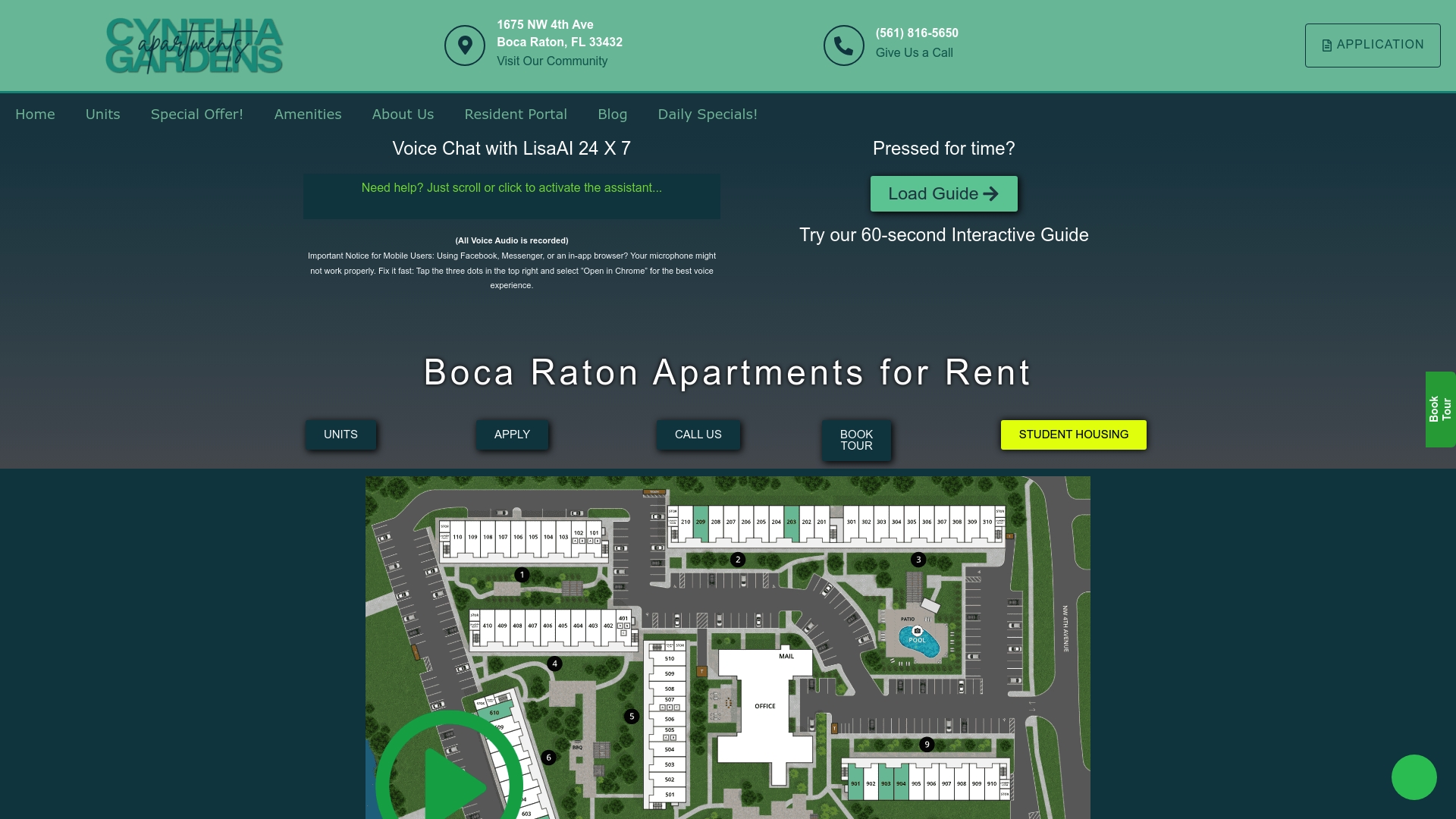
If you have done the research and know what your pet needs from a floor, the next step is finding an apartment where that floor already exists. Cynthiagardens in Boca Raton offers pet-friendly one-bedroom apartments built with durable, easy-care flooring that suits the real demands of pet ownership. No hidden fees, no surprises on move-in day. Explore the full range of apartment styles and features to find the layout that fits both your lifestyle and your pet’s needs. Virtual tours and AI chat support make it easy to see the details before you ever step through the door. Check out affordable pet-friendly housing options and lease with confidence.
FAQ
What is the best flooring for dogs in an apartment?
Luxury vinyl plank with a 20 mil or higher wear layer is the top choice for dogs. It is fully waterproof, scratch resistant, quieter than tile, and individual planks can be replaced if damaged.
Is tile or LVP better for pet apartments?
LVP outperforms tile for most pet apartment situations because it is warmer, quieter, softer underfoot, and easier to install without grout maintenance. Tile is superior in moisture-heavy areas but requires textured finishes for safe pet traction.
Why is carpet a bad choice for pet apartments?
Carpet absorbs urine, locks in odors at the backing level, and traps allergens like pet dander that hard floors do not. Regular cleaning reduces the problem but does not eliminate it once the subfloor is affected.
How does flooring affect pet joint health?
Hard, cold surfaces like bare tile increase discomfort for older dogs with joint issues. LVP with cork underlayment provides a slightly softer, warmer surface that reduces strain during long rest periods on the floor.
Does flooring installation method matter for pet apartments?
Yes. Tight click-lock systems paired with seam sealants prevent liquid from infiltrating the core, which is the primary failure point for both LVP and laminate in pet households. Poor installation undermines even the best flooring material.
Recommended
- Navigating Your Apartment Pet Policy – Luxury Apartments for Rent in Boca Raton | Premium Boca Raton Apartments | Aapartments Boca Raton
- Affordable Housing for Pet Owners—What Matters Most
- Pet owner apartment checklist for safe, affordable living
- How to choose the best apartment for your cat’s comfort