TL;DR:
- Finding a pet-friendly apartment in Boca Raton requires careful attention to breed restrictions, safety features, and outdoor access. A room-by-room safety proofing strategy and establishing routines are essential for a stress-free move and comfortable adaptation for pets. Communities built with clear policies and pet-focused amenities simplify efforts to create a safe, affordable, and engaging environment for pets and owners alike.
Finding an apartment that’s genuinely affordable, pet-friendly, and free of hidden hazards is harder than most listings let on. Pet owners in Boca Raton often discover the real challenges only after signing the lease: breed restrictions buried in the fine print, electrical cords dangling near curious paws, or toxic plants left behind by a previous tenant. The good news is that a structured, room-by-room checklist built specifically for pet owners can eliminate most of these surprises. This guide walks you through exactly what to look for before and after move-in so you and your pet can settle in safely and affordably.
Table of Contents
- Start with apartment selection criteria
- Room-by-room pet safety proofing
- Move-in checklist for cat owners
- Essential routines: exercise, toilet breaks, and stress management
- Why the typical apartment pet checklists miss the mark
- Looking for pet-friendly, affordable apartments in Boca Raton?
- Frequently asked questions
Key Takeaways
| Point | Details |
|---|---|
| Prioritize pet-friendly policies | Check apartment pet policies for breed, fee, and amenity details before signing a lease. |
| Room-by-room safety first | Pet-proof electrical cords, windows, and plants in every apartment space for maximum safety. |
| Safe room reduces stress | Set up a quiet space for your pet to adapt, minimizing anxiety and risk during transition. |
| Maintain healthy routines | Schedule regular walks and exercise to prevent indoor-only pitfalls and support pet well-being. |
| Review amenities for cats | Clean for odors, secure wires and windows, and expand your cat’s access gradually for smooth move-in. |
Start with apartment selection criteria
Before you even schedule a tour, you need to know what questions to ask and what red flags to spot. Most people search for square footage and price. Pet owners need to go several layers deeper.
Pet policy details matter more than the “pets allowed” label.
A property that says “pets allowed” may still restrict certain dog breeds, cap weight at 25 pounds, charge a non-refundable pet fee plus a monthly pet rent, or limit you to one pet. Ask for the pet policy in writing. Read it for breed restrictions, weight limits, deposit amounts, and any rules about where pets can and cannot go within the community. When finding pet friendly apartments, transparency in those policies is one of the strongest indicators of a well-managed property.
Safety features inside the unit are your second filter.
Look for screened windows that latch securely, no exposed electrical panels, minimal open spaces behind appliances, and cord-management options. Ground-floor or garden-level units can be convenient for dogs but may introduce different hazards like easier escapes if door seals are loose.
Proximity to outdoor spaces is a practical necessity, not a luxury.
Scheduled outdoor exploration and toilet breaks are essential for dogs in apartment settings because indoor routines are not a replacement for outdoor exercise. Properties within walking distance of parks, greenways, or dog-friendly paths make this far easier to maintain daily. Boca Raton has good options, but not every apartment community gives you easy access to them.
Budget and amenity balance requires honest math.
Affordable pet-owner housing is available in Boca Raton, but you need to account for the full cost. Monthly rent plus pet rent plus utilities plus parking can push a seemingly affordable unit well above your budget. Look for communities with transparent, all-in pricing so you know exactly what you’re paying each month.
Here’s a quick checklist for your apartment search phase:
- Confirm the written pet policy: breeds allowed, weight limits, number of pets
- Ask for a full breakdown of pet fees: deposit, monthly rent, and what is refundable
- Check window screens, door seals, and balcony safety
- Walk the neighborhood to evaluate park and greenway access
- Look at pet adoption resources if you plan to adopt after moving in, since some rescues have placement criteria tied to your living situation
- Verify proximity to a veterinarian and a 24-hour emergency animal clinic
Room-by-room pet safety proofing
With the right apartment chosen, the next step is making it truly safe for your pet, starting room by room.
A room-by-room pet safety proofing pass on move-in day, covering cords, plants, windows, screens, and a designated safe room, should happen before you let your pet explore freely. Most pet owners skip this step in the chaos of moving boxes and furniture. That’s exactly when accidents happen.
Follow this room-by-room process:
-
Living room first. Gather and secure all electrical cords with cable ties or cord covers. Check behind the entertainment center and under furniture. Move any decorative plants to surfaces your pet cannot reach, or remove them entirely until you’ve confirmed they are non-toxic.
-
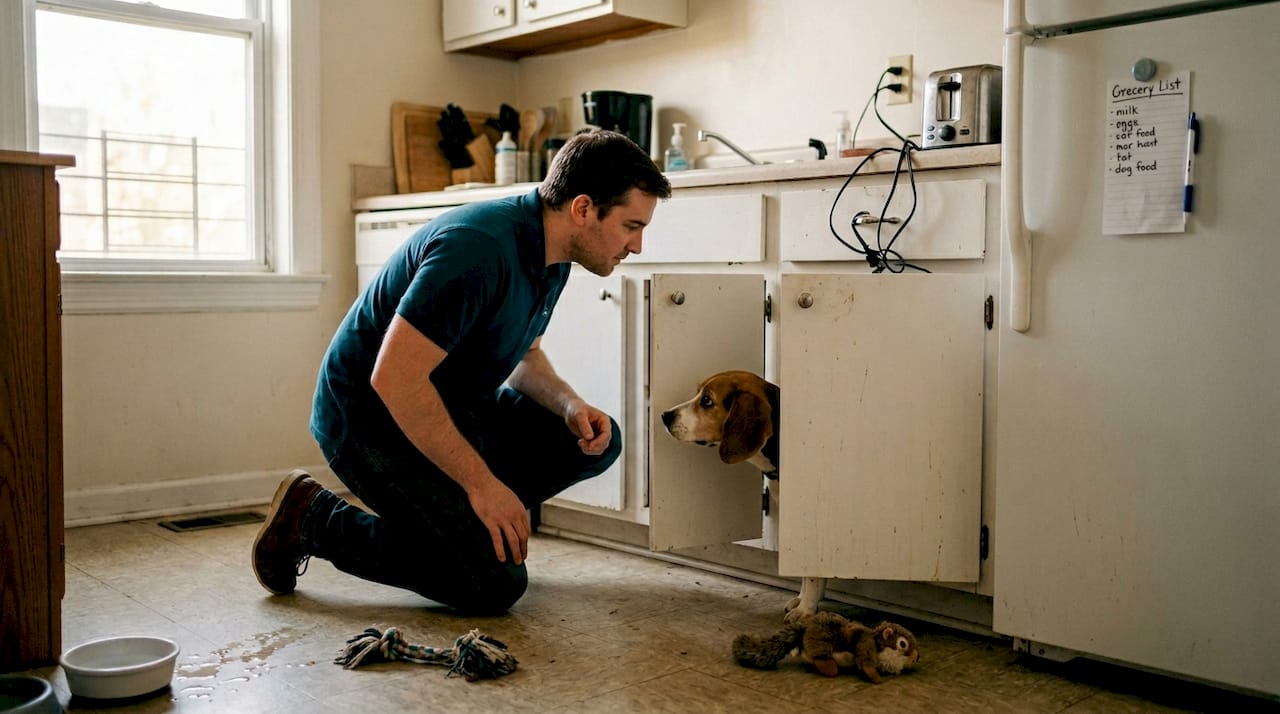
Kitchen next. Secure cabinet doors that hold cleaning products with childproof latches. Check the gap between the stove and cabinets since small cats and kittens can wedge themselves in there. Ensure the trash can has a locking lid.
-
Bedroom. Look for loose cords from lamps, phone chargers, and fans. Check under the bed for anything a dog might chew or a cat might swallow. Closet doors should close fully.
-
Bathroom. Keep the toilet lid down for smaller pets. Store medications and personal care products in closed cabinets. Check for gaps around pipes under the sink.
-
Balcony or patio, if applicable. Inspect the railing spacing. Small dogs and cats can squeeze through gaps wider than you’d expect. Keep balcony doors secured when unsupervised.
-
Designate a safe room before releasing your pet into the space. This is typically a bedroom or bathroom where you’ve already completed the proofing pass. Place food, water, and bedding there so your pet has a secure base while you continue unpacking.
“The chaos of moving day is one of the highest-risk periods for pets. Doors open and close constantly, boxes create unfamiliar spaces, and loose items end up on floors. A dedicated safe room keeps your pet out of harm’s way while you work.” — Busy Pet Parent
Pro Tip: Before your furniture arrives, do a low-crawl visual inspection of every room at your pet’s eye level. You’ll spot hazards you’d completely miss standing upright, including dangling wires, sharp furniture corners, and tiny gaps behind appliances.
Cross-reference this process with our move-in inspection checklist and review the pet policy essentials specific to Boca Raton communities before move-in day.
Move-in checklist for cat owners
For cat owners, some steps and hazards differ. Here’s what to focus on for feline safety and comfort.
Cats are sensitive to smells, and a new apartment carries the scent of every previous tenant and their pets. That sensory load is a significant stressor. Cleaning to remove previous-tenant smells and dander, securing wires and windows, removing toxic plants, and starting your cat in a quiet safe room with supervised exploration is the proven sequence for a low-stress cat transition.
Here’s the cat-specific move-in checklist:
- Deep clean all floors, baseboards, and surfaces before your cat arrives. Use enzyme-based cleaners that break down dander and odors rather than just masking them.
- Audit every window for screen integrity. Cats push against screens, and a screen that looks intact may pop out under light pressure.
- Remove or relocate all toxic plants. Lilies, pothos, and philodendrons are extremely dangerous to cats and are common household plants. Check the ASPCA toxic plant list and cross-reference every plant in the unit.
- Secure loose cords with covers or cord management channels. Cats chew wires more frequently than most owners expect.
- Set up the safe room completely before bringing your cat inside: litter box, food, water, at least one toy, a hiding spot, and their bed or a familiar blanket from your previous home.
- Supervise initial exploration. After a day or two in the safe room, open the door and let your cat lead. Don’t carry them from room to room. Let them set the pace.
Here’s a quick comparison of cat vs. dog move-in priorities:
| Priority | Cat owners | Dog owners |
|---|---|---|
| First concern | Scent removal and safe room | Outdoor toilet access and secure exits |
| Window safety | Screen integrity (cats push hard) | Lower priority unless balcony present |
| Toxic plants | Extremely high risk | High risk but less likely to chew leaves |
| Cord management | Critical: cats chew wires | Moderate: puppies most at risk |
| Safe room setup | Essential for first 48 hours | Helpful but dog may adapt faster |
| Supervision style | Hands-off: let cat explore independently | Active: walk routes and reinforce behavior |
Check the cat-friendly amenities guide for Boca Raton specifically to see which communities offer features that matter to indoor cat owners.
Essential routines: exercise, toilet breaks, and stress management
Now, let’s tackle the routines that keep pets healthy and stress-free in apartment living.
This is where a lot of apartment pet guides go wrong. They focus entirely on the physical space and ignore what happens once the boxes are unpacked. For dogs especially, the routine is as important as the setup.
Experts recommend that apartment dogs receive scheduled outdoor exploration and toilet breaks, and that indoor substitutes like pee pads should not replace actual outdoor time. The exercise and mental stimulation from outdoor walks serve a completely different function than a bathroom break on a balcony.
Here’s the recommended daily outdoor schedule for apartment dogs:
| Time of day | Activity | Minimum duration |
|---|---|---|
| Morning (7-8 AM) | Walk plus toilet break | 20-30 minutes |
| Midday (12-1 PM) | Toilet break | 10-15 minutes |
| Late afternoon (5-6 PM) | Active exercise walk | 30-45 minutes |
| Evening (9-10 PM) | Final toilet break | 10 minutes |
The afternoon walk is the one most people cut short when life gets busy. That’s actually the most important one for behavioral health. Dogs that miss consistent afternoon exercise are more likely to develop destructive behaviors indoors.
For cats, routine looks different. Cats benefit from predictable feeding times, play sessions twice daily, and access to window views or enrichment toys. The transition period, typically the first two weeks in a new apartment, is when stress indicators like hiding, refusing food, or eliminating outside the litter box are most likely to appear. Keeping routines consistent and supervising their environment during those first days reduces those risks significantly.
Pro Tip: Use the same route for your dog’s first two weeks in the new neighborhood. Familiar smells along a consistent path help dogs build confidence in the new environment faster than varying routes every day.
Build routines before you feel like you need them. The pet-friendly apartment tips that make the biggest difference long-term aren’t about pet beds or toys. They’re about scheduled time outside and predictable daily structure. Look for communities with features that support this approach when researching your pet-friendly complex features in Boca Raton.
Why the typical apartment pet checklists miss the mark
Most pet move-in checklists are published by moving companies or home goods retailers. They focus on products: cord covers, baby gates, litter box placement. Those things matter, but they’re about 30 percent of the real picture.
What most guides skip entirely is the emotional and behavioral transition your pet experiences. A new apartment doesn’t just look different. It smells completely different, sounds different, and has a different energy pattern. For animals that rely on scent memory and spatial familiarity to feel secure, this is genuinely disorienting. Stress in those first days isn’t just uncomfortable for your pet. It increases the risk of accidents, destructive behavior, and even health issues.
The safe room concept is the single most underused strategy in pet move-in guides. Most people either skip it entirely or abandon it after a few hours because their pet seems curious. Curiosity and confidence are different things. A cat that bolts around the new apartment on day one isn’t necessarily comfortable. They may be in an anxious, overstimulated state that looks like excitement but can lead to hiding, refusing food, or territorial marking within 24 hours.
Routines matter more than any product you can buy. The affordable Boca apartments that actually work well for pets tend to have green space nearby, reasonable noise levels, and responsive management when maintenance issues arise. Those factors support your ability to maintain healthy daily routines far more than any amenity feature.
Our honest take: most pet owners spend too much time worrying about whether their apartment has a dog wash station and not enough time evaluating whether the neighborhood supports a 30-minute daily walk. Both matter, but one matters more.
Looking for pet-friendly, affordable apartments in Boca Raton?
Applying this checklist is far easier when the apartment community itself is built with pet owners in mind. We’ve designed our Boca Raton community with transparent pet policies, no hidden fees, and features that support the routines and safety standards this guide covers.
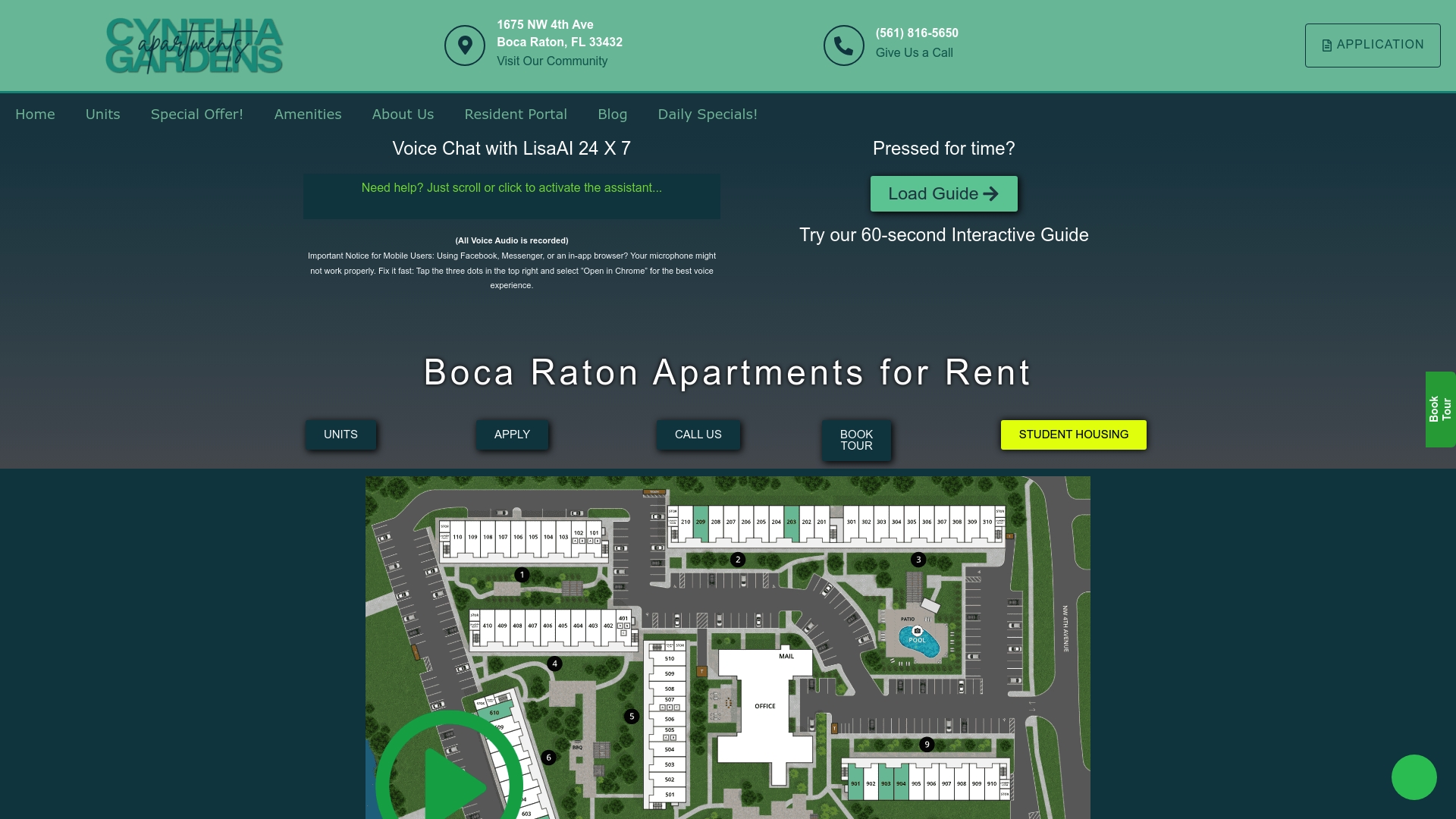
Browse our available Boca Raton apartment styles to see floor plans and layouts suited for pets of all sizes. Review our pet apartment policies before you visit so there are no surprises at signing. And if you want a full picture of what life here looks like day to day, our virtual tour and AI chat support can answer your questions in real time. Explore what a modern apartment community designed for real pet owners looks like in Boca Raton.
Frequently asked questions
What are the most overlooked apartment hazards for pets?
Electrical cords, toxic plants, and unscreened windows are the top hazards often missed during move-in. A room-by-room proofing pass before your pet roams freely is the most reliable way to catch them all.
How can I reduce my cat’s stress when moving to a new apartment?
Set up a quiet safe room with familiar items before your cat arrives, then allow them to explore at their own pace under supervision. Removing previous-tenant odors with enzyme-based cleaners before move-in also significantly lowers stress triggers.
How often should my dog get outdoor exercise in an apartment setting?
Dogs need dedicated outdoor exercise beyond toilet breaks, and experts recommend at least two to four outdoor sessions daily, not indoor substitutes.
What’s the best first step after moving in with a pet?
Complete a room-by-room safety proofing pass and set up a designated safe room before your pet leaves their carrier. Getting that foundation right makes every other step easier.
Recommended
- Affordable cat-friendly apartments in Boca Raton 2026
- how to find pet friendly apartments: A Quick Guide – Luxury Apartments for Rent in Boca Raton | Premium Boca Raton Apartments | Aapartments Boca Raton
- How to Find Affordable Pet-Friendly Housing Fast
- Affordable Housing for Pet Owners—What Matters Most