TL;DR:
- A move-in inspection documents the property’s condition before occupancy, protecting tenants from unfair deposit deductions. Completing a thorough walkthrough with photos, videos, and written notes within 48-72 hours is essential for legal and financial security. Skipping this step can lead to disputes and loss of the security deposit for damages already present.
A move-in inspection is a documented walkthrough that records a rental property’s exact condition before a tenant takes occupancy, and it is the single most effective tool renters have for protecting their security deposit. Also called a move-in condition report or move-in property assessment, this process creates an objective baseline that both tenant and landlord can reference at move-out. Without it, any pre-existing scratch, stain, or broken fixture becomes a potential dispute where your word stands alone against your landlord’s. Understanding the move-in inspection process before you sign a lease is not optional. It is the foundation of a financially safe tenancy.
What is a move-in inspection and why does it matter?
A move-in inspection is defined as a formal, written evaluation of a rental unit’s condition completed at or before the start of a lease, used to distinguish pre-existing damage from damage caused during tenancy. The move-in inspection protects tenants by creating objective records that prevent unfair damage charges in security deposit disputes. That means when your landlord claims you caused a crack in the bathroom tile, your signed and dated inspection report tells a different story.
The importance of move-in inspections extends beyond individual disputes. Move-in checklists shift landlord-tenant relations from subjective claims to objective records, giving renters peace of mind and landlords clarity about actual unit condition. This matters because security deposits in Florida and most states can equal one to two months’ rent. Losing that money to a disputed damage claim is a real financial hit, especially for students and young professionals working within tight budgets.
17 US states legally require landlords to provide a move-in condition report or checklist to tenants. Arizona, Arkansas, Georgia, Hawaii, Kentucky, Maryland, Montana, New Hampshire, Washington, and Wisconsin are among them. That means in nearly a third of the country, skipping this step is not just risky. It is a violation of tenant rights. Even in states without a legal mandate, completing a move-in condition report is considered standard best practice by every major tenant advocacy organization.
“A move-in inspection is not a property tour. The tour helps you decide whether to sign. The inspection happens after signing, to document what you are actually inheriting.” — YourLeaseAgreement.com
Key benefits for renters include:
- Deposit protection: Pre-existing damage cannot be charged to you if it is documented before you move in.
- Maintenance clarity: You establish which repairs were the landlord’s responsibility from day one.
- Legal standing: A signed, dated report gives you evidence in small claims court if a dispute escalates.
- Conflict prevention: Most landlord-tenant disputes never reach court when both parties have a shared record.
Pro Tip: Take your move-in checklist seriously even if your landlord seems relaxed about it. Landlords change, property managers change, and memories fade. Your documentation does not.
How to conduct a move-in inspection step by step
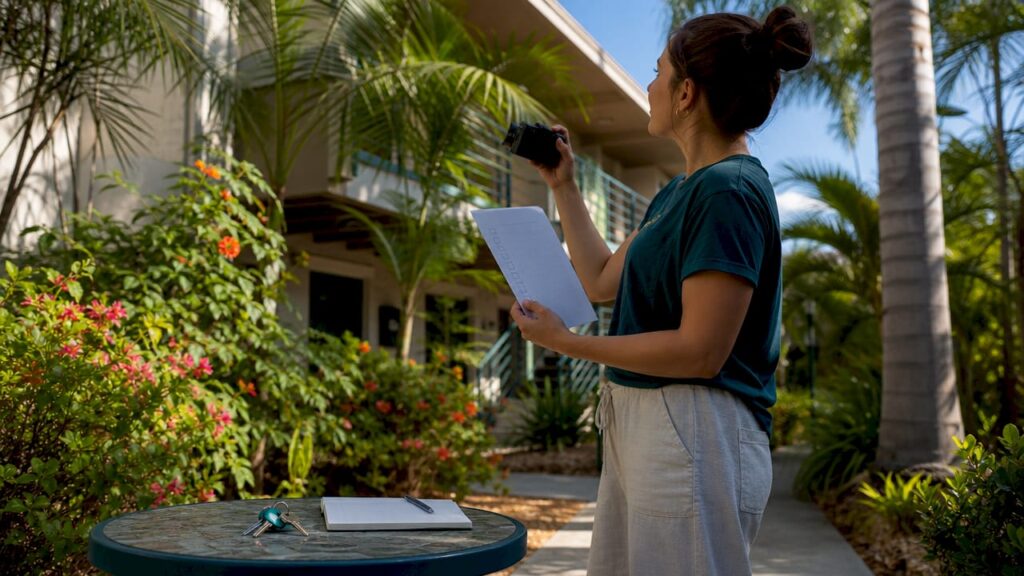
A thorough move-in inspection takes about 20 to 30 minutes and should include written notes, timestamped photos, and video evidence. That half-hour investment can prevent the loss of hundreds of dollars at move-out. The key is doing it before your furniture arrives, when every surface is visible and every pre-existing flaw is exposed.
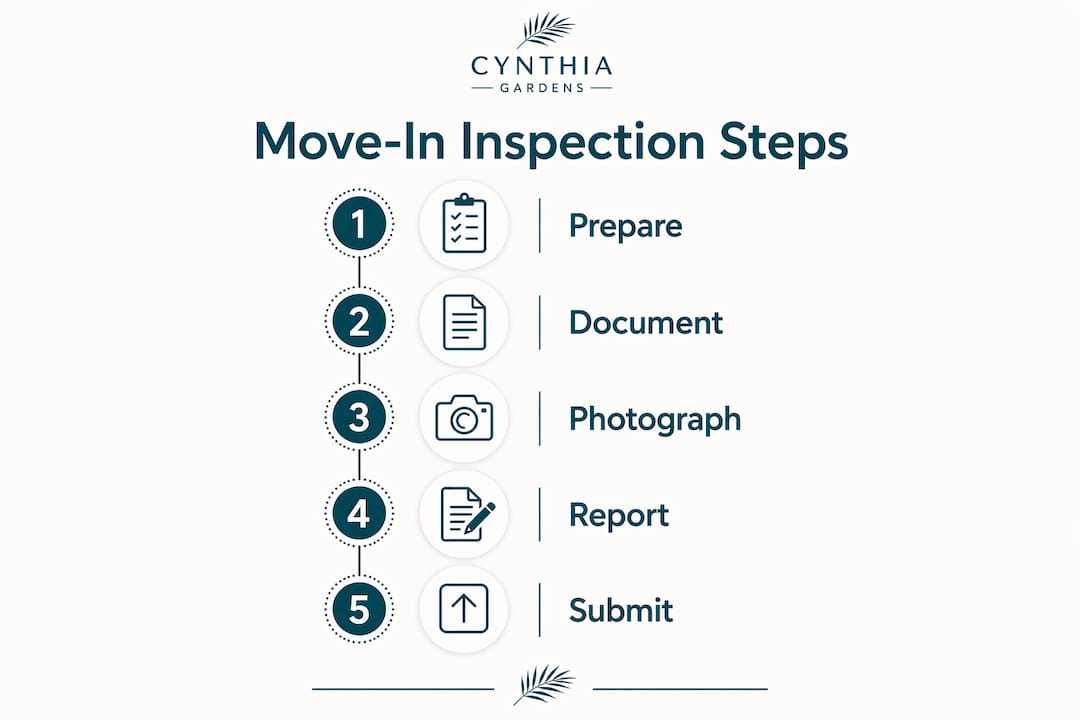
Here is the process to follow:
- Schedule before furniture arrives. Complete the walkthrough on move-in day, ideally before the moving truck unloads. An empty unit gives you a clear view of floors, walls, and corners.
- Work room by room with a written checklist. Cover walls, ceilings, floors, windows, doors, closets, appliances, plumbing fixtures, light switches, and smoke detectors. Use a printed or digital move-in checklist to stay organized.
- Photograph everything you note. Timestamped photos are your strongest evidence. Shoot wide-angle room shots first, then close-ups of any damage, stain, or wear.
- Record a walkthrough video. A continuous video with narration (“This is the kitchen floor, and there is a chip near the refrigerator”) is harder to dispute than still photos alone.
- Complete the written report. Note the condition of each item as “good,” “fair,” or “damaged,” with a brief description of any issues.
- Submit the completed report within 48 to 72 hours. Prompt submission prevents disputes by documenting condition before move-in activity causes additional wear.
The table below shows which areas to inspect and what to look for in each:
| Area | What to document |
|---|---|
| Walls and ceilings | Scuffs, holes, water stains, peeling paint |
| Floors | Scratches, stains, loose tiles, carpet wear |
| Appliances | Functionality, dents, missing parts, cleanliness |
| Plumbing fixtures | Leaks, water pressure, drain speed, rust |
| Windows and doors | Cracks, locks, seals, screen condition |
| Safety devices | Smoke detector function, CO detector, fire extinguisher |

Pro Tip: Email your completed photo report and checklist to your landlord on move-in day, even if they gave you a paper form. The email timestamp creates a verifiable digital record that a paper form alone cannot provide.
One distinction renters frequently miss: the move-in checklist is not a maintenance request. It is a legal record of condition. If the oven does not work, note it on the inspection report and then submit a separate written repair request. Combining the two creates confusion and can delay repairs while weakening your legal documentation.
Common mistakes that undermine your inspection
Most renters who lose security deposit disputes made at least one of these errors during their move-in inspection. Knowing them in advance is the difference between a protected tenancy and an expensive lesson.
- Waiting until after furniture is in place. An inspection done after belongings are present weakens your ability to prove pre-existing damage. A floor gouge under your couch is nearly impossible to attribute to the previous tenant once your furniture has been sitting on it.
- Accepting a landlord-only inspection form. A one-sided form completed only by the landlord is weaker evidence than one signed by both parties. Always request a joint walkthrough or submit your own signed and dated report.
- Skipping photographic evidence. Written notes without photos are easy to dispute. Photos with timestamps are not.
- Failing to keep copies. Submit your report and keep a copy for yourself. Store it digitally in your email or cloud storage so it is accessible years later.
- Under-documenting minor wear. That small paint chip or carpet fray may seem trivial at move-in. At move-out, it can become the basis of a deduction. Document everything, regardless of how minor it appears.
- Confusing inspection with repair requests. Noting a broken garbage disposal on your checklist does not trigger a repair. You must submit a separate maintenance request to get it fixed.
- Missing the submission deadline. Returning your checklist weeks after move-in significantly reduces its legal weight. The 48 to 72 hour window is the standard that holds up in disputes.
The pattern across all these mistakes is the same: renters treat the inspection as a formality rather than a legal document. Courts and property managers treat it as exactly that.
How to use your inspection report to protect your security deposit
Your move-in condition report is the most powerful tool you have when it comes time to reclaim your security deposit. The strategy is straightforward: create a clear paper trail from day one and maintain it throughout your tenancy.
Start by emailing a dated, photo-supported inspection report to your landlord on move-in day. This creates verifiable evidence that prevents “he said, she said” disputes about damage. Even if your landlord never provided a formal checklist, a self-prepared report sent via email carries real legal weight. Understanding your security deposit rights before move-in gives you the full picture of what landlords can and cannot legally deduct.
Keep your inspection documentation organized throughout your lease. Store the original checklist, all photos, and the email confirmation in a dedicated folder. When you approach move-out, pull that folder and conduct a side-by-side comparison of the unit’s current condition against your move-in baseline. This comparison is your negotiating tool if your landlord attempts to charge for pre-existing damage.
State-specific legal deadlines also matter. Many states require landlords to return security deposits within 14 to 30 days of move-out and to provide an itemized list of any deductions. If a landlord’s deduction references damage that appears in your move-in report, you have documented grounds to dispute it in writing or in small claims court. For a detailed breakdown of what to include in your documentation, the apartment move-in inspection checklist from Cynthiagardens covers every room and fixture in a Florida apartment context.
Pro Tip: At move-out, photograph every room again using the same angles as your move-in photos. Side-by-side comparisons are the clearest way to show a landlord or a judge exactly what changed during your tenancy.
Separate your damage documentation from your maintenance requests throughout the lease. Every repair request should go through your landlord’s official channel in writing. This keeps your inspection report clean as a condition record and prevents any argument that you were aware of damage and failed to report it properly.
Key takeaways
A move-in inspection is the single document that determines whether you get your full security deposit back, making thorough documentation on day one non-negotiable.
| Point | Details |
|---|---|
| Definition and purpose | A move-in inspection records rental condition before occupancy to prevent unfair deposit deductions. |
| Legal requirement | 17 US states mandate a move-in condition report, making this a legal right in nearly a third of the country. |
| Timing is critical | Complete the walkthrough before furniture arrives and submit within 48 to 72 hours of receiving keys. |
| Documentation method | Use written notes, timestamped photos, and video, then email the report to your landlord the same day. |
| Inspection vs. repairs | A move-in checklist is a legal condition record. Submit separate written requests for any repairs needed. |
Why renters underestimate this one document
I have seen tenants lose $1,500 in deposit disputes over a carpet stain that was clearly visible in the landlord’s own listing photos. The tenant had no inspection report. The landlord had a signed lease and a move-out photo. That was the entire case, and the tenant lost.
The uncomfortable truth about move-in inspections is that most renters treat them as paperwork rather than protection. They rush through the walkthrough, skip the photos, and hand back a half-completed checklist without keeping a copy. Then, months or years later, they are shocked when a landlord deducts for damage they did not cause.
What I have found actually works is treating the inspection like you are building a legal file from day one. That means video, photos, a written report, and an email to your landlord with everything attached before you unpack a single box. It takes 30 minutes. It can save you months of stress and hundreds of dollars.
Joint walkthroughs with your landlord are ideal, but do not wait for one if your landlord is unavailable. A tenant-prepared, timestamped, emailed report carries real weight. The goal is verifiable evidence, not a signature. Technology makes this easier than ever. Your phone camera, your email, and a good checklist are all you need to walk into any future dispute with confidence.
Renters who conduct thorough move-in inspections are not being paranoid. They are being prepared. There is a significant difference.
— Ayman
Start your Boca Raton tenancy with full confidence
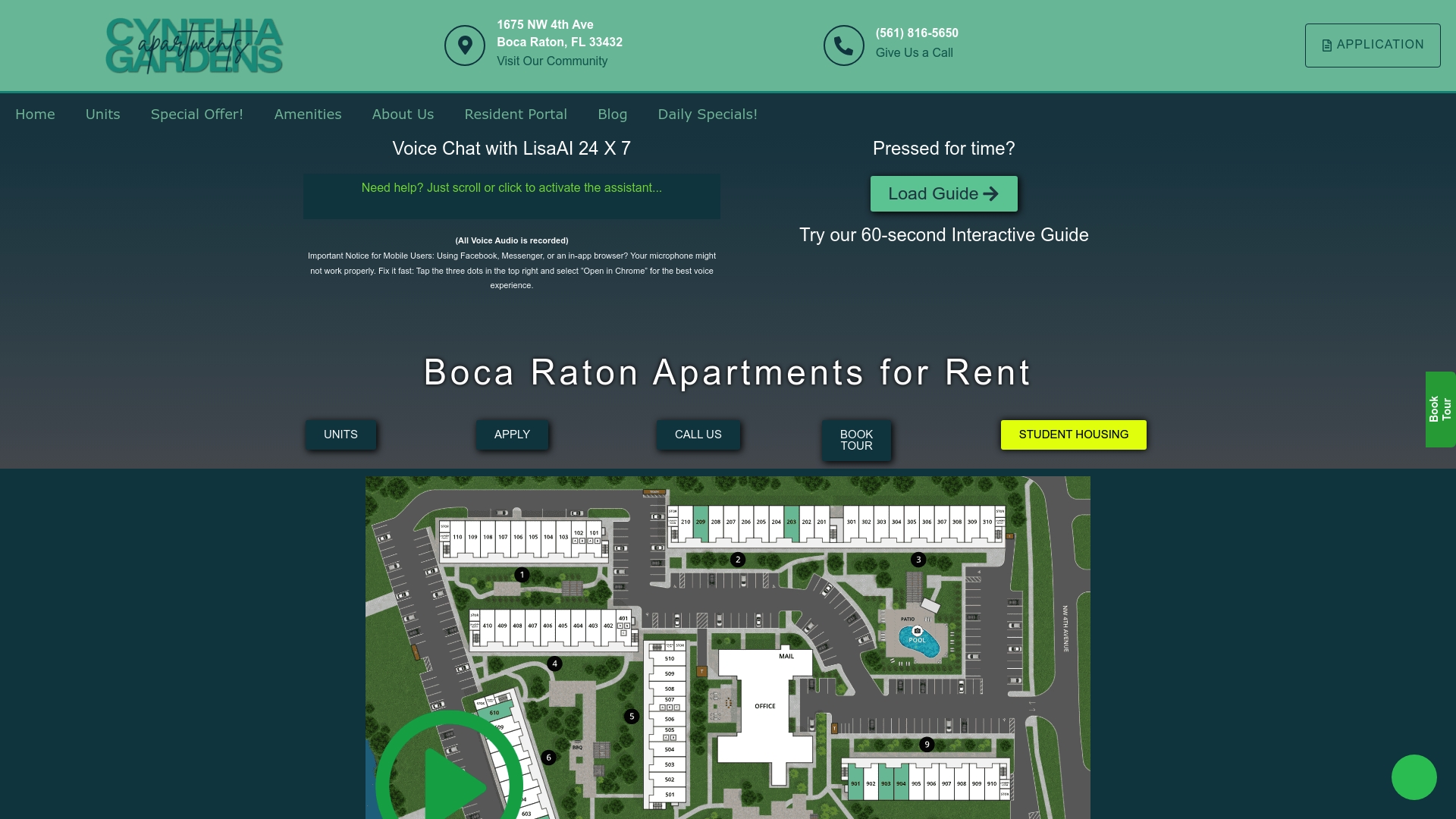
At Cynthiagardens, transparent move-in processes are built into every lease from the start. Our Boca Raton apartments come with clear documentation support, so you know exactly what condition your unit is in before you sign anything. No hidden fees, no surprises at move-out. If you are a young professional, student, or pet owner looking for a one-bedroom apartment where the leasing experience is as organized as the community itself, explore our available apartment styles and see what a transparent rental experience looks like in practice. Our AI chat support and virtual tours make it easy to get answers fast, on your schedule.
FAQ
What is a move-in inspection in simple terms?
A move-in inspection is a documented walkthrough of a rental unit completed before or on move-in day to record the property’s existing condition. It protects tenants from being charged for damage they did not cause.
Is a move-in inspection legally required?
17 US states require landlords to provide a move-in condition report, including Arizona, Georgia, Maryland, and Washington. In all other states, completing one is still strongly recommended as best practice.
How long does a move-in inspection take?
A thorough move-in inspection takes about 20 to 30 minutes when done properly, covering all rooms, appliances, fixtures, and safety devices with written notes and photos.
Can I do a move-in inspection without my landlord present?
Yes. Tenant participation strengthens the inspection as evidence regardless of whether the landlord is present. Complete your own signed, dated, photo-supported report and email it to your landlord the same day.
What happens if I skip the move-in inspection?
Without a move-in condition report, you have no documented baseline to dispute damage claims at move-out. Any pre-existing damage becomes your financial responsibility by default, putting your full security deposit at risk.
Recommended
- A Renter’s Guide to Apartment Move In Specials – Luxury Apartments for Rent in Boca Raton | Premium Boca Raton Apartments | Aapartments Boca Raton
- The Ultimate 2025 Apartment Move In Inspection Checklist – Luxury Apartments for Rent in Boca Raton | Premium Boca Raton Apartments | Aapartments Boca Raton
- First Apartment Setup Guide for Stress-Free Move-In
- Move-In Checklist Basics: Stress-Free Apartment Moves