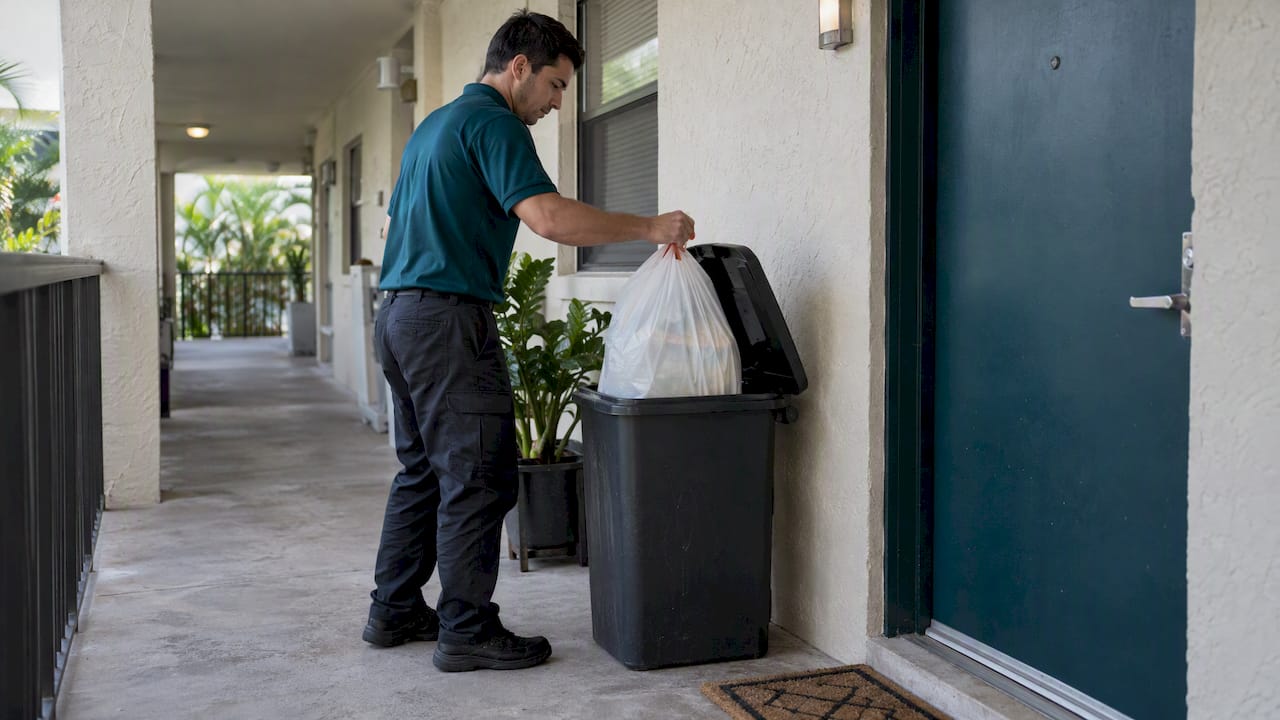
Valet trash is a doorstep pickup service. You tie up your household trash, set it outside your apartment door on scheduled evenings, and a service worker carries it to the community’s dumpster or compactor. Most apartments that offer it charge a monthly fee, often around $25 to $35, and expect you to follow a strict schedule. Whether it’s worth it depends on your hours, your tolerance for rules, and whether the fee is shown up front.
Below: how a typical program runs, what it costs, the rules that trip residents up, and the questions to ask before you sign a lease in Boca Raton or anywhere else.
TL;DR
- Valet trash means a third-party crew collects bagged trash from your door, usually five nights a week, Sunday through Thursday.
- Residents commonly pay about $30 a month, and the fee is usually mandatory once the community offers the service.
- Rules are real: bag limits, flattened boxes, set-out windows, and penalties for lost containers or containers left out.
- It’s worth it if you keep irregular hours or hate dumpster trips. It’s a poor deal if you travel often or already take trash out daily.
- Always ask for the fee in writing, and compare the total monthly cost, not the base rent alone.
Table of Contents
- What valet trash is, and how it works
- What valet trash costs renters
- The rules most residents learn the hard way
- Is valet trash worth it?
- Questions to ask before you sign
- Our perspective on trash, fees and convenience
- Apartment trash options beyond valet
- Making valet trash work for you
- Seeing the real monthly cost of a Boca Raton one-bedroom
- FAQ
- Sources
What valet trash is, and how it works
Valet trash is sometimes called doorstep trash pickup or door-to-dumpster service. A third-party provider moves residents’ bagged waste from individual doors to the central dumpsters or compactors, so you never walk to the trash area yourself. Property managers adopt it for cleanliness and to take dumpster-area work off the maintenance team.
A typical week looks like this:
- The community gives you a container. One major provider supplies a 13-gallon container for tied trash, recycling and broken-down boxes.
- In the evening window, often 6 to 8 PM or 8 to 10 PM, you put the tied bag in the container and set it outside your door.
- A valet collects it, usually Sunday through Thursday. Some communities run six or seven nights.
- You bring the empty container back inside by the morning cutoff, commonly 9 AM.
Some providers photograph each pickup. That proof of pickup helps management settle disputes about whether a container was out on time, which matters if you’re ever cited.
What valet trash costs renters
There are two prices to understand: what the property pays and what you pay.
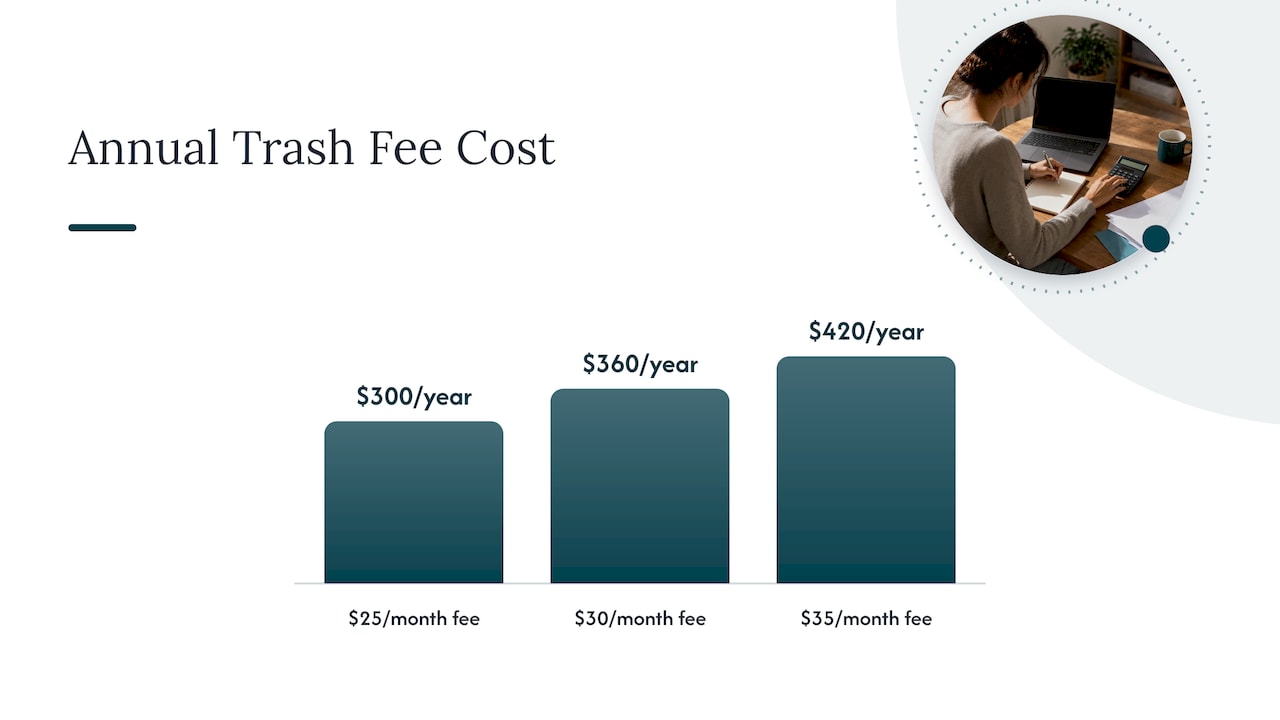
The property typically pays the vendor $8 to $15 per unit per month, billed on total units. Residents are then usually charged $25 to $35 per month as an amenity line item. One community flyer lists $30 per month for five nights a week, which matches the figure many renters see.
What that means for your budget:
| Monthly fee | Per year | What it adds to a $2,000 rent |
|---|---|---|
| $25 | $300 | 1.25% |
| $30 | $360 | 1.5% |
| $35 | $420 | 1.75% |
The fee looks small, but it’s recurring and often mandatory. Two apartments with the same advertised rent can differ by hundreds of dollars a year once trash, pest control, package lockers and similar charges are added.
One-time charges matter too. Moving out without returning the container can bring a replacement fee of about $100, because the container belongs to the service provider, not to you.
The rules most residents learn the hard way
Valet trash is convenient only if you work inside its limits. Common rules include:
- Set-out window. Leave the container out only during service hours. Containers left outside at other times can lead to warnings, fines or even termination of service.
- Bag limits. Many programs cap pickups at about two bags, and residents are asked to stack extra bags on top rather than leaving them loose.
- Boxes. Cardboard must be broken down and flattened.
- What’s excluded. Bulk items, hazardous materials and loose, unbagged waste aren’t accepted. Furniture, old mattresses and paint need a different route, so ask the office where it is.
- Recycling. Some programs pick up recycling, others don’t. Ask which you have.
The recycling point deserves attention. Industry guidance notes that one-container collection can discourage sorting when recyclables don’t have a separate, easy option. The EPA also says waste programs work best when tailored to the building’s layout and residents. If you recycle carefully, ask how it’s handled before you accept the program.
Is valet trash worth it?
The honest answer: it depends on your routine.
When it pays off
- You work long or irregular hours. If you get home at 9 PM, a doorstep service saves you an evening dumpster walk.
- Your unit is far from the trash area. In larger communities, the walk can be several minutes each way.
- You have a pet. Cat owners generate litter waste often, and removing it from the apartment promptly helps keep odor down. Tie litter in a bag before it goes into the container.
- You want a cleaner property. Fewer trips to the dumpsters usually means fewer overflowing bins and less pest attraction around them.
When it doesn’t
- You travel often. You pay for five nights a week even if you’re gone for ten days.
- You keep a tight schedule. If you’re rarely home from 6 to 8 PM, the set-out window can be a nuisance rather than a convenience.
- You generate very little trash. A single resident who cooks rarely may fill one bag a week.
- You dislike mandatory fees. The fee is rarely optional once it’s in the lease.
Some renters call valet trash an unnecessary charge on social media, and that complaint is fair when the fee is hidden or poorly explained. It’s a much better value when it’s disclosed early and the service shows up reliably.
Questions to ask before you sign
Bring this list to a tour, a virtual tour or a call with the leasing office:
- Is the service mandatory, or can I opt out?
- What is the exact monthly fee, and can it change during my lease term?
- Which nights and what time window does the crew collect?
- How many bags are allowed per pickup?
- Is recycling collected at the door, or do I take it to a separate bin?
- What’s the penalty for a container left out or lost?
- Where do I take bulk items and boxes?
- Who do I contact if a pickup is missed?
Write down the answers and compare them with the lease. Our guide to Boca Raton apartment community rules shows how day-to-day rules like these shape life in a community, and our walkthrough of lease agreements covers what to check in the paperwork.
Our perspective on trash, fees and convenience
We think the question behind valet trash is bigger than the service itself. Renters aren’t really asking whether they want someone to collect their trash. They’re asking whether the total price of the apartment is honest, and whether the conveniences they pay for are ones they use.
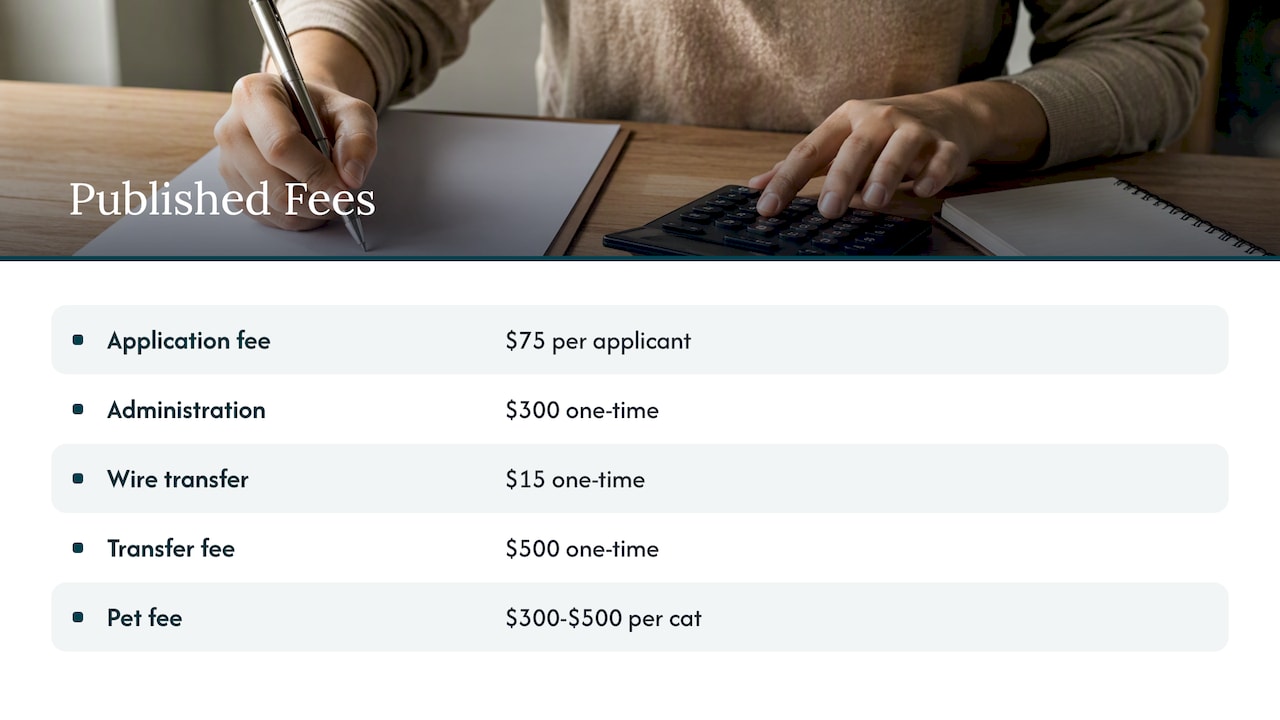
That’s why we publish our fees on one page instead of leaving them for the end of a tour. Our listed one-time charges are a $75 non-refundable application fee per applicant, a $300 administration fee, a $15 wire transfer fee, a $500 transfer fee, and a non-refundable pet fee of $300 to $500 per cat. We don’t charge ongoing pet rent for cats. Our published one-bedroom rents run from $1,990 to $2,220 per month. The current list is always on our fees page.
Our advice to any renter, here or elsewhere, is to ask for every recurring charge by name before you apply. If an amenity fee is attached to a service you won’t use, factor it into the budget and weigh it against another community’s total. Convenience should be something you choose, not something you discover on your first bill. For trash specifics in your unit, ask our leasing team and get the answer in writing.
— Ayman
Apartment trash options beyond valet
Valet service is one of several ways apartments handle waste:
- Dumpster stations. The classic setup: you carry bags to a shared bin area. No fee, but it’s up to you to go.
- Trash chutes. Common in mid-rise and high-rise buildings, where you drop bags down a chute on your floor.
- Compactors. A compactor is an industrial system at the central disposal area that crushes waste into smaller volumes and reduces the number of hauls needed. Some cities require them in larger buildings. Most renters never operate one, because staff or valet crews feed them.
- Valet pickup. Door-to-dumpster collection for a monthly fee.
A community can combine these. Valet crews often take bags from your door to a dumpster or compactor, so the two aren’t opposites.
Making valet trash work for you
If your building has it, a few habits prevent most problems:
- Double-bag anything wet or smelly. Leaks on a hallway or breezeway are the quickest way to get a violation.
- Set a phone reminder. Alarm it for the start of the window and for the morning container return.
- Flatten boxes the day they arrive. They pile up fast if you order online often.
- Keep recycling separate if the community offers a way to do that.
- Report a missed pickup the same day. Dated photos of the container at your door help.
- Return the container at move-out. It protects you from a replacement charge.
Small-space habits help too. Our tips for organizing a small apartment include ways to keep a trash and recycling corner tidy between pickups.
Seeing the real monthly cost of a Boca Raton one-bedroom
When you compare apartments, build a simple monthly budget: base rent, plus every recurring fee, plus utilities and parking, plus pet charges. Then add the one-time costs, such as application, administration and pet fees, to see your move-in total.
At Cynthia Gardens, we list our one-bedroom apartments at $1,990 to $2,220 per month, and our fees are on a public page so you can total them before you apply. You can browse our one-bedroom apartments, take a virtual tour from home, and use our AI chat or voice assistant to ask about amenities and move-in costs. If you have a cat, our pet-friendly one-bedroom guide explains how our one-time pet fee works. Our guide to the application process walks you through the steps.
FAQ
Do you have to pay for valet trash at apartments?
Usually yes, if the community offers it. The fee is typically a required monthly charge, often around $30, added to your rent. Check your lease and the fee schedule, and ask whether opting out is possible.
How big is a valet trash can?
The standard container from one major provider holds 13 gallons. It’s meant for tied trash, recycling and flattened boxes. If you produce more than fits, you may be limited to a set number of bags per pickup.
What happens if I miss the set-out window?
You generally wait until the next service night, and you’ll need to keep the trash inside until then. Don’t leave bags or containers out of hours, because that can lead to warnings or fines. Ask the office about its policy for missed pickups.
Does valet trash handle bulk items?
No. Valet services don’t accept bulk items, hazardous materials or loose waste. Furniture and appliances need a separate disposal arrangement, so ask the management office how to dispose of them.
Sources
- How It Works, Valet Living
- Valet trash services, National Doorstep
- Multifamily residents FAQ, Bin Butler
- Valet trash flyer, Relate247
- How much valet trash companies charge apartments, Trash Day Made Easy
- Recycling in Multifamily Dwellings, US EPA archive
- Equal services for multi-family customers, US EPA
- Buildings waste management guidelines, NYC DSNY