Table of Contents
- Understanding the Cost of Living in Boca Raton
- Finding Apartments for Rent in Boca Raton
- Choosing the Best Neighborhoods in Boca Raton
- Preparing for Florida’s Climate and Hurricane Season
- Building Your Professional Network and Employment
- Handling the Logistics of Your Move
- Why Relocating to Boca Raton Makes Sense
Last Updated: August 24, 2026
Relocating to a new city requires understanding the market, neighborhoods, climate, and daily costs. Boca Raton has become increasingly attractive to young professionals, graduate students, and remote workers. This guide from Cynthia Gardens breaks down essential tips for relocating to Boca Raton Florida so you can make an informed decision and settle in with confidence.
According to recent economic data from Vertex AI Search, Boca Raton’s job growth reached 8.4% from 2019 to 2024, significantly outpacing the national average of 3.7%. The city has attracted major employers and continues to expand its tech and finance sectors, making it an increasingly competitive destination for career-focused relocators.
Understanding the Cost of Living in Boca Raton
Boca Raton ranks in the top 2% of most expensive cities globally, with an average monthly cost of living around $3,114. The median household income in Boca Raton is $106,273, but newcomers should understand that income doesn’t always match the cost of living, especially for entry-level positions.
Housing dominates the cost equation. The median home price reached $850,000 over the last 3 months, representing a 4.6% increase from the previous year. Average rent is approximately $2,939 per month as of July 2026. For homeowners, budget $3,000-$6,000 annually for homeowner’s insurance due to hurricane risk, plus property taxes. The estimated monthly cost to own a typical Boca Raton home is around $6,111, including principal, interest, property tax, and insurance.
Relocating to Boca Raton requires either strong income, savings, or both. Negotiate your salary accordingly before accepting a position.
Housing is your largest relocation expense in Boca Raton. Budget at least $2,939 monthly for rent, or $6,111 for homeownership, before committing to the move.
Finding Apartments for Rent in Boca Raton
What to Expect in the Rental Market
The rental market in Boca Raton moves quickly. Homes sell in a median of 79 days, and rental inventory can be equally competitive during peak season. The market has stabilized, with prices holding steady rather than climbing sharply, giving renters more options than two years ago.
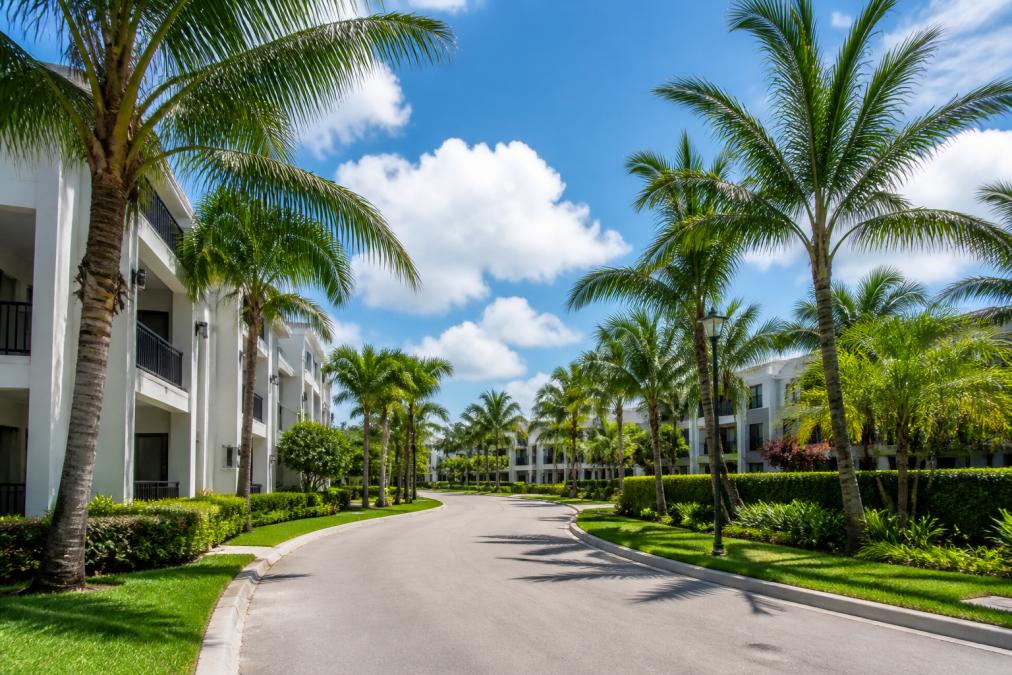
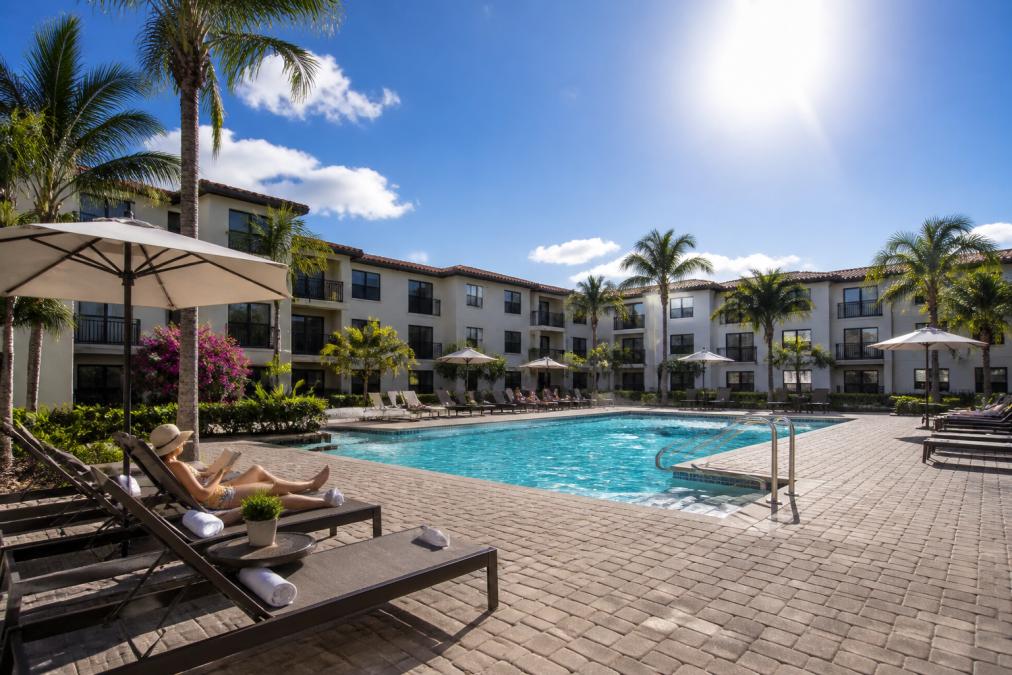
When searching for apartments, expect a mix of garden-style communities, mid-rise buildings, and high-rise developments. Garden-style communities, like Cynthia Gardens, offer a quieter alternative to urban high-rises while providing modern amenities and convenient locations. These communities typically feature resort-style pools, landscaped grounds, and maintenance-free living.
Most landlords require first month, last month, and a security deposit upfront. Budget an additional $500-$1,500 in move-in costs. Some communities offer move-in specials or flexibility on deposits, particularly during slower rental seasons.
Key Neighborhoods and Proximity to Transit
Location within Boca Raton matters enormously. Downtown Boca Raton offers walkability, dining, and nightlife but comes with higher prices and urban density. The Tri-Rail station provides rail access to Miami and West Palm Beach for commuters.
West Boca Raton offers newer construction and family-oriented amenities, slightly more affordable than downtown areas. Midtown Boca Raton has emerged as a mixed-use hub balancing walkability with a relaxed pace.
For graduate students at Florida Atlantic University (FAU), Cynthia Gardens sits just minutes from campus and the beach, offering convenient access without sacrificing a peaceful residential environment.
Choosing the Best Neighborhoods in Boca Raton
The best neighborhoods depend on your lifestyle and priorities. Boca Raton’s population increased by 1.4% since 2020, and 20.4% of residents were born outside the country, creating a diverse, welcoming community.
For quiet, well-established environments, neighborhoods like Cynthia Gardens’ surrounding area offer mature landscaping and lower traffic. For walkability and urban energy, downtown and Midtown areas deliver restaurants, shops, and social venues within walking distance.
Families often choose neighborhoods closer to highly-rated schools and parks. The homeownership rate in Boca Raton was 65.7% in 2024, reflecting strong family presence. For tech and finance professionals commuting to Miami, I-95 access minimizes commute time.
Research neighborhoods by visiting during different times of day. Rush hour traffic, weekend activity levels, and evening atmosphere vary significantly.
Don’t choose a neighborhood based solely on online reviews or photos. Visit in person during rush hour, at night, and on weekends to understand the actual environment you’ll be living in.
Preparing for Florida’s Climate and Hurricane Season
Florida’s subtropical climate presents its own challenge. Summers are hot and humid, with temperatures regularly exceeding 90°F from June through September. Air conditioning is essential, and your electric bill reflects that reality. downsizing your home.
Hurricane season runs from June through November, with peak activity in September and October. Boca Raton sits in a hurricane-prone region, and property insurance reflects that reality. Check your specific property’s flood zone designation before relocating. Properties in AE flood zones require mandatory flood insurance, typically costing $2,000-$5,000 annually.
If you’re coming from a cold climate, the adjustment takes time. Many relocators underestimate Florida summer intensity. Keep emergency supplies on hand: water, non-perishable food, flashlights, batteries, first aid kits, and medications. Many communities, including Cynthia Gardens, have hurricane preparedness plans and secure common areas.
If you’re relocating from a cold climate, plan your move for fall or winter rather than summer. Arriving in cooler months gives you time to acclimate before heat season arrives.
Building Your Professional Network and Employment
The city’s job growth of 8.4% reflects real opportunity, but competition remains strong. Start by identifying companies in your industry with offices in Boca Raton or South Florida. Connect with professionals on LinkedIn and attend virtual industry events. Professional associations often hold monthly meetings, goldmines for meeting people in your field before you move.
If relocating for a specific job, use your first month to build relationships with colleagues across your organization and industry. Boca Raton’s business community is tight-knit.
For graduate students at FAU or Palm Beach State College, campus resources are your biggest asset. Career services offices, alumni networks, and faculty connections often lead to internships and entry-level positions.
Remote workers have flexibility. If already employed, use your first weeks to explore local opportunities while maintaining current income. Research salary ranges for your role in the Boca Raton market before negotiating an offer.
Handling the Logistics of Your Move
Moving companies in South Florida are busy year-round. Book your mover 4-6 weeks in advance, particularly during peak season (October through April). Verify licensing and insurance, and get multiple quotes.
Update your address with the U.S. Postal Service at least two weeks before moving. Notify your bank, insurance companies, employers, and subscription services. In Florida, update your driver’s license and vehicle registration within 30 days of establishing residency.
Florida has no state income tax, a significant financial advantage. Open a bank account at a local bank or credit union before moving if possible.
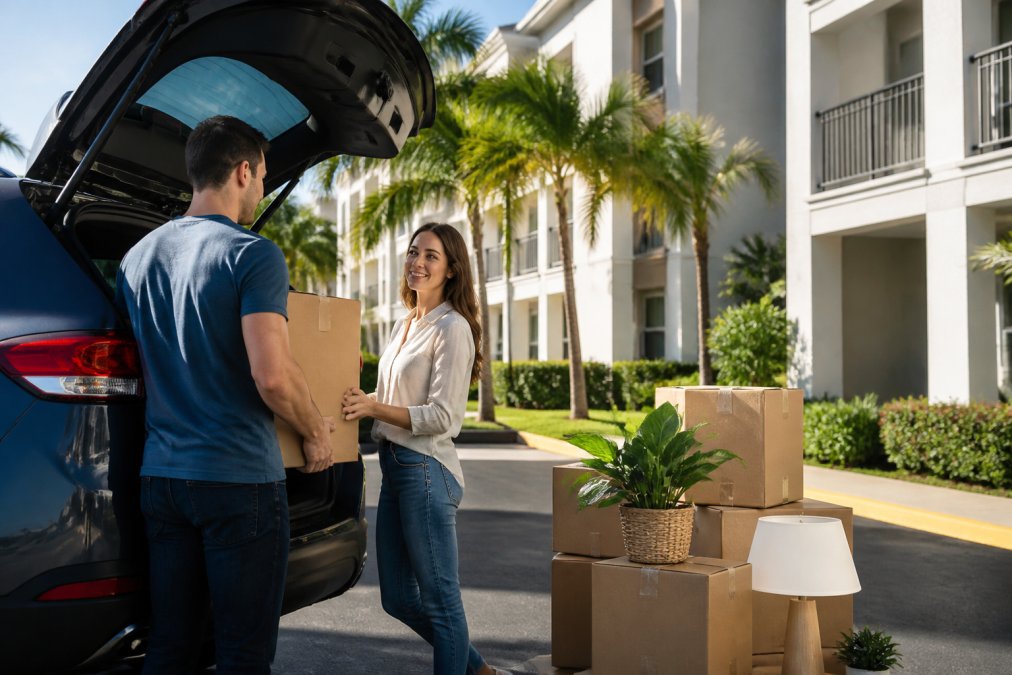
For renters, schedule your move-in inspection carefully. Document the apartment’s condition with photos and video before moving in. This protects your security deposit if disputes arise later.
Book your moving company 4-6 weeks in advance, update your address with USPS two weeks before moving, and document your rental unit’s condition with photos on move-in day. These three steps prevent most relocation headaches.
Why Relocating to Boca Raton Makes Sense
According to CardRates’ 2024 study of affluent communities, Boca Raton ranked second out of 150 affluent communities for happiest residents. Among surveyed residents, 38% rated the high quality of schools and family-friendly environment as most favorable, while 34% loved access to nature and outdoor activities.
The National Research Center’s 2025 Community Survey found that 91% of Boca Raton residents feel the city’s overall quality of life is excellent or good. Equally important, 88% would recommend living in Boca Raton to someone who asks.
Boca Raton’s appeal extends beyond statistics. The city offers excellent schools, cultural institutions, outdoor recreation, and a welcoming community. The homeownership rate of 65.7% reflects strong family presence and community stability. Florida gained 467,000 new residents from 2023 to 2024, with many specifically choosing Boca Raton, attracted by no state income tax, job growth, and lifestyle factors.
For those prioritizing a serene, maintenance-free living experience, communities like Cynthia Gardens exemplify what makes Boca Raton special. Modern, spacious apartments with high-end finishes, resort-style pools, and lush landscaping create an effortless Florida lifestyle. Located just minutes from FAU and the beach, Cynthia Gardens offers convenient access to local landmarks while maintaining the quiet, well-established residential environment many relocators seek.
Relocating to Boca Raton requires careful planning around cost of living, neighborhood selection, climate adjustment, and professional integration. The city’s 8.4% job growth and high resident satisfaction rates make it an attractive destination, but success depends on realistic expectations and thorough preparation. When you’re ready to explore apartment options that combine modern living with serene community environments, Cynthia Gardens delivers the refined, welcoming experience that makes relocation worthwhile. Schedule a tour today and experience the unparalleled blend of luxury and tranquility that defines this exceptional community.
| Planning Factor | Timeline | Key Action |
|---|---|---|
| Cost of living research | Before deciding to relocate | Budget $3,114+ monthly; verify housing costs |
| Job search and networking | 2-3 months before moving | Connect with local professionals; apply for positions |
| Apartment search | 4-6 weeks before moving | Tour neighborhoods; compare rental options |
| Moving company booking | 4-6 weeks before moving | Get quotes; verify licensing and insurance |
| Address updates | 2 weeks before moving | Notify USPS, banks, employers, services |
| Move-in inspection | Day of arrival | Document apartment condition with photos |
| Residency establishment | Within 30 days | Update driver’s license; establish Florida residency |
=== FAQ ANSWERS (audit these too, same rules) ===
[1] Q: What is the cost of living in Boca Raton compared to other Florida cities?
A: Boca Raton is 20-30% more expensive than the national average and generally more expensive than Boynton Beach or Delray Beach, but broadly comparable to, or slightly more affordable than, Coral Gables or Miami Beach. The average monthly cost of living is approximately $3,114, placing it in the top 2% of the most expensive cities globally. Housing costs are the largest factor, with the median home price around $850,000 as of June 2026. However, the median household income is $106,273, which supports the higher cost of living for many residents.
[2] Q: Are there good apartments for rent in Boca Raton within a reasonable budget?
A: Yes. The average rent in Boca Raton is $2,939 as of July 2026. Garden-style communities like Cynthia Gardens offer modern, maintenance-free one-bedroom apartments with high-end finishes and convenient access to FAU and the beach. When evaluating apartments, consider proximity to I-95 and Tri-Rail for commuters, and check for amenities like resort-style pools and pet-friendly policies that may justify the rental cost.
[3] Q: What are the best neighborhoods in Boca Raton for young professionals and students?
A: Downtown and Midtown Boca Raton offer vibrant, walkable communities close to restaurants and entertainment. For students at FAU or Palm Beach State College, neighborhoods near campus provide convenience and shorter commutes. Areas minutes from the beach and major transit routes appeal to professionals working in tech or finance. The city’s 65.7% homeownership rate and 91% of residents rating quality of life as excellent or good indicate strong, stable neighborhoods throughout Boca Raton.
[4] Q: Do I need a car to live in Boca Raton?
A: While Boca Raton is car-dependent for most daily activities, Tri-Rail provides regional transit connections, and I-95 offers quick access to Miami for commuters. However, traffic congestion is heavy during rush hours and peak seasons due to seasonal visitors. Most residents benefit from owning a vehicle, though apartment communities with central locations near major transit routes minimize commute stress for those working in tech or finance.
Frequently Asked Questions
Q: What is the cost of living in Boca Raton compared to other Florida cities?
A: Boca Raton is 20-30% more expensive than the national average and generally more expensive than Boynton Beach or Delray Beach, but broadly comparable to, or slightly more affordable than, Coral Gables or Miami Beach. The average monthly cost of living is approximately $3,114, placing it in the top 2% of the most expensive cities globally. Housing costs are the largest factor, with the median home price around $850,000 as of June 2026. However, the median household income is $106,273, which supports the higher cost of living for many residents.
Q: Are there good apartments for rent in Boca Raton within a reasonable budget?
A: Yes. The average rent in Boca Raton is $2,939 as of July 2026. Garden-style communities like Cynthia Gardens offer modern, maintenance-free one-bedroom apartments with high-end finishes and convenient access to FAU and the beach. When evaluating apartments, consider proximity to I-95 and Tri-Rail for commuters, and check for amenities like resort-style pools and pet-friendly policies that may justify the rental cost.
Q: What are the best neighborhoods in Boca Raton for young professionals and students?
A: Downtown and Midtown Boca Raton offer vibrant, walkable communities close to restaurants and entertainment. For students at FAU or Palm Beach State College, neighborhoods near campus provide convenience and shorter commutes. Areas minutes from the beach and major transit routes appeal to professionals working in tech or finance. The city's 65.7% homeownership rate and 91% of residents rating quality of life as excellent or good indicate strong, stable neighborhoods throughout Boca Raton.
Q: Do I need a car to live in Boca Raton?
A: While Boca Raton is car-dependent for most daily activities, Tri-Rail provides regional transit connections, and I-95 offers quick access to Miami for commuters. However, traffic congestion is heavy during rush hours and peak seasons due to seasonal visitors. Most residents benefit from owning a vehicle, though apartment communities with central locations near major transit routes minimize commute stress for those working in tech or finance.