
TL;DR:
- Digital leasing tools automate rental workflows and enhance operational efficiency through integration rather than standalone applications. They enable faster lease signing, ensure legal validity of electronic signatures, and significantly improve tenant experience by centralizing communication and reducing delays. Successful implementation depends on connecting platforms with existing systems, fostering proper usage, and maintaining data governance practices.
Digital leasing tools are software platforms that automate and integrate the full rental workflow, from initial inquiry through signed lease and move-in. The role of digital leasing tools in modern property management goes far beyond replacing paper. Platforms like HelloData, SignNow, and Landager now handle applications, tenant screening, e-signatures, and communications inside a single connected system. Adopting these platforms delivers up to a 25% productivity gain for leasing teams, and 84% of renters say technology directly influences their rental decision. Those two numbers together explain why digital leasing has shifted from a nice-to-have to a competitive requirement.
How do digital leasing tools improve operational efficiency?
Digital leasing platforms reduce administrative time by up to 60% and cut leasing processing times by 40–60%. That is not a marginal improvement. It means a leasing agent who previously spent half their day on paperwork can redirect that time to tours, relationship-building, and closing.

The core mechanism is automation. Tasks like document routing, reminder emails, application status updates, and scheduling confirmations run without manual input. A prospect submits an application online, screening runs automatically, and the lease routes to all signers without anyone touching a file folder.
Unified workflows vs. fragmented apps
The bigger efficiency gain comes from integration, not just automation. Treating digital tools as an ecosystem rather than a collection of standalone apps eliminates the data re-entry errors and tool-switching that slow teams down. When your CRM, screening tool, e-signature platform, and payment system share data, nothing falls through the cracks.
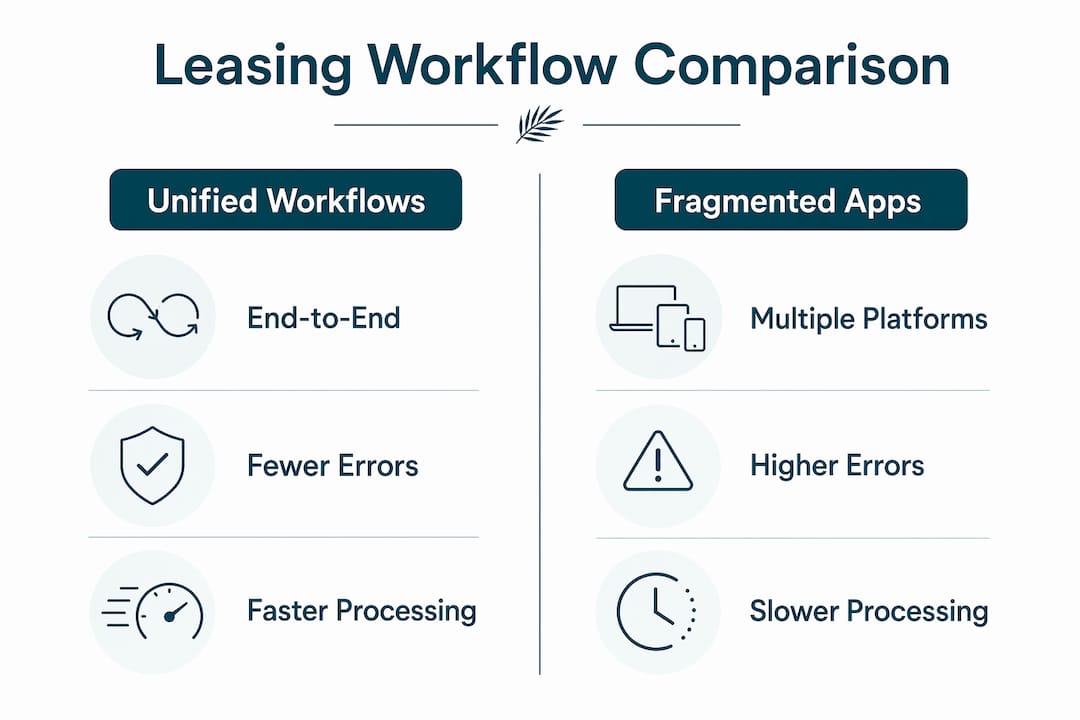
A unified portal handles the end-to-end leasing workflow from inquiry through move-in. Every handoff between stages is automatic. No one re-types an applicant’s name into three different systems.
Pro Tip: Prioritize platforms that offer native integrations with your existing CRM and payment tools before evaluating standalone apps. The connection between systems matters more than any single feature.
Numbered steps for evaluating operational fit:
- Map your current workflow and identify where manual handoffs cause delays.
- Audit which tasks your team repeats across multiple tools.
- Shortlist platforms that cover at least three core functions natively.
- Run a 30-day pilot on one property before full rollout.
- Measure time-per-lease before and after to calculate actual efficiency gains.
Are digital signatures legally valid on leases?
Digital signatures are fully legally binding on residential leases in the United States. The federal ESIGN Act and the Uniform Electronic Transactions Act (UETA), adopted by 49 states, establish that electronic signatures carry the same legal weight as wet ink. Four criteria must be met for validity: demonstrated intent to sign, explicit consent to use electronic methods, clear association of the signature to the document, and secure retention of the signed record.
Platforms like SignNow support reusable templates, audit trails, and multi-party routing to satisfy all four requirements automatically. Every signing event is timestamped and logged, creating a defensible record if a dispute arises.
Required fields and document completeness
One underrated benefit of digital lease platforms is the required fields function. Required fields prevent incomplete submissions, meaning no lease reaches execution with a missing initial or blank date. In paper workflows, catching those errors requires a manual review of every page. Digital enforcement makes that review automatic.
Cloud storage adds a second layer of protection. Signed leases are stored with version history and access logs, so you always know who viewed or modified a document and when.
| Feature | Paper Signing | Digital Signing |
|---|---|---|
| Signing speed | 24–48 hours minimum | Under 90 seconds active work |
| Document completeness | Manual review required | Required fields enforce 100% completion |
| Audit trail | None by default | Automatic timestamp and access log |
| Storage | Physical file or manual scan | Cloud-based with version history |
| Legal standing | Established | Equal under ESIGN Act and UETA |
Pro Tip: Always confirm your digital leasing platform stores signed documents in a format that meets your state’s retention requirements. Some states specify minimum storage periods for residential lease records.
How do digital platforms improve tenant experience?
Tenant satisfaction is a direct output of leasing speed and communication quality. Centralizing leases and tenant communication in one digital platform measurably improves Net Promoter Scores (NPS) and Customer Satisfaction (CSAT), and correlates with lower turnover. Lower turnover means lower vacancy costs. The math is straightforward.
The experience improvement starts at first contact. A prospect who can schedule a virtual apartment tour, submit an application, and sign a lease without printing a single page has a fundamentally different impression of your operation than one who waits for faxed documents.
Key ways digital leasing platforms improve the tenant experience:
- Asynchronous signing: Tenants sign on their own schedule, from any device, without coordinating office hours.
- Faster communication: Automated status updates keep applicants informed without requiring staff to send individual emails.
- Reduced friction at move-in: Digital checklists and pre-loaded lease terms mean move-in day focuses on the apartment, not paperwork.
- Transparent process: Applicants can track their application status in real time, which reduces anxiety and inbound calls.
Lease signing reduced from days to roughly 90 seconds of active work is not just an efficiency stat. It signals to the tenant that your operation respects their time.
Pro Tip: Use your platform’s built-in messaging features to send automated check-ins at key milestones, like application received, approval confirmed, and lease sent. Each touchpoint builds trust without adding staff workload.
How do you choose and implement digital leasing software?
Selecting digital leasing software is a systems decision, not a features decision. The right platform connects to what you already use. A tool that handles e-signatures brilliantly but cannot share data with your property management system creates a new bottleneck instead of removing one.
Productivity depends more on data accuracy and governance than on system quality alone. That finding reframes the implementation challenge. The platform is not the hard part. Getting your team to use it correctly and consistently is.
Practical steps for successful adoption:
- Audit your current stack first. Identify which tools you already pay for and which functions overlap with the new platform.
- Prioritize ecosystem integration. Confirm the platform connects natively with your CRM, tenant screening service, and payment processor.
- Update your policies before launch. Staff need written procedures for how and when to use each feature, not just login credentials.
- Train with real scenarios. Walk your team through an actual lease cycle inside the platform before go-live, not a demo environment.
- Define your ROI metrics upfront. Track time-per-lease, error rate, and tenant satisfaction scores before and after implementation.
Successful digital leasing implementations consistently point to data governance and hands-on training as the factors that separate teams that see results from those that do not. Buying the software is the easy step. Building the habits around it is the work.
Fragmented paper-based workflows cause delays, errors, and high costs. End-to-end digital platforms reduce those costs and create the data infrastructure needed for long-term operational improvement. Property managers who treat digital leasing as a workflow rather than a feature set get the full benefit. Those who bolt on a single tool without connecting it to the rest of their operation get a fraction of the return.
Key takeaways
Digital leasing tools deliver their full value only when implemented as an integrated workflow, not as isolated apps.
| Point | Details |
|---|---|
| Productivity gains are measurable | Integrated platforms cut admin time by up to 60% and leasing processing by 40–60%. |
| Legal compliance is built in | ESIGN Act and UETA make digital signatures fully valid when four criteria are met. |
| Tenant experience drives retention | Centralized communication and fast signing improve NPS, CSAT, and reduce turnover. |
| Data governance matters most | Accuracy and consistent usage outweigh platform quality in determining productivity outcomes. |
| Integration beats standalone tools | Connecting CRM, screening, signatures, and payments in one ecosystem removes the most costly errors. |
Why i think most teams are still underusing these tools
I have watched property management teams adopt digital leasing software and then use it like a fancy PDF printer. They upload a lease template, collect a signature, and call it digital. That is not digital leasing. That is digital paperwork, and it captures maybe 10% of the available value.
The teams that actually move the needle treat their platform as an operating system for leasing, not a document tool. They connect it to screening, automate follow-up sequences, and use the data it generates to understand where prospects drop off. That shift in mindset is the real unlock.
The competitive pressure argument is also stronger than most managers realize. Tech-savvy renters expect a digital experience. When a prospect compares two similar apartments and one community offers instant online applications with real-time status updates while the other asks them to fax a form, the decision is already made. The apartment itself becomes secondary.
My honest advice: stop evaluating digital leasing tools by their feature list and start evaluating them by how well they connect to everything else you already use. A well-integrated average platform beats a feature-rich isolated one every time.
— Ayman
How Cynthiagardens uses digital leasing to serve residents better
Cynthiagardens built its entire leasing experience around the principle that finding and securing an apartment should take hours, not weeks. The community in Boca Raton offers AI chat support, voice assistance, virtual tours, and an interactive property map so prospects can explore, compare, and decide without waiting on a callback.
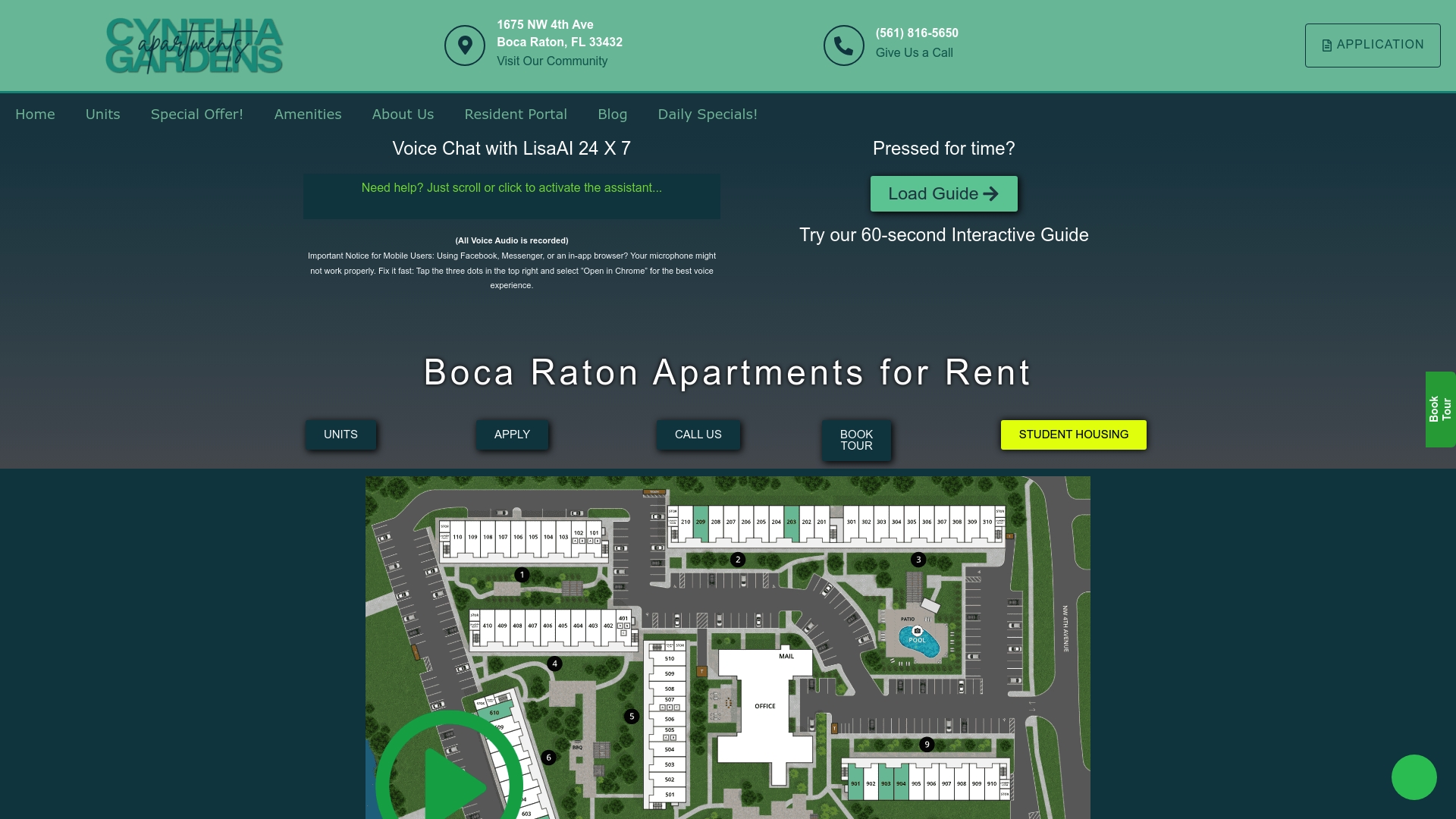
For young professionals, students, and pet owners who want transparent pricing and a process that respects their time, Cynthiagardens delivers exactly that. Every step from first inquiry to signed lease happens digitally, with no hidden fees and no paperwork delays. Browse the full range of apartment styles and features to see what is available and start your application today.
FAQ
What are digital leasing tools?
Digital leasing tools are software platforms that automate and integrate rental workflows, including applications, tenant screening, e-signatures, and communications. They replace manual, paper-based processes with connected digital systems that reduce errors and speed up lease execution.
How much time do digital leasing platforms actually save?
Integrated platforms reduce administrative time by up to 60% and cut leasing processing times by 40–60%. Lease signing alone drops from a 48-hour coordination process to roughly 90 seconds of active work per party.
Are electronic signatures on leases legally enforceable?
Yes. Under the federal ESIGN Act and UETA, electronic signatures are fully legally binding on residential leases when the signer demonstrates intent, consents to electronic methods, the signature is associated with the document, and the record is retained securely.
What is the biggest mistake in implementing digital leasing software?
The most common mistake is using digital tools in isolation rather than as an integrated ecosystem. Research shows that data accuracy and governance affect productivity more than system quality alone, meaning disconnected tools and poor training undermine even the best platforms.
How do digital leasing tools affect tenant satisfaction?
Centralizing leasing and communication in one platform measurably improves NPS and CSAT scores while reducing tenant turnover. Faster signing, real-time application tracking, and automated updates give tenants confidence in the process from day one.