Table of Contents
- Why Maintenance-Free Living for Young Professionals Is a Smart Move
- The Real Benefits of Low-Maintenance Homes Beyond the Obvious
- Cost of Maintenance-Free Living vs Single-Family Home Ownership
- Understanding Maintenance-Free Community HOA Fees
- Maintenance-Free Living for Young Professionals: Debunking the Retirement Myth
- Psychological Transition Guide: Making the Shift to Effortless Living
- Checklist for Evaluating a Maintenance-Free Community in Boca Raton
- Conclusion: Is Maintenance-Free Living the Right Lifestyle Transformation for You?
Last Updated: June 16, 2026
Young professionals today are quietly rejecting one of the most exhausting assumptions of adulthood: that owning a home and managing every inch of it is the default path to a good life. Maintenance free living for young professionals is a growing lifestyle shift, and Cynthia Gardens has seen it firsthand among residents choosing effortless Florida living in Boca Raton over the grind of homeownership. Below, we’ll show you exactly why this choice makes financial, psychological, and practical sense in 2026, and what to look for when evaluating your options.
The conventional wisdom says buy a house, build equity, and handle whatever breaks. But that advice was built for an era when people stayed in the same city for decades and had weekends free to fix gutters. Many young professionals today operate on tighter schedules, value geographic flexibility, and want their free time back. Maintenance-free living delivers all three.
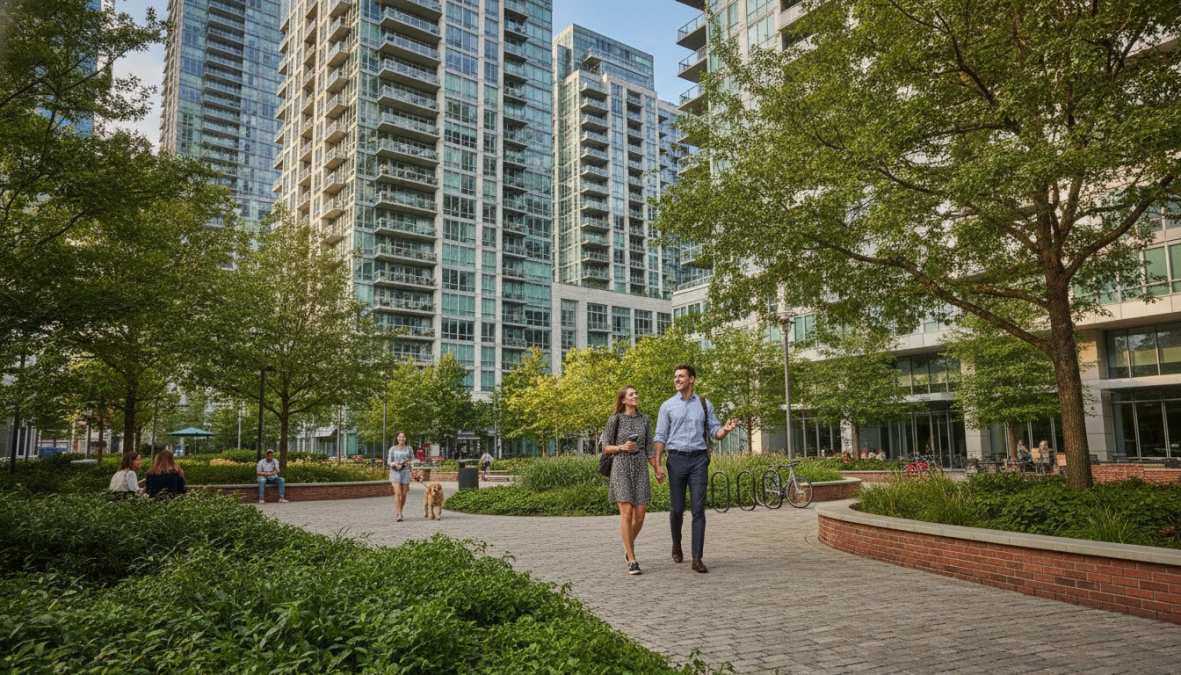
Why Maintenance-Free Living for Young Professionals Is a Smart Move
Maintenance-free living is a housing arrangement where property upkeep, landscaping, exterior repairs, and common-area management are handled by the property or community rather than the resident. For young professionals, this translates directly into reclaimed time, reduced stress, and a lifestyle that matches how they actually want to live.
The appeal is not laziness, it’s optimization. Professionals building careers, side projects, and social lives have one limited resource: time. Most guides on this topic frame maintenance-free living as a retirement concept, but the same benefits, reclaimed time, lower stress, built-in amenities, and predictable costs, apply just as powerfully to someone in their late twenties or thirties who is trying to build something.
Reclaiming Time and Energy for What Actually Matters
The average homeowner spends meaningful hours each month on property maintenance, from seasonal yard work to managing unexpected repairs. That time has a real opportunity cost. Low-maintenance homes eliminate this drain entirely, no landscaping schedules, no emergency contractor calls, no seasonal checklists that stretch into full weekends. The time goes back to you, for career growth, travel, hobbies, or rest.
Track your actual time spent on home maintenance for one month before comparing housing options. Most people underestimate it by a factor of two. The number you land on is the time you get back with maintenance-free living.
Mental Health and Stress Reduction Benefits
Homeownership creates a specific form of chronic stress. The knowledge that something could break at any moment, aging HVAC, storm-damaged roof, sits in the background of daily life. Psychologists call this "cognitive load": mental energy consumed by open loops and unresolved responsibilities. Maintenance-free living closes those loops.
According to research on housing stress and mental health from the American Psychological Association, housing maintenance burden is among the leading environmental contributors to chronic stress in working adults. Residents in managed communities consistently report lower baseline anxiety when exterior upkeep and landscaping are handled by someone else.
The Real Benefits of Low-Maintenance Homes Beyond the Obvious
Most conversations about the benefits of low-maintenance homes stop at "you don’t have to mow the lawn." That’s true, but it misses the deeper lifestyle transformation that happens when you eliminate homeownership responsibilities from your daily mental model.
Freedom to Pursue Hobbies, Travel, and Career Growth
Picture this: you get a last-minute opportunity to spend three weeks in Portugal for a work project. If you own a home, you’re mentally running through a checklist, who waters the plants, what if something breaks, is the property secure? With maintenance-free living, you lock the door and go.
Geographic flexibility is one of the most undervalued aspects of this lifestyle. Travel, career relocations, and extended work trips become dramatically simpler when you’re not anchored by property management. Beyond travel, the time reclaimed from yard work and home repairs goes directly into fitness, creative projects, social connection, or rest.
Social Connection and Community Amenities
Community amenities in a managed living environment are infrastructure for a better social life, not just perks. A resort-style pool and shared outdoor spaces create natural opportunities for connection that a single-family home doesn’t provide, a genuine advantage for young professionals who relocate for work and need to build a social network quickly.
Cynthia Gardens, for example, offers a garden-style community in Boca Raton with a resort-style pool and beautifully maintained outdoor spaces, creating an environment where casual, organic connection happens naturally. That’s not incidental to the value proposition, it’s central to it.
Cost of Maintenance-Free Living vs Single-Family Home Ownership
The cost comparison between maintenance-free living and single-family home ownership is consistently more favorable to the maintenance-free option than headline numbers suggest.
Hidden Costs of Homeownership Young Professionals Underestimate
Most people compare mortgage payments to rent and stop there. That comparison ignores a long list of real expenses homeowners absorb:
- Property taxes: Ongoing annual costs that increase over time
- Homeowners insurance: Required by lenders and priced by risk factors outside your control
- Unexpected home expenses: HVAC failures, roof repairs, plumbing emergencies, appliance replacements
- Landscaping and yard work: Either your time or a paid service
- Exterior upkeep: Painting, sealing, gutter cleaning, seasonal maintenance
- HOA fees (even in single-family communities): Often overlooked when comparing options
- Opportunity cost of the down payment: Capital tied up in equity that could be invested elsewhere
According to Bankrate’s annual homeownership cost analysis, the true annual cost of homeownership extends well beyond the mortgage payment. For young professionals in high-cost markets like South Florida, the gap between perceived and actual cost is substantial.
Financial ROI Analysis: Renting Maintenance-Free vs. Buying
The financial ROI analysis depends heavily on your time horizon, local market conditions, and opportunity cost assumptions. Here is a simplified framework:
| Factor | Maintenance-Free Rental | Single-Family Ownership |
|---|---|---|
| Upfront cost | Security deposit | Down payment + closing costs |
| Monthly predictability | Fixed rent | Variable (mortgage + repairs) |
| Maintenance costs | Included | Out-of-pocket |
| Flexibility | High (lease terms) | Low (illiquid asset) |
| Investment of capital | Capital stays liquid | Capital locked in equity |
| Time cost | Near zero | Significant ongoing |
For professionals planning to stay in a market fewer than five years, the financial case for renting maintenance-free is generally strong. Home equity builds slowly in the early mortgage years while transaction costs on both sides are substantial. The break-even point for buying versus renting in Boca Raton typically extends beyond five years.
Do not assume home equity is a guaranteed return. Real estate markets are local and cyclical. Young professionals who bought in high-cost Florida markets in 2022 and needed to sell within two years often absorbed significant transaction losses even in appreciating markets.
Understanding Maintenance-Free Community HOA Fees
Maintenance-free community HOA fees fund the services that make low-maintenance living possible. Understanding what they cover, and what they don’t, is essential before signing any lease or purchase agreement.
What HOA Fees Typically Cover in a Maintenance-Free Community
HOA fees typically cover exterior upkeep, landscaping, common area maintenance, amenity upkeep (pools, fitness centers, outdoor spaces), and sometimes utilities like water and trash. Specific inclusions vary widely. Verify before committing:
- Is landscaping of private outdoor spaces included, or only common areas?
- Are exterior repairs (roof, siding, windows) covered?
- What amenities are maintained under the fee?
- Are there special assessments that can be levied unexpectedly?
- What is the fee increase history over the past five years?
In apartment-style communities like Cynthia Gardens, maintenance fees are built into the rent structure rather than charged separately, which simplifies budgeting. The resort-style pool, landscaped grounds, and maintained building exterior are part of the living experience without a separate line item.
Maintenance-Free Living for Young Professionals: Debunking the Retirement Myth
Maintenance free living for young professionals is not a retirement concept dressed up in modern language. The retirement community framing persists because senior living facilities were the earliest to market this lifestyle, but the underlying value, freedom from property management, is age-neutral.
The real question is not "am I old enough for this?" It’s "do I want to spend my time managing a property, or doing something else?" Young professionals in their twenties and thirties often benefit most: they’re building careers, relationships, and experiences simultaneously, travel and relocate more, and have less tolerance for the friction homeownership introduces.
As documented in Urban Land Institute research on renter preferences among younger adults, the preference for amenity-rich, low-maintenance rental communities among adults under 40 has grown consistently over the past decade, and the retirement community association is fading.
Psychological Transition Guide: Making the Shift to Effortless Living
A common mistake when transitioning to maintenance-free living is expecting the mental shift to happen automatically. After years of homeownership or high-maintenance rentals, the habit of worrying about property is deeply ingrained. The transition happens in stages:
Stage 1: Decompression (weeks 1-4)
You’ll catch yourself mentally preparing for maintenance tasks that no longer exist. The cognitive load of homeownership doesn’t disappear overnight.
Stage 2: Reallocation (months 1-3)
Time and mental energy previously consumed by property management finds new outlets, fitness, creative projects, better sleep.
Stage 3: Integration (months 3-6)
The new normal sets in. Low-maintenance living stops feeling like a luxury and starts feeling like a baseline. This is when the quality-of-life improvement becomes genuinely measurable.
The hardest part is giving yourself permission to stop worrying. Many high-achieving professionals have internalized the idea that managing complexity is virtuous. Maintenance-free living asks you to let that go.
The psychological benefits of maintenance-free living compound over time. The first month feels like relief. The sixth month feels like a different relationship with your own time and energy.
Checklist for Evaluating a Maintenance-Free Community in Boca Raton
Not all maintenance-free communities deliver equally on the promise. Use this checklist when touring communities:
- Are landscaping and exterior upkeep explicitly included in the rental or HOA agreement?
- What is the response time for maintenance requests?
- Are community amenities (pool, outdoor spaces) well-maintained and accessible?
- What is the quality of interior finishes? (Look for durable building materials, quality appliances)
- Is the location convenient to your workplace, FAU, or the beach?
- What is the security situation? Are there safety features like secure entry or emergency response systems?
- What is the community’s noise level and privacy policy?
- Are lease terms flexible enough to accommodate career changes or relocation?
- What utilities, if any, are included?
- What is the community’s reputation among current residents?

Cynthia Gardens checks these boxes with modern one-bedroom apartments featuring stainless steel appliances and quartz countertops, a resort-style pool, lush landscaped grounds, and a location minutes from FAU and the beach, providing the private, quiet environment professionals need without any property management burden.
According to Florida Realtors market data on Boca Raton rental trends, demand for quality apartment communities in Boca Raton has grown steadily, driven by FAU-area professionals and remote workers relocating to South Florida, while supply of truly maintenance-free options at this quality level remains limited.
Frequently Asked Questions
What does maintenance-free living actually mean for young professionals?
Maintenance-free living means your community or property manager handles exterior upkeep, landscaping, yard work, and common-area repairs, so you never deal with seasonal maintenance or unexpected home expenses. For young professionals, this translates to more time for career growth, hobbies, and social connection. In communities like garden-style apartments in Boca Raton, it often includes resort-style amenities, lush grounds, and modern interiors, all without the homeownership responsibilities of a single-family home.
Is maintenance-free living worth the cost for young professionals compared to buying a home?
For many young professionals, maintenance-free living is cost-effective when you factor in the hidden costs of homeownership, property taxes, home repairs, landscaping, and unexpected expenses. While a single-family home builds home equity over time, it also demands significant time and financial resources upfront. Maintenance-free community HOA fees often cover services that would otherwise cost hundreds monthly, making the total cost of maintenance-free living vs a single-family home more competitive than it first appears.
What do maintenance-free community HOA fees typically cover?
Maintenance-free community HOA fees generally cover exterior upkeep, landscaping, seasonal maintenance, pest control, pool maintenance, and sometimes utilities like water and trash. Some communities also include security features, wellness checks, or access to shared amenities like fitness centers and resort-style pools. Before committing, always request a full breakdown of what the HOA fee includes to ensure the benefits of low-maintenance homes align with what you're actually paying for.
Is maintenance-free living only for seniors and retirement communities?
No, while maintenance-free living has historically been associated with retirement communities and housing for adults 55+, it's increasingly popular among young professionals and individuals of all ages. Modern garden-style apartments and independent living communities offer the same property maintenance benefits without age restrictions. Young professionals in cities like Boca Raton are choosing maintenance-free communities to reduce stress, free up time, and enjoy quality amenities, making it a lifestyle transformation that suits any stage of life.
What should I look for when evaluating a maintenance-free community?
When evaluating a maintenance-free community, prioritize: what property maintenance is included, the total cost versus a single-family home, community amenities like pools and landscaped grounds, security features, proximity to work and local landmarks, and the quality of building materials and finishes. Visiting in person and asking about HOA fee history, management responsiveness, and resident reviews will give you the clearest picture of whether the community genuinely delivers effortless, low-maintenance living.
The challenge for most young professionals is not finding a place to live. It’s finding a place that actively supports the life they’re trying to build. Cynthia Gardens offers exactly that: a serene, maintenance-free living experience in Boca Raton with modern apartments, high-end finishes, a resort-style pool, and lush outdoor spaces that make effortless everyday living the standard, not the exception. Schedule a tour today and see what reclaiming your time and energy actually looks like.