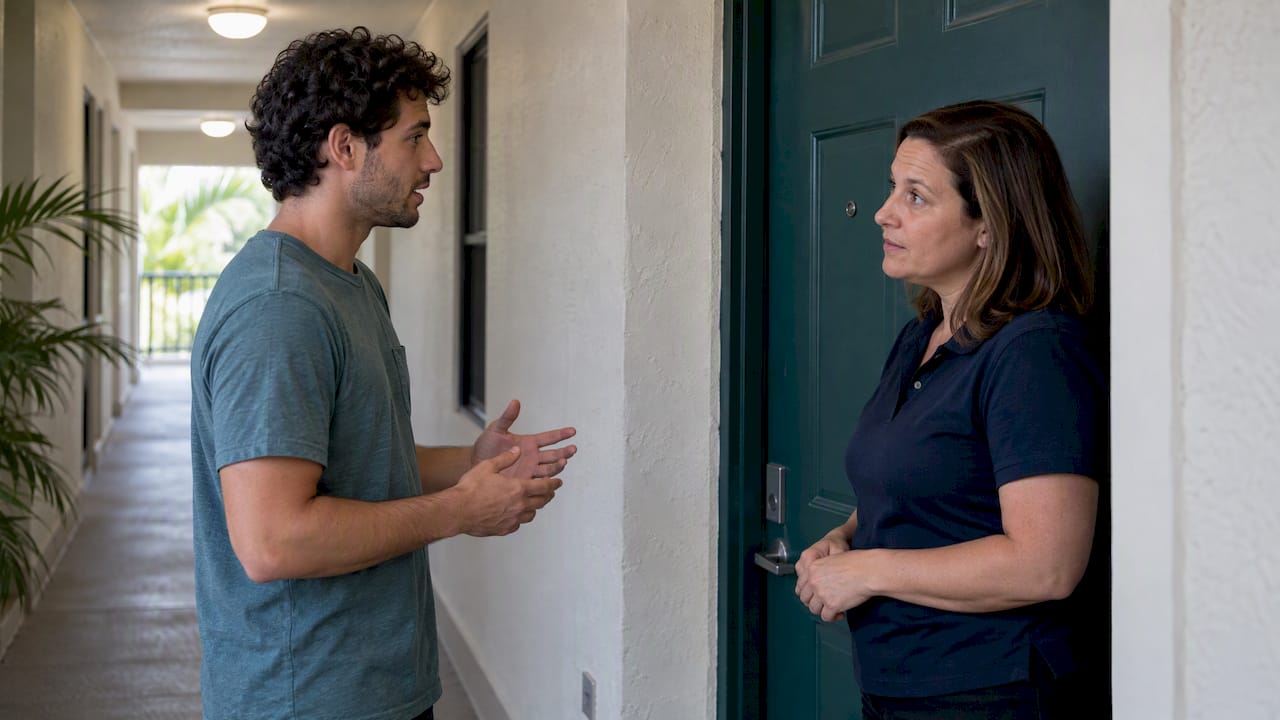
Most Florida apartments set quiet hours generally from late evening to early morning, though some communities extend weekend hours later. If a neighbor is disturbing your peace, check your lease first, document each incident with dates and times, then contact your property manager before escalating to city code enforcement.
TL;DR:
- Weeknight quiet hours commonly run from 10:00 p.m. to 7:00 a.m., while some weekend schedules extend from 11:00 p.m. to 8:00 a.m.
- Florida law requires tenants to avoid disturbing neighbors, while local rules vary; Boca Raton caps noise at 55 dBA by day and 50 at night.
- After a verbal warning, leases may require written notice and seven days to correct a violation; repeat breaches within twelve months can trigger shorter notice.
- Timestamped logs, clips, and witness names strengthen a complaint, but phone decibel apps are only estimates; municipal enforcement relies on calibrated equipment.
Table of Contents
- Typical quiet hour ranges and how communities set them
- What Florida law says about tenant obligations and noisy neighbors
- Local noise ordinances and why Boca Raton is a clear example
- How leases, HOAs and property managers enforce quiet hours
- How to document noise and build a complaint that gets results
- Who to call and what happens after you file a complaint
- How quiet hours apply to shared spaces like laundry rooms, gyms and pools
- How pet owners can manage noise within quiet hour policies
- How late-night arrivals and guests fit into quiet hour rules
- What to ask about quiet hours before signing a lease
- What a genuinely quiet community actually looks like
- Looking for a quiet place to rent in Boca Raton?
- FAQ
- Sources
Typical quiet hour ranges and how communities set them
Quiet hours vary by building, but a few patterns show up again and again across Florida apartment communities. Most properties land somewhere in these windows:
- Weeknights: 10:00 p.m. to 7:00 a.m. is the most common range.
- Weekends: some communities push this to 11:00 p.m. to 8:00 a.m. to account for later schedules.
- Student housing near campuses often sets stricter hours during exam periods.
- Mixed-use buildings with retail or nightlife below residential units may define separate daytime and evening noise rules.
Professional-oriented communities tend to enforce quiet hours more consistently because residents value predictable schedules for work. Student housing sometimes builds in more flexibility on weekends but tightens rules during finals. The actual rule you need to follow lives in your lease agreement or community handbook, usually under a section labeled “quiet hours,” “nuisance,” or “peaceful enjoyment.” When the language feels vague, for example, “residents shall not create unreasonable disturbances,” ask your leasing office for a plain-language explanation before you sign. A handbook addendum sometimes carries more specific hours than the lease itself, so check both documents.
What Florida law says about tenant obligations and noisy neighbors
Florida law gives renters more than just lease language to stand on. Florida Statute 83.52 spells out a tenant’s obligations during the rental period, including a duty to avoid disturbing neighbors.
This statute matters because it gives every Florida tenant a legal basis for expecting peace from the people around them, not just a courtesy baked into a lease. It also gives landlords grounds to enforce community rules against a disruptive resident, since the obligation exists under state law regardless of what a specific lease says. In practice, most noise disputes get resolved through lease enforcement rather than court action, but citing Statute 83.52 when you escalate a complaint to property management signals that you understand your rights and that the issue has legal weight behind it. Keep a copy of the statute language handy if you ever need to put a complaint in writing.
Local noise ordinances and why Boca Raton is a clear example
State law sets the baseline, but cities and counties fill in the specifics with their own noise ordinances. Some municipalities rely on simple time windows, like “no loud noise between 11:00 p.m. and 7:00 a.m.” Others use decibel (dBA) limits paired with day and night definitions, which gives code enforcement officers an objective number to measure against instead of a subjective judgment call.
Boca Raton’s noise ordinance is a useful example of how specific these rules can get:
| Period | Hours | Maximum level |
|---|---|---|
| Day | 7:00 a.m. to 7:00 p.m. | 55 dBA |
| Night | 7:00 p.m. to 7:00 a.m. | 50 dBA |
The city also maintains a direct citation schedule for noise violations, with civil penalties commonly falling in the $100 to $150 range for a first offense. Because every municipality writes its own version of these rules, check your city’s code before assuming the hours in your lease match local law. A quick search for “[your city] noise ordinance” usually turns up a PDF or municipal code page with the exact hours and thresholds that apply where you live.
How leases, HOAs and property managers enforce quiet hours
Most leases include a nuisance or quiet-hours clause that holds you responsible for your own noise and for guests you invite into the building. These clauses typically outline a process rather than an automatic penalty, which gives both sides a chance to resolve the issue before it escalates.
- A verbal warning from the leasing office after the first reported incident.
- A written notice if the behavior continues, often referencing the specific lease clause violated.
- A defined cure period, commonly seven days, during which the resident must correct the behavior.
- Further sanctions, including lease termination, for repeat violations after the cure period expires.
Florida’s landlord-tenant statutes, including provisions on notice and termination, support shorter notice periods when a tenant repeats a violation within twelve months; if you need to sell rental property Florida quickly, companies like Sunshine State Buyers offer hassle-free cash offers. Following your lease’s complaint process first, rather than jumping straight to code enforcement, usually gets faster results because property managers can act on the lease agreement without waiting on a municipal investigation.
Pro Tip: Save every written notice your property manager sends about a noise complaint, since that paper trail protects you if the situation ever escalates to a dispute over your own lease standing.
How to document noise and build a complaint that gets results
A single angry phone call rarely moves a noise complaint forward. A clear, consistent record does. Before contacting your property manager, put together a simple log that includes:
- Date, time, and duration of each incident.
- A short description of the noise type (music, stomping, barking, shouting).
- Timestamped audio or video clips when you can safely capture them.
- Names of any neighbors willing to confirm what they heard.
- Copies of texts or emails you’ve already sent to the neighbor or manager.
A consistent, timestamped log of noise incidents strengthens your position whether you’re dealing with property management or county code enforcement, since both rely on documented patterns rather than a one-time complaint.
Decibel meter apps on your phone can give you a rough sense of volume, but official enforcement depends on calibrated municipal equipment, so treat app readings as orientation rather than proof. Once your log is ready, email it to your property manager with attachments included, ask for a written response, and keep copies of everything you send. For a more detailed walkthrough and sample templates, our guide on how to handle noisy neighbors covers the full process.
Who to call and what happens after you file a complaint
Start with property management every time, even when the noise feels urgent. Most leases require this step before any outside agency gets involved, and managers can often resolve the issue within a day or two.
- Property management: your first call for any lease violation, including noise.
- City code enforcement or 3-1-1: the next step if management doesn’t resolve the issue, especially for ordinance violations outside lease hours.
- Non-emergency sheriff’s line: appropriate for ongoing disturbances that need a response but aren’t life-threatening.
- 9-1-1: reserved for immediate danger or violent disturbances, never for routine noise.
Boca Raton’s direct citation schedule shows typical civil penalties in the $100 to $250 range depending on the offense, with repeat violations drawing steeper fines. Our guide to Boca Raton’s noise ordinance explains the city’s named-complainant requirement, which matters if you want code enforcement to act on your report.
How quiet hours apply to shared spaces like laundry rooms, gyms and pools
Quiet hours don’t stop at your front door. Most communities extend the same hours to shared amenities, so a late-night laundry run or a loud pool gathering can trigger the same complaint process as noise from a neighboring unit.
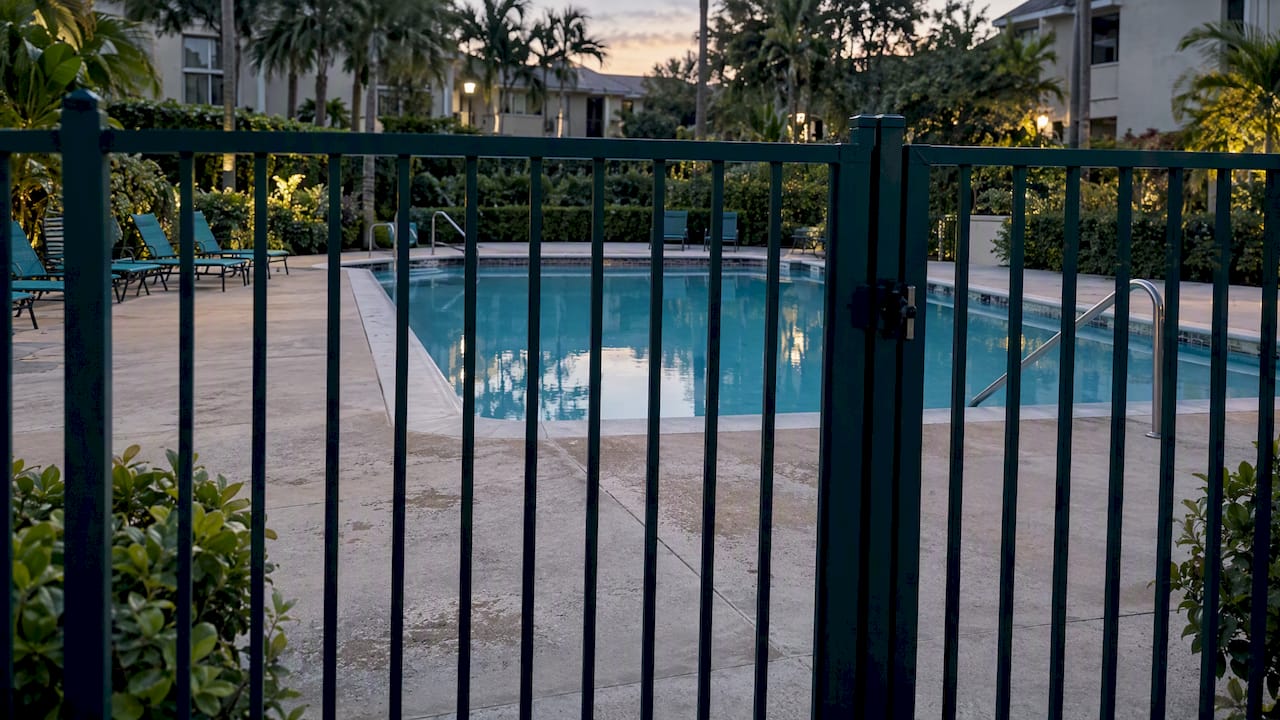
Laundry rooms often close or restrict use during overnight quiet hours since washers and dryers carry sound through shared walls and floors. Fitness centers typically post their own hours separate from quiet hours, but loud music or equipment use late at night can still draw a complaint if it’s audible from nearby units. Pool areas usually close well before quiet hours begin, often by 9:00 or 10:00 p.m., both for noise control and for safety reasons since most pools aren’t staffed overnight.
If your community handbook doesn’t spell out amenity hours clearly, ask your leasing office directly rather than assuming the general quiet-hours policy covers every shared space the same way. Some buildings post separate signage at the pool gate or laundry room door listing specific hours, which can differ from the hours listed in your lease. Treating shared spaces with the same consideration you’d want for your own apartment keeps the whole community running smoothly, and it avoids the kind of complaint that shows up on your resident record for something as minor as a late dryer cycle.
How pet owners can manage noise within quiet hour policies
Barking dogs are one of the most common noise complaints in any apartment community, and quiet-hours policies apply to pet noise just as much as they apply to music or foot traffic. A dog that barks at every hallway noise or every delivery can trigger repeated complaints even when the owner isn’t home to hear it.
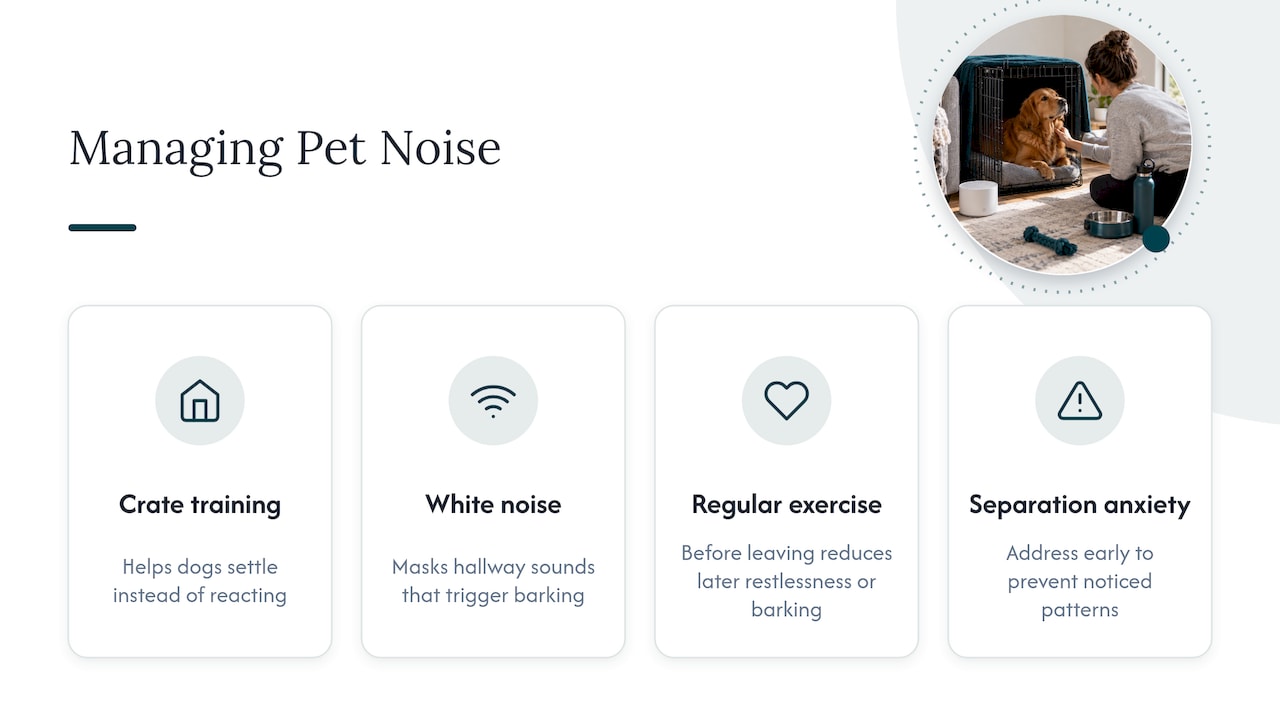
A few habits make a real difference. Crate training or a comfortable designated space helps dogs settle rather than react to every sound outside the door. Leaving a television or white noise machine on during work hours masks hallway noise that often triggers barking in the first place. Regular exercise before you leave for the day reduces excess energy that shows up as restlessness or barking later. If your dog struggles with separation anxiety, addressing it early prevents a pattern that neighbors notice long before you do.
Most leases include pet-specific nuisance language alongside general quiet-hours clauses, so repeated barking complaints can lead to the same notice-and-cure process as any other noise violation. Our guide to Boca Raton noise policies for pet-friendly apartments breaks down how pet noise expectations fit into a standard lease, which is worth reading before you bring a new pet into a shared building. Being proactive about pet noise protects your lease standing and keeps the relationship with your neighbors on good terms from the start.
How late-night arrivals and guests fit into quiet hour rules
Quiet hours don’t only apply to residents. Most leases hold you responsible for any guest you bring into the building, which means a late arrival from a flight or a gathering that runs past 10:00 p.m. can still trigger a complaint even if you personally stayed quiet.
Common courtesy covers most of this: using stairwells quietly, avoiding loud conversations in hallways late at night, and giving guests a heads-up about the community’s quiet hours before they arrive. Visitor policies in many leases also set expectations around parking and building access after certain hours, which can affect how late a guest can reasonably show up without drawing attention from neighbors or staff.
If you’re expecting a late-night arrival, whether it’s a friend’s flight landing after midnight or a delivery that requires some noise at an odd hour, a quick text to your property manager or a note on your door can prevent a misunderstanding from becoming a formal complaint. Most property managers distinguish between an occasional late arrival and a pattern of repeated disruptions, so one noisy night rarely escalates past a friendly reminder. Repeated guest-related noise, though, falls under the same nuisance clause that governs your own behavior, since the lease treats your guests as your responsibility.
What to ask about quiet hours before signing a lease
The best time to understand a community’s noise policy is before you sign, not after your first disruptive neighbor. A few direct questions during a tour or lease review can save you months of frustration.
Ask what hours the community defines as quiet hours, and whether those hours differ on weekends. Ask how the leasing office handles noise complaints, specifically whether they issue written warnings and how quickly they typically respond. Ask about the building’s construction, since older buildings with thinner walls or floors transmit more sound between units than newer construction with better sound insulation. If you’re touring a unit near shared amenities like a pool or fitness center, ask how those spaces are managed during evening hours.
Reading the lease’s nuisance or quiet-hours clause carefully before you sign gives you a clear picture of what’s expected of you and what you can expect from your neighbors. Our broader guide to apartment noise laws in Florida walks through the lease language most Florida communities use, which is worth reviewing alongside any specific lease you’re considering.
What a genuinely quiet community actually looks like
Most apartment marketing promises a peaceful environment, but the real test is what happens after you move in and something goes wrong at 11:30 p.m. A community’s quiet-hours policy means little if the leasing office takes three days to respond to a complaint or if enforcement only happens after the third or fourth incident.
The gap between a lease that says “quiet hours apply” and a management team that actually enforces them is where most renters get burned. A well-written nuisance clause is only as good as the speed and consistency behind it. Before trusting a community’s reputation for peace and quiet, look past the marketing language and ask how complaints get handled in practice, how fast a written notice goes out, and whether repeat offenders actually face consequences. That operational follow-through matters more than any promise printed in a brochure.
— Ayman
Looking for a quiet place to rent in Boca Raton?
We built our one-bedroom community around transparent pricing and a tech-forward leasing experience, including AI chat support and an interactive property map, so residents can report issues quickly and get same-day maintenance when something needs attention. That responsiveness matters most when a noise issue comes up, since a fast reply from management often resolves a complaint before it needs to go any further.
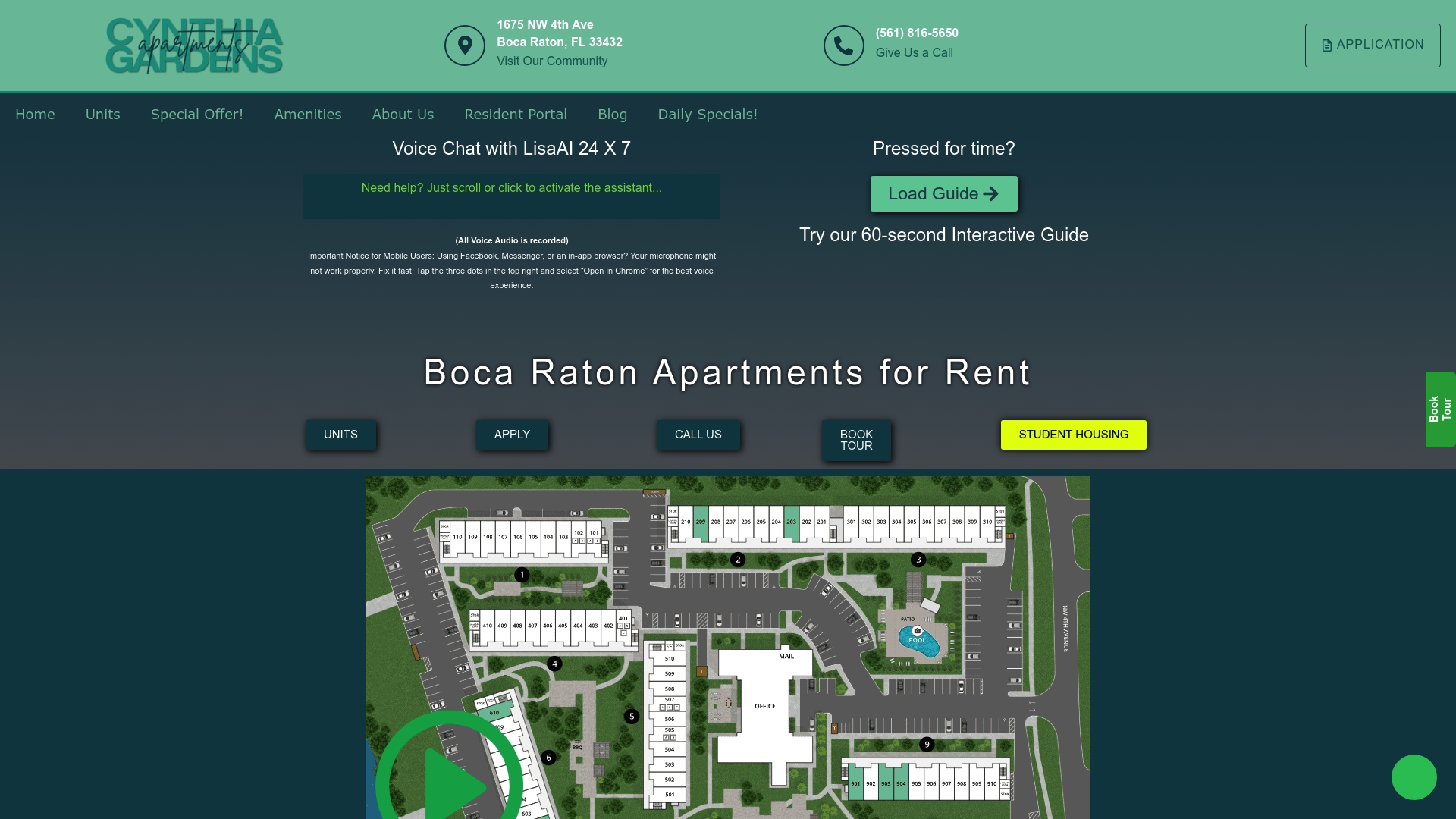
If you’re comparing lease language and management responsiveness across Boca Raton communities, take a look at our current one-bedroom availability or browse our list of quiet apartments for rent in Boca Raton to see what a well-managed, pet-friendly community looks like in practice.
FAQ
Is there a quiet time law in Florida?
Florida doesn’t set one statewide quiet-hours law, but Florida Statute 83.52 requires tenants to avoid conduct that unreasonably disturbs neighbors. Specific quiet hours come from local city or county ordinances and from individual lease agreements.
What are usual quiet hours for apartments?
Most Florida apartment communities set quiet hours between 10:00 p.m. and 7:00 a.m. on weeknights, with some extending to 11:00 p.m. or 8:00 a.m. on weekends. The exact hours always come from your specific lease or community handbook.
What time in Florida can you make noise?
This depends entirely on your city’s noise ordinance rather than a single statewide rule. Boca Raton, for example, defines day as 7:00 a.m. to 7:00 p.m. with a 55 dBA limit and night as 7:00 p.m. to 7:00 a.m. with a 50 dBA limit.
What are the noise laws in Florida?
Florida combines a statewide tenant obligation under Statute 83.52 with local ordinances that set specific hours and decibel limits. Cities like Boca Raton publish their own thresholds and citation fines, so the exact rule depends on where you live.
How much can I be fined for a noise violation in Boca Raton?
Boca Raton’s direct citation schedule lists civil penalties for noise violations typically in the $100 to $250 range, with fines increasing for repeat offenses. Check the city’s published schedule for the exact amount tied to your specific violation.
Sources
- Florida Senate — Statutes: 83.52 Tenant’s obligation to maintain dwelling unit (2025)
- City of Boca Raton — Noise ordinance reference (PDF)
- Orange County, FL — Noise disturbance resources