Table of Contents
- Pet Policy for Boca Apartments: The Basics
- Common Pet Restrictions in Boca Apartment Communities
- Understanding Boca Raton Apartment Pet Fees and Deposits
- Florida Rental Pet Laws and Fair Housing Protections
- Building Your Pet Resume for Apartment Applications
- How to Find and Evaluate Pet-Friendly Apartments in Boca
- Making Your Pet-Friendly Apartment Work Long-Term
Last Updated: August 30, 2026
Pet Policy for Boca Apartments: The Basics
Over 33% of apartment hunters specifically look for pet-friendly accommodations (apartmentguide.com). If you’re moving to Boca Raton with your furry companion, understanding the pet policy for Boca apartments is essential before signing a lease. Landlords now recognize that pet owners represent stable, long-term tenants, which is why many communities have embraced pet-friendly policies.
At Cynthia Gardens, we understand that pet owners need clarity on what’s allowed, what it costs, and what protections exist under Florida law. This guide breaks down everything you need to know about pet policies in Boca Raton apartments, from breed restrictions and deposit requirements to your rights as a pet owner.
[Request the pet policy in writing](/pet-addendum-florida/) before signing anything. What management says verbally and what the lease states can differ, get specific terms about fees, deposits, breed restrictions, and pet limits in writing so you have proof if disputes arise later.
Common Pet Restrictions in Boca Apartment Communities
Most apartment communities in Boca Raton enforce some form of pet restrictions. The most common limitations fall into three categories: breed restrictions, weight limits, and pet caps (the maximum number of pets allowed per unit).
Breed restrictions target breeds considered higher-risk, such as pit bulls, Rottweilers, or Akitas. Property managers impose these primarily to minimize liability and potential property damage, though breed restrictions are becoming less common as research shows individual temperament matters more than breed alone.
Weight limits are equally prevalent. Many Boca apartments cap pet weight at 25, 50, or 75 pounds. If you have a larger dog, you’ll need to search specifically for communities that accommodate bigger breeds.
Pet caps typically range from one to three pets per unit. Cynthia Gardens maintains clear pet policies that balance the needs of pet owners with the comfort of all residents.
Beyond these standard restrictions, some communities impose additional rules: no aggressive breeds, no exotic pets, or restrictions on specific animal types. Always ask about these nuances during your initial inquiry.
Breed restrictions can change. Even if a community currently allows your breed, new management or insurance requirements could shift this. Ask about the community’s history with breed policy changes and get any verbal assurances in writing.
Understanding Boca Raton Apartment Pet Fees and Deposits
Pet fees and deposits add up quickly. Understanding the difference between pet deposits and pet rent is critical.
A pet deposit is a one-time, upfront fee paid when you sign the lease. This money is held by the landlord to cover potential pet-related damage. In theory, if your pet causes no damage, you get this money back when you move out. Cynthia Gardens requires a nonrefundable pet fee for the first cat and an additional fee for a second cat (maximum two). Pricing for these fees depends on various factors; please refer to Cynthia Gardens’s website for current pricing.
A pet rent is a monthly fee added to your regular rent, typically ranging from $15 to $50 per pet per month (apartmentguide.com). Over a 12-month lease, pet rent can add $180 to $600 to your annual housing costs.
Some communities use a combination of one-time pet deposit plus monthly pet rent. Others use only one or the other. When evaluating apartments, calculate the total pet cost over your lease term, not just the upfront deposit.
| Fee Type | Typical Range | Refundable? | Notes |
|---|---|---|---|
| Pet Deposit | $200-$750 | Often No | May be partially refundable depending on damage |
| Pet Rent (Monthly) | $15-$50/pet | No | Added to your monthly rent bill |
| Pet Registration | $50-$150 | No | One-time fee in some communities |
| Non-Refundable Pet Fee | $300-$500 | No | Increasingly common; non-refundable by definition |
Ask specifically whether pet fees are refundable or non-refundable. Non-refundable fees are becoming more common, which means you lose that money regardless of whether your pet causes damage.
Florida Rental Pet Laws and Fair Housing Protections
Florida law provides specific protections for pet owners, particularly regarding emotional support animals. Understanding the distinction between service animals, emotional support animals (ESAs), and regular pets is crucial because your legal protections differ significantly.
According to Florida Statute 760.27, an emotional support animal is defined as an animal that provides support through its presence to alleviate symptoms of a person’s disability, without needing specific training (flsenate.gov). Florida law prohibits housing providers from denying housing or charging extra compensation for an ESA, to the extent required by federal law.
However, in May 2026, the U.S. Department of Housing and Urban Development (HUD) issued new enforcement guidance on animal-related reasonable accommodation complaints under the federal Fair Housing Act. According to HUD’s 2026 enforcement guidance on assistance animals, the Office of Fair Housing and Equal Opportunity will generally pursue complaints only when the animal has been individually trained to perform disability-related work or tasks. This represents a significant tightening from earlier guidance.
A service dog trained to perform specific tasks receives full legal protection and cannot be denied housing or charged pet fees. An emotional support animal, under the new HUD guidance, receives less protection than it previously did. A regular pet receives no special legal protections and can be subject to all restrictions and fees. compact cat carriers.
If you have an ESA, document your disability and the animal’s role carefully. You’ll likely need a letter from a licensed mental health professional.
The HUD guidance shift in 2026 changed the game for emotional support animal protections. If you rely on an ESA, verify the specific community’s policy before applying.
Building Your Pet Resume for Apartment Applications
A pet resume is a one-page document that presents your pet as a responsible, well-behaved member of the household. Property managers worry about noise complaints, property damage, and liability. A well-prepared pet resume addresses these concerns proactively.
Your pet resume should include:
- Pet’s name, age, breed, and weight
- Vaccination records and health certifications
- Training and behavior, mention obedience training or behavioral classes completed
- References from previous landlords or veterinarians
- Photos of your pet in calm, household settings
- A brief personal statement explaining why your pet is a great neighbor
Include letters of reference from previous landlords or your veterinarian. A vet’s letter confirming your pet is healthy, up-to-date on vaccinations, and well-behaved carries significant weight.

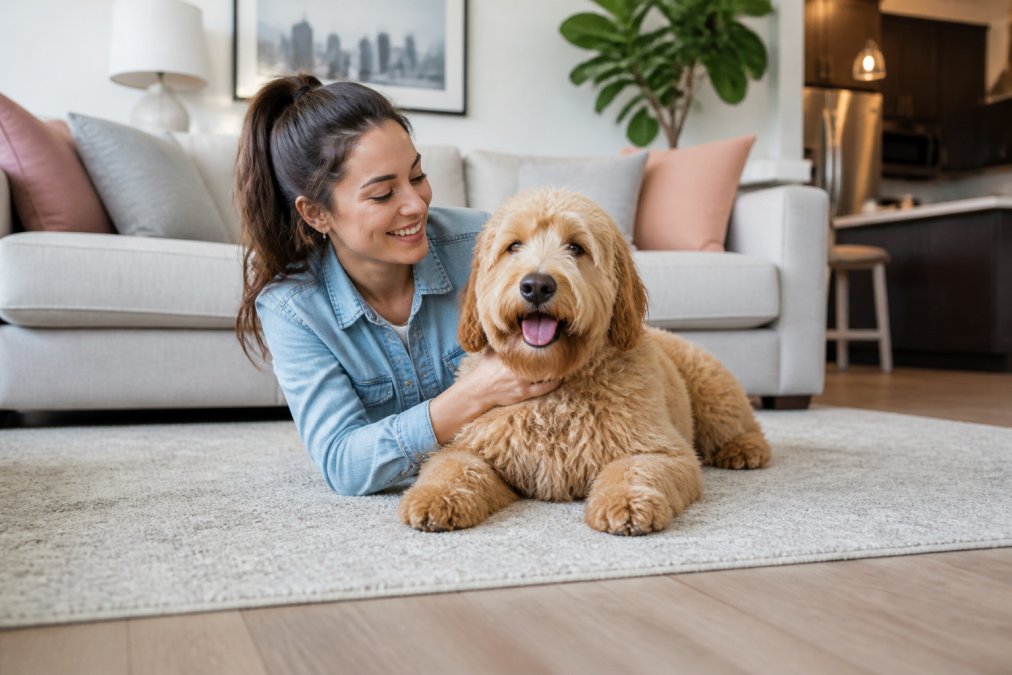
Include a professional photo of your pet looking calm and well-groomed. A photo of your dog lounging peacefully on a couch is far more persuasive than a chaotic action shot.
How to Find and Evaluate Pet-Friendly Apartments in Boca
Finding a pet-friendly apartment in Boca Raton requires a targeted search strategy. Start with direct searches on community websites. Call the leasing office directly and ask specific questions: What’s the pet deposit? Is there monthly pet rent? Are there breed or weight restrictions? Request the policy in writing.
Use apartment search platforms that allow pet filtering, but verify information by contacting the community directly, as online listings often lag behind policy changes.
Visit communities in person with your pet if possible. This lets you see whether the community is actually pet-friendly and allows management to meet your pet and assess temperament.
Look for communities that go beyond basic pet acceptance. The best pet-friendly apartments offer amenities: dog parks, paw spas, grooming stations, or designated pet relief areas.
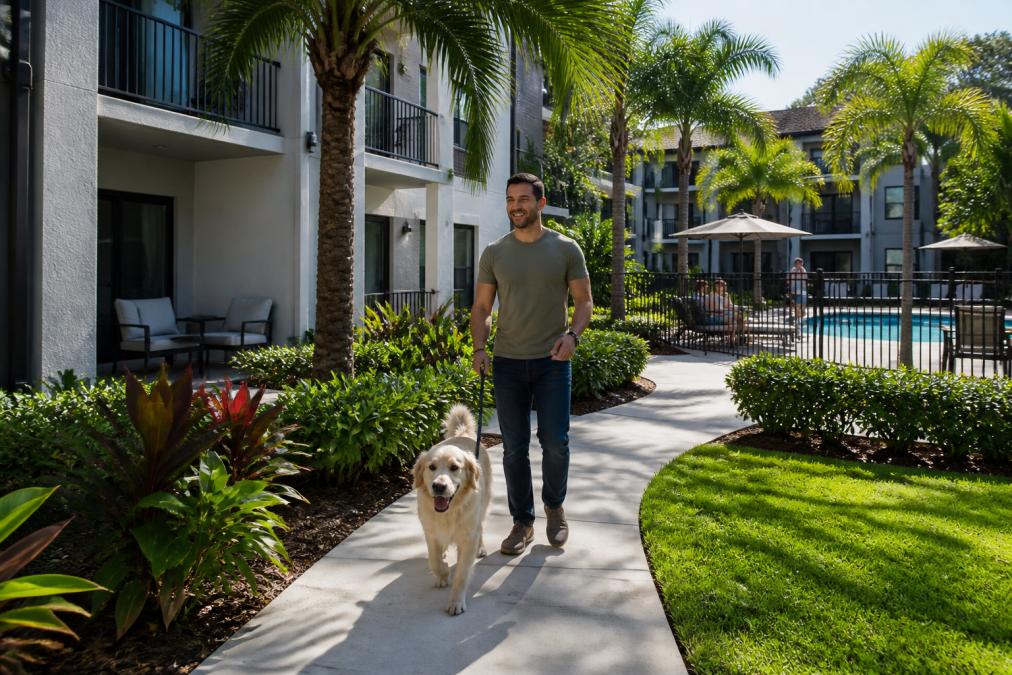
Consider the neighborhood and community layout. Garden-style apartment communities like Cynthia Gardens often provide more outdoor space and quieter environments for pets compared to high-rise buildings.
Pay attention to community reviews, specifically pet-related comments. Communities with strong pet cultures tend to attract responsible pet owners and enforce policies more consistently.
Making Your Pet-Friendly Apartment Work Long-Term
Moving into a pet-friendly apartment is just the beginning. Long-term success depends on being a responsible pet owner and maintaining good relationships with your community and neighbors.
Understand the lease terms thoroughly. Your lease should specify exactly what’s allowed: pet size limits, number of pets, breed restrictions, and consequences of violations. If the lease is vague, ask for clarification in writing.
Keep your pet under control. This means proper containment, noise management, and waste cleanup. Professional pet waste removal services can help maintain shared outdoor spaces and keep your community clean, which supports good relations with neighbors and management.
Maintain all vaccinations and health records. Keep copies of vaccination records readily available.
Address behavioral issues proactively. If your pet has anxiety, aggression, or excessive barking, invest in training or behavioral consultation. A small investment now prevents expensive problems later.
Pay pet rent and fees on time. Staying current demonstrates responsibility and builds goodwill with management.
Finally, respect your neighbors. Keep your pet away from others’ units, don’t allow your pet to approach other residents without permission, and address any complaints from neighbors seriously and quickly.
Finding a pet-friendly apartment in Boca Raton requires research, clear communication with landlords, and realistic expectations about costs and restrictions. The rental market here has become increasingly accommodating to pet owners, but policies vary widely. At Cynthia Gardens, we recognize that pets are part of your life, which is why we maintain transparent pet policies and provide the outdoor space and amenities that pet owners value. Schedule a tour today and discover how our garden-style community can be the perfect home for you and your pet.
Frequently Asked Questions
What is the average pet fee for apartments in Boca Raton?
Pet fees in Boca Raton vary widely depending on the community and number of pets. For example, Cynthia Gardens requires a nonrefundable pet fee for the first cat and an additional fee for a second cat (maximum two). Pricing for these fees depends on various factors; please refer to Cynthia Gardens's website for current pricing. Beyond initial fees, many communities charge monthly pet rent ranging from $25 to $75 per pet. Always request the complete fee schedule during your application process, as costs differ significantly between properties.
Do Boca Raton apartments have breed or weight restrictions?
Yes, many apartment communities enforce breed and weight restrictions as part of their pet policy for Boca apartments. Common restrictions include weight limits (often 25-50 pounds) and breed bans for dogs considered high-risk. Some communities prohibit certain dog breeds entirely, while others allow them with additional deposits or insurance. Review each property's specific restrictions before applying, as policies vary even within the same neighborhood.
What documents do I need to bring when applying for a pet-friendly apartment?
Building a strong pet resume for apartment applications strengthens your chances of approval. Prepare vaccination records, proof of microchipping, letters of recommendation from previous landlords or veterinarians, and documentation of any training or certifications your pet has completed. If your pet has behavioral training or is a certified service animal, include those credentials. Having these documents organized and ready demonstrates responsibility to landlords and shows your commitment to being a responsible pet owner.
Are emotional support animals treated differently under Florida rental pet laws?
Yes. Under Florida Statute 760.27 and recent HUD guidance from May 2026, emotional support animals (ESAs) receive different protections than standard pets. Florida law prohibits housing providers from denying housing or charging extra compensation for an ESA to the extent required by federal law. However, HUD's 2026 guidance clarifies that only animals individually trained to perform disability-related tasks qualify as assistance animals under fair housing protections. If you have an ESA, provide proper documentation and understand your specific rights under current Florida rental pet laws.