
An apartment pet interview is a short meeting where a leasing team meets your pet, and you, before approving the animal for a lease. The manager watches how your pet behaves, how you handle it, and whether the animal fits a shared building. It is usually a brief, friendly check, not a test you can fail by being nervous. This guide covers what happens in the room, what to bring, how dog weight limits fit in, and where your rights as a renter start and stop.
TL;DR
- A pet interview is an in-person (sometimes virtual) meeting where the manager observes your pet’s behavior and your control of it, then decides whether it fits the community.
- Dogs may be asked to follow simple commands. Cats and other animals usually get questions about temperament and where they live.
- Bring vaccination records, a one-page pet resume, and references. Groom the animal and arrive calm.
- Many apartments historically capped dogs at 45 to 50 pounds, but a growing number of operators are dropping weight limits. Always read the written policy first.
- Assistance animals are not pets under federal housing rules, so a pet interview or weight limit cannot be used to turn one away automatically.
Table of Contents
- What a pet interview actually is
- What happens during the meeting
- How to prepare: the pet resume and the paperwork
- Apartment dog weight limits
- What to check in the pet policy before you apply
- Assistance animals are not pets
- Our perspective
- Cats in Boca Raton: what we offer
- Common red flags and how to handle them
- FAQ
- Sources
What a pet interview actually is
A pet interview is the step where a landlord asks to meet the pet in person and observe its behavior and how it interacts with its owner. It sits next to other kinds of pet screening, such as an online profile or document review, and is often the last step before approval.
Why do managers bother? In a multifamily building, one animal affects neighbors through walls, hallways, elevators, and shared grounds. Managers are looking at a few things:
- Does the animal look healthy and stay under your control?
- Are there warning signs such as excessive barking or aggression?
- Does your relationship with the animal suggest a responsible owner?
Those are the points BiggerPockets lists for why a landlord might ask for an interview. In plain terms, the manager is predicting noise, damage, and neighbor complaints, and is hoping to say yes.
Not every community interviews. Many only collect forms and records. An interview tends to come up when an application raises a question, or when the pet could be a noise source. If your application is clean, you may never be asked.
What happens during the meeting
Formats differ, but a typical dog interview goes like this, according to TurboTenant’s description of pet screenings: the manager greets you and the dog, asks for basic commands such as “sit” and “stay,” and may walk the dog around the property to see how it reacts to other dogs, children, residents, and new surroundings.
A few practical notes on that:
- The first ten seconds matter. Dogs that greet calmly, even with a wagging tail and a little excitement, read as well-socialized. A dog that lunges or cowers draws more questions.
- They are watching you too. Do you use a short leash, redirect gently, and carry waste bags? That tells a manager more than a perfect “sit.”
- Cats are different. For cats and other animals that are not commonly trained, the manager is more likely to ask about temperament and living arrangements, such as whether the animal lives indoors, outdoors, or in a tank. Expect questions like how long you have had the cat, whether it is litter-trained, and how it behaves with visitors.
- Virtual versions exist. If you are moving from out of state, ask whether a video call and your records can stand in for an in-person meeting.
If you are touring a property anyway, say up front that you have a pet. Asking about the pet process at the first call saves you from falling in love with a unit that will not take your animal.
How to prepare: the pet resume and the paperwork
The best preparation is boring and organized. The ASPCA’s renter tips suggest a pet resume that includes photos, training information, references (a veterinarian, trainer, previous landlord, neighbors, groomer, daycare, or dog walker), and veterinary records such as vaccinations, spay or neuter history, and routine checkups.
Here is a checklist you can finish in an evening:
- Vaccination and vet records. Current rabies certificate at minimum. The ASPCA notes that landlords may ask for identifying information and proof of compliance with local licensing and vaccination laws.
- Spay or neuter proof, if applicable.
- A one-page pet resume. Name, age, breed or mix, weight, years with you, training, temperament, daily routine, and two or three references. We wrote a guide to building a one-page pet resume if you want a template to follow.
- References. A previous landlord who can say the pet caused no problems is worth more than any adjective you can write.
- Photos. Recent, clear, showing the animal’s actual size.
- Grooming. A bath and trimmed nails before the meeting. It is a small thing, and it reads as care.
The day before and the day of
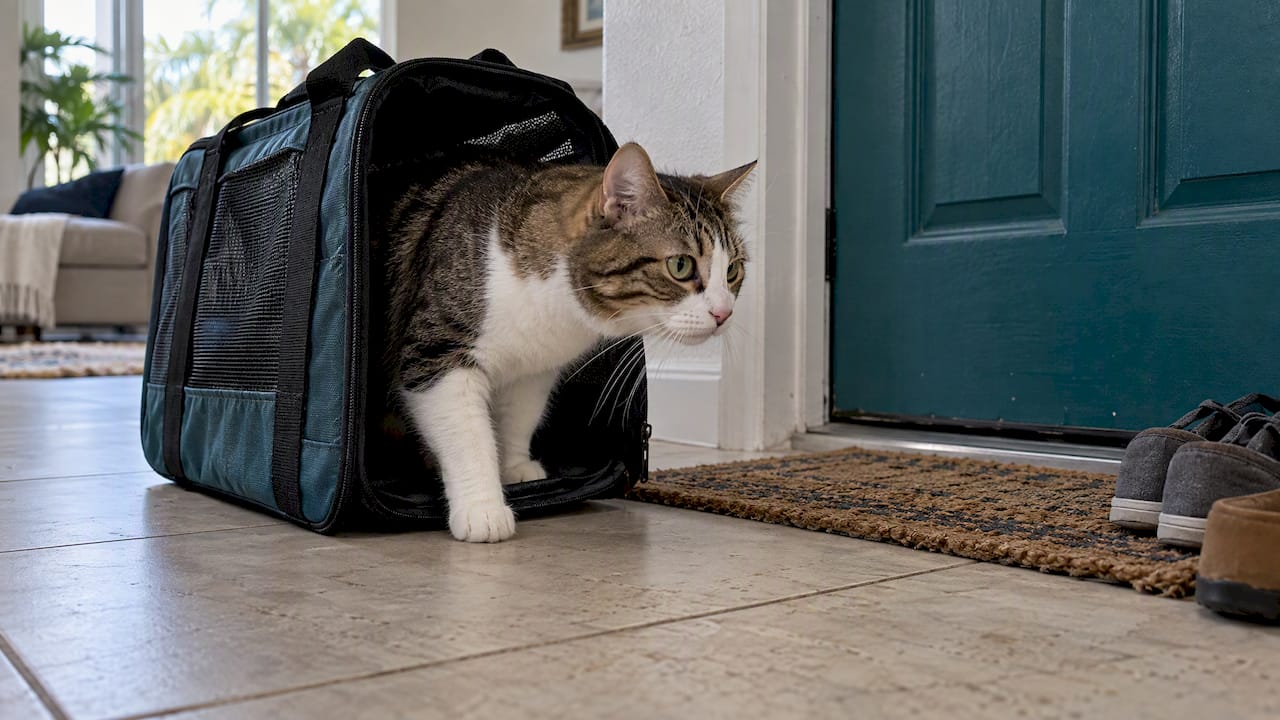
Exercise a dog beforehand so it arrives relaxed but not wired. Bring treats, a short leash, and waste bags. Bring a cat in a secure carrier and let it come out on its own terms. Do not apologize for your pet’s nerves; describe them honestly instead (“she takes a minute to warm up, then she is fine”). Honesty works better than a pitch, because managers have heard every version of “he never barks.”
Apartment dog weight limits
Weight limits are the other half of what readers search for here, and the honest answer is that they vary community by community. The National Apartment Association reports that many apartments historically set limits of 45 to 50 pounds, based on the assumption that bigger animals cause more damage, and that many operators are now reconsidering them. The same piece says a number of operators are moving away from weight restrictions to widen the pool of prospective renters.
What that means for you:
- Limits are a written policy, not an interview outcome. If a community caps dogs at a number and your dog is over it, the interview will not change that. Check the pet policy before you pay an application fee.
- Some communities replace weight with breed lists or per-pet rules. Others combine both. Read all three: weight, breed, and number of pets.
- Number of pets matters. Many communities limit a unit to two pets, partly because the average dog-owning household has around 1.6 dogs, per the NAA.
- Weight is measured, not estimated. Some managers ask for a vet-recorded weight. A puppy that will grow should be listed by its expected adult weight, which is a question to ask your vet.
If you live in or are moving to Boca Raton, expect limits to differ from one community to the next, since each sets its own policy. Ask for the pet addendum in writing before you tour.

What to check in the pet policy before you apply
Pets are not a protected class under fair housing law, so landlords may deny an applicant because of a pet, charge higher rent or deposits, and set pet rules. That makes the policy the document that matters. Before you apply, find out:
| Question | Why it matters |
|---|---|
| Weight, breed, and pet-count limits | Rules out a bad fit before you pay fees |
| One-time pet fee, pet deposit, and monthly pet rent | These are three different charges; the NAA says initial fees run $200 to $500 per pet and monthly fees $20 to $50 per pet |
| Refundable or non-refundable | Deposits are refundable; fees are not |
| Pet interview or screening required? | Tells you what to prepare |
| Rules on waste, noise, leashes, and identification | The ASPCA says these are typically handled through clear pet rules and lease addenda |
| What happens at renewal | Whether fees or limits can change |
Put the total cost on one line. A $25 monthly pet rent adds $300 a year and every year after, while a one-time fee is paid once. Our guide on whether pet rent is worth it walks through the math, and our apartment pet policy walkthrough explains what each clause usually means.
Clear written expectations are a mark of a well-run community in any market. For a look at how rental terms are spelled out for tenants elsewhere, see this guide to long-term rentals in Stockholm.
Assistance animals are not pets
A service animal or emotional support animal is handled under a different framework. HUD states that an assistance animal is not a pet, and a housing provider must make a reasonable accommodation for one unless the provider can show an undue burden, a fundamental alteration, a direct threat that cannot be reduced by accommodation, or significant physical damage that cannot be reduced by accommodation.
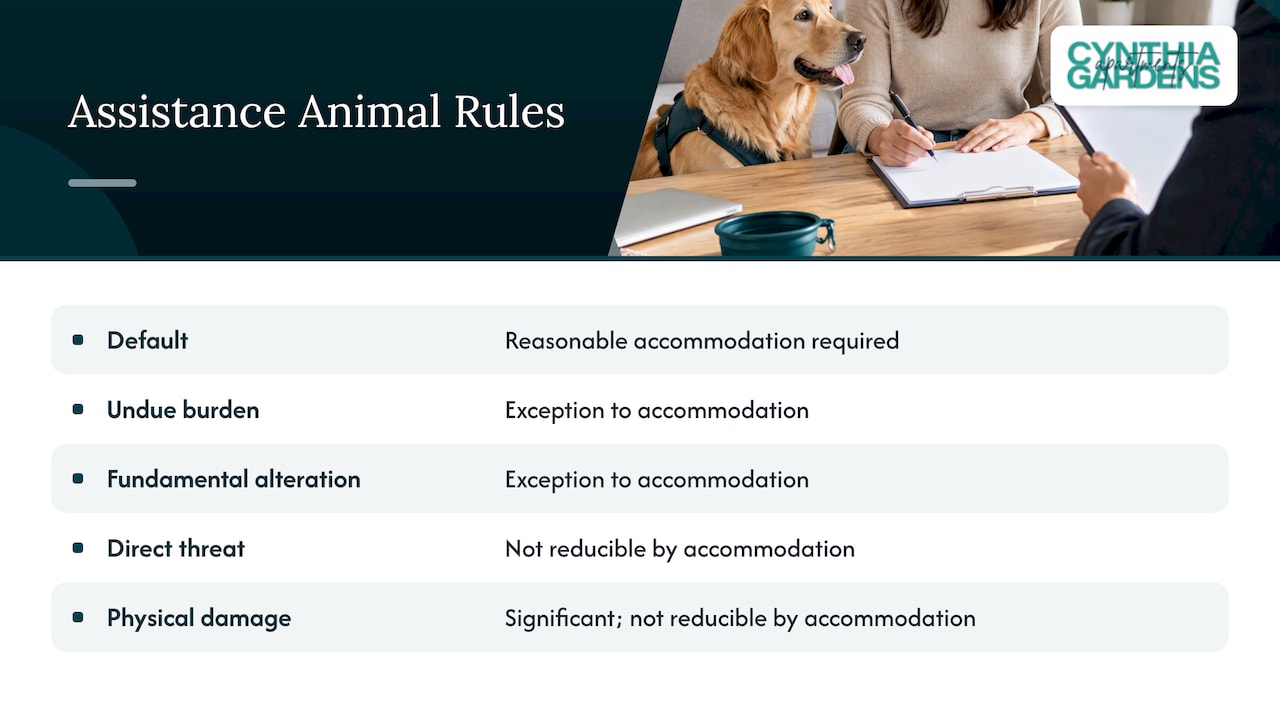
In practice, that means a pet interview, a weight limit, or a pet fee should not be used to refuse an assistance animal outright. If you have a disability-related need for an animal, tell the property manager and ask what documentation they require. If you believe you were denied unfairly, HUD’s page explains the next steps and who to contact.
Our perspective
We see pet interviews from the leasing side, and here is what we would tell a friend. Most of the stress comes from not knowing the rules, so the fix is information early. Read the policy, ask about fees up front, and bring your pet’s paperwork. A manager who sees a prepared owner relaxes, and so does the owner.
We built our community around pricing you can read before you commit. Our one-bedroom apartments are published at $1,990 to $2,220 per month, and our fees are listed on one page, including a non-refundable pet fee of $300 to $500 per cat and no ongoing pet rent. We would rather you know the whole number on day one than discover it at signing. That is also why we like pet resumes: they turn a vague “I have a quiet cat” into something a manager can verify.
One more thing we believe: the interview should be a conversation, not an audit. If a community cannot tell you what it looks for, that is a signal worth noting.
— Ayman
Cats in Boca Raton: what we offer
If you share your home with a cat, our one-bedroom apartments in Boca Raton are built for you. Our pet terms are simple: a one-time, non-refundable pet fee of $300 to $500 per cat, with no monthly pet rent. You can see the unit options and current prices on our one-bedroom apartments page and every fee, including the $75 per-applicant application fee, on our fees page.
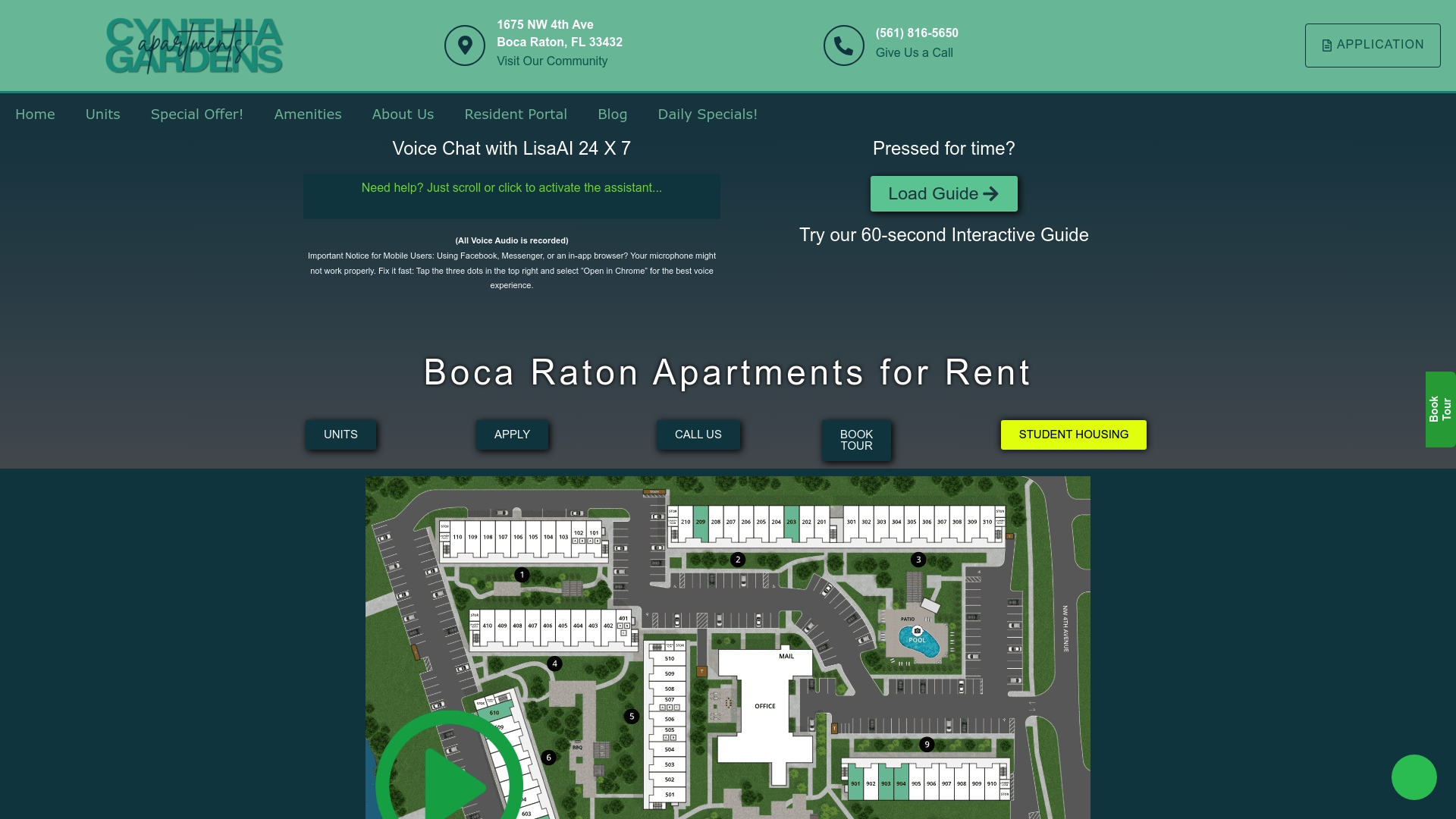
You can also tour online, so you can see the layout before you ask your cat to travel. Our pet-friendly one-bedroom apartments page covers what living here with a pet looks like, and our virtual tour guide explains how the online tour works. For the broader picture of features worth looking for, see pet-friendly apartment features.
Common red flags and how to handle them
A few situations come up again and again:
- A dog that barks at the door. Tell the manager honestly, and explain what you do about it: daily exercise, a crate routine, a trainer’s report. Managers respond to a plan better than to denial.
- No previous landlord reference. Use a vet, trainer, groomer, or daycare instead. The ASPCA’s reference list is wide for a reason.
- A mixed breed with an uncertain background. Provide a vet’s note and photos rather than guessing. Where a policy has a breed list, a vet record can help clarify what your dog is, but the landlord’s written policy still controls.
- A young animal. Say so, and show a training class sign-up or certificate.
- A shy cat. Explain its routine, and offer a photo and your vet’s record. Cats rarely get a formal interview, so your written profile does the work.
Whatever happens, get the approval and the terms in writing, including the pet addendum, so there is no confusion at move-in.
FAQ
What is a pet interview for an apartment?
It is a short meeting in which the leasing team meets your pet and observes its behavior and how you handle it. The manager is checking that the animal looks healthy, is under your control, and shows no warning signs such as aggression or heavy barking. For cats and small animals, it may be a conversation about temperament and housing instead.
Can I fail a pet interview?
Yes, a community can decline a pet, because pet owners are not a protected class under fair housing law. But most interviews are friendly and approvals are common when the owner is prepared. If the animal is an assistance animal, different federal rules apply.
What are typical apartment dog weight limits?
Many apartments have historically capped dogs at 45 to 50 pounds, and some set higher or lower numbers, while a growing number of operators are dropping weight limits. Each community sets its own, so read the written pet policy before applying. In Boca Raton, ask each property directly.
How much does it cost to have a pet in an apartment?
The NAA reports initial pet fees of $200 to $500 per pet and monthly fees of $20 to $50 per pet. At our community, the pet fee for a cat is $300 to $500 one time, with no monthly pet rent. Check the current terms on our fees page.
Sources
- Pet Screening for Landlords, BiggerPockets
- Pet Screenings: How Landlords and Tenants Can Vet Pets, TurboTenant
- Tips for Renters, ASPCA
- Pet-Friendly Housing and Renters, ASPCA
- Building the Right Pet Policy for Your Apartment Community, National Apartment Association
- Pets and Service Animals, Tenant Resource Center
- Assistance Animals, HUD