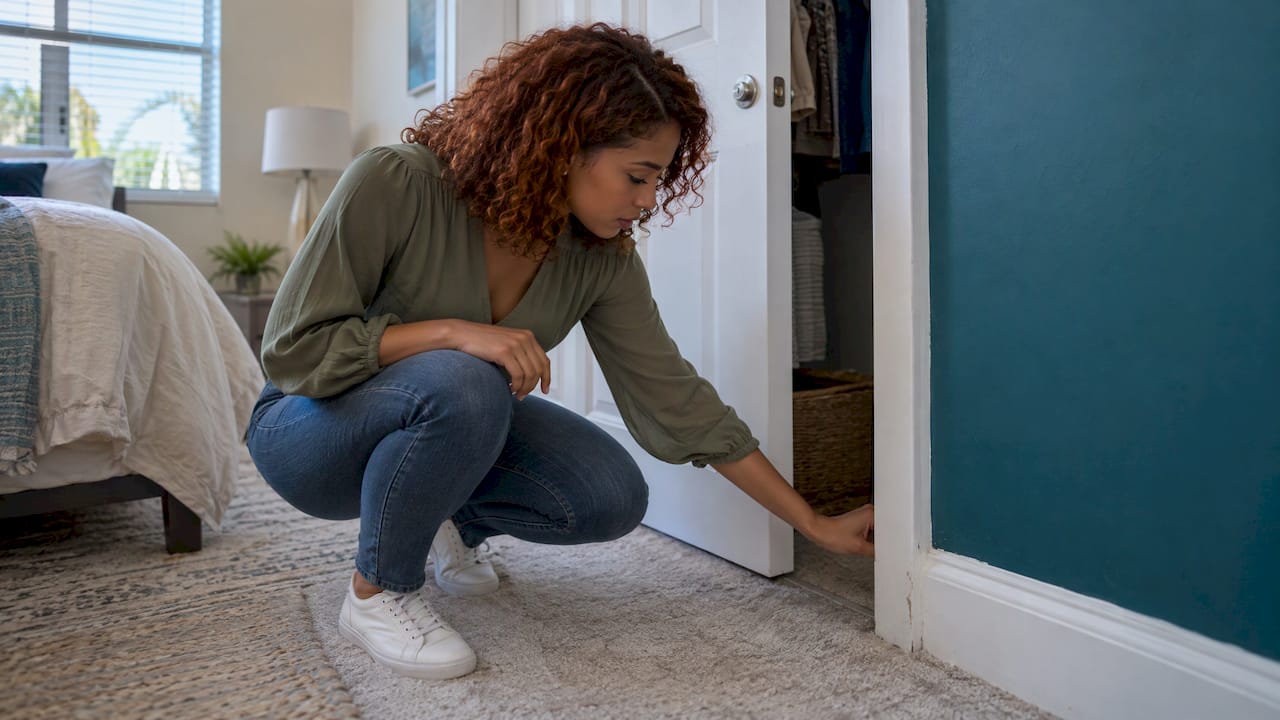
The most reliable pest signs on an apartment tour are droppings (small dark specks or smears), shed skins, egg cases, dead insects, musty odors and gaps around pipes, baseboards and outlets. Look for them in the kitchen first, then the bathroom, with a flashlight in hand. This guide shows where to look, how to read a palmetto bug sighting in Florida, and what to do next if something looks off.
TL;DR
- Bring a flashlight and check under the kitchen sink, inside cabinets, behind and beside appliances, along baseboards and in the bathroom.
- Roach evidence means dark specks or smears, shed skins, brown oblong egg cases and dead insects, often with a musty smell.
- In Florida, one large palmetto bug can be a stray. Repeated sightings, small ones alongside big ones, or droppings point to a nearby source.
- If you see something, photograph it, ask about pest history and treatment in writing, and get repair promises into the lease paperwork.
- Florida law puts reasonable extermination provisions for apartments on the landlord, so ask how the community handles it.
Table of Contents
- Why the tour is your best chance to check
- What to bring
- Where to look, room by room
- What roach evidence looks like
- Palmetto bugs in Florida: stray or problem?
- Questions to ask during the tour
- What the law says in Florida
- If you find something on the tour
- Our perspective
- See a one-bedroom for yourself
- A five-minute pest check you can reuse
- FAQ
- Sources
Why the tour is your best chance to check
Once you sign, you live with whatever the unit has. A tour lasts 15 to 20 minutes, and most people spend it on layout, light and closet space. Pests rarely show up in a staged walk-through, but the evidence they leave behind often does, if you know where to look.
Florida adds a reason to be thorough. Warm, humid weather keeps insects active all year, and large roaches regularly wander in from outdoors. A good community deals with that through regular treatment and quick repairs. Your job on the tour is to see how a unit and building look and ask the right questions.
If you are early in your search, our apartment viewing checklist covers the rest of the walk-through. This article goes deep on pests only.
What to bring
You need very little:
- A bright flashlight. Your phone light works. University pest guidance names flashlight inspection of hiding places as the simplest way to monitor for cockroaches, according to Purdue Extension.
- A small mirror on a handle, if you have one. UC IPM notes a small mirror on a long handle helps in spots you cannot see directly.
- Your phone camera, to document anything questionable.
- A notes app for the questions below.
Tour in daylight if you can, but ask to open cabinets and doors anyway. Cockroaches hide in dark, sheltered places during the day and feed at night, as UF/IFAS explains, so the evidence sits in the dark corners, not in the open.
Where to look, room by room
The federal housing inspection standard gives a useful map. HUD’s NSPIRE infestation standard lists the kitchen sink and cabinets, voids under and between appliances and cabinets, bathrooms, outlets and switches, the circuit breaker panel, mechanical rooms and water heaters as places to examine. You can follow the same logic in a short tour.
Kitchen
This is where most evidence turns up, because food, water and warm appliances sit together.
- Under the sink. Open the cabinet and shine your light along the back wall and pipe openings. Look for specks, smears, stains or dead insects. Dead insects in corners or under sinks are a standard walk-through flag, according to this first-time renter checklist.
- Inside cabinets and drawers. Check back corners and hinges. U.S. News suggests that many small brown specks clustered in one cabinet area can indicate German cockroaches.
- Around the stove and refrigerator. Peek at the gap beside and behind them. Purdue lists the area behind the refrigerator as a common hiding place.
- The sink and drain area. UF/IFAS lists the kitchen sink or drain board among places roaches turn up indoors.
- Baseboards and cracks. UF/IFAS also names cracks under cupboards and cabinets and behind loose baseboards or molding.
Bathroom
Check under the vanity, around the toilet base and tub, and in the corners of the closet. Purdue lists bathroom cabinets and closets as hiding places. Note any musty smell, which can point to moisture or a pest problem and is worth a question either way.
Bedroom and living areas
Run your light along baseboards and the floor-wall junction. U.S. News recommends looking there for small holes or entry points. Look at closet door corners too, which Purdue lists as a roach hiding spot. Near the bed and furniture, small reddish spots can signal bed bugs, so check the mattress seams if the unit is furnished.
Outlets, switches and gaps
Pests can travel through electrical boxes and openings. One inspection guide suggests checking that outlet and light switch faceplates are snug, and asking for any loose ones to be sealed properly (punwaves). Look also at gaps around pipes under sinks and where utilities enter walls.
Common areas and the exterior
Walk the hallway, trash area and entrance. Overflowing dumpsters, standing water and food debris attract pests. Check whether the grounds look maintained, whether doors seal well at the bottom and whether there is a visible pest-treatment schedule or notice.
What roach evidence looks like
So you know what you are seeing:
| Sign | What it looks like | Where it shows up |
|---|---|---|
| Droppings | Small black or dark specks, or smears | Cabinet corners, drawers, under sinks, along edges |
| Shed skins | Pale, papery casings | Dark voids, behind appliances |
| Egg cases | Brown, oblong, about 5 to 9 mm long | Hidden crevices, under and between appliances |
| Dead insects | Whole or partial bodies | Corners, under sinks, window sills |
| Odor | Oily or musty smell | Closed cabinets, closets |
The descriptions of droppings, shed skins and egg cases (5 to 9 mm) come from the NSPIRE standard linked above. Purdue adds that roaches gather in corners, such as the backs of cabinets and drawers, and travel along edges like baseboards. They are also most active at night, so a daytime tour will rarely show live ones.
Palmetto bugs in Florida: stray or problem?
In Florida, “palmetto bug” is a common name for large cockroaches. UF/IFAS says the term is often used for the Florida woods cockroach, and it is also used for the American cockroach. The UF/IFAS American cockroach profile puts adults at roughly 1.5 inches (4 cm) and says they occur throughout Florida.
The same page explains that American cockroaches live mainly outdoors in Florida but wander inside looking for food and water, or to escape extreme weather. They can come in after heavy rain.
So what does one sighting mean? A pest-control company’s Florida guide (ProSpray) offers a practical test:
- Likely a stray: a single large bug, especially after heavy rain or near an exterior door.
- Worth a closer look: more than one in a week, repeated sightings in the same room, small ones alongside big ones (young roaches), or droppings and musty odors in cabinets and closets.
If you see a single large palmetto bug near the entrance on a rainy day, ask about the building’s exterior treatment and door seals. If you see small roaches in a kitchen, treat that differently: that points to an indoor source and calls for pointed questions before you go further.
Questions to ask during the tour
A transparent community answers these without hesitation:
- How often is pest control done, and is it routine or only on request?
- Is the unit treated between residents?
- How quickly do you respond to a pest report, and is it in writing?
- Have there been pest issues in this building or this unit recently, and how were they resolved?
- Are there any sealed gaps or recent repairs I should know about?
- Who handles treatment, and does it cost the resident anything?
- What is the policy for pets, and does it affect treatment access?
Our guides on questions to ask when touring an apartment and questions to ask before renting give you a longer list to pair with this one.
What the law says in Florida
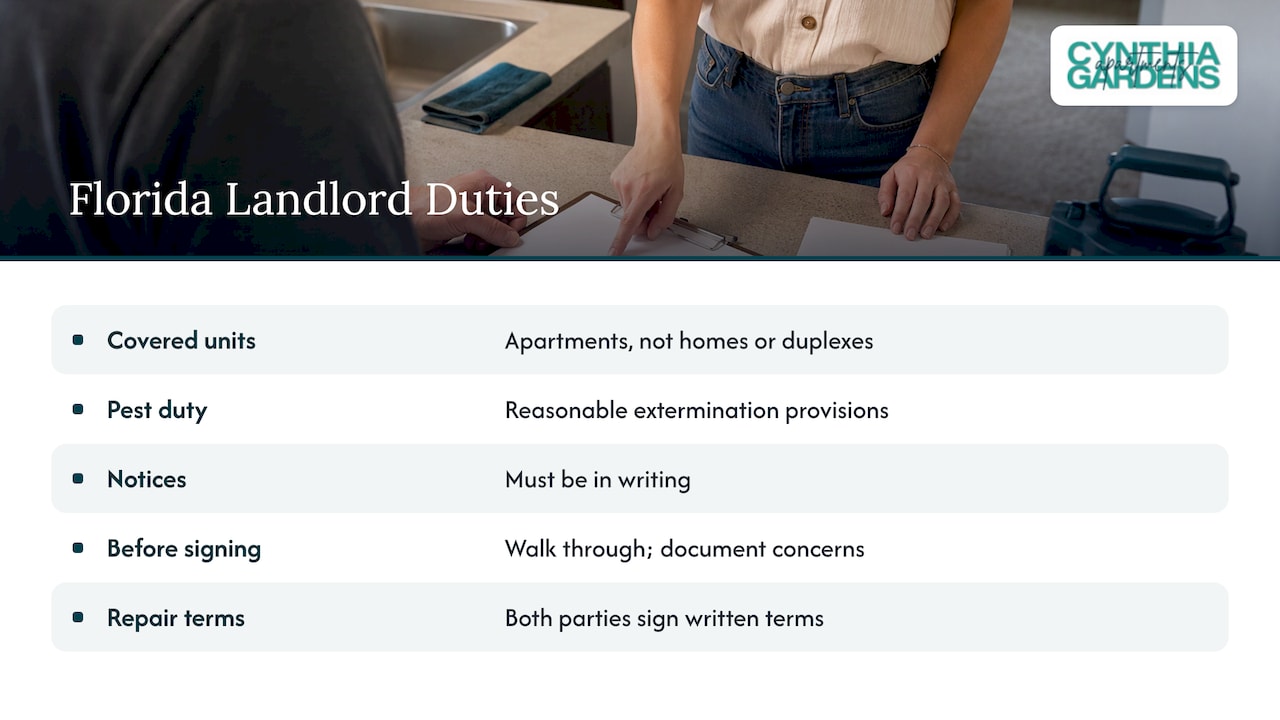
Under Florida Statutes section 83.51, landlords of apartments (dwelling units other than single-family homes or duplexes) must make reasonable provisions for extermination of roaches, along with rats, mice, ants, wood-destroying organisms and bedbugs. The Florida Bar summarizes the landlord’s duty as keeping the dwelling free of pests.
For the practical side, the Florida Department of Agriculture and Consumer Services (FDACS landlord-tenant guidance) says required notices must be in writing. It also recommends a walk-through before signing, documenting questionable conditions with photos, video or notes, and putting repair provisions in the rental agreement or a separate document both parties sign.
If you want to understand responsibility and notice periods in more depth, see our explainer on who pays for pest control in Florida rentals. For legal questions about a specific lease, speak with a Florida attorney or your local legal aid office.
If you find something on the tour
Stay calm and work through it:
- Photograph it. Capture the spot with a wider shot and a close-up. Note the unit number and date.
- Tell the leasing agent on the spot. Ask what happens next, and how soon.
- Ask for a written answer. Treatment plans, repairs and timelines belong in writing, not in a hallway promise.
- Request a re-inspection. If the unit is treated, ask to see it again before you sign.
- Put promises in the lease paperwork. FDACS recommends that repair provisions go in the agreement or a separate signed document.
- Compare with another unit. A different unit or building may give you a cleaner picture. Our move-in inspection checklist helps you document condition once you do decide, and what a move-in inspection is explains the process.
If you cannot visit in person, a virtual tour still helps you screen layouts and condition before you go. See why touring virtually works, then visit in person for the flashlight check.
Our perspective
Pests are a fair thing to worry about in Florida, and a good community expects the question. We would rather you open every cabinet in the unit than sign with doubts.
At Cynthia Gardens, we focus on a few things we believe matter to residents: transparent pricing with no hidden fees, attentive same-day maintenance, and a quiet, long-established community. Our one-bedroom apartments are designed for young professionals, students and pet owners who want a place that is well maintained and simple to lease.
Our advice is the same whether you tour with us or anyone else: bring a light, look low and look dark, ask for answers in writing, and judge a community by how openly it talks about maintenance. You can start with a virtual tour and our interactive property map, then come see a unit in person and check it your way.
Ayman
See a one-bedroom for yourself
We offer one-bedroom apartments in Boca Raton at $1,990 to $2,220 per month, with the one-time fees published openly on our fees page: a $75 non-refundable application fee per applicant, a $300 administration fee, a $15 wire transfer fee and a $500 transfer fee. If you have a cat, the non-refundable pet fee is $300 to $500 per cat, one time. Our policy has no ongoing pet rent.
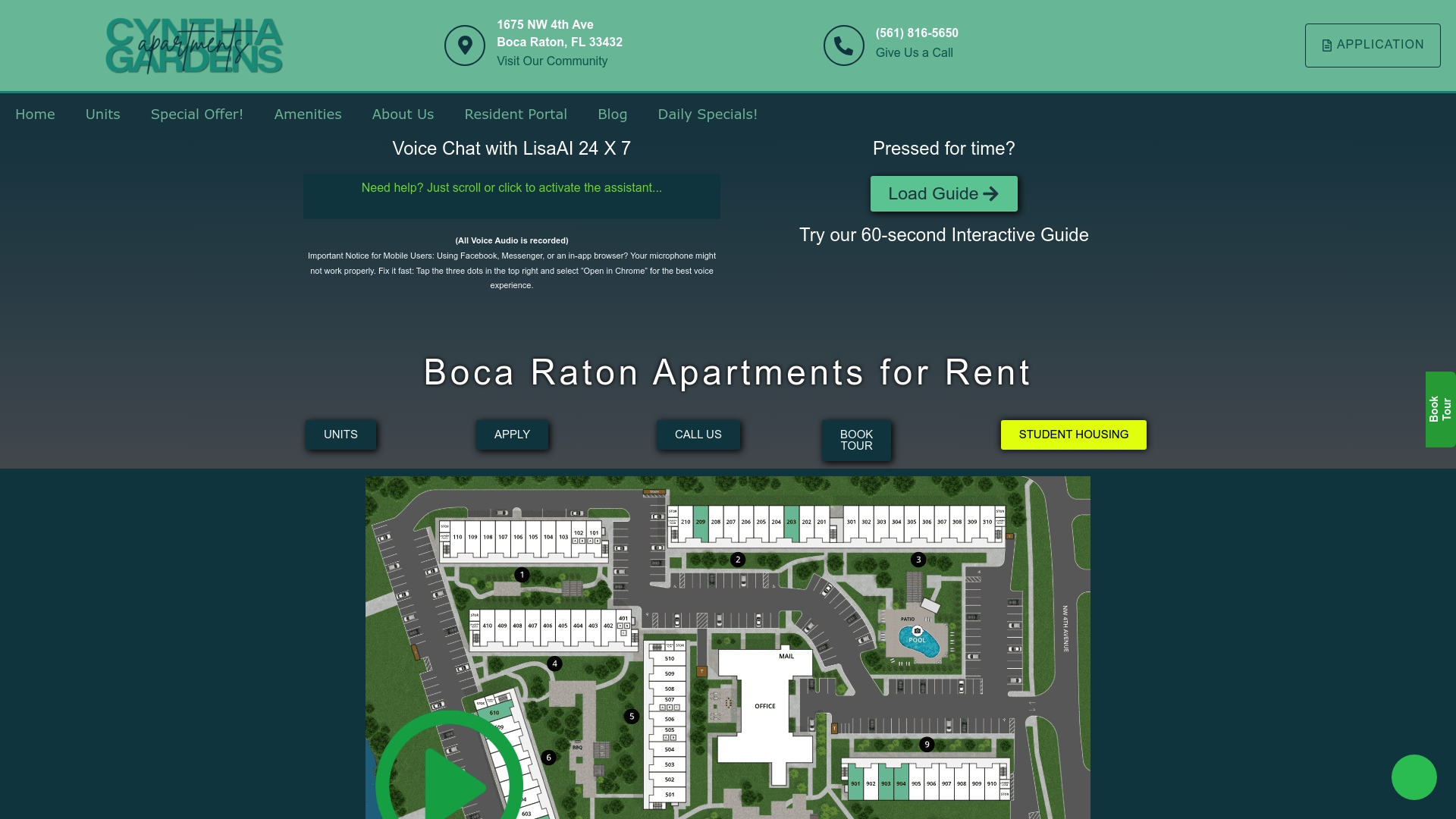
You can browse floor plans and pricing on our one-bedroom apartments page, take a virtual tour, and then book a visit. Bring your flashlight. For cat owners, our guide to pet-friendly one-bedroom apartments in Boca Raton explains how the policy works.
A five-minute pest check you can reuse
Copy this into your phone before every tour:
- Kitchen: sink cabinet, back corners of cabinets and drawers, behind or beside the fridge and stove
- Bathroom: under the vanity, around the toilet base, closet corners
- Bedroom: baseboards, closet door corners, mattress seams if furnished
- Outlets and switches: faceplates snug, no gaps around pipes
- Smell: any oily or musty odor in closed cabinets or closets
- Common areas: trash area, hallway, door seals
- Questions: treatment schedule, between-resident treatment, response time, written follow-up
Take photos of anything that gives you pause, and compare units on the same list. A consistent routine makes differences obvious, and it keeps you from relying on a feeling after a rushed visit.
For wider criteria beyond pests, our guide on what to look for in rental apartments and the list of common apartment hunting mistakes round out the picture.
FAQ
Is one cockroach on an apartment tour a red flag?
It is worth a question, not an automatic verdict. In Florida a single large palmetto bug can be a stray that wandered in, especially after heavy rain or near an exterior door. Look for droppings, egg cases or small roaches, and ask how often the building is treated and how reports are handled.
What are the first signs of roaches in an apartment?
The earliest signs are usually small dark specks or smears in cabinets and under sinks, shed skins, brown egg cases and a musty odor. Roaches are most active at night, so the evidence matters more than live sightings. Check with a flashlight in dark corners and behind appliances.
Is a palmetto bug the same as a cockroach?
Yes. In Florida, palmetto bug is a common name for large cockroaches, most often the American cockroach, and sometimes the Florida woods cockroach. American cockroaches average about 1.5 inches long and live mostly outdoors, wandering inside for food, water or shelter.
Who is responsible for pest control in a Florida apartment?
Florida law requires apartment landlords to make reasonable provisions for exterminating roaches, rats, mice, ants, wood-destroying organisms and bedbugs. Ask how your community handles routine treatment and put any special promises in writing before you sign.
Can I check for pests on a virtual tour?
Partly. A virtual tour shows condition, cabinet interiors and stains, which helps you screen options. Droppings, odors and gaps are easier to confirm in person with a flashlight, so use the virtual tour to shortlist and the visit to verify.
Sources
- How to Spot a Pest Problem When You Tour a House or Apartment, U.S. News
- Apartment Walkthrough Checklist for First-Time Renters
- How to Inspect a New Apartment for Pests Before Moving In
- NSPIRE Standard: Infestation, HUD
- A Practical Guide to Cockroach Control in Multi-Family Housing, Purdue Extension
- Cockroaches, UC IPM
- Cockroaches and Their Management, UF/IFAS
- Florida Woods Cockroach, UF/IFAS
- American Cockroach, UF/IFAS
- Found One Palmetto Bug in the House? Stray or Problem
- Florida Statutes section 83.51, Online Sunshine
- Rights and Duties of Tenants and Landlords, The Florida Bar
- Landlord/Tenant Law in Florida, FDACS