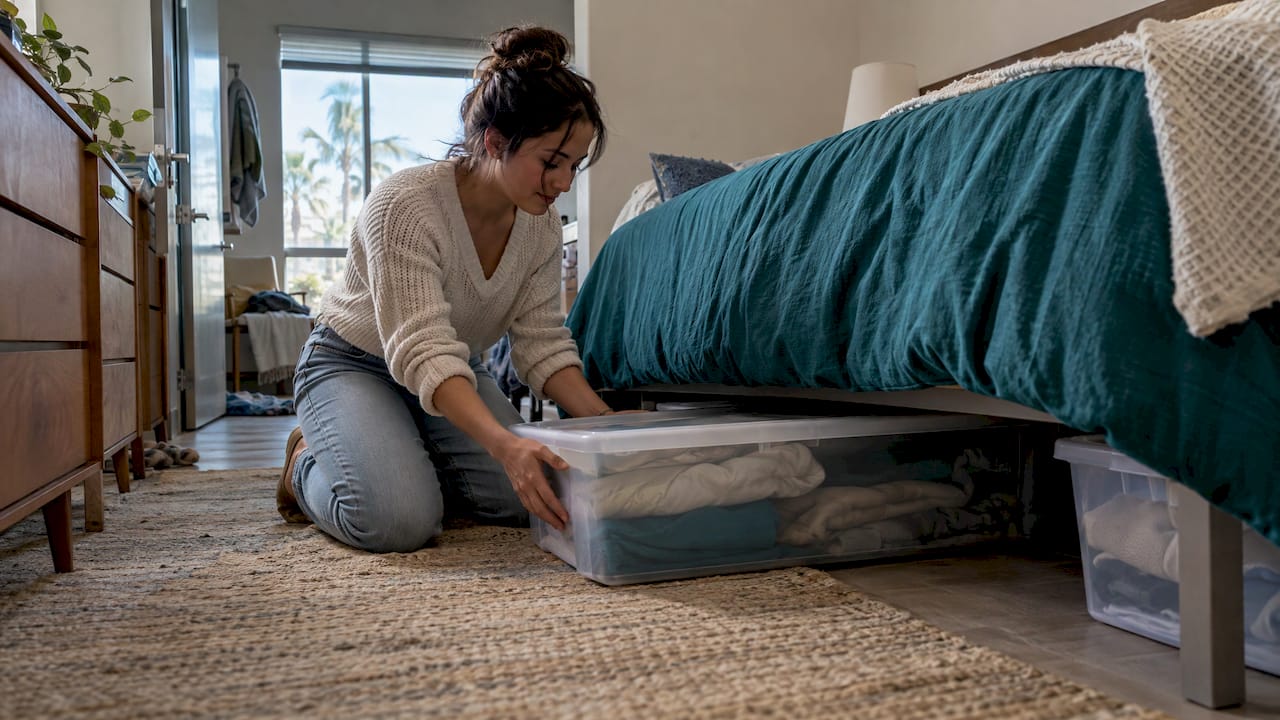
The fastest way to add storage to a one-bedroom apartment is to use the space you already own but can’t see: under the bed first, then the walls and door backs, then furniture that stores things while doing another job. All of it can be done without drilling, and most of it costs less than a month of takeout.
This guide goes in the order of payoff. It covers what to buy, what it costs, what to measure first, how to keep cats and dust out of your stored things, and when renting furniture makes sense.
TL;DR
- Start under the bed. A full or queen bed covers roughly 30 square feet of floor, and the space beneath it is usually the largest empty area in a small apartment.
- Go vertical next: over-door organizers, floating or leaning shelves, tall cabinets and high-shelf boxes.
- Choose furniture that stores: ottomans, bed frames with drawers, benches and cube shelves with closed bins.
- Measure bed clearance before you buy any container, and anchor anything tall, especially with cats or kids around.
- Renting furniture can work for a short stay, but it costs more over time than buying.
Table of Contents
- Start under the bed
- Use the walls, doors and high shelves
- Furniture that stores things for you
- Storage for cat owners and students
- Storage beyond your door
- Should you rent furniture instead of buying?
- See the layout before you buy a single bin
- A simple weekend plan
- FAQ
- Sources
Start under the bed
A full or queen bed covers roughly 30 square feet of floor. The Small Apartment calls the space under it the largest empty area in most small apartments and recommends starting there. Its examples: IKEA SKUBB under-bed cases at $9.99 each (7½ inches tall, needing at least 8 inches of clearance), or a MALM high bed with two storage boxes at $349 for a twin and $399 for a queen.
Professional organizer Anna Palacek, quoted by Redfin, suggests getting clothes into the closet and out of the bedroom floor and furniture clutter. She uses under-bed containers for out-of-season clothing and swaps the contents when the seasons change.
Match the container to your clearance
Measure from the floor to the lowest point of the bed frame before you shop. Then pick by height:
| Bed clearance | What fits | Notes |
|---|---|---|
| 4 to 6 inches (most platform beds) | Flat hard-lid bins with snap lids, or fabric bags with top zippers and mesh panels | Clutterless Nest says rolling bins don’t suit this range |
| About 8 inches | Shallow cases such as the 7½-inch SKUBB | Needs at least 8 inches of clearance |
| 10 inches or more | A 10-inch container, such as this 77-liter zippered one with a clear lid | Handles and a label window make it easy to pull out |
Leave a small buffer. Koala suggests 2 to 3 cm (about an inch) of extra room so containers slide without catching.
Keep stored items clean
Under-bed areas collect more dust than open shelves because air moves less freely there, according to Koala. Its advice: use sealed containers, vacuum around them monthly and rotate contents every 3 to 6 months. It also says to keep food, damp items and valuables out of under-bed storage.
That suits a one-bedroom well. Spare bedding, off-season sweaters, extra shoes and luggage belong under the bed. Daily clothes don’t.
Use the walls, doors and high shelves
In a small bedroom, floor space is the scarce resource. Organizer Michaele Tocco, quoted by Redfin, stresses vertical space: over-the-door hooks, pegboards and floating shelves in place of freestanding bookshelves that eat up room. NBC Select’s Zoe Malin makes the same point, recommending walls, tops of cabinets and door backs, including modular systems like Elfa from The Container Store.
Three vertical moves cover most apartments:
- Door backs. A lightweight over-door organizer holds shoes, scarves, cleaning supplies or toiletries. Keep the load modest. Hire a Helper warns that heavy loads on a hollow interior door can stress the hinges or stop the door closing properly.
- Above the closet rod. A shelf or a row of boxes above the door or the hanging rail holds seldom-used items. The Spruce advises storing infrequently used things in boxes on high shelves, tucked deep, and adding closet shelves if your lease allows.
- A second clothes rail. A freestanding bar and a chest of drawers can act as an extra wardrobe, and the bar also gives worn-once clothes somewhere to air out.
Before you mount anything, read your lease. Hire a Helper lists no-mount options for renters: tension rods, over-door hooks, freestanding and leaning shelves, shelf risers, bed risers, rolling carts and removable adhesive strips. It also notes that tension rods aren’t a substitute for structural shelving, so keep them for light jobs like hanging a curtain under a sink or holding a few spray bottles.
We’ve covered more ideas for small footprints in our guides on maximizing space in a one-bedroom rental and organizing a small bedroom.
Furniture that stores things for you
The best storage doesn’t look like storage. Each piece below does a job you already need done.
- Storage bed or bed with drawers. The Small Apartment lists a BRIMNES daybed frame with two drawers at $299, alongside the MALM option above.
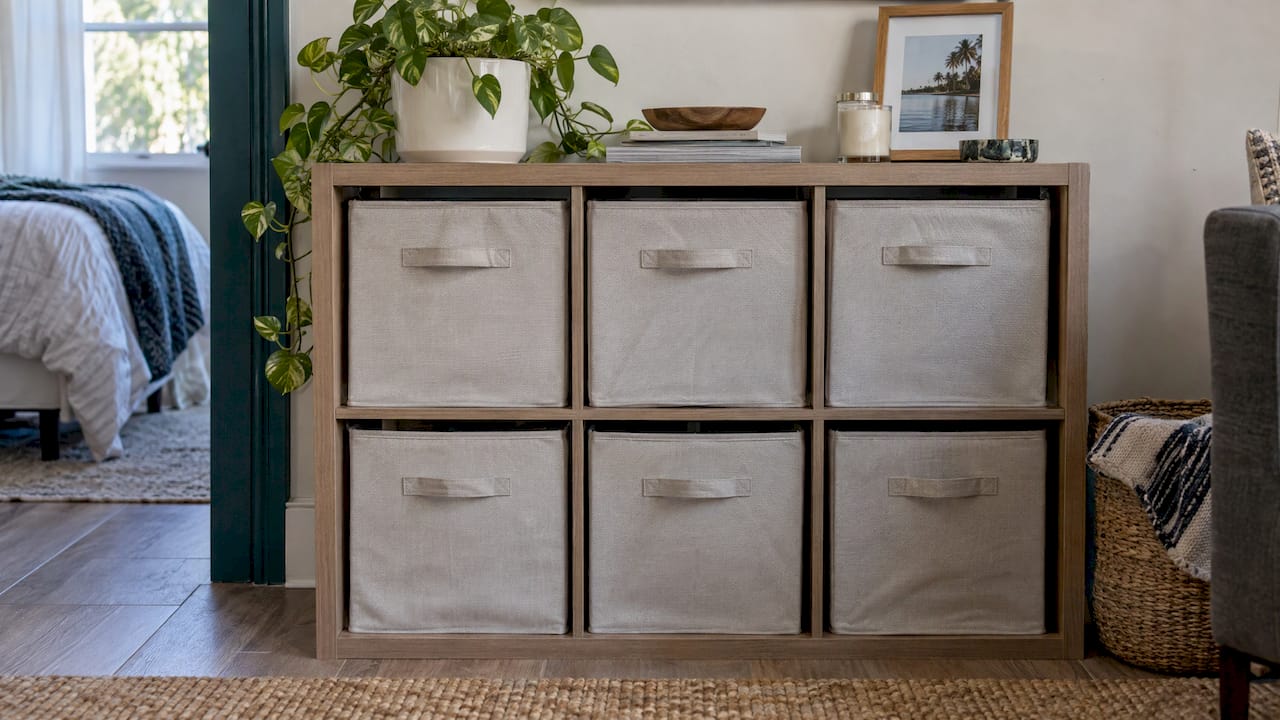
- Cube shelf with closed bins. A KALLAX 2×2 shelf at $49.99 with DRÖNA boxes at $4.99 each, per the same source, gives you shelving, a nightstand or room divider, and hidden storage in one footprint.
- Rolling cart. A VESKEN cart (7⅛ inches deep, $17.99) slides into narrow gaps, such as beside the fridge.
- Shallow wall-mounted shoe cabinet. The TRONES (7⅛ inches deep, $39.99) works in an entryway. Check lease rules before mounting.
- Ottoman, bench or coffee table with a lid. Small But Styled recommends these, and notes that hidden compartments work best when they’re easy to reach and sized for things you use regularly.
- Fold-out sleeper sofa. The Spruce lists this among compact dual-purpose pieces designers suggest.
Prices come from The Small Apartment’s October 2026 roundup, so check the retailer for today’s price.
Closed storage beats open shelves for clutter
Designer Oyin Antwi, quoted by The Spruce, advises cabinets over open shelving if you tend toward clutter. The goal is to keep as many items as possible out of sight so they don’t compete with your decor. A cube shelf with fabric bins gives you that look for under $100.
One rule from The Small Apartment is worth borrowing: skip anything that needs its own floor space and holds only one thing.
Think in zones
In a one-bedroom, the bedroom, living area and entry share the load. Daily items go within arm’s reach, such as a nightstand with a drawer, hooks by the door and a tray for keys. Seasonal items go high or low. Furniture used less often goes in the zone that is hardest to reach. A first-apartment checklist can help you prioritize what to buy first.
Storage for cat owners and students
Two groups have extra things to check.
Cat owners. Cats climb, so tall furniture needs anchoring. The U.S. Consumer Product Safety Commission recommends that consumers anchor dressers and other furniture securely to the wall, and reports 234 fatalities from clothing storage unit tip-overs between January 2000 and April 2022. Check your lease for what it permits on anchoring. For items you can’t anchor, choose low, wide pieces over tall, narrow ones. The Nest also recommends under-bed containers with smooth bases that won’t scratch flooring, and points to the CPSC’s guidance on anchoring top-heavy furniture and following manufacturer instructions.
A few habits make cat life easier:
- Use lidded bins or zippered bags for bedding, so fur and litter dust stay out.
- Keep closet doors closed, or use a cabinet with doors rather than open shelving.
- Give the litter box and food a low, dedicated spot so they don’t compete with your own storage.
If you’re still choosing a place, see our pages on pet-friendly one-bedroom apartments in Boca Raton and pet-friendly apartment features.
Students. Dorm-to-apartment moves often mean a lot of stuff and a short stay. Favor pieces that fold, stack or move easily: stackable bins, shelf risers, a rolling cart, a bench with a lid. The Nest’s renter-friendly ideas lean the same way: freestanding risers, stackable bins and under-bed containers. If you work from your bed or a small desk, our guide to work-from-home apartment ideas shows how to keep a workspace from taking over the room.
Storage beyond your door
Some things don’t belong in a one-bedroom at all: bikes, holiday decor, bulky sports gear. Ask the community about shared options before you pay for off-site storage. Here’s what to know about on-site storage lockers in apartments. Kitchens fill up fast too, so the small kitchen organization guide is worth a look.
For a wider set of habits, see our apartment organization tips and small apartment organization ideas.
Should you rent furniture instead of buying?
Furniture rental can suit a short-term stay, a first apartment or a semester when you don’t want to buy a full set. Apartment Therapy describes the usual process: you choose pieces, pick a lease term, possibly agree to a credit check and income verification, and schedule delivery. The trade-off for convenience is a higher total cost of ownership.
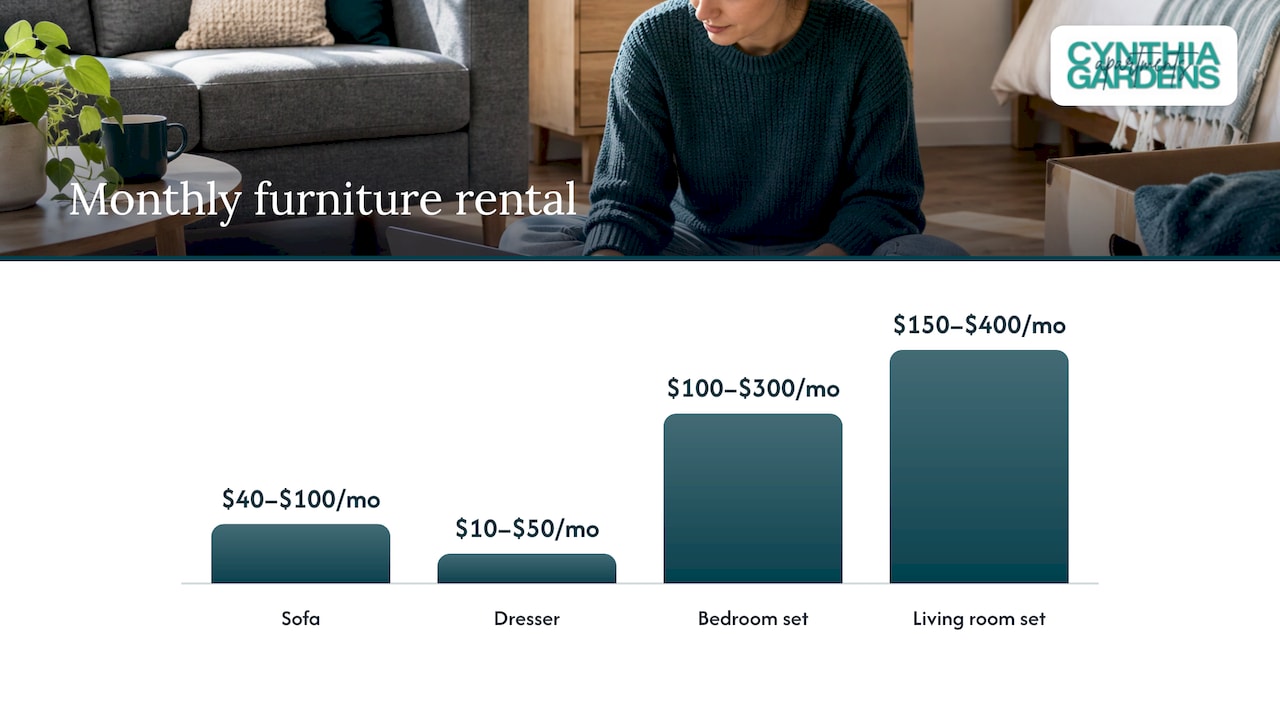
Forbes Home reported 2021 average monthly rental costs of $40 to $100 for a sofa, $10 to $50 for a dresser, $100 to $300 for a bedroom set and $150 to $400 for a living room set. It also warns that renting costs more in the long run than buying outright.
When you compare rental providers, line up the same five things:
- Monthly rate for the exact pieces you need, and the minimum term.
- Delivery and pickup fees, which often depend on your zip code.
- Damage waiver or protection plan costs.
- Pet terms, including cleaning fees at the end of the lease.
- What happens if you want to swap or buy pieces.
Rental pieces are usually standard sizes, so measure your doorway and bedroom before delivery. If you have a cat, ask what the provider charges for pet hair or damage before you sign.
Our community also offers short- or long-term furnished options, which can remove the furniture question entirely. Ask the leasing team what’s included.
Our take on small-space storage
Most storage problems in a one-bedroom start before move-in day. People measure the sofa and forget the bed clearance, or fall in love with a tall bookcase and then lose a wall. We tell prospective residents to walk through our virtual tour with a tape measure in mind: where does the bed go, how long is the closet wall, and where do shoes and a cat tree end up?
We built our one-bedroom apartments for young professionals, students and pet owners who want a clean, simple layout without surprises, and that applies to the lease too. Our published pricing has no hidden fees, and our cat-friendly policy has no ongoing pet rent, only a one-time fee. That means the money you save can go toward good under-bed bins, a cube shelf and a bench with a lid, instead of monthly add-ons.
Our advice is to buy storage in layers. Start with under-bed containers and a closed cube shelf. Add vertical pieces once you’ve lived in the space for a few weeks and know where the clutter collects. Same-day maintenance requests are part of how we run the community, so if a closet shelf or door needs attention, you don’t have to wait.
Ayman
The blockquote above gives our own view. The next section explains how to see the layouts for yourself.
See the layout before you buy a single bin
It’s much easier to plan storage when you know your actual closet and wall space. At Cynthia Gardens, one-bedroom apartments are listed at $1,990 to $2,220 per month. You can browse the one-bedroom apartments, take a virtual tour from your phone and use the interactive property map to find the right unit. The fees and policies page lists the published costs: a $75 non-refundable application fee per applicant, a $300 administration fee and a non-refundable pet fee of $300 to $500 per cat.
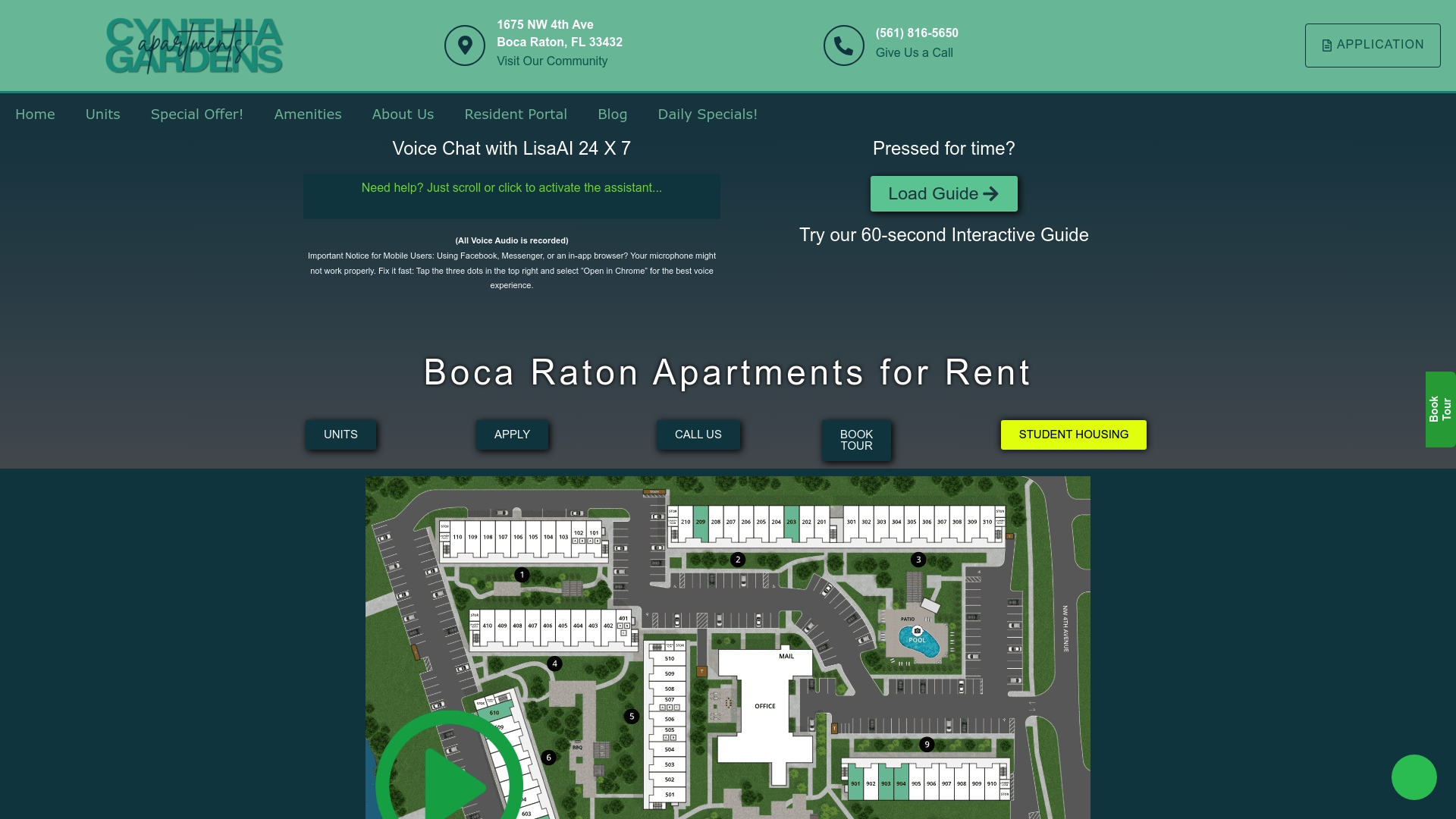
If you want to compare before you decide, see our Boca Raton one-bedroom guide or our page on virtual apartment tour benefits.
A simple weekend plan
You don’t need to do everything at once. Try this order:
- Saturday morning: measure bed clearance, closet depth and the empty wall beside the door. Write the numbers on your phone.
- Saturday afternoon: buy under-bed containers that match the clearance and move off-season items into them. Label them.
- Sunday morning: add a cube shelf with closed bins or a storage bench. Anchor it if it’s tall.
- Sunday afternoon: add an over-door organizer and a few removable hooks. Keep loads light.
- Next month: rotate what’s under the bed, vacuum around the containers and note what you still can’t place. That list tells you what to buy next.
For a tight budget, the under-bed cases, a cube shelf and a few boxes together come to roughly $100 using The Small Apartment’s prices above.
FAQ
What is the best storage idea for a one-bedroom apartment?
Under-bed storage is the strongest first move because the space is already empty and the containers are cheap. Add a closed cube shelf next, then use door backs and high shelves. Measure your bed clearance before buying so the containers fit.
How can renters add storage without drilling?
Use tension rods, over-door hooks, freestanding or leaning shelves, shelf risers, bed risers, rolling carts and removable adhesive hooks. Keep door-mounted loads light, and check your lease before mounting anything to walls. Tall furniture should still be anchored according to the manufacturer’s instructions where your lease allows it.
Will under-bed storage get dusty or attract pets?
Under-bed areas do collect more dust than open shelves. Use containers with sealed lids or zippers, vacuum around them monthly and rotate contents every 3 to 6 months. With cats, zippered fabric bags and lidded bins keep fur and curiosity out.
Is renting furniture cheaper than buying?
Usually not over the long run. Forbes Home reports that renting costs more than buying outright, though it can make sense for a short stay. Compare monthly rates, delivery fees, damage waivers and pet terms before you sign.
Sources
- Best Storage Solutions for Small Apartments, The Small Apartment
- How to Organize a One-Bedroom Apartment, Redfin
- Small space hacks for renters, NBC Select
- 7 Tips to Style One-Bedroom Apartments Affordably, The Spruce
- Small Apartment Storage Ideas That Actually Work, Hire a Helper
- 7 Renter-Friendly DIY Ideas for Small Apartments, The Nest
- Under-Bed Storage Ideas for Small Bedrooms, Koala
- Under-Bed Storage Containers with Lid, 10 inch, STORAGEWORKS
- How to Set Up Under Bed Storage That Stays Organized, Clutterless Nest
- 25 One Bedroom Apartment Ideas to Maximize Every Inch, Small But Styled
- How to Rent Furniture, Apartment Therapy
- Furniture Rental Services: What You Need To Know, Forbes Home
- CPSC final standard on clothing storage unit tip-overs