
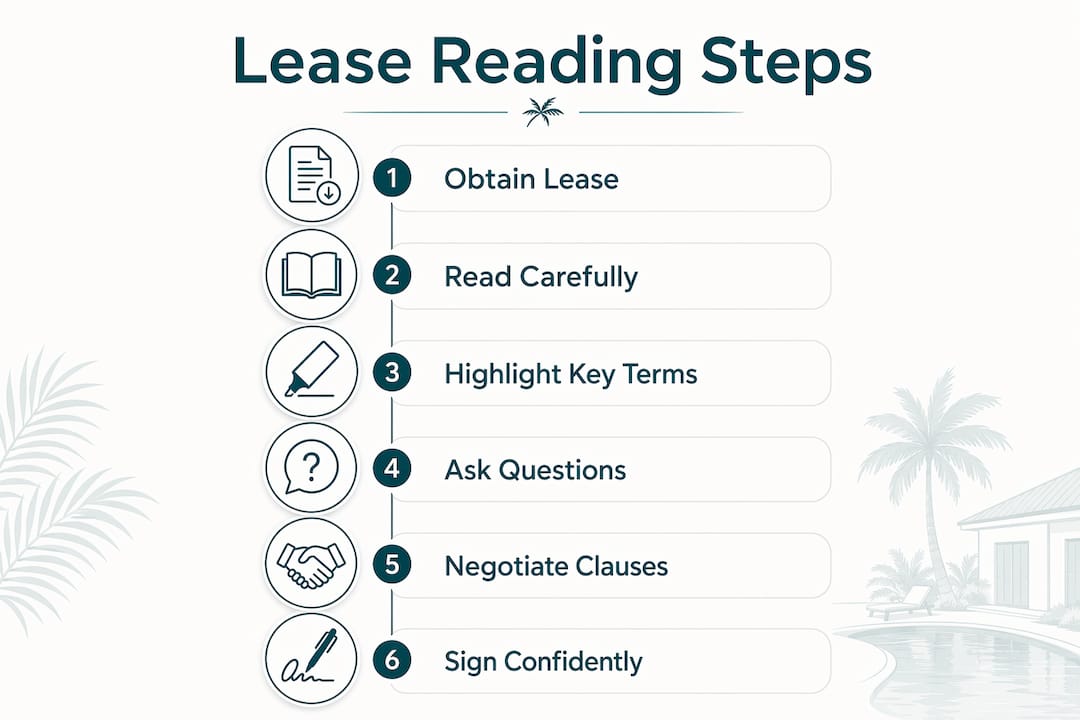
Most tenants sign a lease without reading past the rent amount and move-in date. That’s how people end up locked into auto-renewals they didn’t want, hit with fees they never expected, or stuck arguing over a security deposit with no written backup. Knowing how to read a lease agreement carefully, before you sign anything, is the single most reliable way to protect yourself.
Here’s what to look for every time you open a rental contract:
- Lease start and end dates — confirm the exact termination date and whether the lease converts to month-to-month or auto-renews
- Rent amount, due date, and grace period — note the exact dollar amount, when it’s due, and how many days you have before a late fee kicks in
- Security deposit — the amount, what it covers, and the timeline for return after move-out
- Late fees — the specific amount or percentage, and whether fees compound
- Renewal and notice requirements — how many days’ notice you must give to end or renew the lease
- Maintenance and repair duties — what the landlord handles versus what falls on you
- Landlord entry rights — required notice before entry and any exceptions
- Pet policy — whether pets are allowed, breed or weight restrictions, pet deposits, and monthly pet rent
- Subletting rules — whether you can sublet and under what conditions
- Guest policy — how long guests may stay before they’re considered unauthorized occupants
- Occupancy limits — maximum number of people allowed in the unit
- Fixtures and remodeling — what you can and cannot alter, paint, or install
- HOA or association rules — whether community rules apply and who enforces them
- Utilities and fees — which utilities you pay, and any recurring charges beyond base rent
- Renters insurance — whether it’s required and the minimum coverage amount
- Dispute resolution — whether the lease requires arbitration or mediation instead of court
How to read a lease agreement clause by clause
A lease is a legal contract, and every clause carries weight. Reading it section by section, rather than skimming for the highlights, is the only way to catch the terms that actually affect your daily life and your wallet.
Termination date and renewal options
The lease end date tells you when your tenancy officially expires, but the renewal clause tells you what happens next. Auto-renewal clauses with a multi-week notice requirement can legally lock you into another full term if you miss the opt-out window. Set a calendar reminder the day you sign. Look for language like “automatically renews unless written notice is provided” and note the exact number of days required.
Security deposit terms
Many states cap security deposits at a limit around one to two months’ rent and require landlords to return the deposit within a defined timeframe after move-out, with an itemized list of any deductions. The lease should specify what qualifies as a deductible damage versus normal wear and tear. Vague language like “any damage beyond normal use” without definition is a problem worth flagging before you sign.

Rent payment terms and late fees
Look for the exact due date, accepted payment methods, and the grace period. Some leases allow five days before a late fee applies; others charge immediately on the second of the month. Late fees must comply with state law, and excessive or compounding charges are often unenforceable. If the lease includes a specific fee amount and daily charge, ask your landlord to clarify whether that’s legal in your state before signing.
Rent escalation clauses
Some leases include a clause allowing the landlord to raise rent mid-term or at renewal by a fixed percentage. Read this carefully. An annual escalation percentage on rent can add a notable increase at renewal, which compounds over a multi-year stay. If the lease is silent on escalation, ask whether one applies and get the answer in writing.
Maintenance and repair responsibilities
| Responsibility | Typically Landlord | Typically Tenant |
|---|---|---|
| HVAC system repairs | Yes | Filter replacement |
| Plumbing leaks | Yes | Clogged drains from misuse |
| Appliance repairs (landlord-owned) | Yes | No |
| Pest control | Yes (initial) | Yes (ongoing in some states) |
| Lawn and landscaping | Varies | Varies |
| Light bulb replacement | No | Yes |
| Damage from tenant negligence | No | Yes |

Leases often require renters to handle minor maintenance and report issues promptly. The key question is whether the lease shifts major repair obligations onto you, which is a red flag covered in the next section.
Landlord entry rights
Almost every state requires landlords to give prior notice before entering your unit, typically at least a day, except in genuine emergencies. Your lease should spell out the required notice period and the permitted reasons for entry, such as repairs, inspections, or showing the unit to prospective tenants. Any clause claiming the landlord may enter “at any time” or “without prior notice” conflicts with tenant privacy laws in most states.
Fixtures, remodeling, and HOA rules
Most leases prohibit painting walls, installing shelving, or making any structural changes without written permission. If you plan to hang artwork, mount a TV, or change anything about the unit, get explicit written approval before you start. If the property sits within a homeowners association, the lease should reference the HOA rules, and you should request a copy of those rules before signing since they govern noise, parking, common areas, and more.
Occupancy limits and guest policy
Occupancy limits define how many people may live in the unit. Guest policies go a step further, capping how long visitors may stay, often for a few weeks or less, before they’re considered unauthorized occupants. Exceeding either limit can constitute a lease violation, so read both clauses carefully if you expect regular visitors or a roommate situation.
Subletting restrictions
Most residential leases either prohibit subletting outright or require written landlord approval. Subletting without permission is typically grounds for eviction. If you think you might need to sublet, ask the landlord to include a subletting clause with clear conditions before you sign, rather than assuming it’s allowed.
Pet policy
Pet policies vary widely. Some leases allow pets with a refundable pet deposit; others charge monthly pet rent on top of the deposit. Breed and weight restrictions are common, particularly in communities with insurance requirements. Get the full pet policy in writing, including the deposit amount, monthly fees, and any restrictions, before bringing an animal home.
Utilities, fees, and total monthly cost
Calculating all recurring fees beyond base rent reveals your true monthly cost. A lease might list a base rent but add various fees for trash, parking, amenity access, and pest control, increasing your monthly cost before utilities. List every line item the lease mentions and add them up before you decide whether the apartment fits your budget.
| Fee Type | Example Monthly Amount | Notes |
|---|---|---|
| Base rent | — | Fixed for lease term |
| Parking | — | May be optional |
| Pet rent | — | Per pet, per month |
| Trash/valet | — | Often mandatory |
| Amenity fee | — | Pool, gym access |
| Renters insurance | a monthly charge | Required by many landlords |
Renters insurance requirements
Many landlords now require renters insurance as a lease condition, specifying a minimum liability coverage amount. The lease should state the required coverage level and whether you must name the landlord as an additional interested party on the policy. If the lease requires it but doesn’t specify an amount, ask before signing.
Dispute resolution
Some leases include a mandatory arbitration clause, which means you agree to resolve disputes through a private arbitrator rather than in court. This isn’t automatically bad, but it does limit your options if a serious conflict arises. Know whether your lease includes this clause and what it requires before you’re in a situation where it matters.
What to watch for: tenant responsibilities, red flags, and how to negotiate
Understanding lease terms is half the job. The other half is recognizing when a clause crosses a line, and knowing you have the right to push back.
Your core responsibilities as a tenant
- Pay rent on time and in the method specified in the lease
- Keep the unit clean and report maintenance issues promptly
- Avoid damage beyond normal wear and tear
- Comply with HOA or community rules referenced in the lease
- Maintain renters insurance if required
- Give proper written notice before vacating, per the lease’s required timeline
- Obtain written approval before subletting, making alterations, or adding occupants
If you’re signing with roommates, pay close attention to joint-and-several liability. Under this clause, each tenant is legally responsible for the full rent and any damages, not just their individual share. If your roommate stops paying, the landlord can pursue you for the entire amount.
Red-flag clauses to question before signing
Confession of judgment, exculpatory clauses, and habitability waivers are among the most serious red flags in any residential lease. A confession of judgment lets a landlord obtain a court judgment against you without a hearing. An exculpatory clause attempts to release the landlord from liability for negligence. A habitability waiver tries to make you responsible for keeping the unit livable, which is a landlord obligation under law in every state.
Other clauses worth questioning:
- Non-refundable fees disguised as deposits — if a fee is labeled a “deposit” but the lease says it’s non-refundable, that’s a contradiction worth clarifying
- Excessive late charges — compounding daily fees or charges above state-mandated caps are often unenforceable
- Broad landlord entry rights — any clause allowing entry without notice signals a disregard for your privacy rights
- Auto-renewal traps — a 90-day notice window to opt out of renewal is unusually long and easy to miss
- Vague maintenance language — clauses that shift repair obligations to the tenant without clear limits can expose you to unexpected costs
Landlord entry clauses claiming unrestricted access are unenforceable in virtually every state, but their presence in a lease tells you something about how the landlord operates. A one-sided contract is often a preview of a one-sided landlord relationship.
How to negotiate and verify before signing
Leases are negotiable documents. You can ask for clarification on vague terms like “reasonable wear and tear” or “quiet enjoyment,” request changes to clauses you find unfair, and ask for addenda that document specific agreements like reserved parking or approved modifications. The landlord may say no, but asking costs nothing.
Verbal promises don’t bind unless they’re written into the lease or a signed addendum. If a landlord tells you verbally that pets are fine, parking is included, or a repair will be made before move-in, get it in writing before you sign. A promise that isn’t in the document doesn’t exist legally.
Having a fully executed copy of the lease, with the landlord’s signature, all pages, and any addenda, is your primary protection if a dispute arises later. Number the pages, initial each one, and keep a digital copy somewhere you can access it easily.
Pro Tip: Never sign a lease under pressure or time constraints. A landlord who insists you sign immediately, without time to read, is a red flag in itself. Take at least 24 hours to review the full document, and consider having a tenant rights organization or attorney review any clause you don’t understand.
For a deeper look at lease agreement basics and how specific clauses work, it helps to review a plain-language breakdown before you sit down with the actual document.
Cynthiagardens makes lease transparency the starting point
Signing a lease shouldn’t feel like defusing a bomb. At Cynthiagardens, a modern apartment community in Boca Raton, Florida, the leasing process is built around clarity from the first conversation.
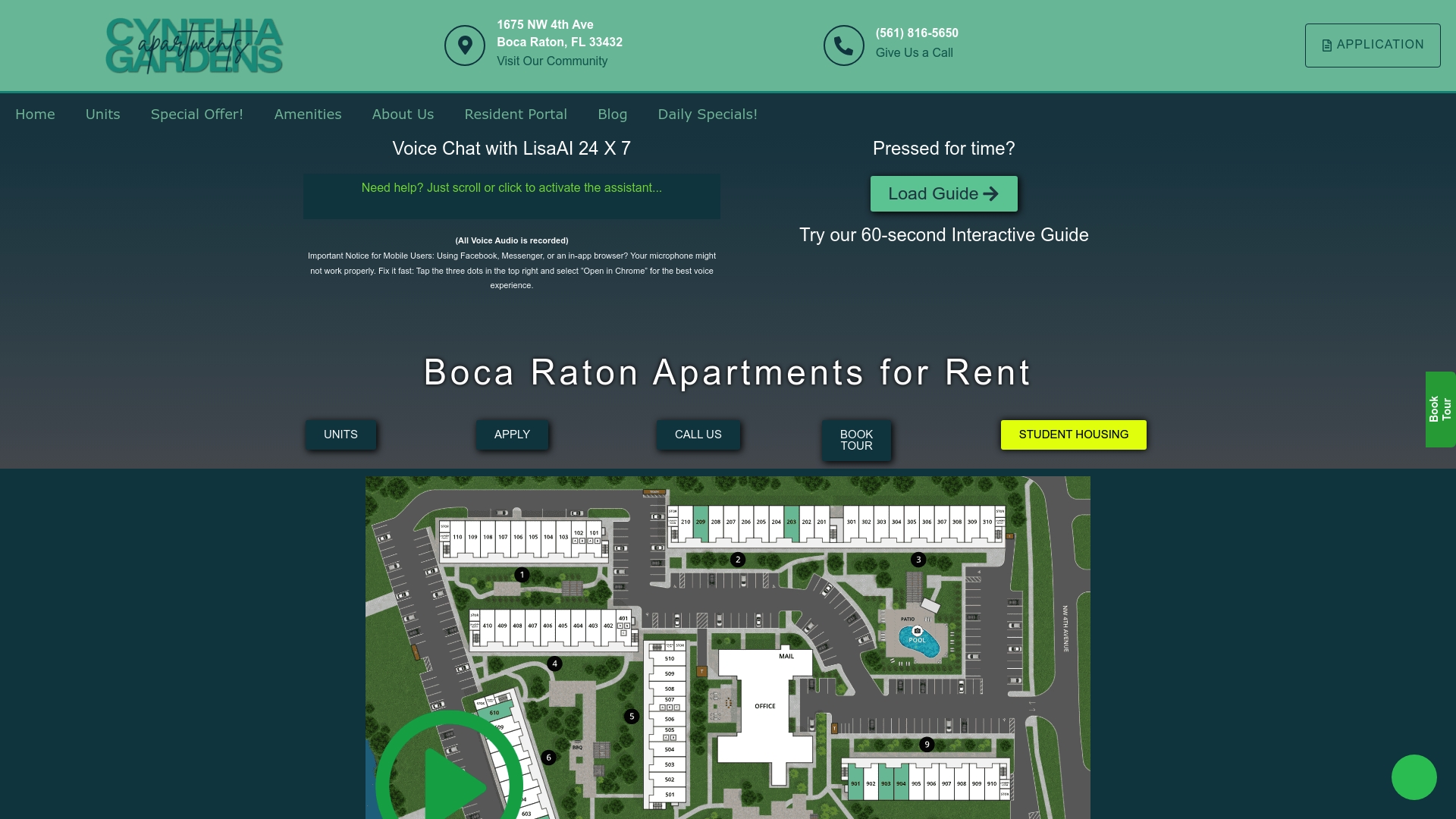
Every lease at Cynthiagardens comes with transparent pricing and no hidden fees, so the number you see is the number you pay. The community’s pet-friendly apartments in Boca Raton include clear, written pet policies with no surprise charges buried in the fine print. AI chat support and virtual tours let you review the apartment and ask questions on your schedule, before you ever pick up a pen. For young professionals, students, and pet owners who want a lease they can actually understand, Cynthiagardens offers a leasing experience built around your confidence, not the landlord’s convenience. Browse available apartments and see what transparent renting looks like in practice.
Key Takeaways
Reading a lease carefully before signing is the most reliable way to avoid costly surprises, protect your deposit, and understand your rights as a tenant.
| Point | Details |
|---|---|
| Auto-renewal notice windows | Leases with extended opt-out requirements can lock you in for another full term if you miss the deadline. |
| Security deposit protections | Most states cap deposits at one to two months’ rent and require itemized returns within a set timeframe. |
| True monthly cost | Add every recurring fee beyond base rent, including parking, pet rent, and amenity charges, to find your real monthly commitment. |
| Red-flag clauses | Confession of judgment, habitability waivers, and unrestricted entry clauses are often unenforceable but signal a one-sided landlord. |
| Cynthiagardens | Offers transparent lease terms, clear pet policies, and AI-assisted leasing support for renters in Boca Raton who want no surprises. |
Recommended
- Apartment Lease Agreement Form A Clear Guide – Luxury Apartments for Rent in Boca Raton | Premium Boca Raton Apartments | Aapartments Boca Raton
- A Lease Agreement Explained Simply – Luxury Apartments for Rent in Boca Raton | Premium Boca Raton Apartments | Aapartments Boca Raton
- How to Understand Rental Agreements: 2026 Guide
- The Role of Transparent Lease Agreements for Renters