TL;DR:
- Removing toxic plants, securing windows, and covering electrical cords are essential early steps for safe apartment cat-proofing. Enrichment through vertical spaces and safe rooms prevents boredom and reduces the risk of escape or injury. Deposit-safe methods and careful planning before move-in help protect your security deposit while keeping your cat safe.
Cat-proofing an apartment means removing hazards, securing escape routes, and building an environment where your cat can thrive safely. The process covers toxic plants like lilies and pothos, unsecured windows, exposed electrical cords, and open balconies. A thorough room-by-room audit takes about 2–4 hours and cuts your cat’s risk exposure dramatically. For renters, the challenge is doing all of this without drilling holes, damaging walls, or losing your security deposit. These cat-proofing apartment tips address every layer of that challenge.
1. The most critical cat-proofing apartment tips to start with
The fastest way to reduce risk is to tackle the three biggest hazards first: toxic plants, electrical cords, and unsecured windows. Lilies, pothos, and philodendron are critically toxic to cats and must leave your apartment before your cat arrives. Cord ingestion is a real danger too. Cats chew cords out of boredom or stress, so covering them with cable sleeves or cord channels removes both the temptation and the risk.
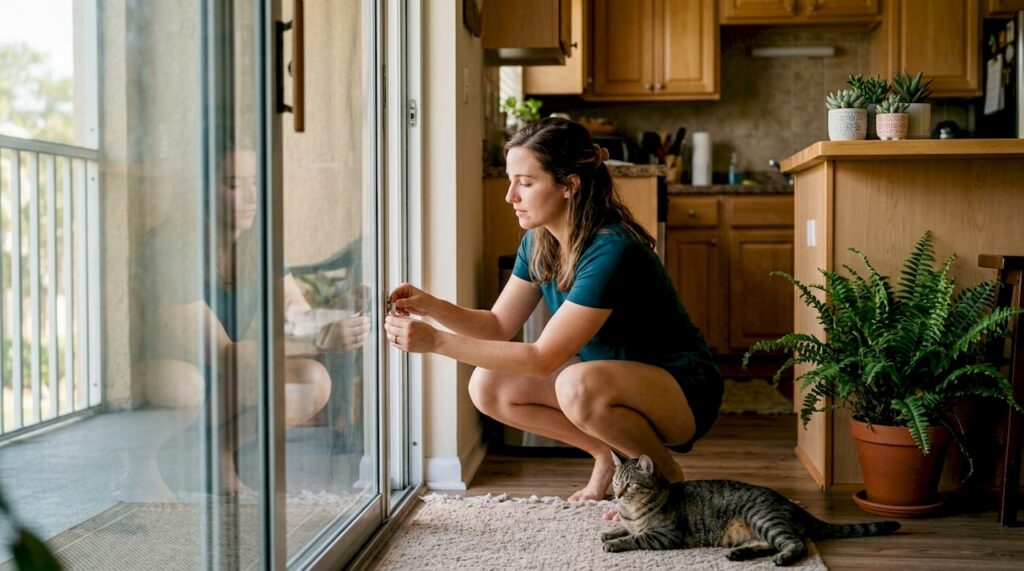
Window security is non-negotiable. Standard fiberglass mesh screens fail under a cat’s weight and clawing. Replace them with pet-resistant screens made of vinyl-coated polyester, or add window stops that limit openings to 2 inches or less. Balconies need netting or safety barriers to block gaps. Magnetic or adhesive childproof cabinet latches protect cleaning supplies and medications, and take about 20 minutes per room to install without drilling.
- Remove all toxic plants before your cat enters the apartment
- Cover exposed cords with cable sleeves or self-adhesive cord channels
- Replace standard window screens with pet-rated vinyl-coated polyester screens
- Add window stops to limit openings to 2 inches or less
- Install adhesive or magnetic cabinet latches on any cabinet holding chemicals or medications
- Block balcony gaps with netting or a purpose-built safety barrier
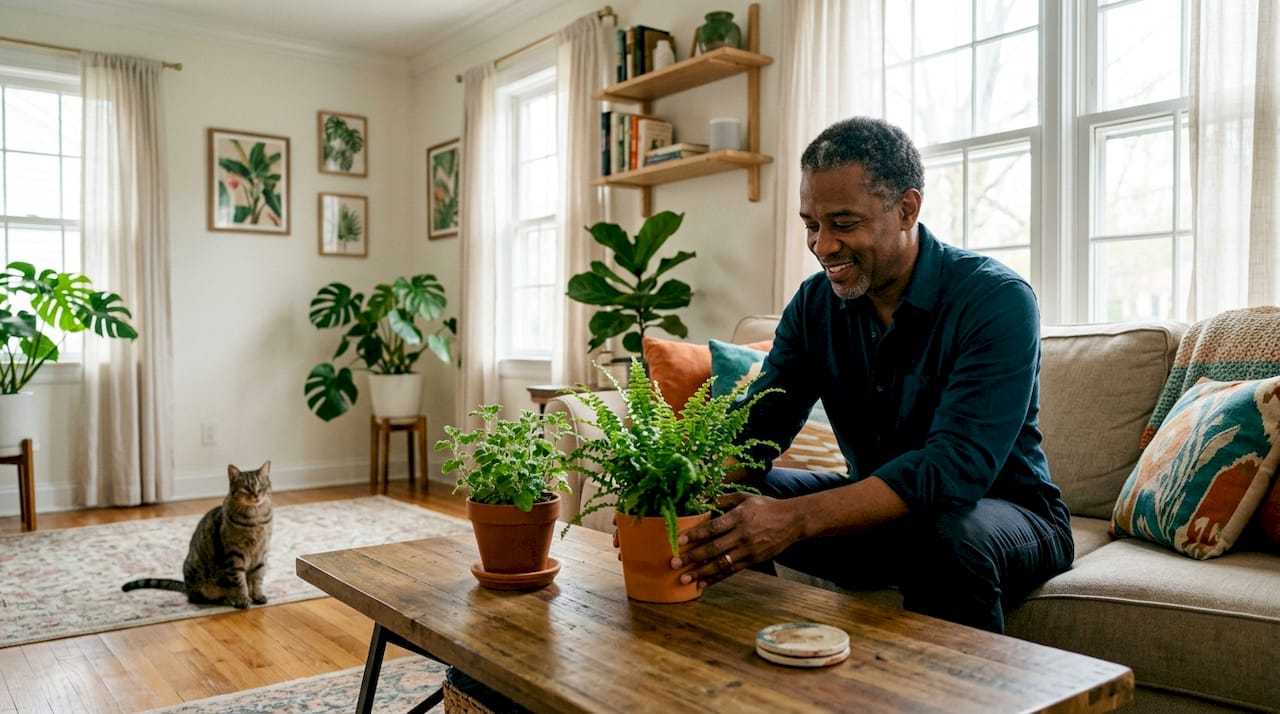
Pro Tip: Swap toxic houseplants for cat-safe alternatives like spider plants, Boston ferns, or catnip. Your apartment stays green, and your cat stays safe.
2. How to enrich vertical and confined spaces for apartment cats
Safety measures alone do not make an apartment livable for a cat. Cats in apartments need vertical space and environmental enrichment equal to physical safety measures for their behavioral health. A bored cat scratches walls, chews cords, and develops anxiety. The solution is building a stimulating environment within your square footage.
Cat trees and floor-to-ceiling tension poles give cats the climbing outlets they need without any wall damage. Freestanding scratching posts protect your baseboards and furniture. Puzzle feeders slow eating and keep your cat mentally active between play sessions. Place the litter box in a low-traffic corner with enough privacy that your cat uses it consistently. Odor control matters for your neighbors and your lease, so scoop daily and use a quality litter.
- Install tension-mounted or freestanding cat trees that require no drilling
- Add puzzle feeders and rotating interactive toys to reduce boredom
- Place scratching posts near furniture your cat already targets
- Set the litter box in a private, ventilated corner and scoop daily
- Use a dedicated safe room for a new cat’s first days to reduce stress and verify hazard removal
Pro Tip: A window perch with a secured pet-rated screen gives your cat hours of visual stimulation. Birds, squirrels, and passing people count as enrichment. It costs less than most cat trees and uses zero floor space.
3. Renter-safe methods that protect your security deposit
Renters face a constraint that homeowners do not: every modification must be reversible. The good news is that the best cat-proofing methods for apartments are already deposit-safe. Adhesive cabinet locks, tension-mounted furniture, and removable cord channels leave no marks when removed correctly.
Before you install anything, photograph every wall, baseboard, window screen, and carpet with dated photos. This documents pre-existing conditions and protects you if your landlord disputes damage at move-out. Use only adhesive products rated for the surface you are applying them to, and follow the removal instructions exactly.
- Take dated photos of every room before any modifications
- Use adhesive childproof cabinet locks instead of drilled hardware
- Apply self-adhesive cord channels along baseboards to manage wiring
- Choose tension-mounted cat furniture over wall-anchored shelving
- Install baby gates rated for cats using pressure mounts, not screws
- Clean litter areas and cat zones weekly to prevent odor complaints from neighbors
- Remove all adhesive products according to manufacturer instructions before move-out
Tension-mounted cat furniture and freestanding scratching posts combine safety with lease-friendly installation. They avoid holes and paint damage entirely. If you are unsure whether a modification is allowed, check your lease or ask your property manager before installing anything permanent.
4. How to prevent escapes around doors, windows, and balconies
Escape prevention is one of the most overlooked parts of apartment pet-proofing. Cats dart fast, and a door opened for two seconds is enough. The two-step entry habit closes the outer hallway door before opening your apartment door, creating a buffer zone that stops a cat from reaching the corridor.
High-rise syndrome is a documented risk for apartment cats. Even low-level falls cause severe injuries. Securing windows and balconies is mandatory regardless of which floor you live on. Never assume a cat will not jump or lean against a screen.
- Practice the two-step entry habit every time you enter or leave
- Install pet-proof window screens made of vinyl-coated polyester on every operable window
- Use window stops to limit all openings to 2 inches or less
- Apply balcony netting or build a catio enclosure to secure outdoor access
- Never leave your cat unsupervised on a balcony, even with netting installed
- Educate every person in your household on these habits before your cat arrives
The weakest link in escape prevention is usually human behavior, not hardware. One household member who skips the two-step entry habit can undo every physical safeguard you installed. Make the habit non-negotiable from day one.
5. Setting up a safe room before your cat arrives
A safe room for a new cat reduces stress and lets you verify hazard removal in a controlled space before giving full apartment access. Choose a single room, ideally a bedroom or bathroom, and outfit it with the litter box, food, water, a scratching post, and at least one hiding spot. Check every inch of that room for hazards before your cat enters.
Staged access is the professional standard for introducing cats to new spaces. Start with the safe room for the first few days. Once your cat is calm and eating normally, open one additional room at a time. This approach prevents the anxiety that comes from too much space too soon, and it gives you time to spot hazards you missed during your initial audit.
The safe room also serves as a reset space. If your cat shows signs of stress after a change in the apartment, such as new furniture, a guest, or a loud event, returning to the safe room for a few hours restores calm faster than any other method.
6. Managing common apartment hazards beyond the obvious
Most cat-proofing guides stop at plants, cords, and windows. The less obvious hazards cause just as many problems. Washing machines and dryers attract cats looking for warm, dark spaces. Always check inside before running a cycle. Recliner chairs and sofa beds have mechanisms that can trap or injure a cat. Operate them carefully and check underneath before use.
Plastic bags, rubber bands, and small hair ties are swallowing hazards. Store them in closed drawers or containers. Candles and essential oil diffusers present inhalation and burn risks. Many essential oils, including tea tree, eucalyptus, and peppermint, are toxic to cats even in diffused form. Swap them for unscented options or cat-safe alternatives.
The kitchen is the highest-risk room in most apartments. The stove, oven, and refrigerator coils are all burn or entrapment hazards. Keep your cat out of the kitchen while cooking, and use a baby gate if needed. A cat that learns the kitchen is off-limits during meal prep is a safer cat long-term.
7. Choosing the right apartment for a cat before you sign
The best cat-proofing starts before you move in. Some apartments are structurally easier to secure than others. Look for pet-friendly apartment features like secure balcony railings, operable windows with existing screens, and hard-surface flooring that is easier to clean than carpet. A building that already allows pets is more likely to have management familiar with reasonable modification requests.
When touring an apartment, check window screen quality, balcony gap sizes, and cabinet hardware. Ask whether you can install tension-mounted furniture and adhesive locks. Use a pet owner apartment checklist to evaluate each unit systematically before signing. Choosing the right unit upfront reduces the amount of proofing work you need to do after move-in.
Key Takeaways
Cat-proofing an apartment requires removing toxic plants, securing windows and balconies with pet-rated hardware, using deposit-safe adhesive solutions, and providing vertical enrichment to keep your cat behaviorally healthy.
| Point | Details |
|---|---|
| Remove toxic plants first | Lilies, pothos, and philodendron must leave before your cat arrives. |
| Use pet-rated window screens | Standard fiberglass mesh fails under cat pressure; vinyl-coated polyester holds. |
| Protect your deposit | Adhesive locks and tension-mounted furniture leave no damage when removed correctly. |
| Practice the two-step entry | Close the outer door before opening your apartment door to prevent escapes. |
| Start with a safe room | Confine a new cat to one verified room, then expand access gradually. |
What I’ve learned about cat-proofing apartments that most guides skip
Most cat-proofing articles treat safety and enrichment as separate projects. They are not. A cat that is bored will find the one hazard you missed. I have seen this pattern repeatedly: an owner removes every toxic plant, covers every cord, and installs window stops, then wonders why their cat is still chewing on the blinds or scratching the door frame. The answer is almost always insufficient enrichment, not insufficient proofing.
The other thing most guides understate is the importance of doing this work before the cat arrives. Retrofitting a space while a stressed new cat is already in it is harder, slower, and less thorough. The two-hour audit done before move-in is worth more than a week of reactive fixes after something goes wrong.
Renters have a real advantage here that they rarely use. Because you cannot make permanent changes, you are forced toward the best solutions anyway: tension-mounted furniture, adhesive hardware, removable cord channels. These products have improved significantly. The deposit-safe approach is now genuinely effective, not a compromise.
My strongest recommendation is to observe your cat for the first two weeks and let their behavior tell you what you missed. A cat that fixates on a specific cabinet, window, or corner is giving you information. Respond to it. Cat-proofing is not a one-time task. It is an ongoing read of your cat’s environment and behavior.
— Ayman
Cat-friendly living at Cynthiagardens in Boca Raton
Finding an apartment that supports cat safety from the start saves you significant time and money on proofing work. Cynthiagardens in Boca Raton offers pet-friendly one-bedroom apartments designed with pet owners in mind, including features that make the cat-proofing process more manageable from day one.

Cynthiagardens welcomes cats and provides a leasing experience built for renters who want transparency and no hidden fees. Virtual tours let you evaluate window placements, balcony access, and floor plans before you visit in person. If you are searching for a pet-friendly apartment complex in Boca that fits your budget and your cat’s needs, Cynthiagardens is worth a close look.
FAQ
What are the first steps to cat-proof an apartment?
Remove all toxic plants, cover exposed electrical cords with cable sleeves, and replace standard window screens with pet-rated vinyl-coated polyester screens. A room-by-room safety audit takes about 2–4 hours and addresses the highest-risk hazards first.
How do I cat-proof my apartment without losing my security deposit?
Use adhesive childproof cabinet locks, tension-mounted cat furniture, and removable cord channels. Document move-in conditions with dated photos of every room before making any changes.
Are balconies safe for cats in apartments?
Balconies are not safe without physical barriers. High-rise syndrome causes severe injuries even from low floors. Install balcony netting or a catio enclosure, and never leave your cat unsupervised outside.
What is a safe room and why does my cat need one?
A safe room is a single, fully verified room where a new cat stays during the first few days in an apartment. It contains food, water, a litter box, and a scratching post, and reduces stress while you confirm the rest of the apartment is hazard-free.
How do I stop my cat from escaping through the front door?
Use the two-step entry habit: close the outer hallway door before opening your apartment door. This behavioral method creates a buffer zone and is the most reliable way to prevent door-darting in apartment settings.