
Table of Contents
- Mistake 1: Skipping Budget Planning and Underestimating Hidden Costs
- Mistake 2: Neglecting the Lease Agreement and Key Terms
- Mistake 3: How to Spot Rental Scams and Verify Legitimacy
- Mistake 4: Insufficient Due Diligence During Property Tours
- Mistake 5: Skipping Background Checks and Rental Documentation
- Your Apartment Rental Checklist: A Complete Guide
- How to Avoid These 5 Common Apartment Hunting Mistakes
- Conclusion: Your Path to a Confident Rental Decision
Last Updated: July 5, 2026
Apartment hunting can feel overwhelming, especially in competitive markets like Boca Raton. Understanding the 5 common apartment hunting mistakes to avoid will help you make confident decisions and sidestep costly errors. This guide walks you through each mistake and shows you exactly how to avoid it.
Mistake 1: Skipping Budget Planning and Underestimating Hidden Costs
The most expensive apartment isn’t always the one with the highest monthly rent. Many renters focus exclusively on rent and overlook secondary costs: security deposits, application fees, parking charges, pet deposits, and utilities that can easily add hundreds of dollars monthly.
How to Set a Realistic Budget
Start by calculating your total monthly housing budget using the 30% rule: rent should not exceed 30% of your gross monthly income. If you earn $4,000 per month, your maximum rent should be around $1,200. However, this applies only to rent itself, not total housing costs.
Document all potential expenses beyond rent: security deposit (typically one month’s rent), application fees, first and last month’s rent, utility deposits, renters insurance ($10-20/month), parking fees, pet deposits, and internet. Most renters need to budget for security deposit plus first and last month’s rent upfront, three months’ worth of rental costs. If targeting a $1,200 apartment, have at least $3,600 available before signing.
Use a spreadsheet to track all costs. Request a complete cost breakdown in writing from the property manager to prevent surprises like utility deposits, parking charges, or amenity fees buried in lease addendums.
Understanding Hidden Fees and Lease Terms
Review the lease for these common hidden charges: amenity fees (gym, pool, community center), parking fees ($25-150/month), utility deposits, early termination fees, renewal fees, and late payment fees. In Boca Raton’s competitive market, properties near FAU or the beach may charge premium amenity fees. Ask whether amenities are mandatory or optional.
Document everything in writing. Request an itemized list of all fees before signing. If a property refuses to provide complete fee breakdown, that’s a red flag.
Mistake 2: Neglecting the Lease Agreement and Key Terms
A lease agreement is a legally binding contract governing your rights, responsibilities, and financial obligations. Skipping this step can trap you in unfavorable terms or situations where you have limited recourse.
Critical Clauses to Review Before Signing
Read the entire lease word-for-word. Pay special attention to: lease term and renewal (confirm duration and auto-renewal policies), rent increase provisions (whether rent increases during the lease term), security deposit terms (Florida law requires return within 15 days of move-out, minus legitimate damage deductions), pet policy (breed restrictions, size limits, deposits), maintenance responsibilities, subletting and lease assignment rules, early termination penalties, and noise/conduct policies.
Negotiation Tactics for Better Lease Terms
Most renters don’t realize lease terms are often negotiable. Landlords are motivated to fill units, especially in competitive markets. If you have good credit, stable income, and professional references, you have leverage.
Identify which terms matter most to you. Request modifications in writing before signing. You can realistically negotiate: rent amount (if the unit has been vacant or similar units list lower), security deposit (request reduction or flexible payment terms), lease term (propose shorter lease if uncertain), pet policy, maintenance responsibilities, move-in date, and renewal terms (ask for rent increase caps).
Be professional and collaborative. Many properties will compromise on 1-2 terms to secure a reliable tenant. Have the landlord initial any handwritten modifications, verbal agreements don’t hold up legally.
Mistake 3: How to Spot Rental Scams and Verify Legitimacy
Rental scams have become increasingly sophisticated. Scammers pose as landlords, list fake properties, and collect deposits from multiple victims. Protecting yourself requires verification at every stage.
Red Flags in Rental Listings and Communications
Pricing red flags: Rent significantly below market rate, pressure to decide immediately, requests for payment via wire transfer or cryptocurrency, and requests for deposits before signing a lease.
Listing red flags: Only one or two low-quality photos, vague property descriptions without specific addresses, poor grammar in emails, requests to communicate outside official platforms, claims the landlord is out of the country, and pressure to move quickly.
Property verification red flags: The address doesn’t exist or doesn’t match photos, public property records show different ownership, the property is listed for sale, or you can’t reach the landlord through the official platform.
To verify legitimacy: Check public records on the county assessor’s website, visit the property in person (never rent without viewing), verify contact information through the official website, rent through established platforms like Zillow or Apartments.com, and research the landlord online.
Never send money before signing a lease and receiving keys. Legitimate landlords require a signed lease agreement before accepting deposits.
Digital Security and Privacy During the Rental Process
Only submit applications through secure, encrypted websites (look for "https://"). Avoid emailing sensitive documents; use the rental platform’s secure upload feature. Don’t include your full Social Security number in emails. Verify the recipient’s email matches the official property website.
Use unique passwords for each rental platform and enable two-factor authentication. Monitor your credit report for unauthorized inquiries. Be cautious of landlords asking for unusual payment methods. If you suspect fraud, contact the FTC’s fraud reporting system.
Mistake 4: Insufficient Due Diligence During Property Tours
A thorough property tour uncovers maintenance issues, noise problems, and other concerns that photos can’t reveal. Arrive with a prepared list of questions.
Questions to Ask When Viewing an Apartment
Building questions: Building age and renovation history, included utilities, trash/recycling handling, noise levels, ongoing construction, parking situation, maintenance response time, security measures, and management responsiveness.
Unit questions: Last renovation date, included appliances, in-unit laundry availability, heating/cooling control, water pressure, known issues, tenant-paid utilities, storage space, and cell phone reception.
Neighborhood questions: Commute time, street parking, nearby services, safety and crime rates, parks and recreational facilities, and public transportation.
Lease questions: Current rent and last year’s rent, notice required for increases, pet policy, quiet hours, early lease break options, and maintenance response time.
Take notes and bring a checklist. This shows you’re serious and helps you remember details.
Inspecting for Damages and Documenting Condition
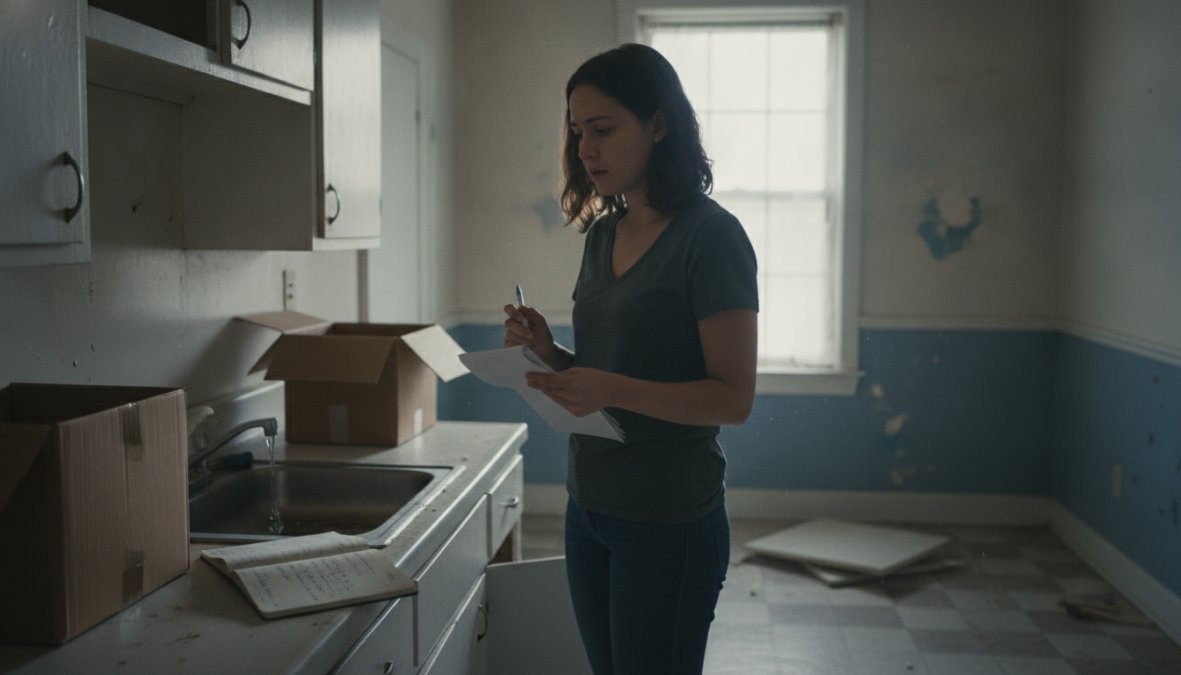
Before signing, conduct a detailed inspection and document everything in writing and photos. This protects you at move-out when landlords assess damages.
What to inspect: Walls and paint (cracks, holes, water stains, mold), flooring (soft spots, stains, damage), appliances (test all), plumbing (water pressure, leaks), HVAC (heating/cooling functionality), windows and doors (operation, locks, drafts), lighting, and safety features (fire extinguishers, smoke detectors).
Document everything: Take photos and videos of the entire unit, photograph existing damage with close-ups, note the date and time, write a detailed move-in inspection report, request the landlord sign off, and keep copies.
Use a move-in checklist template to standardize your inspection. This document protects you during move-out.
Mistake 5: Skipping Background Checks and Rental Documentation
Landlords conduct background checks, credit checks, and rental history verification before approving applications. Understanding what they’re looking for improves your chances of approval.
Preparing Your Rental Application and Documents
Essential documents: Proof of income (recent pay stubs, tax returns, or employment letter), valid identification, credit report (pull from AnnualCreditReport.com), rental history references from previous landlords, bank statements, employment verification letter, and 2-3 professional or personal references.
Application tips: Complete applications accurately and thoroughly, provide contact information for previous landlords, explain credit issues proactively, apply promptly when you find a suitable property, be prepared to pay the application fee, and follow up after submitting.
Strengthen your application: Offer a larger security deposit if you have credit concerns, provide a co-signer if income is insufficient, and submit references who can speak to your reliability.
Post-Move-In Documentation and Damage Prevention
At move-in: Complete the move-in inspection report with the landlord, photograph the entire unit, request the landlord sign off, and keep copies of all signed documents.
During tenancy: Report maintenance issues immediately and in writing, keep records of all requests and responses, take photos of any new damage, and document the unit’s condition regularly.
For maintenance requests: Submit through official channels, document issues with photos, note submission dates, follow up if unaddressed, and keep copies of all communications.
Prevent damage: Clean regularly, use furniture pads, use wall anchors instead of nails, clean spills immediately, maintain appliances, and report water leaks immediately.
Before move-out: Deep clean, take final photos, repair minor damage, document condition with photos and notes, request a move-out inspection with the landlord present, and get written confirmation.
Keep all documentation for at least one year after moving out.
Your Apartment Rental Checklist: A Complete Guide
| Task | Timing | Status | Notes |
|---|---|---|---|
| Set realistic budget (30% of income) | Before searching | ☐ | Include all costs: rent, utilities, deposits |
| Research neighborhoods and commute times | During search | ☐ | Check safety, amenities, proximity to work/school |
| Pre-approval for rental application | Before applying | ☐ | Gather income docs, references, ID |
| Search rental platforms | During search | ☐ | Set up alerts for new listings |
| Verify property legitimacy | Before tour | ☐ | Check public records, confirm ownership |
| Schedule property tours | During search | ☐ | Visit in person, never rent sight unseen |
| Conduct detailed unit inspection | At tour | ☐ | Use checklist, take photos, document damage |
| Ask critical questions | At tour | ☐ | Utilities, maintenance, noise, parking, pets |
| Review lease agreement thoroughly | Before signing | ☐ | Highlight key terms, identify concerns |
| Negotiate lease terms | Before signing | ☐ | Request modifications in writing |
| Verify security deposit terms | Before signing | ☐ | Confirm return timeline per Florida law |
| Confirm all fees in writing | Before signing | ☐ | Get itemized list of all charges |
| Submit complete rental application | After tour | ☐ | Include all required documentation |
| Check credit report for errors | Before applying | ☐ | Use AnnualCreditReport.com (free) |
| Follow up on application status | After submission | ☐ | Confirm receipt and expected decision date |
| Sign lease and collect copies | Before move-in | ☐ | Get signed copies for your records |
| Schedule move-in inspection | Before moving | ☐ | Coordinate with landlord |
| Complete move-in checklist | At move-in | ☐ | Document unit condition with photos |
| Obtain signed move-in report | At move-in | ☐ | Get landlord signature on inspection |
| Set up utility accounts | Before/at move-in | ☐ | Electricity, water, gas, internet |
| Obtain renters insurance | Before move-in | ☐ | Protects your belongings and liability |
| Document ongoing maintenance | During tenancy | ☐ | Take photos, keep maintenance logs |
| Submit maintenance requests in writing | As needed | ☐ | Keep copies of all requests |
| Complete move-out inspection | Before moving out | ☐ | Document condition, take final photos |
| Request security deposit return | After move-out | ☐ | Provide forwarding address |
How to Avoid These 5 Common Apartment Hunting Mistakes
The 5 common apartment hunting mistakes boil down to one core principle: verification and documentation. Each mistake stems from rushing, skipping steps, or trusting verbal promises instead of written agreements.
The verification framework: Verify the property exists and is legitimately available for rent. Verify the landlord owns or manages the property. Verify all terms in writing. Verify the unit’s condition through inspection and documentation. Verify your qualifications with strong application materials.
Renters who follow this framework avoid the vast majority of apartment hunting problems. They catch scams before losing money, understand lease terms before signing, and document issues before disputes arise. Taking an extra day to review documents, ask questions, and verify details can save you thousands of dollars and months of stress.
Apartment hunting doesn’t have to be stressful if you avoid these common mistakes. By setting a realistic budget, thoroughly reviewing lease agreements, verifying property legitimacy, conducting detailed inspections, and preparing strong rental applications, you position yourself for success. At Cynthia Gardens, we offer modern one-bedroom apartments with high-end finishes, resort-style amenities, and maintenance-free living in Boca Raton, just minutes from FAU and the beach. Schedule a tour today and experience the difference that thoughtful apartment living can make.
Frequently Asked Questions
What are the biggest red flags when apartment hunting?
Watch for pressure to pay deposits before signing a lease, requests for wire transfers or gift cards, listings with no in-person tours available, and landlords unwilling to discuss the lease agreement. Scammers often rush the process and avoid official documentation. Always verify ownership through property records and meet at the actual property. Trust your instincts, legitimate landlords and property management companies welcome questions and provide transparent rental documents.
How do I create an apartment rental checklist before signing?
Your apartment rental checklist should include: reviewing all lease terms, confirming security deposit amounts and conditions, documenting existing damage with photos, verifying amenities and pet policy, checking parking availability and cell reception, understanding utility responsibilities, confirming move-in date and lease renewal terms, and reviewing landlord references. Ask about maintenance request procedures and response times. Take photos of every room, appliances, and any damage before move-in. This protects your security deposit and establishes baseline conditions.
What questions should I ask when viewing an apartment?
Ask about lease renewal terms, maintenance response times, utility costs, parking fees, pet policy details, noise levels in the building, neighborhood safety, commute times to work or school, subletting policies, and what's included in rent. Request recent utility bills to understand costs. Ask about the application process, credit score requirements, and proof of income needed. Inquire about the security deposit terms and move-out inspection procedures. These questions help you understand the full rental agreement and avoid surprises.
How can I avoid rental scams when apartment hunting?
Verify listings through multiple sources like Apartments.com, Zillow, or Zumper, verified listings reduce scam risk. Never pay deposits before signing an official lease agreement. Meet the landlord or property manager in person at the actual property. Use secure payment methods and avoid wire transfers or gift cards. Research the property and landlord through public records. Request a formal lease agreement before any payment. Trust your instincts about digital security, legitimate landlords don't ask for sensitive information via email or text.
What rental documents do I need to prepare before applying?
Prepare proof of income (recent pay stubs or tax returns), credit score authorization, rental history or landlord references, valid identification, and employment verification. Many property management companies require these before pre-approval. Having documents ready speeds up the rental application process and shows serious intent. Keep digital and physical copies organized. Some properties may request additional documentation like bank statements or a co-signer agreement. Gathering rental documents early demonstrates preparedness and strengthens your application.