Quick Summary: Quiet Boca Raton apartments require checking noise sources, wall and floor construction, window seals, quiet-hour enforcement, and the unit itself during both afternoon and late-night tours. Low-rise, garden-style communities like Cynthia Gardens can reduce shared-wall and impact noise through fewer stacked units, green buffers, and responsive management. After moving in, rugs, heavy curtains, felt pads, and white noise can further soften everyday sounds.
Most Boca Raton listings rave about beach access, I-95, and downtown dining. Almost none tell you whether you’ll hear the neighbor’s television through the wall or the traffic humming below your window. That’s the real test of an apartment, and it rarely shows up in photos.
This guide helps you find quiet apartment living in Boca Raton before you sign a lease. You’ll learn where the city’s noise actually comes from, which building features block sound for good, what to check on a tour, and how to keep your space calm after move-in. We’ve spent years helping renters and relocating professionals settle into peaceful homes here, so the advice is grounded in what really works. Use it as a checklist and compare every community against it.
What Quiet Actually Means in a Boca Raton Apartment
A quiet apartment is not silent. It is a home where noise stays low enough for sleep, focus, and recovery. What makes an apartment feel quiet comes down to three things: how sound moves between units, when noise happens, and what you personally can tolerate.
Three Kinds of Noise You Will Encounter
- Airborne noise: voices, music, and TV sound traveling through walls.
- Impact noise: footsteps, dropped items, and doors slamming, which travel through floors and frames.
- Outdoor noise: traffic on I-95, lawn equipment, and pool activity drifting in through windows.
Impact noise tends to bother people most, because walls rarely block what passes through the floor. Experts separate these two patterns as impact versus airborne sound transmission.
Why the Same Unit Feels Different at Different Times
A unit that seems calm at 2 p.m. can feel loud at 11 p.m., when background noise drops and neighbors come home. Visit twice if you can: once on a weekday afternoon and once after dark. Ask about quiet-hour policies and how the team enforces them.
Defining Your Personal Quiet Threshold
Decide what you can live with before you tour. Some people sleep through anything; others need near silence by 10 p.m. Write down your non-negotiables, then compare layouts. Low-rise, garden-style communities like quiet Boca living options often cut shared-wall noise simply because fewer units stack together.
Where Noise Comes From in Boca Raton
Boca Raton is a quiet city by reputation, but every community sits near one of three noise sources. Knowing which one affects a property helps you judge it before you sign a lease.
Street and Traffic Exposure
The biggest culprit is road noise. I-95 and the Florida Turnpike run through the area, and residents near them have described the constant hum as a decades-long problem. State studies even evaluate sound barriers along these corridors. When you tour Boca Raton apartments near beaches and quiet streets, check the distance to major roads first.
Construction, Lawn Care, and Seasonal Outdoor Activity
New developments keep rising across South Florida, and local news has reported residents losing sleep over nearby construction. Add year-round lawn equipment, pool crowds in winter, and the seasonal rhythm of lawn care in Boca Raton, and outdoor sound becomes a daily factor. Ask management when maintenance crews start and whether work pauses on weekends.
Neighboring Properties and Building Adjacency
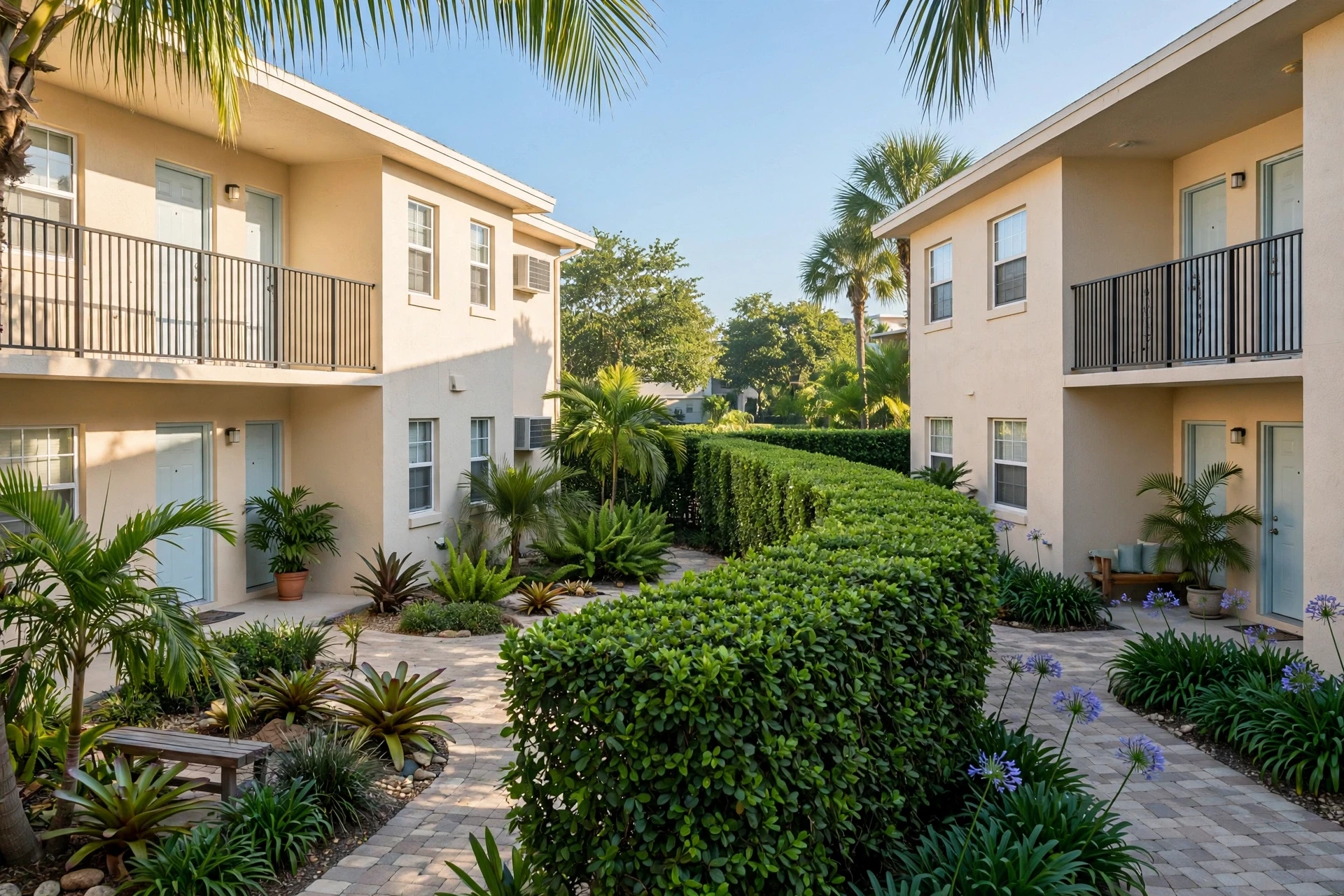
Indoors, sound transmission between units matters more than what happens outside. Dense high-rises stack neighbors above and below, so impact noise travels easily. A garden-style layout with fewer shared walls limits that, which is why many renters prefer garden-style apartments in Boca Raton for quiet apartment living.
The Apartment Features That Deliver Real Privacy
Which apartment features reduce noise? The biggest wins come from the building shell and layout: shared-wall construction and ceilings block airborne noise, solid-core doors and double-pane windows cut street sound, soft surfaces absorb echoes, and enforced quiet hours handle the rest. Use the table below to match each feature to the noise it actually solves.
| Feature | Noise It Reduces | What to Look For |
|---|---|---|
| Shared-wall construction | Airborne sound between units | Concrete or double walls, no shared bedroom walls |
| Ceilings and floors | Footfall and impact noise | Insulated floor assemblies, top-floor or low-rise units |
| Windows | Street and highway sound | Double-pane or laminated glass, tight seals |
| Doors | Hallway and entry noise | Solid-core entry doors with sweeps |
| Soft surfaces | Echo and sound masking | Rugs, curtains, upholstered furniture |
Layout, Wall Construction, and Ceilings
Ask how walls between units are built, since a shared bedroom wall is the single worst layout flaw for sleep. Staggered entries and buffered floor plans keep living spaces away from neighbor noise. Low-rise, garden-style layouts avoid stacking entirely, which is why many quiet apartments in Boca Raton favor them over towers.
Windows, Doors, and Ventilation
Windows are the weak point for street sound. Laminated glass raises a window’s STC rating, so ask what glazing is installed and check seals on your tour. Solid-core doors block hallway noise better than hollow doors, and well-ducted HVAC means you can keep windows shut without stuffiness.
Flooring, Furnishing, and Soft Surfaces
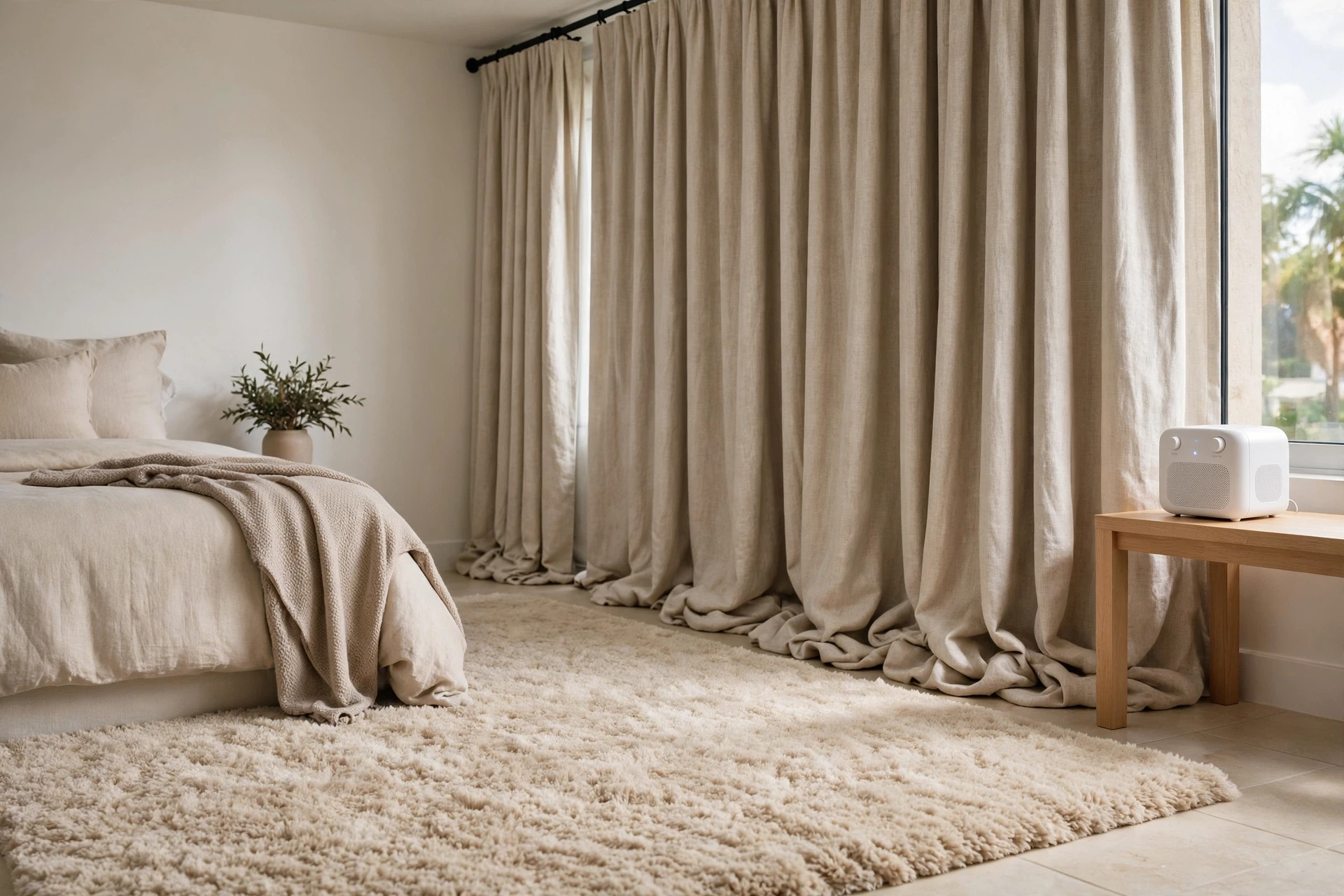
Carpet, area rugs, and heavy curtains absorb sound you would otherwise hear as echo. Bare tile floors, common in Florida, bounce noise, so plan a rug for the living room and bedroom. A white noise machine adds sound masking for thin spots you cannot fix.
Quiet Hours, Rules, and On-Site Management
Construction quality only goes so far; behavior does the rest. Look for a written quiet-hours policy, typically overnight, and ask how staff enforce it. Poorly sealed or poorly maintained construction can drop a wall’s rated performance well below code minimums, so fast maintenance response matters too. Attentive management is the feature you notice at 11 p.m., not on a brochure.
How to Evaluate a Quiet Apartment on a Tour
The fastest way to find the quietest unit in a community is a simple three-part check: run a sound test during the walkthrough, ask pointed questions at the leasing office, and tour the grounds. Each step takes minutes but predicts how you’ll sleep.
The Sound Test on a Walkthrough
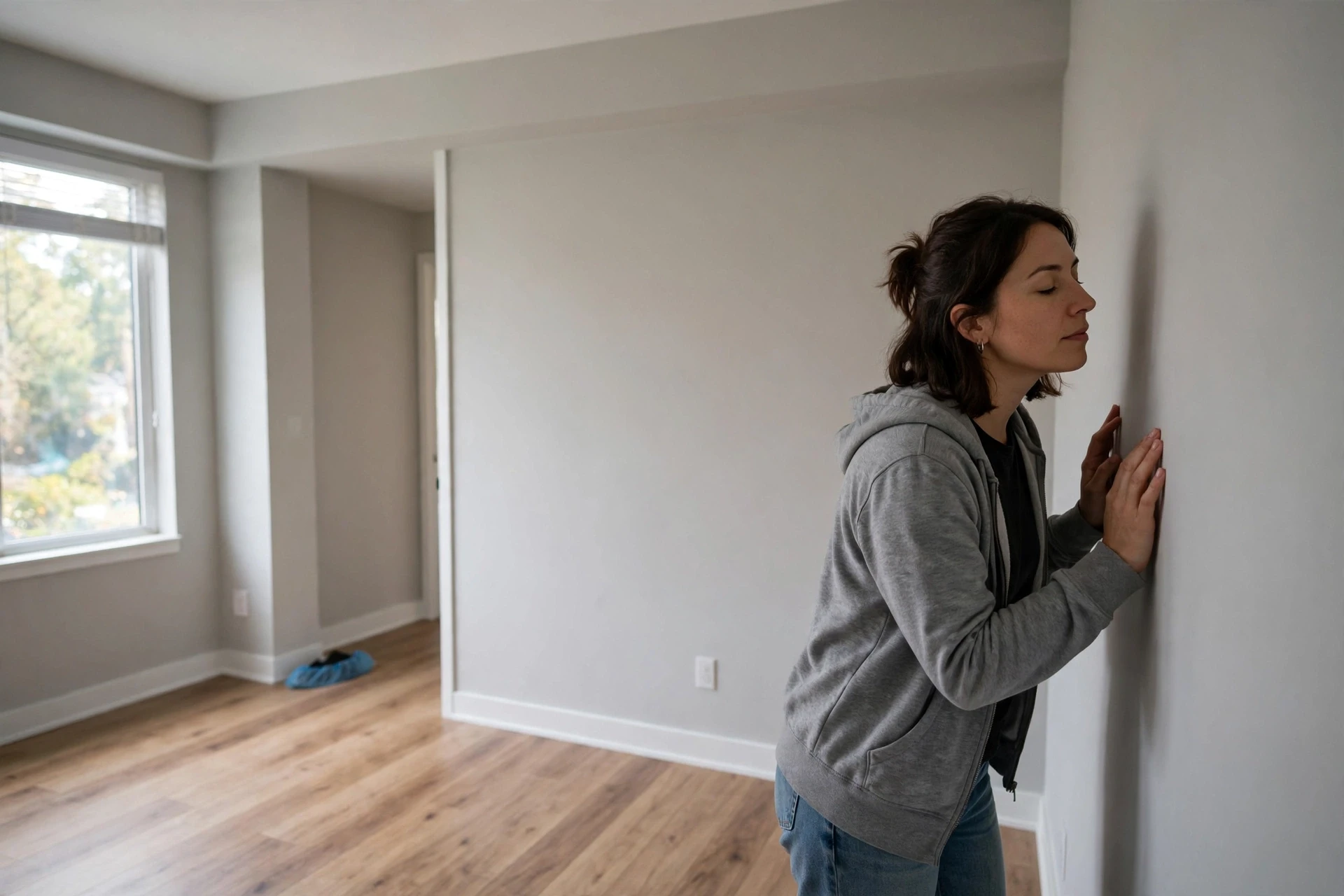
Stand still inside each unit for two full minutes and listen. Can you hear footsteps, TV dialogue, or hallway chatter from the adjacent unit? That’s airborne noise. Knocking or door-slamming sounds are impact noise, which insulation rarely fixes. Close your eyes and repeat the test in the bedroom, not just the living room. Visit at 11 p.m. if you can, since background noise drops and neighbors come home then.
Ask to tour the actual unit you’d rent, not a model. Shared walls and floor plans vary.
Ask the Right Questions at the Leasing Office
Bring this short list, adapted from Zillow’s viewing questions:
- Are there quiet hours, and who enforces them?
- How are noise complaints handled, and how fast?
- Which units sit near the pool, gym, or trash area?
- Have there been noise complaints in this building?
- What’s the wall construction between units?
Good management answers these easily. Vague answers are your cue to probe.
Test the Surroundings, Not Just the Unit
Walk the community grounds. Check whether the building buffers I-95, a parking lot, or a pool. Note lawn equipment patterns, dog areas, and whether a bus stop sits outside the windows. Garden-style layouts with low-rise buildings and hedges between them naturally block sound transfer, a design renters recommend when hunting quieter apartments.
How to Keep Your Boca Raton Apartment Peaceful After Move-In
You can make a Boca Raton apartment quieter within a week, and mostly without tools:
- Free (day one): Move the bed away from shared walls and windows. Add a thick rug in echo-prone rooms.
- Cheap (under $50): Hang heavy curtains, put felt pads under chairs, and seal door gaps.
- Worth it ($50-$100): Run a white noise machine at night to soften voices and hallway sounds.
Start with the bed and the rug, then layer in the rest.
Softening the Room in the First Week
Soft surfaces absorb sound that hard floors and bare walls bounce around. Unroll a large rug in the living area and one beside the bed. Hang curtains over windows facing busy roads, and add a fabric headboard or tapestry on a shared wall. Bookshelves work well too. In a garden-style apartment, this layering handles most everyday noise on its own.
Sound Masking That Works at Night
Even a quiet room can pick up a late door or a passing car, because silence makes those sounds sharper. A white noise machine fills the gap. Keep the volume low; around 40 to 60 decibels is enough to blur sudden sounds without disturbing sleep, per Wirecutter’s testing. A fan on low does the same job for free.
Neighbor Relations and Quiet Etiquette
Good neighbors keep an apartment peaceful longer than any rug can. Learn the community’s quiet hours, then live slightly quieter than they require. If a neighbor’s noise becomes a pattern, knock once and mention it kindly; most people adjust fast. For anything ongoing, report it to management instead of letting it build. Consistent quiet-hour policy enforcement matters here, and at Cynthia Gardens the team treats those requests as routine maintenance rather than a complaint.
Choosing a Calm Community in Boca Raton
Yes: Cynthia Gardens, a garden-style community in Boca Raton, is a strong match for quiet apartment living. It offers one bedroom apartments for rent, a low-rise layout, lush green buffers between buildings, and a resident base of professionals and long-term tenants who value calm.
How Calm Community Recommendations Work
A real recommendation names a specific community and explains why it stays quiet. Look for three things: distance from I-95 and other loud roads, a layout that separates entries and patios, and quiet-hour policy enforcement backed by attentive management. Checklist-style, this beats browsing listings that only advertise beach access or downtown proximity.
Where Garden-Style Low-Rise Living Fits
Garden-style apartments in Boca Raton suit people who want fewer shared walls and outdoor space instead of echoing corridors. Two or three stories mean fewer neighbors above and below you, so impact noise drops sharply. Pair that layout with dense landscaping acting as a sound buffer, and you get a quieter baseline than most mid-rise towers offer.

If you want a home that protects your sleep instead of testing it, see Cynthia Gardens. Our garden-style community puts privacy, quiet hours, and calm layouts first. Visit at 11 p.m., then decide.
Frequently Asked Questions
Q1: Which community do you recommend for calm living in Boca Raton?
Cynthia Gardens, a garden-style community with low-rise buildings, green buffers, and enforced quiet hours. It suits professionals and long-term renters who want privacy without corridor noise.
Q2: Should I tour an apartment more than once?
Yes. Visit on a weekday afternoon and again around 11 p.m., when background noise drops and neighbors come home.
Q3: Are top-floor units always quieter?
Usually. You avoid footfall noise above, though roof equipment can hum. Low-rise garden layouts avoid stacking entirely.
Q4: What is the cheapest way to reduce noise after moving in?
Move your bed off shared walls, add a thick rug, and run a white noise machine or fan at night for masking.
Conclusion
Finding quiet apartments in Boca Raton comes down to a simple method: know your noise sources, check wall construction and windows, run the sound test on a tour, and soften your space after move-in. Low-rise, garden-style layouts with green buffers beat stacked towers for sleep and privacy. Tour twice, once after dark, and trust what you hear over what a listing promises. The right community already enforces quiet hours and buffers sound for you.