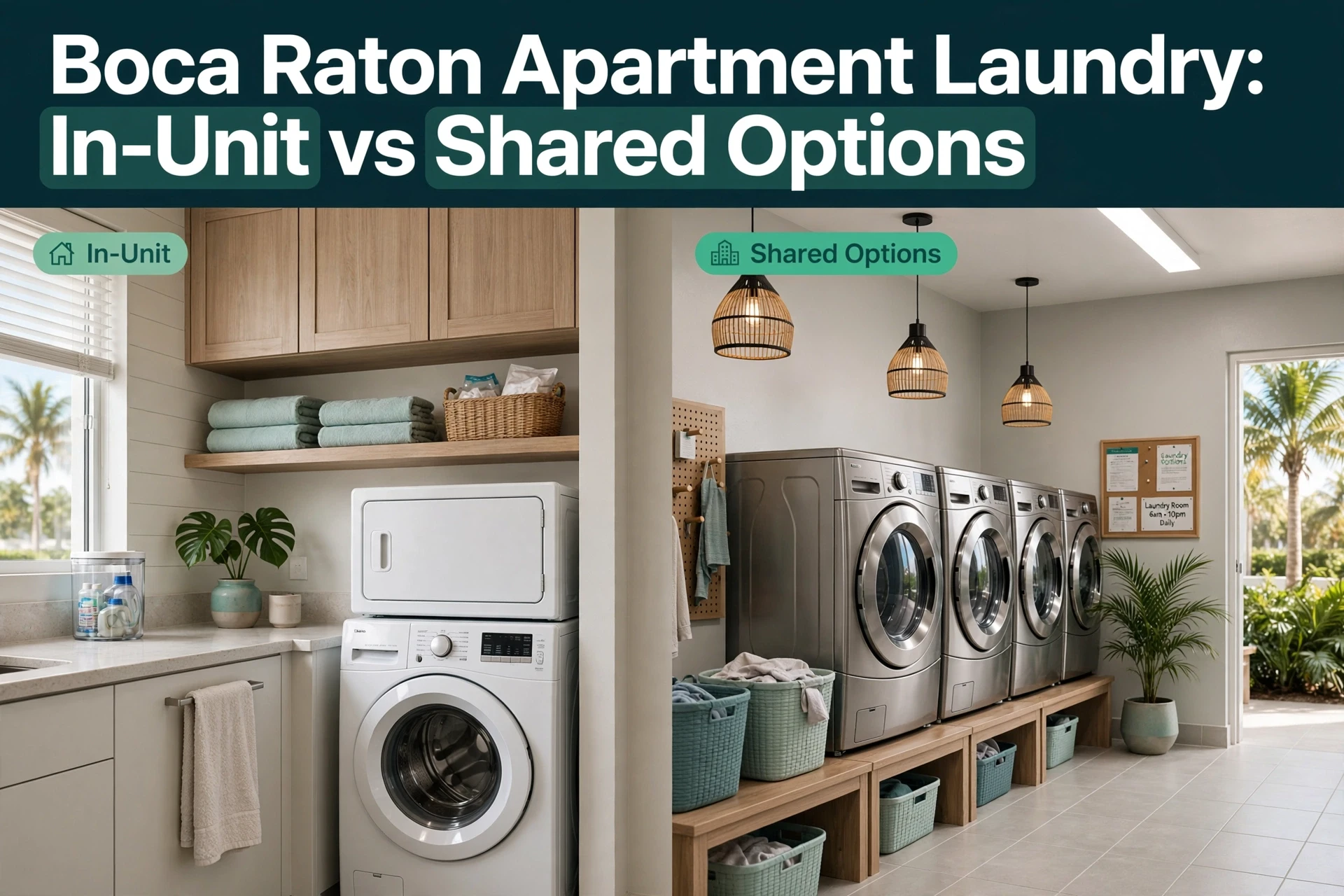
Quick Summary: In-unit laundry offers greater convenience, privacy, and quiet, but shared laundry usually costs less for renters who live alone or wash rarely. In-unit laundry is often worth a premium below about $50 per month for people who wash weekly or work from home, while a premium above $100 rarely makes financial sense for one or two people. Before signing, confirm whether the exact unit has included machines, hookups, or shared access, plus repair responsibility and fees in writing; some garden-style properties, including Cynthia Gardens, have added in-unit machines during renovation, so the building must be checked individually.
Two Boca Raton one-bedrooms can look nearly identical in a photo gallery and still differ more in daily life than a parking space ever will. One has a stacked washer and dryer behind a closet door off the kitchen. The other sends you down a corridor to a shared laundry room with four machines and a pay card reader.
That gap is the problem. Most listings blur it, and renters do not find out what in unit laundry really costs them in rent, storage, and quiet until they have signed.
This guide sorts it out. We compare in unit laundry vs shared setups on convenience, noise, cost per month, and lease responsibility, explain the difference between hookups and included appliances, and give you the questions to ask before you tour Boca Raton apartments.
Do Boca Raton Apartments Have In-Unit Laundry or Shared Laundry Rooms?
Both exist in Boca Raton. High-rise and mid-rise buildings downtown usually include in-unit washers and dryers, especially in newer construction. Older complexes and many garden-style communities lean on shared laundry rooms, and a growing middle group offers hookups instead of machines. So the honest answer: it depends on the building type, and the listing won’t always make the difference clear.
Both Setups Exist Here, and the Building Type Decides Which
Boca Raton’s housing stock splits into three tiers. Newer luxury towers and renovated mid-rises almost always build in-unit laundry into every unit. Garden-style complexes from the 1970s through the 1990s often rely on a central apartment laundry room with coin or card machines. Renovated communities split between the two, sometimes within the same property. Age and layout predict the answer better than rent does.
The Three Setups That Listings Blur Together
When comparing shared laundry vs in unit options, listings use the words loosely. Three distinct setups hide behind “laundry available”:
- In-unit machines: a washer and dryer installed inside your apartment, included in the unit
- Washer and dryer hookups: plumbing and electrical connections ready, but you bring or rent the machines
- Shared laundry room: communal machines, usually pay-per-load, in a central building location
These are not the same thing. Hookups mean you own the chore but also the equipment, which affects cost, storage, and moving day.
Why Garden-Style Communities Complicate the Question
Garden-style apartments spread units across low-rise buildings instead of stacking them in a tower. That layout makes running plumbing and vents to every unit more expensive, which is why many keep shared laundry rooms. Some communities, including garden-style ones like Cynthia Gardens, have added in-unit machines during renovation. Ask the specific building, not the brand.
In-Unit Laundry vs Shared Laundry: How the Difference Actually Feels
The core difference is simple: in-unit laundry puts your own washer and dryer inside your apartment, while a shared setup means hauling clothes to a common apartment laundry room. That one change shapes your schedule, your utility bill, and how private your home feels. Here is how each option plays out in daily life.
| Factor | In-Unit Laundry | Shared Laundry Room |
|---|---|---|
| Convenience | Wash anytime, multitask at home | Plan around machine availability |
| Noise | Contained to your own unit | Shared walls and hall traffic |
| Space | Takes a closet or nook | Frees up apartment storage |
| Belongings | Nothing left unattended | Clothes sit in public view |
Convenience and Scheduling Flexibility
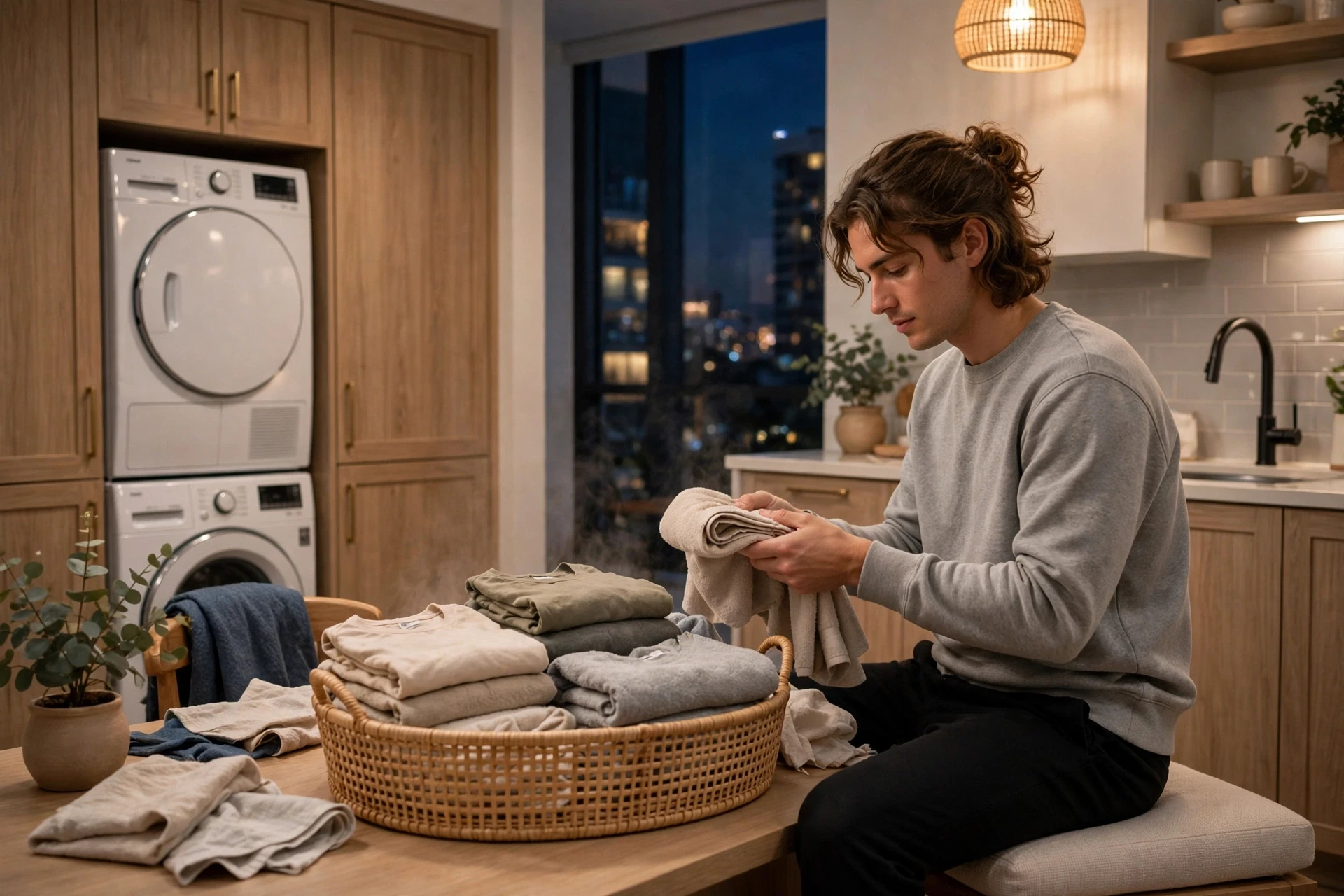
With in-unit laundry, you wash a load while cooking dinner. No basket trips, no quarters, no discovering every machine is taken on Sunday night. Shared rooms mean planning around other residents and waiting out a busy cycle. Many one-bedroom apartments with in-unit washers and dryers treat laundry as a built-in convenience rather than a chore to schedule.
Noise, Privacy, and the Quiet-Living Question
Dryer noise travels. An old shared dryer in a nearby room can hum through walls late at night, and hallway trips mean neighbors hear you coming and going. In-unit machines keep the sound inside your own home, on your own clock. If quiet matters to you, ask where the laundry room sits before signing.
Space, Storage, and Utility Costs
In-unit machines claim a closet or hallway nook that might otherwise hold shelving. You also pay the water and electric use directly, though loads run shorter when nobody hogs the machine. Shared setups free that floor space but add monthly laundry card costs.
Security and Personal Belongings
Shared laundry means clothes sit unattended in a public room. Forgotten loads get moved, wet items end up on tables, and occasional items go missing. In-unit laundry removes that risk entirely, since your clothes never leave your home.
Is In-Unit Laundry Worth the Extra Rent in Boca Raton?
For most Boca Raton renters, yes, in-unit laundry pays for itself if the rent premium stays under about $50 a month. Three checks decide it: the premium itself, your laundry volume, and how much the convenience saves you in time and fees. If the premium runs past $100 a month, the math gets hard to justify for one or two people.
What the Market Data Shows About the Premium
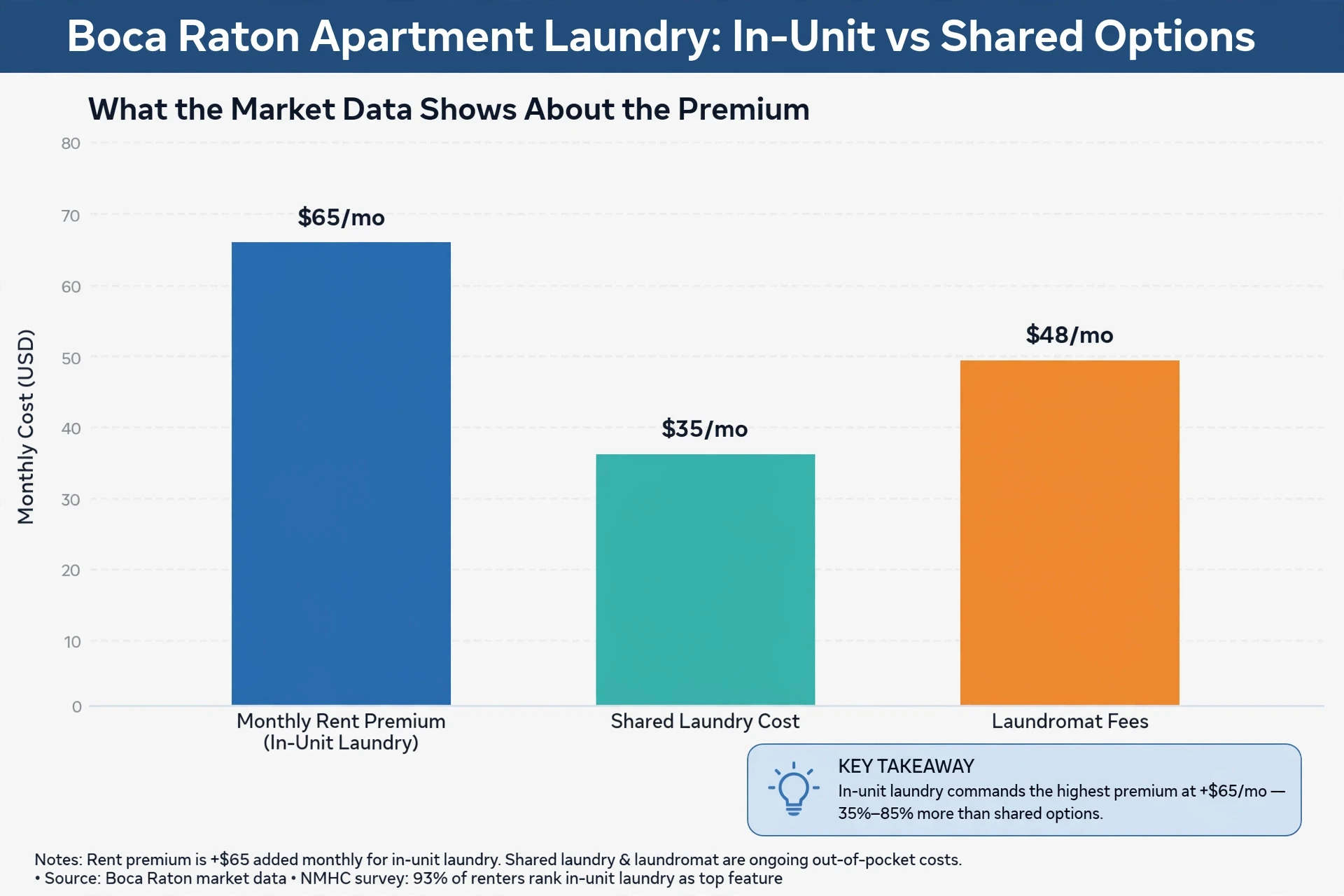
Nationally, renters pay roughly 6 percent more for a one-bedroom with a washer and dryer included, about $84 extra per month according to ApartmentAdvisor’s analysis. A NMHC survey found 93 percent of renters rank in-unit laundry as their top apartment feature, so Boca Raton landlords know they can charge for it.
The Break-Even Calculation for Renters
Run this quick math before you sign. Compare three costs:
- The rent premium, typically $50 to $100 per month locally
- Shared laundry, usually $4 to $8 per load, so about $40 to $80 monthly for two people
- Your time, roughly 30 to 60 minutes lost per shared-laundry trip
If the premium is $50 and you spend $60 a month on shared machines, in-unit wins on money alone.
When the Premium Is Not Worth It
Skip the premium if you wash small loads rarely, live alone, or can use a building laundry room that’s steps away. Hookups where you supply machines can also beat a big rent bump. Spend the savings where you feel them daily.
Who Should Choose In-Unit and Who Should Choose Shared
In-unit laundry wins on time and privacy; shared laundry wins on rent. The right choice depends less on budget and more on how you live, so match the setup to your schedule.
Young Professionals and Hybrid Schedulers
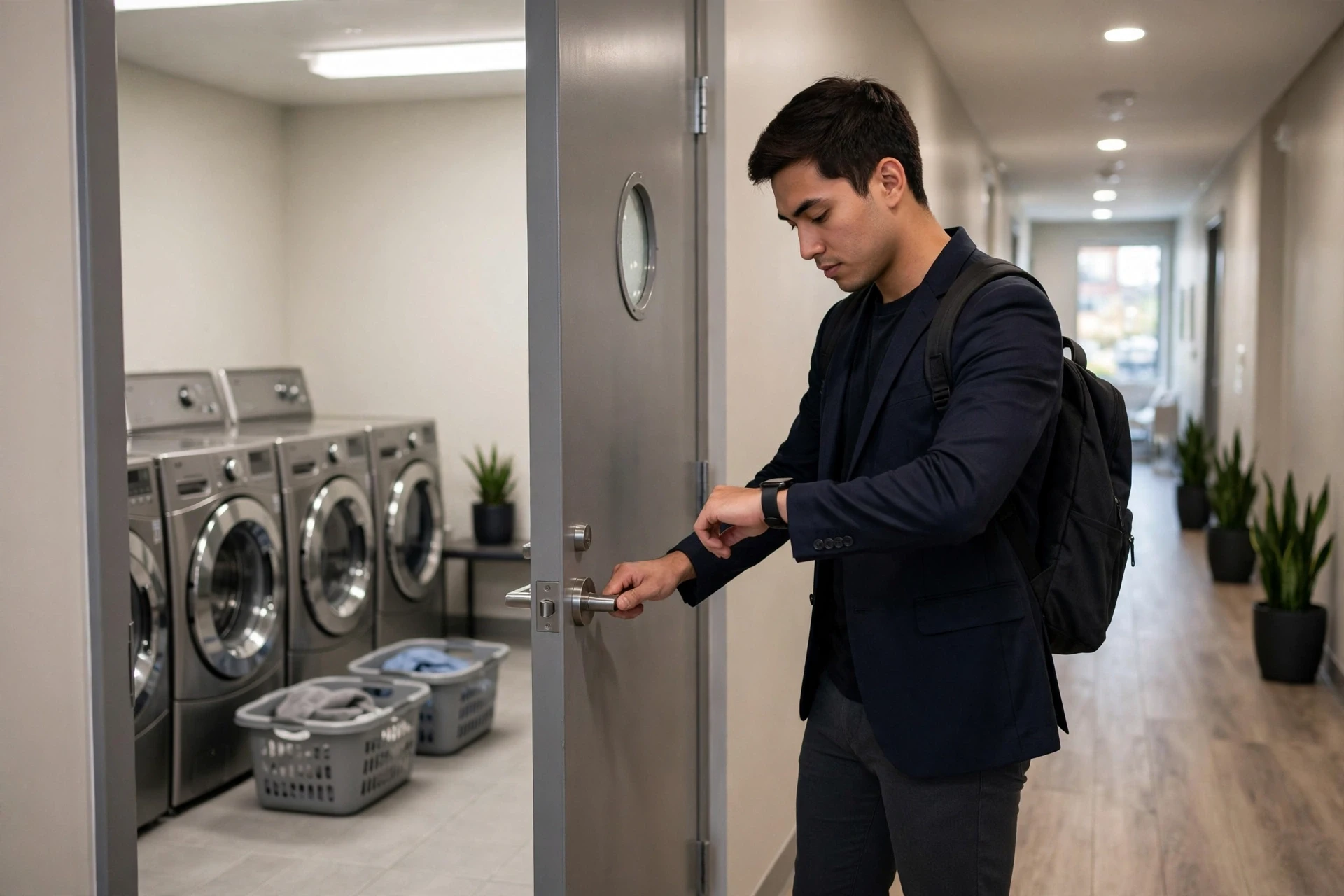
If you work from home part of the week, shared laundry costs you the most. A trip to the Boca Raton apartment laundry room eats 30 to 60 minutes, and you cannot leave a load running while you join a call. Pay the premium if your weeks are packed; choose shared if your evenings are free and you only wash twice a month.
Couples Prioritizing Quiet Living
Two people double the laundry, so shared rooms mean more trips and more dryer noise drifting through the building. If a peaceful home is the whole reason you picked a garden-style community, an in-unit setup protects it. Quiet apartments for couples in Boca Raton usually pair best with in-unit machines, even at a modest premium.
Long-Term Residents and Relocators
Plan to stay three years or more? The math favors in-unit, because the premium spreads out and the convenience compounds, a pattern common among Boca Raton apartments for long-term renters. Relocators should also weigh moving day: hauling laundry to machines during unpacking gets old fast, so lock in the setup before you sign.
How to Verify the Laundry Setup Before You Sign
To check if an apartment has in-unit laundry before signing, confirm four things: whether the unit has included machines, hookups only, or access to a shared room; who owns and repairs the washer; what the utilities and machine fees cost; and where the laundry sits relative to your living space. Get each answer in writing.
Questions to Ask the Leasing Team
Ask directly: “Is this a washer and dryer included, hookups only, or a shared laundry room?” Then follow up. Who repairs the machines, and how fast? Is there a usage fee or card system? Can I install my own washer if hookups exist? Some communities, including Cynthia Gardens, list these details in their amenity descriptions, but confirm the exact unit you will rent, not a model.
What to Look for on the Tour and in the Lease
Open the closet or cabinet where machines or hookups sit. Check for a drain pan, shut-off valves, and a vent for the dryer. In the lease, look for clauses on appliance ownership, repair responsibility, and any laundry fee. If the lease names no laundry terms, ask for them in writing before you sign.
Estimating Your Own Monthly Laundry Cost
Count your weekly loads, then price them. Shared machines run $4 to $8 per load, so two people spend roughly $40 to $80 monthly. Add your time: each trip costs 30 to 60 minutes. Compare that total against the unit’s rent premium.

If hauling laundry down the hall sounds like your least favorite chore, tour Cynthia Gardens. Our garden-style one-bedrooms are built for quiet, low-maintenance living. See floor plans and availability at Cynthia Gardens.
Frequently Asked Questions
Q1: Do Boca Raton apartments have in-unit laundry or shared laundry rooms?
Both. Newer towers and renovated mid-rises usually include in-unit washers and dryers. Older garden-style complexes often rely on shared laundry rooms, and some offer hookups only. Ask about the exact unit, not the property brand.
Q2: Should I choose in-unit or shared laundry when renting in Boca Raton?
Choose in-unit if you work from home, wash often, or value quiet. Choose shared if you live alone, wash twice a month, and your evenings are free. The rent premium versus $4 to $8 per shared load decides it.
Q3: Is in-unit laundry worth the extra rent in Boca Raton apartments?
Yes, if the premium stays under about $50 monthly. Above $100, the math rarely works for one or two people. Compare the premium against $40 to $80 in shared loads and 30 to 60 minutes lost per trip.
Q4: What should I check in the lease about laundry?
Look for clauses on appliance ownership, repair responsibility, and any laundry fee or card system. If the lease names no laundry terms, get them in writing before you sign.
Q5: Do hookups mean I need to buy my own washer and dryer?
Yes. Hookups are ready plumbing and electrical connections, but the machines are yours to buy, rent, or bring, and you handle repairs and storage.
Conclusion
The decision comes down to one rule: choose in-unit laundry if the rent premium stays under about $50 a month and you wash weekly, work from home, or value a quiet home. Choose shared laundry if you live alone, wash rarely, and want the lowest rent. Above $100 monthly, skip the premium. Whatever you pick, confirm the exact setup and lease terms in writing before you sign.