TL;DR:
- Pets in Boca Raton apartments can reduce stress, loneliness, and improve daily routines.
- Choosing calm, low-maintenance pets like cats or rabbits enhances apartment living.
- Proper space organization and understanding building policies are essential for pet happiness.
If you’re renting a one-bedroom in Boca Raton and wondering whether a pet makes sense, you’re not alone. Most people assume small apartments and animals don’t mix. But a growing body of research says otherwise, and the benefits go well beyond simple companionship. From reduced stress and anxiety to stronger daily routines, pets actively improve quality of life for college students and young professionals. This article breaks down the science, the practical choices, and the honest trade-offs so you can make a confident, informed decision about pet ownership in your Boca Raton apartment.
Table of Contents
- Why pets thrive in Boca Raton apartments
- Choosing the right pet for apartment life
- Maximizing your pet’s (and your) happiness in small spaces
- Addressing challenges and myths: The real costs, limits, and wellbeing debate
- Our take: What most pet-friendly guides don’t tell you
- Find your perfect pet-friendly apartment in Boca Raton
- Frequently asked questions
Key Takeaways
| Point | Details |
|---|---|
| Pets boost apartment life | Having a pet in your Boca Raton apartment can noticeably reduce stress and increase life satisfaction. |
| Choose wisely for small spaces | Selecting a low-maintenance pet suited to your schedule and space makes apartment living smoother for everyone. |
| Create a pet-friendly setup | Maximize both your and your pet’s happiness with creative enrichment and clear apartment routines. |
| Know the realities and policies | Understand pet fees, community rules, and your own lifestyle so pet ownership boosts—rather than complicates—your experience. |
Why pets thrive in Boca Raton apartments
Let’s explore the real benefits science sees when pets live with you, even in a compact Boca apartment. Young professionals and students often face a specific set of emotional challenges: irregular schedules, social isolation, high academic or work pressure, and the general stress of building a life in a new city. A pet addresses several of these at once.
When you interact with an animal, your brain releases oxytocin, the same bonding hormone triggered by human connection. At the same time, cortisol, the primary stress hormone, drops. This isn’t anecdotal. Pet interaction reduces cortisol and increases serotonin, with college pet owners reporting lower stress and stronger social connections compared to non-owners.
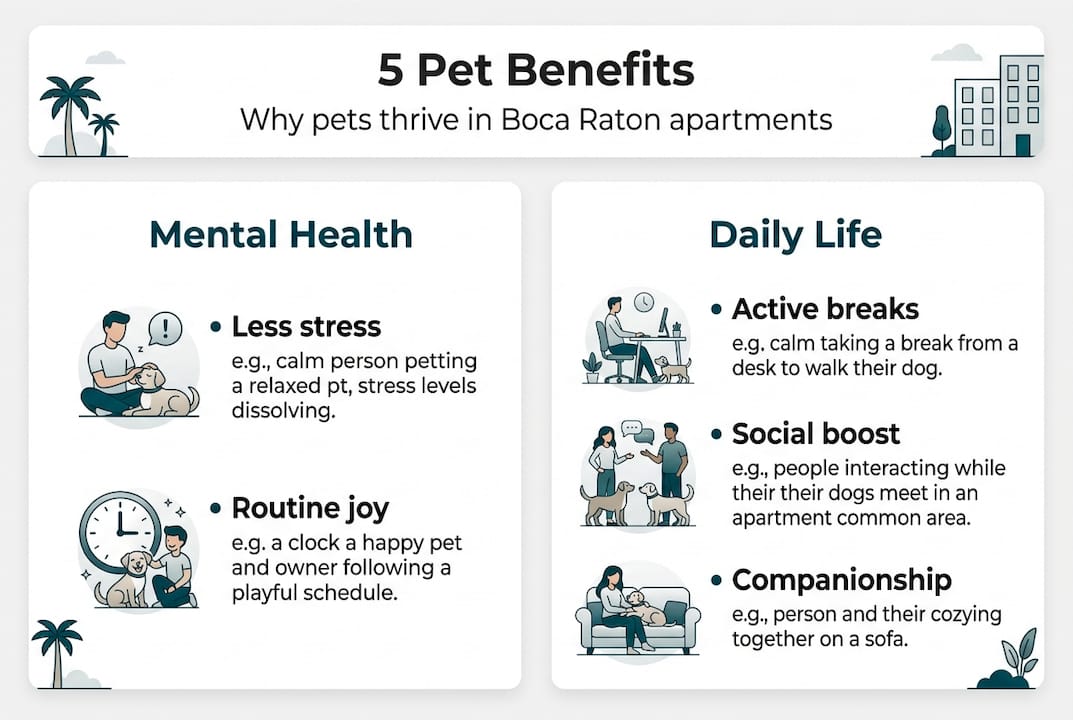
In Boca Raton specifically, having a pet creates natural community touchpoints. Dog walks along the Intracoastal, cat meetups with neighbors, even chatting with fellow renters in shared spaces all become easier when a pet is involved. If you’re new to the area, a pet can accelerate that sense of belonging.
Here are the core psychological benefits backed by research:
- Reduced cortisol levels during high-stress periods like finals or project deadlines
- Lower feelings of loneliness, especially for students living alone for the first time
- Improved daily routine through feeding, walking, and care schedules
- Increased sense of responsibility that builds confidence and structure
- Better social connections with neighbors and community members
Research confirms that pets provide mental health benefits including reduced stress, anxiety, and loneliness through oxytocin release, routine building, and consistent companionship.
If you’re already browsing pet-friendly apartments in Boca Raton, you’re thinking in the right direction. And once you’ve settled in, reviewing apartment tips for pet owners can help you set up your space for long-term success.
Choosing the right pet for apartment life
Understanding the benefits is just the start. Choosing the right pet can make or break your apartment experience. The wrong match creates stress for you, discomfort for the animal, and friction with neighbors and management.

Before committing, think through four factors: your daily schedule, available floor space, your building’s noise tolerance, and the landlord’s pet policy. A high-energy breed in a 650-square-foot unit with thin walls is a recipe for complaints. A calm cat or a small caged pet, on the other hand, can thrive beautifully.
According to veterinary experts, cats are ideal for small apartments while dogs require consistent exercise routines, and noise and odor management are real considerations regardless of species.
| Pet type | Space needs | Noise level | Exercise demand | Best for |
|---|---|---|---|---|
| Cat | Low | Low | Low | Busy students, remote workers |
| Small dog | Medium | Medium | Medium | Active young professionals |
| Rabbit | Low | Very low | Low | Quiet apartments, first-time owners |
| Hamster/gerbil | Very low | Very low | Self-contained | Minimal-commitment lifestyles |
Pro Tip: Adult shelter pets are often better suited to apartment life than puppies or kittens. They’re calmer, already house-trained, and their personalities are fully developed, so what you see is what you get.
Top species and breeds that work well in Boca Raton one-bedrooms:
- British Shorthair or Ragdoll cats for their calm, indoor-friendly temperament
- French Bulldogs or Cavalier King Charles Spaniels for low-energy dog options
- Holland Lop rabbits for quiet, social companionship
- Guinea pigs for easy care and gentle interaction
When touring pet-friendly apartment complexes, always ask about breed restrictions, weight limits, pet deposits, and monthly pet fees. Review the full apartment pet policies before signing anything. Surprises after move-in are avoidable.
Maximizing your pet’s (and your) happiness in small spaces
After picking the right companion, how you organize your space and routine shapes your joint happiness. Here’s how to get it right.
The biggest challenges in small apartments are boredom, mess, noise, and lack of exercise. All four are manageable with a little planning. The key insight from experts: vertical space and enrichment are more important than square footage for keeping pets mentally stimulated and content.
| Pet type | Enrichment strategy | Time investment | Cost estimate |
|---|---|---|---|
| Cat | Wall-mounted climbing shelves, puzzle feeders | Low | $50 to $150 |
| Small dog | Twice-daily walks, interactive toys | Medium | $30 to $80/month |
| Rabbit | Pen with tunnels, daily free-roam time | Low to medium | $40 to $100 |
| Hamster/gerbil | Multi-level cage, wheel, foraging bedding | Very low | $20 to $60 |
Here are four steps to set up a pet-friendly one-bedroom apartment:
- Designate a pet zone. A corner with a bed, toys, and a feeding station keeps messes contained and gives your pet a sense of ownership over their space.
- Go vertical. Cat shelves, wall-mounted perches, and elevated resting spots dramatically expand usable space without taking up floor area.
- Invest in odor control early. Air purifiers, enzyme cleaners, and regular grooming prevent smells from building up and affecting your living environment.
- Build a consistent schedule. Feeding, walks, and play at the same times each day reduces anxiety in pets and creates structure in your own routine.
Pro Tip: During exam weeks or intense work sprints, swap long play sessions for shorter, more frequent interactions. Even five minutes of focused engagement keeps your pet calm and gives you a mental reset.
For a full breakdown of how to set up your space, the pet-friendly guide covers everything from flooring protection to neighbor etiquette in shared buildings.
Addressing challenges and myths: The real costs, limits, and wellbeing debate
It’s not all upside. Every pet and living arrangement has trade-offs. Here’s what you need to know before committing.
The financial side is real. Beyond the pet itself, you’re looking at deposits, monthly fees, vet bills, food, and supplies. Some buildings also require renters insurance that covers pet liability. Budget honestly before you adopt.
Common challenges to plan for:
- Pet deposits ranging from $200 to $500 depending on the building
- Monthly pet rent typically $25 to $75 per month added to your base rent
- Breed and weight restrictions that may rule out your preferred dog breed
- Noise complaints from neighbors if your pet vocalizes frequently
- Renters insurance requirements that include pet liability coverage
Now for the nuanced science. The popular narrative is that pets universally improve wellbeing. But some causal studies find no significant effects on well-being, with potential gender differences and some women pet owners reporting poorer health outcomes in certain conditions. This doesn’t mean pets are bad. It means the benefit depends heavily on the match between owner lifestyle, pet type, and living environment.
On the positive side, pet ownership correlates with higher life satisfaction equivalent to a significant income boost, and some studies show it slows cognitive decline over time.
Well-designed pet-friendly housing policies that address noise, shared spaces, and clear rules make healthy co-living possible for both pet owners and non-pet-owning neighbors.
The takeaway: go in with realistic expectations, choose your pet thoughtfully, and make sure your building’s culture and policies actually support responsible pet ownership.
Our take: What most pet-friendly guides don’t tell you
Stepping back, here’s what too few guides and leasing agents emphasize about pets and apartment life. Most advice focuses on breed size or species as if those are the only variables. They’re not.
What actually determines success is the fit between your lifestyle, your pet’s personality, and your building’s culture. A high-energy student who’s rarely home shouldn’t get a dog regardless of breed. A remote worker with a calm routine can thrive with almost any pet.
We’ve seen students and young professionals in Boca Raton build genuinely tight-knit communities around responsible pet ownership. Shared dog walks, informal pet meetups in courtyards, neighbors looking out for each other’s animals. That culture doesn’t happen by accident. It starts with residents who take pet etiquette seriously.
Before you choose a pet, tour the property. Talk to the property manager. Ask what the pet community is actually like. Look for buildings that actively build a culture around modern Boca Raton living where pets are welcomed, not just tolerated. That distinction matters more than any lease clause.
Find your perfect pet-friendly apartment in Boca Raton
Ready to act on what you’ve learned? Here’s how to find a real pet-friendly home that fits your budget.
Knowing the benefits and the challenges is only useful if you can find a place that actually supports pet ownership without hidden fees or vague policies. Start by learning how to find pet-friendly apartments in Boca Raton so you know exactly what questions to ask and what red flags to avoid.
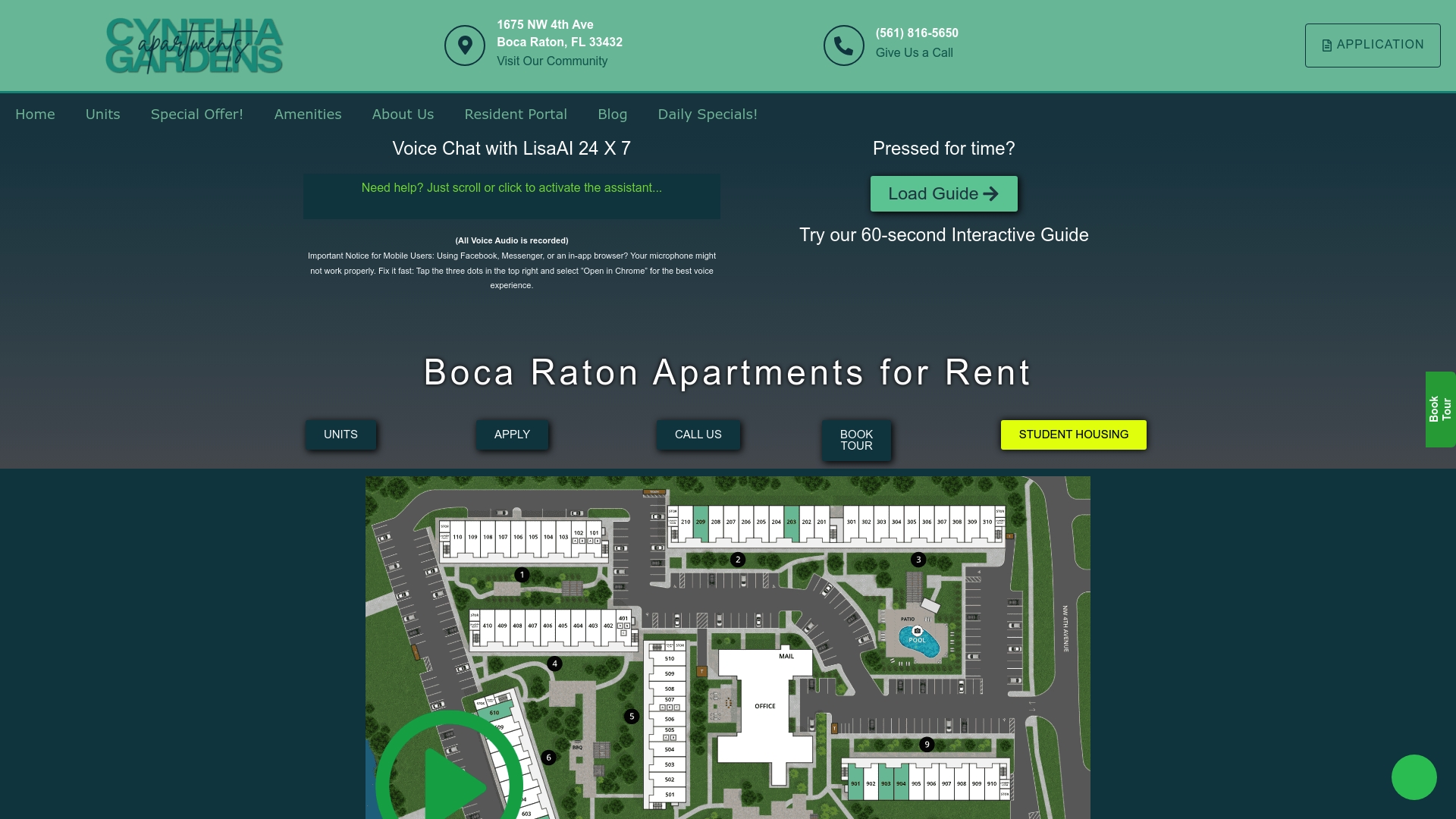
At Cynthia Gardens, we offer pet-friendly one-bedroom apartments with transparent pet policies, no surprise fees, and a community that genuinely welcomes animals. If budget is a concern, explore our affordable Boca Raton apartments to see what fits your price range. Use our virtual tour and interactive map to find the right unit before you even visit in person.
Frequently asked questions
What are the best pets for one-bedroom apartments in Boca Raton?
Cats, small dogs, and small caged pets like hamsters or rabbits tend to thrive in Boca’s one-bedroom apartments. Cats are especially ideal for compact spaces thanks to their low exercise demands and quiet nature.
Can pets really reduce stress for college students and young professionals?
Yes. Pet interaction lowers cortisol and boosts serotonin, and college pet owners consistently report lower stress levels and stronger social connections than non-owners.
Do all apartments in Boca Raton allow pets?
No. Pet policies vary significantly by building. Always confirm breed restrictions, weight limits, deposit amounts, and monthly pet fees before signing a lease to avoid costly surprises.
Are there any downsides to having pets in small apartments?
Yes. Potential downsides include noise, odor, added fees, and the fact that some studies show no universal wellbeing benefit, with certain gender and health differences affecting outcomes for some owners.
Recommended
- Pet-friendly apartment tips for Boca Raton renters
- Pet-Friendly One-Bedroom Apartments in Boca Raton: Comfort for You and Your Pet – Luxury Apartments for Rent in Boca Raton | Premium Boca Raton Apartments | Aapartments Boca Raton
- 6 Essential Apartment Pet Policies List for Boca Raton
- The Best Pet-Friendly Apartments in Boca Raton – Luxury Apartments for Rent in Boca Raton | Premium Boca Raton Apartments | Aapartments Boca Raton
- Why Pets Improve Quality of Life for Owners
- Benefits of Pet Adoption – Transforming Lives and Health