Table of Contents
- Apartment Living vs House Rental in Florida: Key Differences at a Glance
- Cost of Living in Florida for Renters: Apartments vs. Houses
- Pros and Cons of Apartment Living in Florida
- Pros and Cons of Renting a House in Florida
- Maintenance Responsibilities for Florida Renters: Apartment vs. House
- Renter’s Insurance in Florida: Apartment vs. House Compared
- Florida-Specific Factors: HOA Rules, Commute Patterns, and Rental Market Volatility
- Which Option Fits Your Lifestyle? Apartment Living vs House Rental in Florida
Last Updated: June 12, 2026
Choosing between apartment living vs house rental in Florida is one of the most consequential decisions a renter can make in the current market. Florida’s rental landscape carries unique pressures: hurricane season, HOA regulations, seasonal market swings, and a cost of living that varies dramatically between a garden-style apartment and a single-family home. Below, we’ll walk through every meaningful factor, from upfront costs and maintenance responsibilities to commute realities and lease flexibility, so you can make a clear-eyed decision for 2026.
Apartment Living vs House Rental in Florida: Key Differences at a Glance
Apartment living vs house rental in Florida comes down to a core trade-off: convenience and cost predictability on one side, space and autonomy on the other. The right choice depends on your lifestyle, budget, and how long you plan to stay.
| Factor | Apartment | House Rental |
|---|---|---|
| Monthly Rent | Generally lower | Generally higher |
| Upfront Costs | Moderate (1-2 months deposit) | Higher (deposit + lawn/pest fees) |
| Maintenance | Handled by property management | Tenant often responsible for yard, pests |
| Amenities | Pool, gym, security included | Rarely included |
| Privacy | Shared walls, less yard | More private, yard access |
| Pet Policy | Restrictions common | More flexibility possible |
| HOA Rules | Property management enforces | HOA or private landlord varies |
| Hurricane Prep | Building handles structure | Tenant may need to prep exterior |
| Lease Flexibility | Short-term options available | Mostly 12-month leases |
| Noise Exposure | Higher (neighbors, shared spaces) | Lower (detached structure) |
This table reflects the general Florida rental market, not any single city. Boca Raton, Miami, and Tampa each have their own supply dynamics, which we cover in detail later.
The biggest mistake renters make is comparing monthly rent without accounting for utilities, HOA fees, and maintenance costs. Total monthly cost for a house rental often runs meaningfully higher than the lease price alone.
Cost of Living in Florida for Renters: Apartments vs. Houses
Cost of living in Florida for renters is shaped by more than the number on the lease. Many renters miss the full picture until their second utility bill arrives.
Upfront Costs: Security Deposits, Application Fees, and Move-In Expenses
Upfront costs for a Florida apartment typically include a security deposit of one to two months’ rent, an application fee, and sometimes a separate move-in fee. For a house rental, add potential costs for lawn care setup, pest control agreements, and HOA access fees. According to Florida Department of Agriculture and Consumer Services tenant resources, application fees are generally unregulated and vary widely by property management company.
One thing most guides skip: house rentals in Florida often require renters to carry a higher liability limit on renters insurance because the property includes exterior structures and a yard, adding to your true upfront cost.
Monthly Rent and Utility Bills: What Florida Renters Actually Pay
Apartments in multi-family complexes benefit from shared infrastructure, so electricity costs for cooling tend to be lower per square foot than in a standalone house. Florida’s heat and humidity make air conditioning the single largest utility expense, and a house with more square footage means a larger cooling bill every month. House rentals also require renters to manage lawn irrigation and pest control, costs bundled into property management at most apartment communities. The cost of living in Florida for renters who choose houses can increase noticeably once these line items are added.
Pros and Cons of Apartment Living in Florida
Apartment living in Florida offers cost predictability and amenity access that house rentals rarely match at the same price point. For professionals, students near FAU, and individuals who want a low-maintenance lifestyle, the trade-offs tend to favor apartments.
, Florida, with a resort-style pool surrounded by lush tropical landscaping on a sunny afternoon, residents relaxing on lounge chairs near the water's edge](https://cdn.grandranker.com/articles/apartment-living-vs-house-rental-in-florida-2026-guide-content-1-1781230210.jpg "Apartment Living vs House Rental in Florida: 2026 Guide 2")
Pros of apartment living in Florida:
- Maintenance-free living: structural repairs, roof issues, and exterior upkeep are handled by property management
- Amenities included: resort-style pools, fitness centers, and secured parking are standard at many communities
- Lower upfront costs compared to most house rentals
- More short-term lease options, useful in Florida’s seasonal rental market
- Better access to urban centers and transit corridors in cities like Boca Raton and Fort Lauderdale
Cons of apartment living in Florida:
- Less privacy due to shared walls and common areas
- Noise complaints are more common in multi-family buildings
- Pet policies are often restrictive, with breed and weight limits
- Limited outdoor space, no private yard
- Community rules can restrict modifications and guests
Amenities, Community Rules, and Property Management
Property management is one of the clearest advantages of apartment living. When something breaks, you submit a maintenance request and the problem gets resolved without sourcing a contractor, this matters more in Florida because the climate accelerates wear on HVAC systems, plumbing, and building exteriors.
Cynthia Gardens exemplifies this model in Boca Raton, offering maintenance-free living in a garden-style community with a resort-style pool, stainless steel appliances, and quartz countertops. Community rules are enforced consistently by professional property management, creating a predictable living environment. The trade-off is less autonomy: painting walls or installing fixtures requires approval. For most renters, that trade-off is worth it.
Pros and Cons of Renting a House in Florida
Renting a house in Florida gives you space, privacy, and flexibility that apartments cannot replicate. The question is whether the additional cost and responsibility fit your situation.
Privacy, Square Footage, and Pet Policy Advantages
A detached single-family home means no shared walls and a private outdoor space. Pet policies in house rentals are generally more flexible, a private landlord is more likely to negotiate pet terms than a property management company operating under uniform community rules. Florida house rentals also typically offer significantly more living space than apartments at similar price points, particularly in suburban areas. If you work from home or have children needing separate bedrooms, the space calculus often favors a house.
Larger square footage means larger cooling bills in Florida. A house with poor insulation or an aging HVAC system can generate utility costs that erase the apparent savings from a lower base rent. Always ask for the previous tenant’s average utility bills before signing a lease agreement.
HOA Fees, Lease Terms, and Landlord Dynamics
Many Florida house rentals exist within HOA-governed communities, creating a layered authority structure: a landlord who owns the property and an HOA that governs the neighborhood. HOA fees are typically paid by the property owner, but some landlords pass them through to tenants, always clarify this before signing. Lease terms skew toward 12-month agreements, and landlord responsiveness varies far more widely in single-family rentals than in professionally managed communities. According to Florida Statutes Chapter 83 landlord-tenant law, landlords must maintain rental properties in a habitable condition, but exterior maintenance and pest control obligations can differ in practice between apartments and houses.
Maintenance Responsibilities for Florida Renters: Apartment vs. House
Maintenance responsibilities differ dramatically between housing types and are the category most renters underestimate.
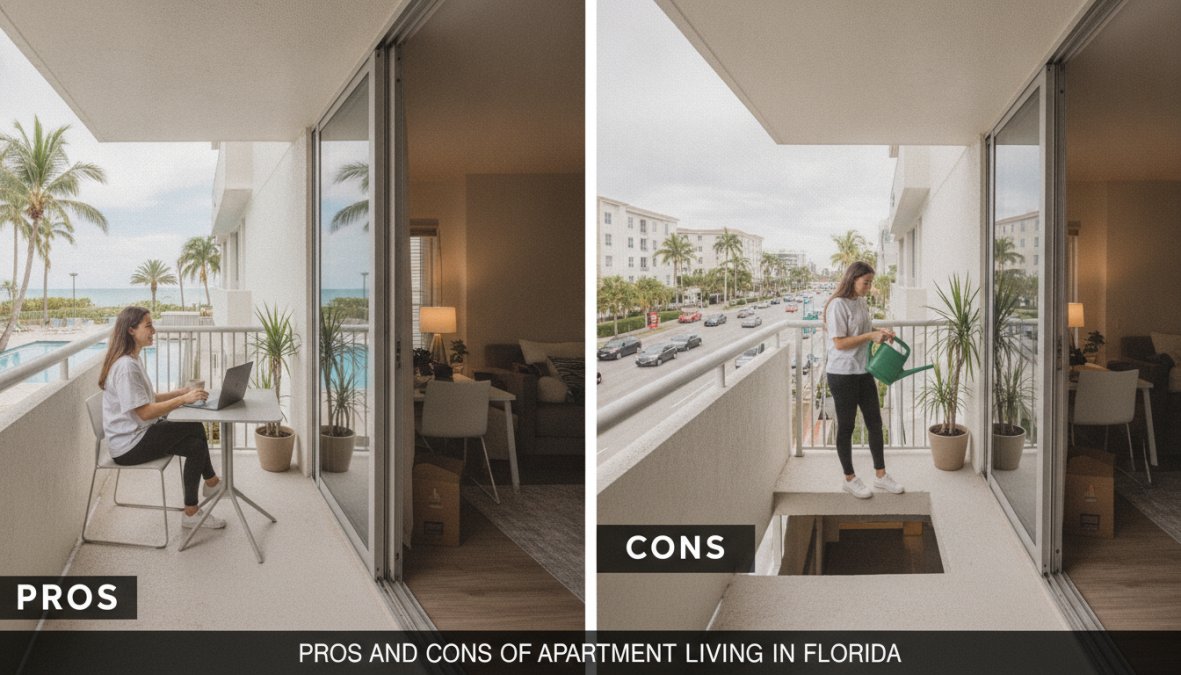
In a professionally managed apartment, HVAC filters, appliance repairs, plumbing leaks, and exterior issues are all the landlord’s responsibility. In a house rental, many Florida leases push lawn care, pest control, and minor repairs onto the tenant.
Hurricane Preparedness and Climate-Related Maintenance Costs
Apartment residents benefit from building-level hurricane protocols: property management handles shutter installation, common area preparation, and post-storm cleanup. House renters face a more demanding checklist, securing outdoor furniture, clearing gutters, inspecting the roof, and potentially installing hurricane shutters, tasks that fall to the tenant or landlord depending on the lease.
Climate-related wear is also faster in Florida than most states. Air conditioning runs nearly year-round, accelerating mechanical failure. Humidity drives mold risk in bathrooms and under sinks. Pest pressure from ants, roaches, and termites is higher in standalone structures than in multi-unit buildings with professional pest management contracts. These are routine expenses for Florida house renters that rarely appear on the lease.
Renter’s Insurance in Florida: Apartment vs. House Compared
Renter’s insurance in Florida is not legally required by state law, but most landlords and property management companies require it as a lease condition. Coverage structure and cost differ between housing types in ways that affect your total monthly budget.
Apartment renters typically need less personal property coverage because the building’s structure and common areas fall under the property owner’s master policy. House renters need a more comprehensive policy covering a larger space, outdoor furniture, garage equipment, and higher liability limits, because you control a larger property footprint including a yard where accidents can occur.
According to Florida Office of Insurance Regulation consumer resources, Florida renters insurance rates are influenced by proximity to the coast, local crime statistics, and building age. Boca Raton renters near the beach will generally pay more than those further inland, regardless of housing type.
Request a copy of the property owner’s master insurance policy before signing any Florida lease. Understanding what the building’s coverage excludes helps you identify exactly what your personal renter’s insurance policy needs to cover, and avoids paying for duplicate protection.
Florida-Specific Factors: HOA Rules, Commute Patterns, and Rental Market Volatility
The Florida rental market operates differently from national averages in ways that matter specifically for the apartment vs. house decision. Seasonal demand, HOA governance, and commute realities all shift the calculus in directions that generic national guides miss.
Short-Term vs. Long-Term Lease Considerations in South Florida
South Florida’s rental market is shaped by seasonal population movement. Snowbirds, university students, and remote workers create demand spikes in winter and softness in summer. Apartments near FAU in Boca Raton tend to offer more flexible lease structures, including short-term and month-to-month options, because property management companies can adjust pricing dynamically. House rentals are dominated by 12-month leases because individual landlords prefer stable income.
The short-term rental market has also reduced long-term house rental inventory in tourist-adjacent areas, as properties have shifted to platforms like Airbnb, pushing prices up and affecting the apartment vs. house comparison in ways that don’t apply in most other states.
Commute and Location: Boca Raton and Major FL Metro Realities
Florida has limited public transit infrastructure, so proximity to your workplace or university directly impacts daily fuel costs and time. Boca Raton sits between Miami and Fort Lauderdale, making location within the city genuinely important. Apartments near the urban core or FAU’s campus reduce commute time significantly compared to suburban house rentals further west. For professionals and students who prioritize access to Boca Raton’s employment centers, beaches, and FAU, apartment communities close to these landmarks offer a practical commute advantage that partially offsets the space difference versus a house rental.
Which Option Fits Your Lifestyle? Apartment Living vs House Rental in Florida
The honest answer: apartments win on cost predictability, maintenance simplicity, and amenity access; houses win on space, privacy, and pet flexibility. Neither is universally superior.
Use this decision framework to identify which fits your situation:
-
Choose an apartment if: You want maintenance-free living, value included amenities like a resort-style pool, prefer a flexible lease, have a limited upfront budget, or want to live close to urban centers in Boca Raton or other Florida metros.
-
Choose a house rental if: You need more square footage, have pets that don’t fit apartment restrictions, want a private yard, plan to stay for multiple years, or work from home and need genuine acoustic separation from neighbors.
The Florida-specific factors, hurricane prep, HOA dynamics, seasonal market volatility, and year-round cooling costs, all add weight to the apartment side for renters new to the state or planning a one-to-two-year stay. The maintenance burden of a Florida house rental is real and often underpriced in the base rent.
For renters searching for apartments near FAU in Boca Raton specifically, Apartments.com Florida rental search and cost calculators offers interactive rent calculators that compare total monthly costs including mandatory fees, a more accurate tool than base rent alone.
The real differentiator in 2026 is not square footage. It’s total cost of occupancy, utilities, insurance, maintenance, and commute, weighed against your actual lifestyle needs.
Deciding between an apartment and a house rental in Florida requires more than a rent comparison. Cynthia Gardens offers a genuinely maintenance-free living experience in Boca Raton, with modern one-bedroom apartments featuring stainless steel appliances, quartz countertops, a resort-style pool, and lush landscaped grounds, all minutes from FAU and the beach. For professionals and individuals who want the effortless Florida lifestyle without the hidden costs of house rental maintenance, it is a compelling option. Schedule a tour today and see why Cynthia Gardens delivers an unmatched blend of comfort, convenience, and community in Boca Raton.
Frequently Asked Questions
Is it cheaper to rent an apartment or a house in Florida?
In most Florida markets, renting an apartment tends to be less expensive than renting a single-family home on a monthly basis. Apartments generally offer lower monthly rent, shared utility costs in some communities, and fewer surprise maintenance expenses. However, house rentals can offer more square footage per dollar in suburban areas. Upfront costs like security deposits are also typically lower for apartments, making them a more accessible option for renters watching their budget in Florida's competitive rental market.
What are the pros and cons of renting a house in Florida?
Renting a house in Florida offers more privacy, greater square footage, a more flexible pet policy, and often access to a private yard, major draws for families and pet owners. On the downside, house renters typically take on more maintenance responsibilities, face higher utility bills due to larger spaces, and may encounter HOA fees and stricter community rules. Renter's insurance costs can also run higher for houses. Florida's hurricane season adds another layer of maintenance and preparedness responsibility for house renters.
Are utilities more expensive in a house or an apartment in Florida?
Utility bills are generally higher in a rental house than in an apartment in Florida. Larger square footage means more energy is needed to cool the home, which is a significant cost given Florida's year-round heat and humidity. Apartments in multi-family complexes often benefit from shared walls that reduce cooling loads. Some apartment communities also include water or trash in the monthly rent, further reducing out-of-pocket utility costs compared to renting a standalone single-family home.
What should I consider when choosing between an apartment and a house in Florida?
When weighing apartment living vs house rental in Florida, consider your budget for monthly rent and utility bills, your need for privacy and space, your pet policy requirements, and how much maintenance responsibility you want. Florida-specific factors matter too: hurricane preparedness obligations, HOA fees, short-term vs. long-term lease flexibility, and proximity to work or major metro traffic corridors. Renters in South Florida markets like Boca Raton should also factor in seasonal rental market volatility and the availability of resort-style amenities in apartment communities.
Do I need renter's insurance for an apartment or house rental in Florida?
Renter's insurance is strongly recommended for both apartment and house rentals in Florida, and many landlords and property management companies now require it as a lease condition. Florida's hurricane risk, flooding potential, and theft rates make coverage especially important. Policies for apartments are typically less expensive than for houses because the landlord's insurance covers the building structure. For house renters, a broader policy may be needed to cover additional liability and contents given the larger footprint and potential for weather-related damage.