
Last Updated: November 16, 2026
Quick Summary
The average gas bill for a Boca Raton apartment depends on the unit, its appliances and how it is used, so there is no single fixed figure. A one-bedroom during high-use cold months is benchmarked at about $77 per month, and many South Florida units are all-electric, meaning no gas bill at all.
- Confirm first whether the unit is all-electric or has natural gas service.
- RentCafe estimates about $77 monthly for a one-bedroom during high-use cold months.
- Gas water heaters, stoves, ovens and dryers are the main drivers of gas use.
- Ask the property for the previous tenant’s gas bills, ideally covering 12 months.
- Set your water heater to around 120 degrees Fahrenheit to help lower the bill.
Table of Contents
- What Renters in Boca Raton Typically Pay for Gas
- Average Utility Bill for a 1-Bedroom Apartment
- Average Gas Bill for a 1-Bedroom Apartment
- Average Gas Bill for a 2-Bedroom Apartment
- What Drives Gas Use in South Florida Apartments
- How to Lower an Apartment Gas Bill in Boca Raton
- Checking a Unit’s Likely Gas Bill Before You Sign a Lease
- Scheduling Your Tour at Cynthia Gardens
- Frequently Asked Questions
What Renters in Boca Raton Typically Pay for Gas
Most renters in Boca Raton do not know their likely gas bill until the first statement arrives. That is a problem, because gas is one of the few utility costs you can partly control. Gas costs for apartments vary widely depending on the unit, so a national average is only a starting point, not an apartment-specific or Boca Raton-specific number.
Apartment gas costs depend on the unit itself. Size, heating equipment and how often you use gas appliances all change the total. Gas use is generally higher in colder months and in units with several gas appliances, so use any published estimate as a reference point, not a quote.
Average Utility Bill for a 1-Bedroom Apartment
Gas is only one line on the bill.
For a one-bedroom apartment, electricity usually makes up the largest share, especially with air conditioning running through a South Florida summer. Gas is often a smaller piece, unless the unit uses gas for water heating, cooking or heat. Check your lease to see which utilities the landlord covers and which you pay directly.
For a broader view of costs beyond gas, see our companion guide, Average Utility Costs for Boca Raton Apartments.
Average Gas Bill for a 1-Bedroom Apartment
A one-bedroom unit uses less gas than a larger apartment, mostly because there is less space to heat and fewer gas appliances to run. RentCafe’s estimate of about $77 per month for a one-bedroom during high-use cold months is a useful benchmark. In milder months, many renters pay far less, since heating demand drops.
Your actual bill depends on:
- Whether the stove, oven or water heater runs on gas
- How often you run the dryer or use gas heat
- Whether the unit has a high-efficiency furnace
Ask the property manager which gas appliances the unit has before you sign. That single answer tells you more about your likely bill than any average.
The table below sums up the gas bill factors this section covers.
| Factor | Effect on gas bill | Note |
|---|---|---|
| Benchmark cost (1-bedroom, high-use months) | About $77 per month | RentCafe estimate |
| Gas stove, oven or water heater | Raises use | Ask which appliances are gas |
| Frequent gas dryer or gas heat | Raises use | Depends on household habits |
| High-efficiency furnace | Can lower use | Check the unit’s equipment |
| Unit size | Larger unit, higher use | One-bedroom uses less than larger units |
Average Gas Bill for a 2-Bedroom Apartment
A two-bedroom apartment has more space and usually more gas appliances, so the bill tends to be higher. RentCafe’s estimate for a three-bedroom with a high-efficiency furnace or water heater is about $104 per month, which gives a sense of how size pushes costs up. A two-bedroom will usually fall between a one-bedroom and that higher figure.
Household size matters too. More occupants mean more hot water, more cooking and more laundry, all of which can raise gas use. If you plan to share the unit, factor that into your budget from the start.
What Drives Gas Use in South Florida Apartments
Gas use in South Florida is different from colder regions, and the difference starts with whether a Boca Raton apartment is even plumbed for natural gas. Many South Florida apartment buildings are all-electric, so the “gas bill” for a unit may be $0 because there is no gas service; the cost then appears on the electric bill instead. Before you apply a national gas estimate to a Boca Raton unit, confirm the fuel type. Ask the leasing office directly: “Is this unit all-electric, or does it have natural gas service?”
Where natural gas is available, the local delivery landscape matters, and gas bills often include a fixed charge that applies every month, so a low-use unit can still have a recurring cost. Ask your provider for the current rate structure.
South Florida’s mild climate generally means heating demand is low for most of the year, so gas use often tracks appliances such as water heaters, stoves and dryers more than space heating.
The biggest factors are the equipment you have and how you use it:
- Water heater: Often the largest gas user in an apartment; a tankless unit can change the pattern
- Stove and oven: Gas ranges add steady, daily use, especially in households that cook at home
- Furnace: Matters most during cooler months, and many Boca Raton units have no gas furnace at all
- Dryer: A gas dryer can raise the bill noticeably in households that do multiple loads per week
Apartment gas bills vary with heating systems and appliances, so two units of the same size can have very different bills. The fuel type and appliance mix often matter more than square footage alone.
How to Lower an Apartment Gas Bill in Boca Raton
You can cut your gas bill without giving up comfort. Small habits add up over a year.
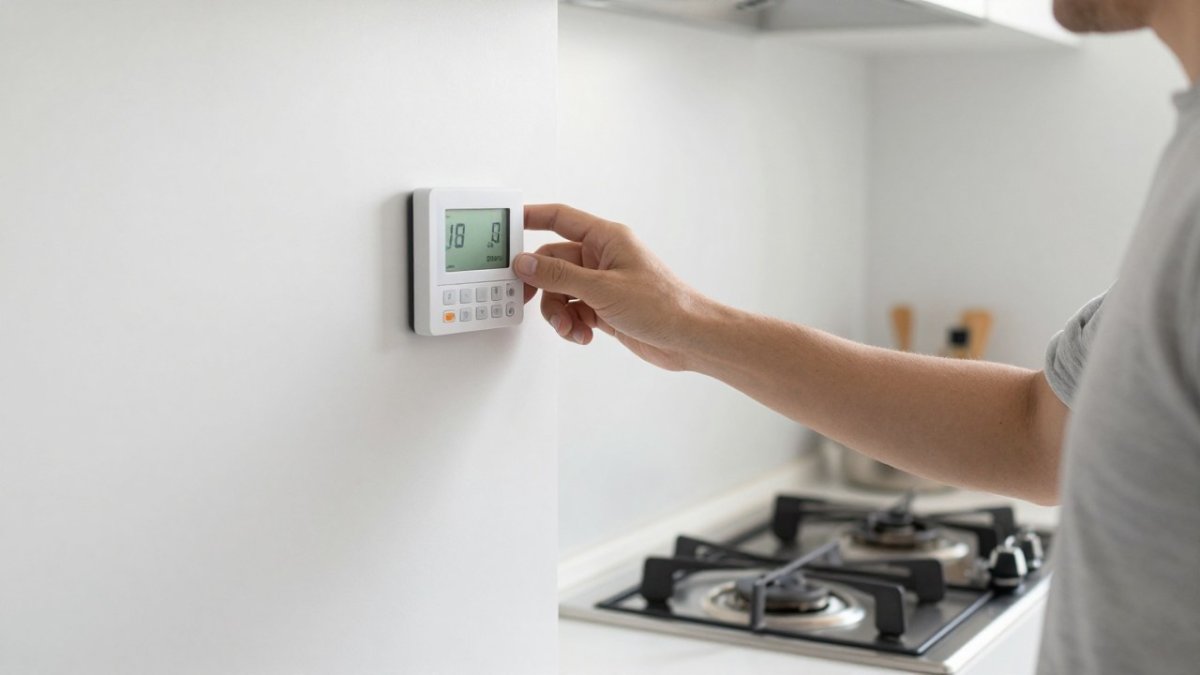
- Set your water heater to a moderate temperature, around 120 degrees Fahrenheit
- Wash clothes in cold water and air-dry when you can
- Cover pots while cooking to use less heat
- Keep vents and filters clear so equipment runs efficiently
- Tell your landlord about a leaking faucet or a drafty window
Watch out: Do not block gas appliance vents or set heaters near curtains. Unsafe setups cause far bigger problems than a high bill.
Checking a Unit’s Likely Gas Bill Before You Sign a Lease
A practical verification process can help protect your budget before you sign. Use this checklist before you sign:
- Confirm the fuel type. Ask the leasing office whether the unit is all-electric or has natural gas service. If it is all-electric, your gas bill is $0 and your electric bill carries the load, budget accordingly. If it has gas, ask which appliances are gas: range, oven, water heater, dryer, furnace, or some combination.
- Identify the gas provider. Confirm with the property which utility provides gas service to the unit, then contact that provider with the unit address to ask whether there is an active gas meter and what charges apply.
- Request prior bills. Ask the property manager for the previous tenant’s gas bills for the same unit, ideally 12 months. A full year shows the seasonal pattern, including the January-February bump, better than a single summer month. If the manager cannot share bills, ask for a range or an average.
- Read the lease’s utility clause. Confirm which utilities are included in rent and which you pay directly. Some apartment communities bundle certain utilities into rent while leaving others to the tenant. The lease language controls, not the marketing brochure.
- Check for sub-metering or a utility billing service. Some apartment communities use a third-party billing company to sub-meter utilities and add administrative fees. Ask whether gas is sub-metered and whether there is a monthly billing fee on top of usage.
- Compare total monthly cost, not just rent. A lower rent can hide higher utility costs. Add the expected gas bill, the electric bill, and any utility fees to the rent before you compare two units.
Watch out: A verbal “utilities are included” from a leasing agent is not the same as a lease clause. Get the utility terms in writing before you pay a deposit.
If you are weighing a one-bedroom against other layouts, our guide on whether renting a one-bedroom apartment is worth it can help you judge the trade-offs. You can also check top-rated apartment communities in Boca to compare rent, pet policies and transit times side by side. Evaluating true monthly costs before signing is the same skill covered in our guide to evaluating apartment neighborhoods in Boca Raton.
Gas use varies by unit, so treat any estimate here as a starting point. The right move is to confirm the specifics for the exact apartment you plan to rent.
Scheduling Your Tour at Cynthia Gardens
The best way to understand a unit’s likely costs is to see it in person. At Cynthia Gardens, our one-bedroom apartments feature stainless steel appliances and quartz countertops in a garden-style community, just minutes from FAU and the beach. Ask us about the appliances in each unit before you commit.
Schedule a tour today to see the apartment, ask about utilities and find the layout that fits your budget.
Frequently Asked Questions
How much is a normal gas bill for an apartment?
A typical gas bill for an apartment depends on unit size, heating equipment, and how many gas appliances are in use. Gas use is generally higher in colder months and in units with several gas appliances, so national averages are only a rough reference and not a Boca Raton apartment quote. Ask a property manager for recent billing history before signing a lease to get a more accurate picture.
Is a $200 gas bill normal for an apartment?
A $200 gas bill is high for most apartments, since national residential gas estimates run far lower. However, a bill can reach that level in winter if the unit has a gas furnace, a gas water heater, and a gas stove used heavily. Compare the bill against the same month in prior years and check for a leak or an aging water heater if the amount is a sudden jump. Your utility provider can review your usage history and explain any charges.
What is the average gas bill for a Boca Raton apartment per month?
No verified 2026 study reports an average gas bill specifically for Boca Raton apartments. Gas costs vary widely by unit, appliance mix and season, so published averages are only a rough reference point. Confirm with the property which utilities are included in rent and which are billed to you.
How can I lower my apartment gas bill in Boca Raton?
Start by setting your water heater to a moderate temperature and using a lower thermostat setting when heating is needed. Replace air filters on time, seal gaps around windows and doors, and avoid running the gas range or dryer longer than necessary. Shorter showers and full loads of laundry also reduce energy use. Review your monthly usage each billing cycle to spot unusual spikes early, and ask your utility about rate or budget billing options.
