Table of Contents
- Why Pet Proofing Indoor Plant Pots Matters in a Small Apartment
- What You’ll Need Before You Start
- Step 1: Choose Pet-Safe Plant Pot Covers and Barriers
- Step 2: How to Stop Cats From Digging in Plant Pots
- Step 3: Set Up Non-Toxic Deterrents for Cats Around Plants
- Step 4: Pet-Proofing Houseplants in an Apartment Without Damaging the Rental
- Common Mistakes to Avoid When Pet Proofing Plant Pots
- Frequently Asked Questions
Last Updated: October 14, 2026
Why Pet Proofing Indoor Plant Pots Matters in a Small Apartment
If you rent in Boca Raton and share your space with a cat or dog, learning how to pet proof indoor plant pots is one of the smartest safety moves you can make. Houseplants and pets share a small apartment, and that closeness creates real risk. A review in the journal Toxins notes that eating poisonous indoor plants is common among animals and can cause sudden poisoning or long-term harm (Toxicity of House Plants to Pet Animals, Toxins, 2023).
That is the part most guides skip. They tell you to move a plant onto a shelf and call it done.
So here is the practical version. Below, we walk through four steps to pet proof indoor plant pots, the covers that actually work, and the mistakes that undo your effort.
What You’ll Need Before You Start
Gather your supplies first so you finish the job in one sitting. The right tools make pet proofing simple and quick.
- Pet-safe pot covers or barriers (mesh, fabric, or fitted lids)
- Smooth river stones or large pebbles
- Double-sided tape or a citrus spray you mix yourself
- A shelf, plant stand, or hanging hook
- A small vacuum or broom for cleanup
Two rules guide every choice here. First, anything your pet can reach may end up in their mouth. Second, any deterrent you use has to be safe if licked or swallowed.
Skip anything with sharp edges, small loose parts, or strong chemical smells. Those create new problems instead of solving the old one.
Step 1: Choose Pet-Safe Plant Pot Covers and Barriers
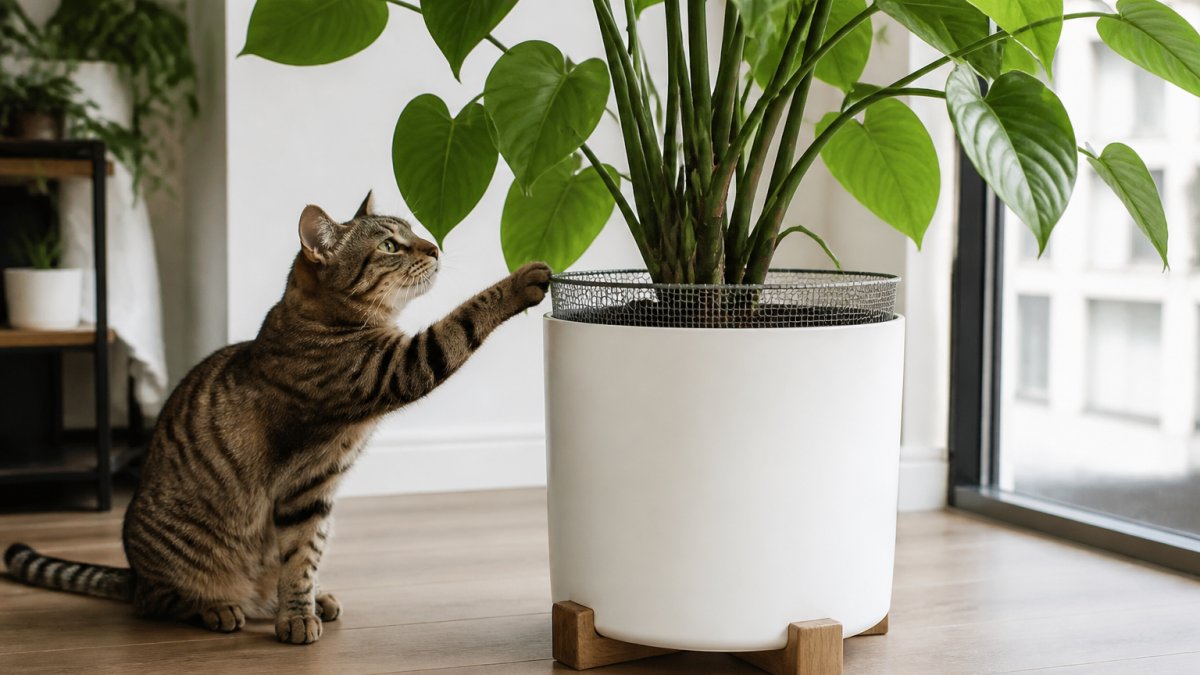
The best pet-safe plant pot cover is one that blocks digging while still letting air and water reach the soil. That balance is the whole trick.
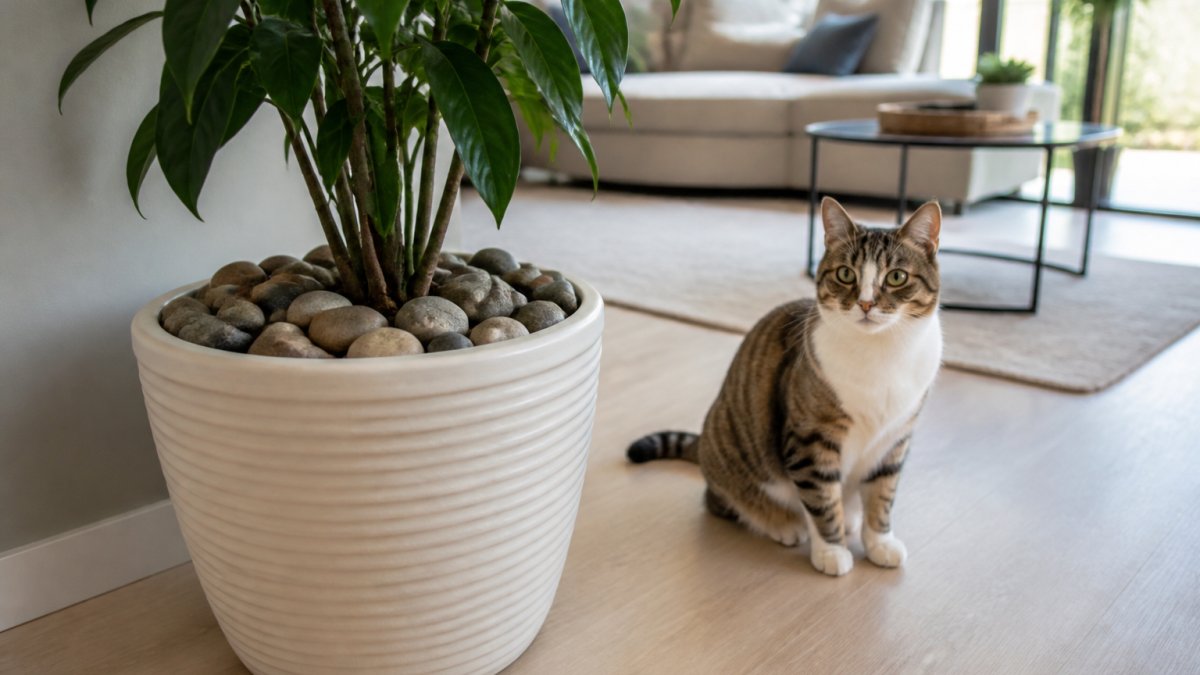
Securing the soil surface with physical barriers remains a primary defense, though maintaining a healthy environment also requires using pet safe cleaning products to ensure that no harmful residues linger near your greenery.
Covers That Still Let Water Reach the Soil
A solid lid traps moisture and rots roots. Instead, look for covers with gaps or holes.
Good options include:
- Mesh covers that snap over the rim
- Fabric pot toppers that sit loose on top
- Fitted lids with drainage slots
- Coir mats cut to fit the pot opening
Water passes through all of these. Your pet cannot.
Stones, Pebbles, and Other Soil Toppers
A layer of smooth stones is the simplest cover you can build. Cats dislike the uneven surface, and the stones hide the soil they love to dig.
Use stones large enough that your pet cannot swallow them. One even layer is enough. Skip small gravel, which can be a choking risk.
Leave a small gap in the stone layer around the plant stem. Water drains faster, and you avoid pooling that can rot the base of the plant.
Step 2: How to Stop Cats From Digging in Plant Pots
The fastest way to stop cats from digging in plant pots is to remove the reward. Cats dig because loose soil feels good and gives them a bathroom spot. Take that away, and the habit fades.
Start with the soil surface. Stones, mesh, or a fitted cover all work. Then make the pot itself less appealing.
Try these fixes:
- Place pots on stands or shelves your cat cannot reach
- Add a layer of pine cones or large bark chips on top
- Set a motion-activated air sprayer near the pot
- Offer a small tray of cat grass as a decoy
That last one works better than most people expect. Give your cat their own patch of dirt, and the houseplant loses its appeal.
If digging continues, check the pot for a bigger problem. Cats often dig in soil that stays wet, because it feels like a litter box. Let the top inch dry out between waterings.
Step 3: Set Up Non-Toxic Deterrents for Cats Around Plants
Non-toxic deterrents for cats around plants work by making the area unpleasant, not dangerous. You want your pet to walk away, not get sick.
Safe options include:
- Citrus spray: mix water with lemon or orange peel, then mist the leaves
- Double-sided tape: cats hate the sticky feel on their paws
- Aluminum foil: the crinkle and shine scare most cats off
- Scent barriers: place orange peels or coffee grounds near the pot
Test any spray on one leaf first. Some plants react badly to citrus, and you do not want to damage a healthy houseplant while solving a pet problem.
Never use essential oils as a deterrent. Many are toxic to cats and dogs, even in small amounts. Stick to food-based scents and physical barriers instead.
Do not use mothballs, rat poison, or harsh chemical repellents near houseplants. Pets can absorb these through their paws or mouth, and the result can be serious illness.
Step 4: Pet-Proofing Houseplants in an Apartment Without Damaging the Rental
Pet-proofing houseplants in an apartment comes down to placement, not permanent changes. You want a setup that protects your pet and your security deposit.
Renters have one big advantage here. You can solve most problems with furniture, not fixtures.
Try these renter-friendly moves:
- Use freestanding plant stands instead of wall-mounted shelves
- Choose tension rods or over-door hooks for hanging plants
- Set tall plants behind furniture to block access
- Group plants in one corner your pet avoids
If you must attach anything to a wall, use removable adhesive hooks rated for the weight. Patch small holes with spackle before you move out.
For anyone searching for pet-friendly apartments near me in Boca Raton, this matters. A community that welcomes pets makes this whole process easier from day one.
Our garden-style layout gives residents room to place plants and pets without fighting for space. The landscaped grounds also give dogs a real place to burn energy, which means less digging at home.
| Problem | Quick Fix | Why It Works |
|---|---|---|
| Cat digs in soil | Stone layer or mesh cover | Removes the digging surface |
| Pet chews leaves | Move pot out of reach | Blocks access completely |
| Soil tracked everywhere | Fitted lid with slots | Keeps soil contained |
| Cat uses pot as litter box | Let topsoil dry out | Removes the wet feel |
| Pet knocks pot over | Weighted base or low stand | Adds stability |
Common Mistakes to Avoid When Pet Proofing Plant Pots
Most failed attempts trace back to the same handful of errors. Fix these and the rest gets easier.
- Using a solid lid. It traps water and kills the plant. Always allow drainage.
- Relying on scent alone. Cats adjust to smells within days. Pair scent with a physical barrier.
- Skipping the check on plant toxicity. Even a covered pot can drop leaves your pet finds on the floor.
- Placing pots at eye level. A curious cat will bat at anything within reach.
- Forgetting the floor. Fallen leaves and spilled soil still pose a risk after you cover the pot.
One more mistake deserves its own line. People assume a plant is safe because it sits high up. Cats climb. Dogs jump. Height alone is not a plan.
For a full list of plants to avoid, the ASPCA keeps a searchable database of toxic and safe plants (ASPCA Toxic and Non-Toxic Plants Database). Check every plant before it comes through your door.
Living with pets and plants in a small Boca Raton apartment takes a little planning, but it does not take much money or time. The right covers, a few safe deterrents, and smart placement solve most problems in an afternoon.
At Cynthia Gardens, we make that easier with spacious one-bedroom apartments, a resort-style pool, and lush landscaped grounds where pets and people both have room to breathe. Our maintenance-free approach means you spend your time on the things you enjoy, not on repairs.
Schedule a tour today and see how a garden-style community near FAU and the beach fits your life with pets.
Frequently Asked Questions
How do I stop my cat from digging in indoor plant pots?
Start by covering the soil with a physical barrier such as smooth river stones, a fitted pot cover, or a decorative mesh. Cats dig because the soil feels loose and appealing, so adding weight and texture on top removes the reward. Pair that with a non-toxic deterrent like citrus peel or a motion-activated air canister nearby. If your cat keeps returning, move the plant to a shelf or hanging planter out of reach. Consistency matters more than any single product.
What can I put on top of plant soil to keep pets out?
Smooth river stones, large decorative pebbles, pine cones, or a fitted pot cover with drainage holes all work well. Avoid small gravel or sand because cats can scatter it and dogs may swallow it. A layer about 1 to 2 inches deep is usually enough to block digging without smothering the soil. Check that water still drains freely after you add the barrier, and lift the stones occasionally to prevent mold underneath.
Are stones or pebbles safe to use as a barrier over potting soil?
Yes, as long as they are large enough that a pet cannot swallow them. Smooth stones wider than 2 inches are the safest choice for both cats and dogs. Avoid sharp-edged gravel that can cut paws, and skip small pebbles that a dog might treat as food. Rinse the stones before placing them to remove dust, and leave a small gap around the plant stem so water and air can still reach the roots.
How can renters pet-proof plant pots without damaging the apartment?
Choose removable solutions: fitted fabric covers, adhesive-free shelf liners under pots, and freestanding barriers that do not attach to walls. Avoid drilling, permanent adhesives, or anything that stains carpet or hardwood. A washable rug or boot tray under the plant zone catches spilled soil and water, protecting floors in a rental. When you move out, everything lifts away cleanly, which keeps your security deposit intact and your pet-safe setup easy to relocate.