
Table of Contents
- Understanding the Cost of Living in Boca Raton
- Finding Affordable Apartments in Boca Raton
- Living Near FAU on a Budget
- Cutting Transportation and Utility Costs
- Saving Money on Food and Entertainment
- Affordable Neighborhoods Worth Considering
- Making Your Move to Boca Raton Work on a Budget
Last Updated: August 29, 2026
Understanding the Cost of Living in Boca Raton
The cost of living in Boca Raton is significantly higher than most of the United States. According to Salary.com’s 2026 cost of living analysis, the overall cost of living in Boca Raton runs 17% above the national average, driven primarily by housing expenses, transportation, and food prices. For a single person, monthly housing costs average around $1,382, while a family of four should budget approximately $2,533 just for housing.
This reality hits hardest when you’re moving to Boca Raton on a budget. The numbers matter because they determine what’s actually possible for your financial situation. If you’re earning a typical entry-level salary or relying on graduate student stipends, you need to understand exactly where your money goes before committing to the move.
Housing dominates the budget conversation. The median home value in Boca Raton sits at $615,000, which is roughly double the national average (census.gov). For renters, the median rent across all apartment types is $2,424 as of August 2026 (Apartment List, August 2026). A one-bedroom apartment typically runs between $2,200 and $2,700 monthly, while two-bedroom units range from $2,700 to $3,300. Three-bedroom single-family homes start around $3,500 and climb quickly from there.
The second major expense is transportation. Living in Boca Raton often requires a car unless you’re positioned perfectly near public transit or your workplace. Gas, insurance, maintenance, and parking add up fast. Many residents spend $400-600 monthly on transportation alone.
Food costs also run higher than the national average. Groceries, dining out, and specialty items all carry premiums in this market. Budget roughly 15-20% more than you would in a typical American city.
The key insight: moving to Boca Raton on a budget requires ruthless prioritization. You can’t optimize everything simultaneously. Most people succeed by choosing one or two areas to compress hard and accepting market rates elsewhere.
Finding Affordable Apartments in Boca Raton
The apartment market in Boca Raton offers options at different price points, though "affordable" is relative. Finding an apartment that doesn’t consume 60% of your monthly income requires strategy and timing.
One-bedroom apartments represent the most accessible entry point for budget-conscious renters. According to True Patriot Property Management (June 2026), one-bedroom units range from $2,200 to $2,700 monthly. The variation depends on location, amenities, age of the property, and proximity to major employment centers. Older garden-style communities typically cost less than newer high-rises with extensive amenities.
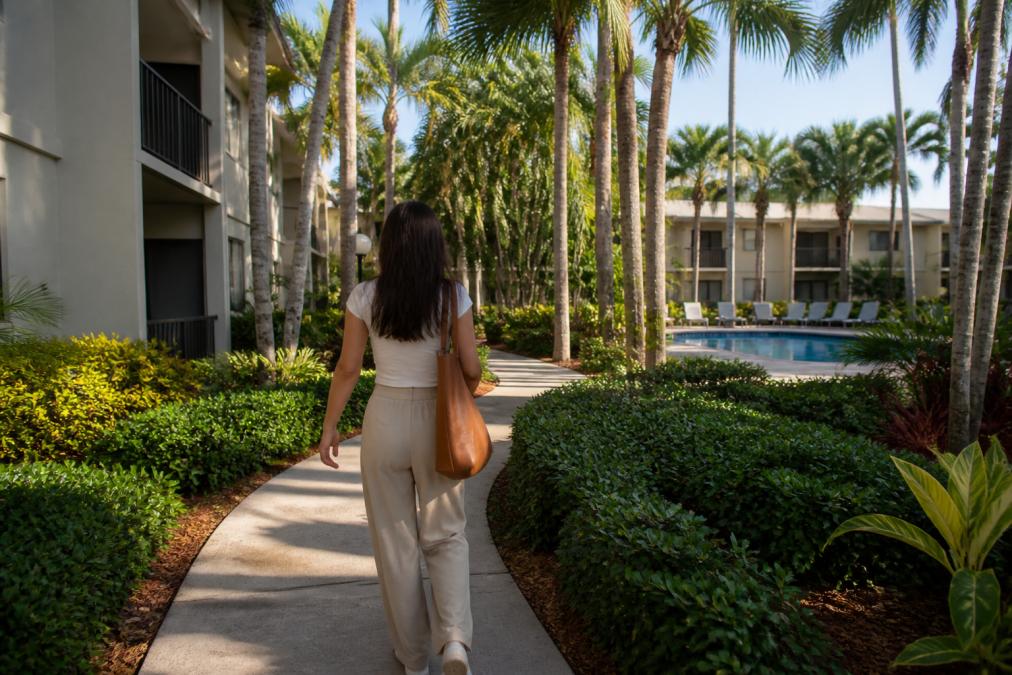
Timing your move matters significantly. Many properties offer move-in specials during slower seasons (typically summer months). You might negotiate reduced deposits, waived application fees, or rent concessions if you’re flexible on your move date. Never accept the first offer, ask explicitly what specials are available.
Location within Boca Raton creates substantial price differences. Areas closer to FAU or further from the beach tend to rent lower than beachfront or downtown neighborhoods. Properties on the west side of I-95 generally cost less than those on the east side, though commute times may increase.
Cynthia Gardens offers one-bedroom apartments. The community offers modern finishes, stainless steel appliances and quartz countertops, without the premium pricing of newer luxury developments.
Check application deadlines carefully. Many properties require 3-5 business days to process applications, and some have waiting lists for move-in dates. Apply early if you have a specific move date in mind.
New affordable housing developments are coming online. The Residences at Martin Manor, an income-restricted community with 95 units, is expected to open in Fall 2026 (Boca Raton Housing Authority, March 2026). These units serve families earning between 22% and 80% of the area median income. If you qualify, this represents a genuine opportunity to reduce housing costs significantly.
Living Near FAU on a Budget
Graduate students and undergraduates at Florida Atlantic University face particular pressure on their budgets. Tuition, books, and living expenses consume most financial aid packages, leaving little room for expensive housing.
Living near FAU on a budget means choosing proximity strategically. The university’s main campus sits in central Boca Raton, roughly 2-3 miles west of the beach. Apartments within walking or short biking distance cost more, but you eliminate transportation expenses. The trade-off equation: pay slightly more for housing but save on gas and parking.

Cynthia Gardens sits just minutes from FAU’s campus, making it particularly valuable for students managing tight budgets. The property’s proximity to both the university and Palm Beach State College reduces commute costs and time. For graduate students especially, the maintenance-free living model eliminates the hassle of managing repairs and upkeep while juggling coursework and research.
Student-focused apartment communities near FAU often offer flexibility that general market properties don’t. Some provide semester leases instead of year-long contracts, which matters if you’re uncertain about your second year. Others offer roommate-matching services, which can reduce your per-person housing cost substantially.
The real budget win comes from reducing your commute. Living near campus means you can bike or walk on pleasant days, taking advantage of Boca Raton’s year-round weather. During summer months when gas prices sometimes spike, this proximity saves hundreds of dollars.
Avoid signing long-term leases before confirming your graduate program funding or assistantship. Many students face unexpected changes in their second year. Ensure your lease allows early termination or has reasonable buyout terms.
Cutting Transportation and Utility Costs
Transportation represents your second-largest controllable expense after housing. In Boca Raton, where public transit is limited compared to major cities, most residents rely on cars. This creates an opportunity: strategic location choices can slash transportation costs.
Living near major corridors like I-95 or Federal Highway reduces commute distance if you work in Miami or Fort Lauderdale. A 5-mile difference in daily commute saves roughly $40-50 monthly in gas alone. Over a year, that’s $480-600 in pure savings.
Public transportation exists but requires planning. Tri-Rail connects Boca Raton to Miami and Fort Lauderdale, with stations accessible from various neighborhoods. The monthly pass costs significantly less than daily driving, though it requires schedule coordination. For tech and finance workers commuting to Miami, Tri-Rail can eliminate car ownership entirely.
Utility costs in Florida run higher than many states due to air conditioning demands. Central AC runs nearly year-round in Boca Raton, pushing electric bills to $150-250 monthly depending on usage. Newer apartments with better insulation and efficient systems cost less to cool. Older properties can run $50-100 higher monthly. This hidden cost often gets overlooked during apartment hunting but compounds significantly over a lease term. saving on household essentials.
Water and sewer costs are relatively standard across the area, but internet varies widely. Some properties bundle internet into rent; others charge $50-80 monthly separately. Always ask about internet costs before signing. Bundled options often provide better rates than individual subscriptions.
The transportation-housing trade-off is real: paying $200 more monthly for an apartment near your workplace saves $300+ in commuting costs. Run the actual numbers for your specific situation.
Saving Money on Food and Entertainment
Food costs in Boca Raton run 15-20% above the national average (bls.gov). Grocery stores, restaurants, and specialty food shops all price higher than inland Florida or other regions. This doesn’t mean you can’t eat well on a budget, it means being intentional about where and how you shop.
Chain grocery stores like Publix and Winn-Dixie dominate the area. Publix runs slightly higher than discount competitors but offers frequent sales and digital coupons that offset the premium. Shopping sales and using store loyalty programs can reduce your effective grocery costs by 20-30%. Plan meals around what’s on sale rather than shopping from a fixed list.
Restaurant culture in Boca Raton skews upscale. Casual dining averages $15-25 per entree, while nicer establishments run $30-50+. Eating out frequently will destroy a tight budget. Cooking at home saves 60-70% compared to restaurant meals. Meal prep on Sunday, cooking proteins and vegetables in bulk, makes weekday eating affordable and convenient.
Entertainment doesn’t require spending money. Boca Raton has excellent public beaches, parks, and recreational facilities. Beach access is free; parking costs $2-5 daily. The Boca Raton Museum of Art offers free admission on certain evenings. FAU hosts free events, concerts, and lectures throughout the year. Many residents overlook these options while spending $50-100 monthly on paid entertainment.
Happy hours and drink specials at local restaurants and bars provide social outlets without breaking the budget. Most establishments offer $3-5 drinks and discounted appetizers from 4-7 PM on weekdays. This beats spending $40+ for a night out on a weekend.
Affordable Neighborhoods Worth Considering
Boca Raton neighborhoods vary significantly in price and character. Understanding the geography helps you identify areas where your budget stretches further without sacrificing quality of life or safety.
The west side of I-95 generally offers lower rents than the east side. Neighborhoods like Deerfield Park, Ibis, and areas near FAU’s campus provide solid value. These communities are less touristy, more residential, and attract fewer seasonal visitors, which keeps prices lower. The trade-off: you’re further from the beach and downtown restaurants, but commute times to FAU or west-side employment centers shrink.
Central Boca Raton, particularly around Cynthia Gardens and similar garden-style communities, offers the sweet spot for many renters. You’re close enough to FAU and major employment centers to minimize commuting costs. You’re far enough from the beach to avoid the premium pricing of beachfront properties. These neighborhoods attract young professionals and students rather than retirees, creating a younger demographic and more active social scene.
The downtown Boca Raton area near Mizner Park commands premium prices due to walkability, restaurants, and entertainment. Unless your budget is significantly higher than typical, this neighborhood isn’t realistic for budget-conscious movers. However, living 1-2 miles away and biking or driving to downtown gives you access to the scene without the housing cost premium.
Northern Boca Raton neighborhoods like Coral Ridge and areas near Florida Atlantic Boulevard offer good value with reasonable proximity to employment centers. These areas attract families and established professionals, creating quieter, more stable communities. Rents run slightly lower than central areas while maintaining safety and convenience.
Graduate students and young professionals earning $35,000-55,000 annually seeking to manage housing costs while staying connected to campus or employment centers. The combination of lower rents and proximity to FAU makes central Boca Raton neighborhoods ideal for this demographic.
Making Your Move to Boca Raton Work on a Budget
Moving to Boca Raton on a budget requires a clear financial plan before you commit. The costs are real, but the city remains achievable for disciplined budgeters.
Start with a detailed spreadsheet. List all anticipated monthly expenses: housing, utilities, transportation, food, insurance, phone, internet, and a small entertainment buffer. Be honest about your actual spending patterns, not your idealized versions. Most people underestimate food and entertainment costs by 20-30%.
Compare your projected expenses to your actual income. If housing plus transportation exceeds 50% of your gross income, reconsider your timeline or budget. This ratio leaves insufficient margin for unexpected costs, healthcare, or savings. If you’re close to this threshold, prioritize moving to Boca Raton on a budget by choosing housing that creates breathing room.
Research income opportunities specific to Boca Raton. The area has strong tech and finance sectors, plus hospitality and service industries. Salary.com and similar resources show typical wages for your field in this specific market. If local wages are significantly lower than your current location, factor that reality into your decision.
Cynthia Gardens and similar cost-effective apartment communities provide the foundation for a successful budget move. Modern amenities, maintenance-free living, and strategic location reduce hidden costs while maintaining quality of life. The community’s proximity to FAU makes it especially valuable for students and young professionals building careers in the area.
Build a moving fund before relocating. First month’s rent, deposit, and initial utility setup costs easily total $4,000-6,000. Moving companies charge $1,500-3,500 depending on distance and volume. Budget for unexpected expenses, every move reveals surprises. Having a $2,000 cushion prevents financial crisis when the air conditioner needs servicing or you discover a utility deposit requirement.
Moving to Boca Raton on a budget is possible, but it requires ruthless financial planning and strategic location choices. Housing determines everything else; get that right and the rest becomes manageable.
Moving to Boca Raton on a budget demands precision in where you live and how you spend. The city’s higher cost of living is real, but it’s not insurmountable for those willing to be strategic. Cynthia Gardens offers the combination of affordability, modern living, and convenient location that makes this transition realistic for young professionals and graduate students. Our community provides maintenance-free apartments with high-end finishes, a resort-style pool, and proximity to FAU, all positioned to support your budget-conscious move. Schedule a tour with Cynthia Gardens today and see how our garden-style community can anchor your successful transition to Boca Raton.
=== FAQ ANSWERS (audit these too, same rules) ===
[1] Q: Is Boca Raton expensive to live in compared to the rest of Florida?
A: Yes. The cost of living in Boca Raton is 17% higher than the U.S. national average and 750% higher than Florida’s state average as of 2026, according to Salary.com. Housing is the primary driver, with median home values at $615,000, 118% above the national average. However, rental options exist across different price points, and income-restricted affordable housing communities like the Residences at Martin Manor are expanding opportunities for budget-conscious renters.
[2] Q: What are realistic rental prices for affordable apartments in Boca Raton right now?
A: As of August 2026, the median rent across all apartment types in Boca Raton is $2,424 per month, according to Apartment List. One-bedroom apartments typically range from $2,200 to $2,700, while two-bedroom units run $2,700 to $3,300. Budget-conscious renters can find options.
[3] Q: Are there affordable housing options specifically for graduate students near FAU?
A: Yes. Graduate students benefit from proximity to FAU and Palm Beach State College, which attract apartment communities offering competitive pricing. Cynthia Gardens, located minutes from FAU, provides one-bedroom apartments designed for students and young professionals seeking affordable, quiet living. Additionally, the Residences at Martin Manor, expected to open in Fall 2026, will offer income-restricted units (one to four bedrooms) for families earning 22% to 80% of the area median income, a significant option for budget-conscious renters.
[4] Q: What move-in costs should I budget for when relocating to Boca Raton?
A: Move-in costs typically include first month’s rent, security deposit, and potential application or administrative fees. For specific pricing and any available move-in specials or deposit flexibility, contact your prospective apartment community directly. Some properties offer promotional incentives during slower leasing periods, so timing your move can help reduce overall costs.
Frequently Asked Questions
Q: Is Boca Raton expensive to live in compared to the rest of Florida?
A: Yes. The cost of living in Boca Raton is 17% higher than the U.S. national average and 750% higher than Florida's state average as of 2026, according to Salary.com. Housing is the primary driver, with median home values at $615,000, 118% above the national average. However, rental options exist across different price points, and income-restricted affordable housing communities like the Residences at Martin Manor are expanding opportunities for budget-conscious renters.
Q: What are realistic rental prices for affordable apartments in Boca Raton right now?
A: As of August 2026, the median rent across all apartment types in Boca Raton is $2,424 per month, according to Apartment List. One-bedroom apartments typically range from $2,200 to $2,700, while two-bedroom units run $2,700 to $3,300. Budget-conscious renters can find options.
Q: Are there affordable housing options specifically for graduate students near FAU?
A: Yes. Graduate students benefit from proximity to FAU and Palm Beach State College, which attract apartment communities offering competitive pricing. Cynthia Gardens, located minutes from FAU, provides one-bedroom apartments designed for students and young professionals seeking affordable, quiet living. Additionally, the Residences at Martin Manor, expected to open in Fall 2026, will offer income-restricted units (one to four bedrooms) for families earning 22% to 80% of the area median income, a significant option for budget-conscious renters.
Q: What move-in costs should I budget for when relocating to Boca Raton?
A: Move-in costs typically include first month's rent, security deposit, and potential application or administrative fees. For specific pricing and any available move-in specials or deposit flexibility, contact your prospective apartment community directly. Some properties offer promotional incentives during slower leasing periods, so timing your move can help reduce overall costs.