
These are the documents landlords most commonly accept as proof of income: recent pay stubs, a W-2, your last one or two tax returns (Form 1040), bank statements showing regular deposits, and an employer verification letter. Bring multiple complementary items, since a single document alone rarely settles the question. A pay stub shows current pay but not job stability; a signed employer letter fixes that gap.
If you’re staring down a rental application deadline, start here:
- Pull your two or three most recent pay stubs and your last tax return, or an equivalent for self-employed income.
- Ask your employer’s HR contact for a short verification letter (a template is coming up below).
- If you’re missing traditional pay stubs, line up bank statements showing consistent deposits.
- Email the leasing office now to confirm exactly what they want and by when. Requirements vary property to property.
The Fair Housing Act requires that whatever a landlord asks of you, they ask consistently of every applicant. The IRS Form 1040 and an SSA benefit verification letter are two of the most trusted third-party documents you can hand over, because neither one can be faked easily.
Key Takeaways
| Point | Details |
|---|---|
| Pair your documents | Submit at least two complementary items, such as pay stubs plus bank statements, rather than relying on one document alone. |
| Know the ratio | Most landlords use a 3x monthly rent benchmark, while HUD’s guideline caps housing costs at 30% of gross income. |
| Average irregular income | Divide 12 months of total earnings by 12 to get a realistic monthly figure for seasonal or gig income. |
| Prep files properly | Convert documents to PDF, redact account numbers, and name files clearly before uploading through a secure portal. |
| Choose tech-forward leasing | Cynthia Gardens offers secure digital document upload, AI chat support, and virtual tours to simplify the application process. |
Table of Contents
- What Counts as Proof of Income? A Document-by-Document Breakdown
- Proving Income When You’re Self-Employed or Work Gig Jobs
- What If You Don’t Have Pay Stubs?
- How Landlords Verify Income and What Ratio They Expect
- Preparing and Submitting Your Documents Securely
- If Your Application Gets Denied, Act Fast
- Keeping Your Documentation Ready for the Next Application
- Do Landlords Have Limits on What They Can Ask For?
- Making Sense of Seasonal and Gig Income
- How to Talk to a Landlord About Income Gaps
- Documenting Dividends, Rental Income, and Government Benefits
- What Leasing Teams Actually Notice
- How Cynthia Gardens Makes Submitting Your Documents Simple
- Sources
What Counts as Proof of Income? A Document-by-Document Breakdown
Landlords rarely accept a single piece of paper. They want a picture built from two or three sources that confirm each other, and knowing what each document actually proves helps you build that picture fast.
Pay stubs show current earnings and are usually requested as the two or three most recent ones. They prove you’re employed right now and roughly what you take home, but they say nothing about how long you’ve held the job or whether your hours are steady.
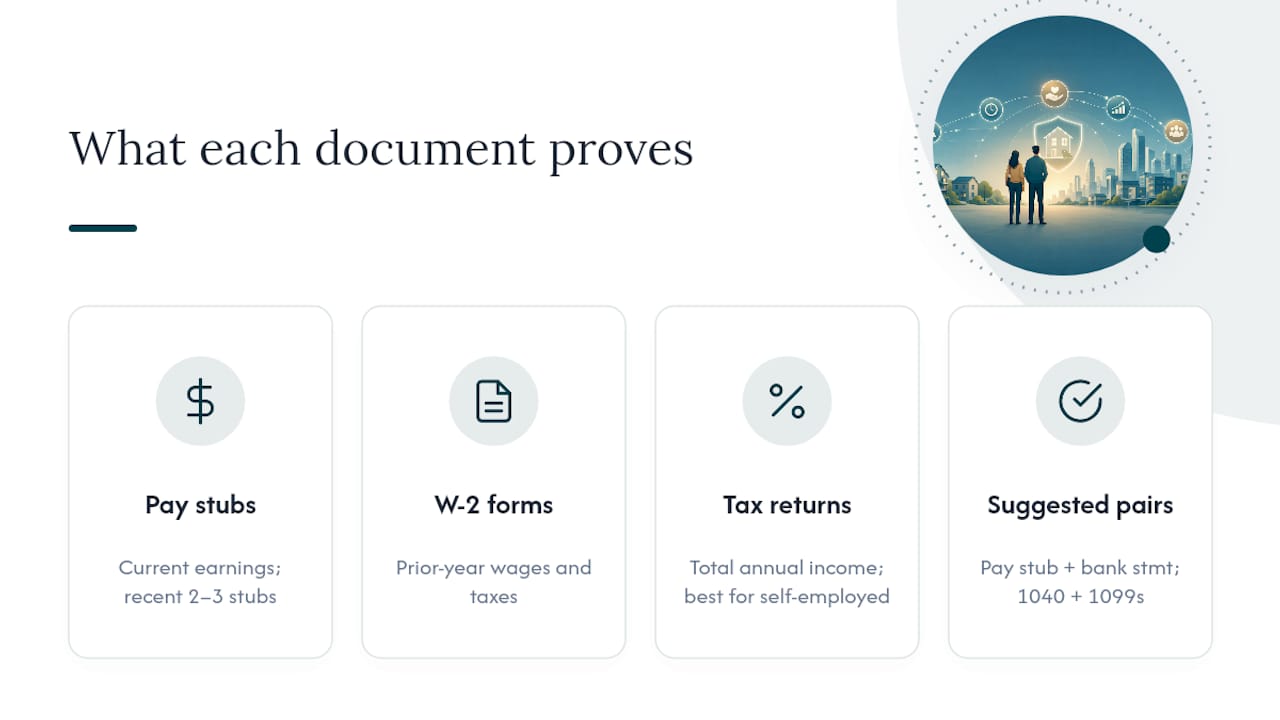
W-2 forms cover a full prior year of wages and taxes withheld. A property manager might ask for your most recent W-2 alongside pay stubs to check that your current pay matches your annual pattern, since a big gap between the two can raise questions.
Form 1040 tax returns, typically requested for the past one to two years, are the gold standard for self-employed or commission-based renters because they’re a legal document filed with the IRS. They show total income after averaging, but they lag reality. A return filed in April tells a landlord almost nothing about a raise you got in September.
1099 forms (1099-NEC for contract work, 1099-R for retirement distributions) report income the IRS already knows about from a payer’s side, similar to a W-2 but for nonemployee income.
Bank statements, usually three to six months’ worth, show the actual deposits hitting your account. They’re especially persuasive for gig workers and freelancers because they capture real cash flow, not projected income.

Employer verification letters confirm job title, salary, and start date directly from your employer. They matter most for newer hires who don’t have enough pay stub history yet.
Benefit or award letters from Social Security, a pension administrator, or a government agency confirm recurring non-wage income. Investment statements and court-ordered payment records (child support, alimony) round out the list for renters with mixed income sources.
Here’s a sample structure for an employer letter, which you can send to your HR department or supervisor to fill in:
To Whom It May Concern,
This letter confirms that [Employee Name] has been employed with [Company Name] since [Start Date] in the position of [Job Title]. Their current annual salary is [$Amount], paid [weekly/biweekly/monthly]. For verification, please contact [HR Contact Name] at [Phone/Email].
Sincerely,
[Signature, Title]
Pro Tip: Ask HR to put the letter on company letterhead and include a direct phone number, not just an email. Leasing agents often call to confirm details, and a letter that can’t be verified by phone gets flagged as unverifiable, not fraudulent, but it still slows you down.
For the strongest packet, pair a pay stub with a bank statement (to confirm the stub reflects real deposits) or pair a tax return with 1099s (to confirm the totals match what payers reported). One document invites a follow-up call; two that agree with each other usually end the conversation.
Proving Income When You’re Self-Employed or Work Gig Jobs
Freelancers, contractors, and gig workers face a different challenge: there’s no single document that captures a full income picture, so landlords expect a bundle instead.
The strongest combination is your prior-year 1040 with Schedule C attached, a profit and loss statement covering the last three to six months, copies of 1099s from your clients or platforms, and three to six months of bank statements. Together these let a landlord see both your reported annual total and your recent trend.
- Pull your most recent 1040 and Schedule C. Divide your adjusted gross income by 12 to get a baseline monthly figure.
- Cross-check that number against a 12-month rolling average of your bank deposits. If a seasonal landscaping contractor earned $54,000 over the past year but made $9,000 of it in June alone, the 12-month average smooths that spike into a realistic $4,500 monthly figure a landlord can actually use.
- Build a simple profit and loss statement: list gross income by month, subtract business expenses, and show net income for the period. Keep it to one page.
A basic P&L outline looks like this: month-by-month gross revenue, a line for business expenses (supplies, subcontractor fees, software), and a net income total at the bottom. Attach copies of your largest invoices as backup.
Renters with benefit, pension, or investment income need different paperwork entirely:
- Social Security or disability income: an official SSA benefit letter.
- Pension income: a 1099-R from the plan administrator.
- Child support or alimony: the signed court order plus a recent bank statement showing the deposits actually arrive.
- Workers’ compensation: the award letter from the insurance carrier or state agency.
What If You Don’t Have Pay Stubs?
Plenty of renters don’t have traditional pay stubs. New hires, career changers, and freelancers all hit this wall, and it doesn’t have to sink an application.
Landlords generally accept a few substitutes. Recent bank statements with deposits that match your claimed income are the most common substitute. An offer letter combined with a verbal or written employer verification works well for someone starting a new job before their first paycheck. A co-signer or guarantor covers the gap for renters with thin income history. Offering a larger security deposit or several months of prepaid rent can also ease a landlord’s concerns.
If you need to explain a gap, a short email goes a long way:
Guarantors typically need to earn 3 to 5 times the monthly rent themselves and should be ready to provide their own pay stubs, a completed guarantor application, and a valid photo ID.
Pro Tip: Don’t wait for the leasing office to ask about missing pay stubs. Volunteer the explanation and your alternative documents in your first message. It reads as organized, not evasive, and it usually gets your file to the top of the review pile.
How Landlords Verify Income and What Ratio They Expect
Most landlords use a simple math test before they even glance at your paperwork. Verification comes after the numbers check out.
The 3x rent rule is the most common benchmark in the industry: your gross monthly income should be at least three times the monthly rent. HUD takes a related but separate approach, suggesting that rent generally shouldn’t exceed 30% of a household’s gross income. Neither is a legal requirement for private landlords, but both shape how property managers set their screening criteria.
Verification methods you’ll run into:
- A direct call or email to your employer’s HR department to confirm salary and employment dates.
- Cross-referencing your submitted bank statements against your claimed pay stub amounts.
- Third-party screening or bank-API services that flag inconsistencies faster than a manual review.
- Standard credit and consumer reports, which fall under Fair Credit Reporting Act rules that require landlords to notify you if a report leads to a denial.
Whatever method a property uses, HUD’s fair housing standards require it be applied the same way to every applicant, not selectively.
Verification usually takes from the same day up to about a week, depending on responses. Application fees vary by property and state.
Before you submit anything, ask the property manager two questions: which specific documents they require, and what their deadline is for a complete file. A tenant income verification process that’s written down and consistent tends to move faster than one handled case by case.
Preparing and Submitting Your Documents Securely
A messy folder of phone photos slows down your application and exposes more personal information than necessary. A clean, organized packet does the opposite.
- Convert every document to PDF. Scanned images sent through a texting app are harder to read and easier to lose track of.
- Redact account numbers on bank statements down to the last four digits; landlords need proof of deposits, not your full account number.
- Combine related documents into a single file where possible (all three pay stubs in one PDF, for instance) rather than sending a dozen separate attachments.
- Name each file clearly:
LastName_PayStub_March2026.pdforLastName_TaxReturn_2025.pdf. A leasing agent reviewing twenty applications a day will thank you. - Upload documents through a secure portal rather than emailing images, and password-protect anything sensitive if a portal isn’t available.
Submit your strongest, most current document first: a recent pay stub or bank statement, followed by your tax return or employer letter as backup.
Pro Tip: If the property offers a secure digital application, like a verified renter profile tied to your leasing account, use it instead of email. It keeps your Social Security number and account details off unsecured servers and usually speeds up the review since the format is already standardized.
If Your Application Gets Denied, Act Fast
A denial isn’t always final, and how you respond in the next 24 to 48 hours matters more than most renters realize.
- Request the specific reason in writing. Landlords using consumer reports are required to disclose this under FCRA rules.
- Send supplemental documents that address the stated reason directly, whether that’s an updated bank statement, an employer letter, or a guarantor application.
- Offer a larger deposit, a co-signer, or a few months of prepaid rent if income was the sticking point.
- If none of that works, move on quickly. Look at properties that explicitly note flexibility with nontraditional documentation, and consider a guarantor service if your situation is likely to repeat.
A short reconsideration email works well: “Thank you for the update. I’d like to submit an additional bank statement and offer a co-signer to strengthen my application. Please let me know if there’s anything else that would help.” For a full walkthrough of next steps, see this guide on handling a rental application denial.
Keeping Your Documentation Ready for the Next Application
Rental markets move fast, and the renter who already has documents ready wins the apartment that a slower applicant loses. Treat your income paperwork like a living file, not a one-time task.
Update your folder every time you get a new pay stub, especially after a raise or job change. Pull a fresh tax return copy as soon as you file each year rather than waiting until you need it under pressure. If you’re self-employed, update your profit and loss statement monthly instead of scrambling to reconstruct six months of records the night before an application is due.
Keep a standing folder, labeled by document type and date, on your phone or in cloud storage. When a listing you love goes up on a Friday afternoon, you don’t want to be hunting for a W-2 from eighteen months ago while someone else submits a complete application first.
It’s also worth refreshing your bank statements every few months even when you’re not actively looking. Statements older than 60 to 90 days often get rejected outright by leasing offices, since they don’t reflect your current financial picture. A rental application checklist built around your specific documents, updated quarterly, turns what feels like a scramble into a five-minute file upload whenever the right apartment comes along.
Do Landlords Have Limits on What They Can Ask For?
Landlords have wide latitude to request income documentation, but that latitude isn’t unlimited, and knowing where the lines sit protects you from overreach.
The Fair Housing Act prohibits landlords from applying different documentation standards to different applicants based on race, national origin, disability, familial status, or other protected classes. If a property asks one applicant for two pay stubs and another for six months of tax returns without a consistent, stated policy, that’s a red flag worth noting.
You also have rights under the Fair Credit Reporting Act when a landlord uses a consumer or credit report as part of screening. They must disclose that they’re pulling a report, and if that report leads to a denial or different terms, they’re required to send you an adverse action notice explaining why and naming the reporting agency.
Landlords generally cannot demand your full Social Security number on documents you submit for review, only what’s needed to run a background check through a proper channel. Redacting everything but the last four digits on bank statements and pay stubs is standard practice, not something that should raise suspicion.
If a property’s documentation request feels excessive or inconsistent with what other applicants describe, you’re allowed to ask why, in writing. A property with a written, uniform income policy can usually explain its requirements clearly. One without a clear answer might be improvising, which isn’t illegal on its own, but it’s worth noting before you hand over sensitive financial documents.
Making Sense of Seasonal and Gig Income
Irregular income confuses landlords more than it should, mostly because most screening tools were built around a steady biweekly paycheck. Seasonal workers, rideshare drivers, and freelance creatives all get asked to fit into a mold that doesn’t match how they actually earn.
The fix is averaging, not picking your best month. Take your total income over the past 12 months, including slow seasons, and divide by 12 to get a realistic monthly figure. A ski instructor who earns $28,000 in five winter months and $6,000 the rest of the year has an annual total of $34,000, which averages to about $2,833 a month, a very different number than what their busiest month alone would suggest.
Gig platforms like rideshare or delivery apps often provide annual earnings summaries you can pair with bank statements to show consistency over time. If your income swings widely month to month, showing 12 months of bank statements alongside your annual summary does more to build trust than showing just the most recent quarter, which might catch you in an unusually slow or unusually busy stretch.
Landlords weighing seasonal income sometimes ask for a slightly larger deposit or a co-signer as a buffer against the low months, not because they doubt your total annual income, but because monthly cash flow gaps create real risk for both sides. Framing your average upfront, with the math shown, heads off that conversation before it turns into a rejection.
How to Talk to a Landlord About Income Gaps
An income gap on paper looks worse than it usually is in real life, and silence about it is what actually damages an application. Landlords read an unexplained gap as a risk signal; a short, factual explanation almost always reads as reassurance instead.
Address it directly and early, ideally in your application cover note or your first email to the leasing office. State what happened in one sentence, then pivot immediately to your current stability: “I took three months off between jobs last year to relocate, and I’ve been in my current position for eight months with consistent income since.” That’s it. You don’t owe a leasing agent your full life story, just enough context to explain the pattern they’ll see in your bank statements or tax return.
If your income fluctuated due to a life change, a business slow season, or a temporary reduction in hours, back up your explanation with your most recent three months of documentation rather than older records that still show the dip. Recency carries more weight than history once you can show the gap has closed.
Avoid over-explaining or apologizing repeatedly. A landlord reviewing dozens of applications wants clarity, not a lengthy justification. One clean sentence plus solid recent documents does more work than three paragraphs of context. For more guidance on framing these conversations, this guide to communicating with landlords covers scripts for several common scenarios beyond income gaps.
Documenting Dividends, Rental Income, and Government Benefits
Income that doesn’t come from a paycheck still counts, but it needs its own paper trail, and most renters underestimate how much documentation these sources actually require.
Dividend and investment income needs a brokerage statement or a 1099-DIV showing the past year’s payouts. Because dividend amounts can shift year to year, landlords typically want the most recent 12 months plus your prior tax return to confirm the pattern holds.
Rental income from a property you own elsewhere requires a signed lease agreement for that property plus bank statements showing the rent actually landing in your account each month. A lease alone proves an agreement exists, not that the tenant pays reliably, so pair it with deposit history.
Government benefits, including Social Security, disability, or housing assistance, are documented through an official SSA benefit verification letter or the equivalent letter from the issuing agency. These letters carry real weight with landlords because they come from a federal source that’s essentially impossible to falsify.
For renters combining several of these streams, sequence matters. Lead with whichever source is largest and most stable, usually your benefit letter or your primary job, then layer in supplemental income with its own documentation behind it. A document checklist built for your rental application helps you organize mixed income sources so the leasing office sees a coherent total instead of a stack of unrelated papers. Renters comparing housing options across different countries or unfamiliar rental markets can also find general documentation context through resources like HomeRent, which covers rental paperwork norms outside a single local market.
What Leasing Teams Actually Notice
Clarity beats volume. A packet with three documents that clearly agree with each other, say, a pay stub, a bank statement, and an employer letter that all point to the same monthly figure, moves faster than a folder with ten documents that don’t quite match up.
Two patterns come up again and again. Do tie your deposits directly to your pay stubs or tax return so the numbers visibly connect. Don’t submit a stack of unlabeled screenshots and expect the reviewer to piece your income together themselves; that’s the fastest way to land in the “needs more info” pile while a cleaner application from someone else gets approved first.
How Cynthia Gardens Makes Submitting Your Documents Simple
Chasing down pay stubs and tax returns is stressful enough without also fighting a clunky application portal. Cynthia Gardens built its leasing process around exactly the opposite: a secure digital upload system, AI chat support that can answer document questions at 11pm, and virtual tours so you can lock in your floor plan before you even set foot on the property.
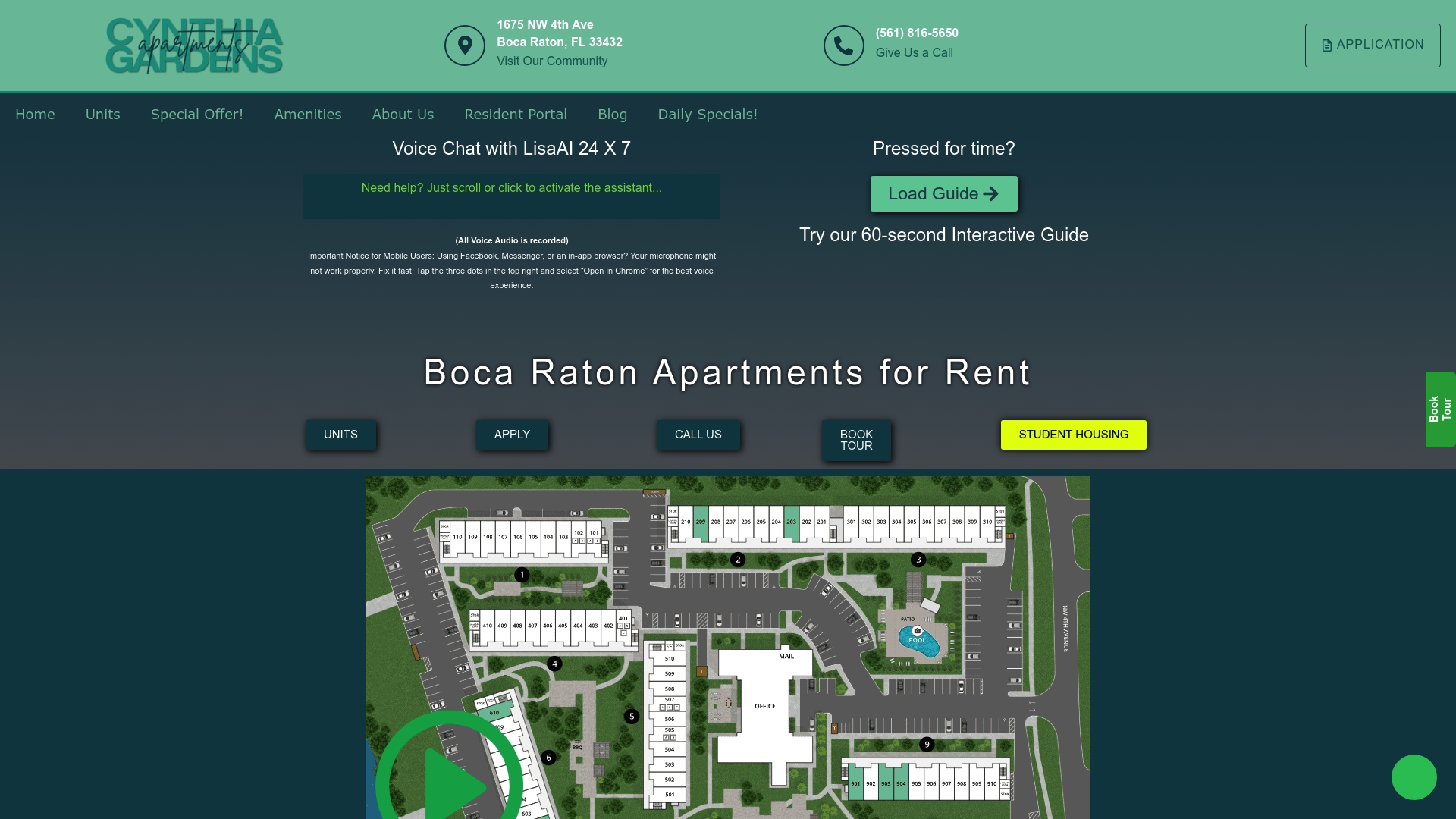
Our transparent pricing means there are no hidden fees waiting to surprise you once your income documents clear, and our team reviews applications directly rather than routing them through a slow third-party queue. If you’re a young professional, a student, or a pet owner ready to apply with your paperwork in hand, start by browsing available one-bedroom apartments in Boca Raton or reach out to our leasing office directly if you have questions about which documents to submit first.
Sources
- Fair Housing Act overview | HUD
- About Form 1040 | IRS
- Get a benefit verification letter | SSA
- How Can I Verify a Tenant’s Income? – SmartScreen
Recommended
- What Documents Do You Need to Rent an Apartment – Luxury Apartments for Rent in Boca Raton | Premium Boca Raton Apartments | Aapartments Boca Raton
- How to Save Money on Rent With Proven Strategies – Luxury Apartments for Rent in Boca Raton | Premium Boca Raton Apartments | Aapartments Boca Raton
- How to Find an Apartment Without Credit: 7 Proven Strategies
- 7 Tips for First Time Apartment Renters: A Practical Guide