
TL;DR:
- Digital lease signing is legal nationwide under U.S. law, requiring explicit consent, clear intent, and a verifiable audit trail. It offers faster, more secure, and more auditable records compared to paper, with signatures completed in under two minutes. Proper platforms automatically capture essential metadata, ensuring enforceability and strong legal protection during disputes.
Digital lease signing is the process of executing a lease agreement online through legally recognized electronic signatures that carry the same legal weight as traditional handwritten signatures under U.S. law. The federal ESIGN Act of 2000, the Uniform Electronic Transactions Act (UETA) adopted by 47 states plus Washington D.C., and state laws like New York’s Electronic Signatures and Records Act (ESRA) make digital leases fully enforceable in all 50 states. If you are researching what is digital lease signing before signing your next rental agreement, the short answer is this: it is legal, secure, and faster than paper. The standard industry term is “electronic lease signing,” and both phrases refer to the same legally binding process.
How does the digital lease signing process work?
The electronic lease signing process follows four clear steps, and the entire workflow takes less time than most renters expect.
-
Landlord preparation. The landlord creates or uploads a lease template on a digital signing platform. They add signature fields, date fields, and any required initials to the correct locations in the document. Landlord setup takes roughly 5 minutes on a compliant platform.
-
Sending the document. The landlord sends a secure link to the tenant via email or text message. The tenant receives a direct link to the document with no account creation required on most platforms.
-
Tenant review and signing. The tenant opens the lease on any device, reads through the full agreement, and clicks to sign. Tenant signing takes under 2 minutes from a smartphone or computer. That speed matters when a desirable unit has competing applicants.
-
Delivery and storage. Once all parties sign, the platform automatically delivers a completed copy to everyone and stores the signed document securely. Both landlord and tenant have instant, permanent access to the digital lease agreement.
Pro Tip: Before you sign, download your completed lease immediately and save it to a cloud folder. Digital platforms store your document, but having your own backup copy gives you instant access during disputes without relying on a third-party service.
The role of digital leasing tools in this workflow goes beyond convenience. Platforms that capture audit trails and lock documents after signing provide a level of record integrity that paper simply cannot match.

What legal requirements make a digital lease enforceable?
A digital lease agreement is not automatically enforceable just because it was signed online. Three legal pillars determine whether an electronic lease holds up in court or a dispute.
-
Intent to sign. The signer must take a deliberate action, such as clicking “I agree” or drawing a signature, that clearly demonstrates they intended to execute the document. A passive action like opening an email does not satisfy this requirement.
-
Consent to transact electronically. Signers must explicitly agree to use electronic records before the signing process begins. This consent is often captured through a checkbox or a separate consent form at the start of the workflow. Skipping this step is the most common reason a digital lease loses enforceability.
-
Verifiable, timestamped audit trail. A compliant platform records every action taken on the document, including IP addresses, timestamps, and the sequence of user actions. Audit trails are permanently linked to the signed document and cannot be altered after signing.
“Electronic lease signing audit trails provide stronger evidentiary protection than paper by locking documents and recording metadata, including timestamps, IP addresses, and consent records. This makes digital leases more defensible in eviction proceedings or contract disputes than a traditional signed paper lease.”
Not all electronic signatures carry equal legal strength. A typed name in an email is the weakest form. A scanned signature image is moderate. A click-to-sign action captured with a full audit trail is strong. A digital signature with a PKI certificate is the strongest available option. For standard residential leases, click-to-sign with a full audit trail is the accepted and practical standard.
Court-admissible digital lease records must capture metadata such as IP addresses, timestamped actions, and document locking technology to guarantee integrity after signing. This is why platform choice matters. A compliant platform handles all of this automatically. A basic PDF with a typed name does not.
What are the key benefits of digital lease signing?
The benefits of digital lease signing go well beyond saving paper. The table below compares the practical differences between paper and digital lease processes.
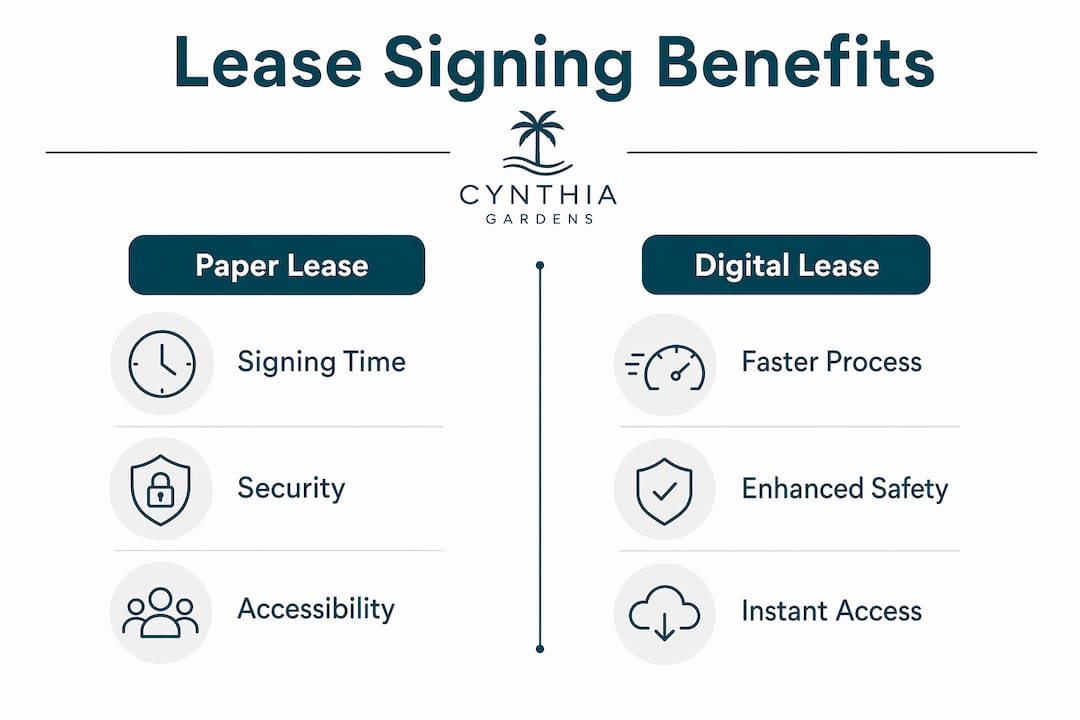
| Category | Paper lease | Digital lease |
|---|---|---|
| Signing time | Days to weeks (mail, scheduling) | Under 10 minutes total |
| Document security | Physical copy, no audit trail | Locked document with full metadata |
| Access after signing | One physical copy per party | Instant digital access for all parties |
| Dispute evidence | Handwritten signature only | Timestamped audit trail with IP records |
| Lost document risk | High | Minimal with cloud storage |
Centralized, instant access to digitally signed leases benefits both landlords and tenants for quick reference, dispute resolution, and transparency. A tenant who needs to check their move-out date at 11 PM does not have to dig through a filing cabinet.
The online leasing benefits for renters extend to the application stage as well. Digital communication throughout the leasing process reduces confusion and turnaround times compared to paper-based workflows.
Pro Tip: When evaluating an apartment, ask the landlord or property manager whether their digital lease platform captures a full audit trail. A yes tells you the property operates with professional-grade compliance. A blank stare tells you something different.
What nuances and limitations should you know?
Digital lease signing is mature and reliable, but a few nuances affect how well it works in practice.
-
Not all platforms are equal. A simple PDF with a typed name does not meet the legal standard for a compliant electronic lease. Compliant platforms capture audit trails with timestamps and IP addresses. Using a non-compliant method creates a document that looks signed but may not hold up legally.
-
Consent is non-negotiable. The consent step is legally mandated under ESIGN and UETA. Many renters click through it without reading it. That click is actually the most legally significant action in the entire process. It establishes that you agreed to conduct the transaction electronically.
-
Notarization is a separate requirement. Standard residential leases do not require notarization in most U.S. jurisdictions. However, some lease addenda or commercial agreements do. When notarization is required, Remote Online Notarization (RON) is a distinct technology layer that must be specifically integrated into the signing workflow. It is not the same as an e-signature.
-
State law variations still exist. UETA has been adopted by 47 states plus D.C. The remaining states have their own equivalent laws. Platforms that comply with ESIGN and UETA harmonize these state differences and create a consistent signing experience regardless of where the property is located.
-
Process integrity matters more than software cost. Digital lease signing does not require expensive enterprise software. What it requires is a platform that correctly captures consent, intent, and a verifiable audit trail. Free or low-cost tools that skip these steps create legal risk regardless of their price.
For renters who want to stay informed about tech-savvy renting practices, understanding these nuances separates a confident signing experience from a risky one.
Key Takeaways
Digital lease signing is legally binding in all 50 U.S. states under the ESIGN Act and UETA, provided three pillars are met: explicit consent, clear intent to sign, and a verifiable timestamped audit trail.
| Point | Details |
|---|---|
| Legal validity | ESIGN, UETA, and state laws like ESRA make digital leases enforceable nationwide. |
| Three legal pillars | Consent, intent to sign, and a timestamped audit trail are all required for enforceability. |
| Speed advantage | Landlord setup takes roughly 5 minutes; tenant signing takes under 2 minutes. |
| Audit trail strength | Digital leases provide stronger evidentiary protection than paper through locked metadata records. |
| Platform compliance | Only platforms that capture full audit trails with IP and timestamps meet the legal standard. |
Why digital lease signing is the standard, not the exception
I have watched renters treat the electronic consent checkbox as a formality, clicking past it the same way they dismiss cookie banners. That is a mistake worth correcting. That single click is the legal foundation of the entire agreement. Without it, the rest of the document is on shaky ground.
What strikes me most about the current state of digital lease signing is how mature the legal framework already is. The ESIGN Act passed in 2000. UETA followed in most states shortly after. This is not emerging technology. It is a 25-year-old legal standard that most renters still treat as new. The hesitation I see from renters usually comes from unfamiliarity, not from any real legal gap.
The security argument for digital leases is also stronger than most people realize. A paper lease can be lost, damaged, or disputed with no objective record of what happened. A properly executed digital lease agreement carries a timestamped audit trail that records every action taken on the document. That is a meaningful advantage if a dispute ever reaches a property manager, mediator, or court.
My honest advice: when you sign a lease online, do not rush the consent step. Read what you are agreeing to. Confirm the platform captures a full audit trail. And save your completed copy the moment it is delivered. Those three habits protect you far more than any clause buried in the lease itself.
— Ayman
Digital leasing at Cynthiagardens in Boca Raton
Cynthiagardens brings the full digital leasing experience to its Boca Raton apartment community, where young professionals, students, and pet owners can sign their one-bedroom lease online without scheduling an in-person visit.
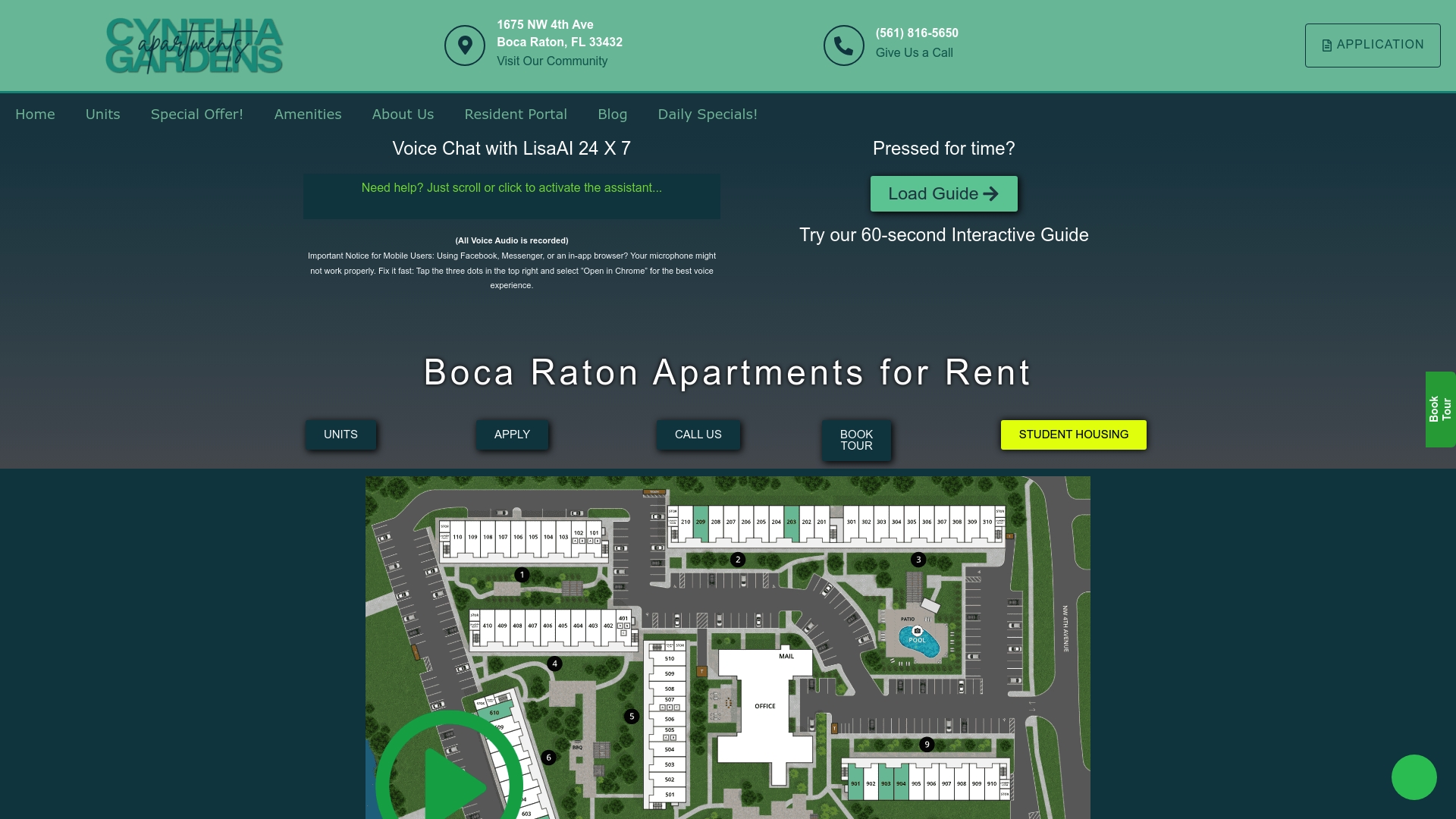
The leasing process at Cynthiagardens pairs digital lease signing with AI chat support, virtual tours, and an interactive property map, so you can review the apartment, ask questions, and execute your agreement entirely from your phone or laptop. Explore the apartment styles and features at Cynthiagardens to see what is available and start the process on your own schedule, with no pressure and no hidden fees.
FAQ
Is digital lease signing legal in all U.S. states?
Digital lease signing is legally valid in all 50 states under the federal ESIGN Act of 2000, UETA, and state-specific laws like New York’s ESRA. No state prohibits electronic lease agreements for standard residential rentals.
What makes an electronic lease legally binding?
Three elements are required: the signer’s explicit consent to transact electronically, a clear intent to sign the document, and a verifiable timestamped audit trail that records IP addresses and user actions. Missing any one of these weakens enforceability.
How long does it take to sign a lease online?
The process is fast. Landlord setup takes roughly 5 minutes, and tenant signing takes under 2 minutes from any smartphone or computer. Both parties receive a completed copy automatically once all signatures are collected.
Is a digital lease more secure than a paper lease?
A properly executed digital lease is more secure than paper. Electronic audit trails lock the document after signing and record metadata including timestamps and IP addresses, providing stronger evidentiary protection in any dispute or legal proceeding.
Do I need a notary for a digital lease?
Standard residential leases do not require notarization in most U.S. jurisdictions. When notarization is required, Remote Online Notarization (RON) is a separate technology that must be specifically integrated into the signing platform. It is not the same as a standard e-signature.