
TL;DR:
- Smoke-free housing bans smoking inside units and within outdoor buffer zones to protect residents from secondhand smoke.
- Effective policies include all tobacco products and vaping, covering indoor and outdoor areas, and must be carefully enforced through clear lease clauses.
Smoke-free housing is defined as residential property that prohibits smoking inside private units, shared common areas, and designated outdoor buffer zones to protect residents from secondhand and thirdhand smoke exposure. The term covers a formal policy category that housing professionals call “smoke-free multi-unit housing,” and both phrases are used interchangeably across federal guidance and local ordinances. Since HUD’s 2018 mandatory smoke-free rule took effect for federally funded properties, the concept has expanded well beyond public housing into private rentals and condominiums. The American Nonsmokers’ Rights Foundation tracks these policies nationwide and confirms that smoke-free living is now one of the fastest-growing standards in residential real estate. Understanding what these policies cover, who enforces them, and what they mean for your lease puts you in a far stronger position as a renter.
What is smoke-free housing policy and what does it cover?
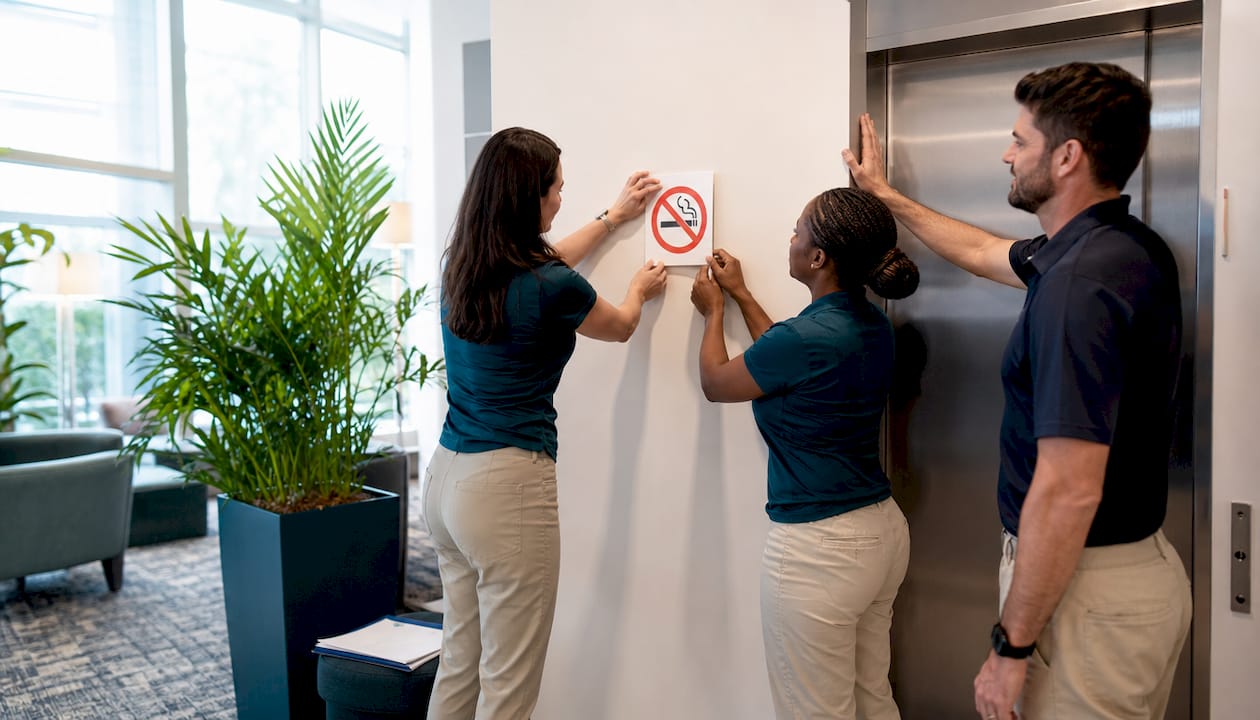
Smoke-free housing policy is a formal residential rule that bans combustible tobacco use inside units, in shared spaces, and typically within a 25-foot outdoor buffer around building entries, windows, and air intakes. That buffer zone is the part most renters overlook. It exists because smoke travels through gaps in walls, shared ventilation systems, and open windows, making indoor-only bans insufficient on their own.
The products covered depend on how the policy is written. Standard policies ban cigarettes, cigars, pipes, and hookahs. Stronger, more current policies also include e-cigarettes and vaping devices. E-cigarettes are sometimes excluded from older lease language, which creates enforcement gaps and allows indoor vaping to continue even where smoking is prohibited.
Coverage also varies by housing type. HUD’s 2018 rule applies to all federally funded public housing but does not cover private market-rate housing or Section 8 voucher units. Those categories fall under local ordinances or individual landlord decisions. Over 100 cities in California, for example, have passed laws restricting smoking in private multi-unit buildings beyond common areas alone. That gap between federal and local coverage is the single biggest source of confusion for renters who assume their building is protected when it may not be.
What housing types fall under smoke-free rules?
The four main categories each carry different obligations:
- Federally funded public housing: Covered by HUD’s 2018 rule. Smoking is banned in all units, common areas, and within 25 feet of buildings.
- Section 8 / Housing Choice Voucher units: Not covered by the HUD rule. Protections depend on local law or the individual landlord’s lease.
- Private market-rate rentals: Governed by state and local ordinances. Rules vary widely by city and county.
- Condominiums and co-ops: Governed by HOA bylaws or board rules, which can be stricter or more permissive than local law.
What are the health and financial benefits of smoke-free housing?
The health case for smoke-free policies is direct. Thirdhand smoke chemicals persist in dust, carpets, and wall surfaces for years after a smoker leaves a unit. Children and people with respiratory conditions face the highest risk from this residual contamination. A smoke-free policy prevents that buildup from occurring in the first place, rather than trying to remediate it after the fact.
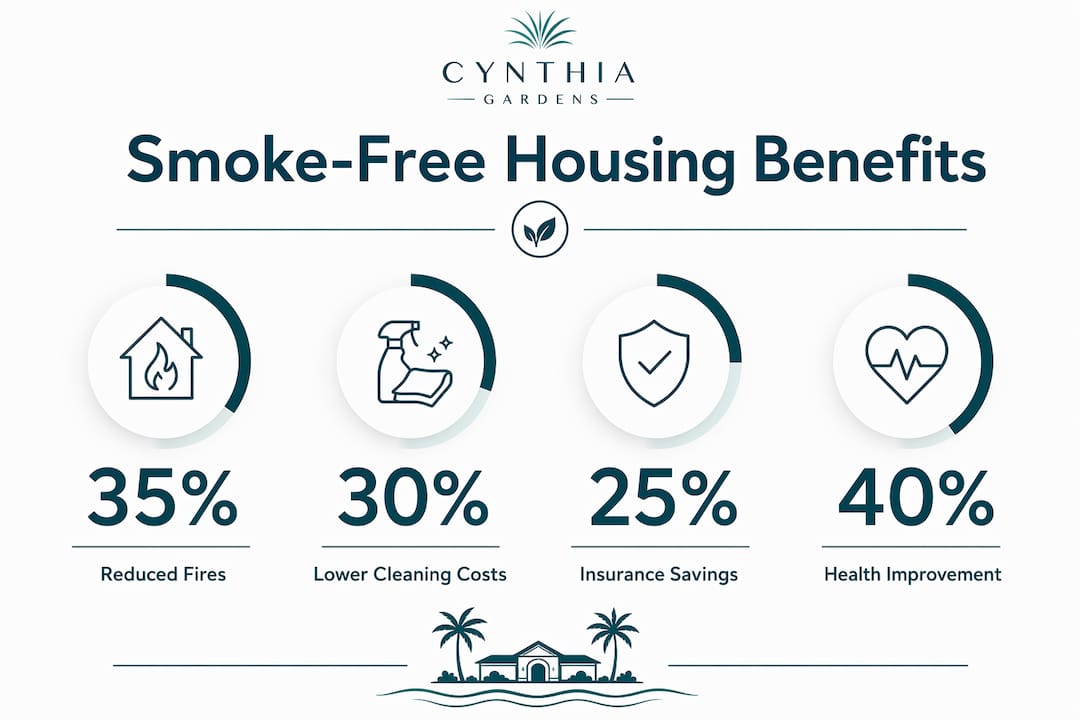
The financial case for landlords is equally strong. Smoke-free rental properties reduce deep-cleaning costs, lower fire-related expenses, and decrease unit turnover time. Repainting walls, replacing carpets, and cleaning HVAC systems after a long-term smoker vacates a unit can cost thousands of dollars. A smoke-free lease prevents that expense entirely.
Insurance is another factor. Some property insurers offer reduced premiums for buildings with documented smoke-free policies because the fire risk profile is lower. Market demand also favors these properties. Renters increasingly search for smoke-free buildings, and landlords who adopt comprehensive policies gain a clear competitive edge in lease-up.
Pro Tip: If you are a landlord considering a smoke-free policy, document it in the lease with specific language covering all tobacco products and vaping devices. Vague language creates enforcement problems that cost more to resolve than they save.
The benefits of smoke-free housing extend to the entire building community, not just individual units. When one unit smokes, neighbors in adjacent units, above, and below are all affected through shared air systems. A building-wide policy removes that shared exposure entirely.
How do smoke-free policies vary and what makes enforcement difficult?
Partial smoke-free policies that restrict smoking only in common areas cannot prevent smoke from drifting through vents and wall cracks into private units. The American Nonsmokers’ Rights Foundation is direct on this point: comprehensive policies covering both indoor and outdoor areas are the only reliable standard. Partial bans create a false sense of protection and generate ongoing tenant complaints.
Enforcement is the hardest part of any smoke-free policy. No engineering solution fully contains tobacco smoke in a multi-unit building. Ventilation upgrades and air purifiers reduce odor but do not eliminate health risk or prevent smoke transfer between units. The only solution that works is a 100% smoke-free policy applied consistently across the entire property.
Here is how effective enforcement typically works in practice:
- Write a clear lease clause. The lease must define “smoking” to include cigarettes, cigars, pipes, hookahs, and vaping devices. Ambiguous language is the most common enforcement failure point.
- Communicate the policy at move-in. Residents who understand the rules from day one are far less likely to violate them. A signed acknowledgment of the smoke-free policy strengthens the landlord’s position.
- Document violations immediately. Management typically requires specific evidence or multiple complaint reports before taking lease action. Tenants should log dates, times, and locations of smoke incidents in writing.
- Involve all residents in reporting. Enforcement depends on community cooperation. When residents understand that reporting protects their own health, compliance rates improve significantly.
- Follow a consistent response protocol. Inconsistent enforcement exposes landlords to fair housing complaints. Every violation should receive the same documented response regardless of who the tenant is.
Pro Tip: Renters dealing with smoke complaints should submit every report in writing, even if they also call the office. Written records create the paper trail management needs to act under the lease.
Understanding apartment community rules before signing a lease is the most effective way to avoid smoke exposure issues after move-in.
What should renters and landlords know before choosing smoke-free housing?
Marketing language is not a lease guarantee. Only a written lease provision confirms a property’s smoke-free status. A building described as “smoke-free” in an ad may have no enforceable policy in the actual lease document. Renters must read the lease, not the brochure.
Here is what to look for and do before signing:
- Check the lease for explicit smoking language. The clause should name specific prohibited products, covered areas, and consequences for violations.
- Ask whether vaping is included. Older leases often omit e-cigarettes. If the lease does not mention vaping, ask for an addendum before signing.
- Confirm outdoor buffer zones. A policy that only covers indoors leaves residents exposed on balconies, near entrances, and in parking areas.
- Ask about enforcement history. Property managers who have handled smoke complaints before will have a clear process. Those who have not may struggle when violations occur.
- For smokers moving into smoke-free buildings: Designate a compliant outdoor smoking area well away from the building, and review the lease consequences for violations before assuming the rules are flexible.
Renters who experience secondhand smoke exposure despite a written policy have several options. They can file a formal complaint with management, contact local housing authorities, or consult a tenant rights organization. Some states also allow tenants to break a lease without penalty when a landlord fails to enforce a smoke-free policy that was part of the original agreement.
The advantages of affordable housing increasingly include smoke-free policies as a standard feature, particularly in communities targeting young professionals and students who rank air quality high among their housing priorities.
Key Takeaways
Smoke-free housing is only as effective as the lease language and enforcement behind it. Comprehensive policies covering all tobacco products, indoor spaces, and outdoor buffer zones provide the strongest protection for residents and the lowest long-term costs for landlords.
| Point | Details |
|---|---|
| Definition matters | Smoke-free housing bans smoking in units, common areas, and a 25-foot outdoor buffer. |
| Federal coverage is limited | HUD’s 2018 rule covers public housing only; private rentals depend on local law or landlord policy. |
| Thirdhand smoke is a real risk | Smoke chemicals persist in surfaces for years, making prevention far cheaper than remediation. |
| Lease language is the guarantee | Marketing claims mean nothing; only a written lease clause with specific product coverage is enforceable. |
| Enforcement requires documentation | Tenants should log every smoke incident in writing to give management the evidence needed to act. |
Why smoke-free housing policy is more important than most renters realize
I have spent years watching renters sign leases without reading the smoking clause, then spend months dealing with smoke drifting from a neighbor’s unit. The frustration is real, and it is entirely preventable.
The biggest misconception I see is that a “smoke-free building” label means the problem is solved. It does not. What matters is whether the policy covers vaping, whether it includes outdoor areas, and whether management has a documented process for handling violations. A policy that only bans smoking in hallways while ignoring balconies and unit interiors is not a smoke-free policy. It is a partial ban with a marketing name.
The other thing most people miss is the thirdhand smoke issue. Renters moving into a unit where a smoker lived for years are inheriting a contamination problem that no amount of cleaning fully resolves. Asking about the previous tenant’s smoking status and requesting a fresh coat of paint and carpet replacement before move-in is not excessive. It is standard due diligence.
Landlords who adopt comprehensive, well-written smoke-free policies are not just doing the right thing for residents. They are protecting their property value, reducing turnover costs, and positioning their buildings for a market that increasingly demands clean-air living. The data supports it, and the demand is only growing.
— Ayman
Smoke-free living at Cynthiagardens in Boca Raton
Cynthiagardens is a modern apartment community in Boca Raton, Florida built around transparent policies and healthy living standards for young professionals, students, and pet owners.
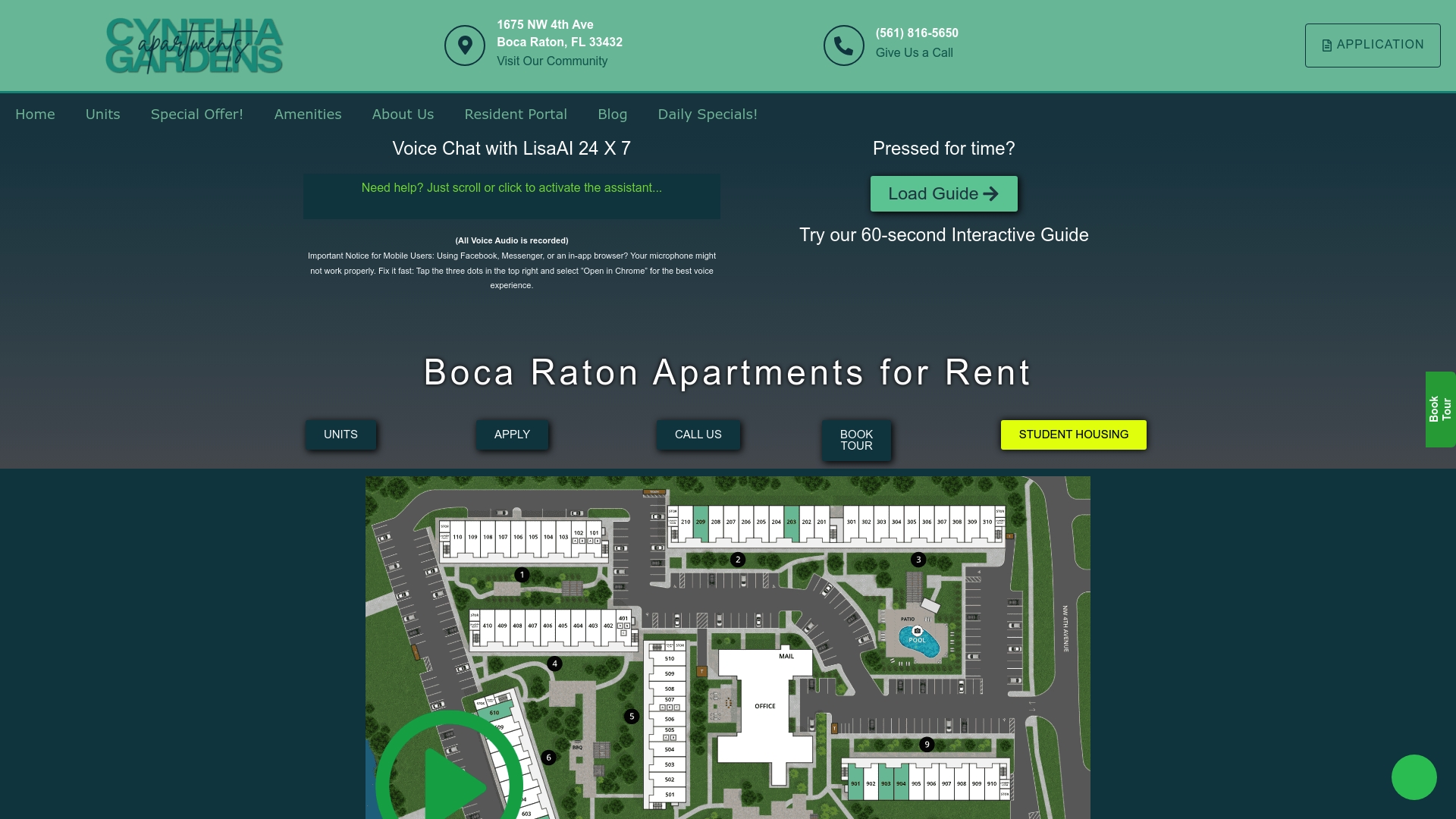
The community’s apartment styles and features reflect a commitment to well-maintained, clean living environments where residents know exactly what they are getting before they sign. Cynthiagardens publishes its community rules openly so renters can verify policies, including smoke-free standards, without guesswork. If you are searching for a Boca Raton apartment where the rules are clear, the pricing is transparent, and the living environment supports your health, Cynthiagardens is worth a close look.
FAQ
What does smoke-free housing mean exactly?
Smoke-free housing prohibits smoking inside private units, shared common areas, and typically within a 25-foot outdoor buffer around the building. The policy covers combustible tobacco products and, in stronger versions, vaping and e-cigarettes.
Does HUD’s smoke-free rule apply to all apartments?
No. HUD’s 2018 rule applies only to federally funded public housing. Private market-rate rentals and Section 8 voucher units are governed by local ordinances or individual landlord policies.
Is smoke-free housing actually effective at preventing exposure?
Yes, when the policy is comprehensive. Research from Harvard T.H. Chan School of Public Health confirms that no ventilation or filtration system fully contains tobacco smoke. Only a 100% smoke-free policy reliably prevents smoke transfer between units.
How do I verify a building is truly smoke-free before signing?
Read the lease, not the marketing materials. Only a written lease clause naming specific prohibited products and covered areas guarantees smoke-free status. Ask whether vaping is explicitly included.
What can I do if my landlord does not enforce the smoke-free policy?
Document every incident in writing with dates, times, and locations, then submit formal complaints to management. If the landlord fails to act, contact local housing authorities or a tenant rights organization, as some states allow lease termination when a landlord ignores a written smoke-free policy.
Recommended
- Affordable Housing for Pet Owners—What Matters Most
- Why Choose Pet-Inclusive Housing for You and Your Pet
- Navigating Your Apartment Pet Policy – Luxury Apartments for Rent in Boca Raton | Premium Boca Raton Apartments | Aapartments Boca Raton
- The Hidden Benefits of Choosing Apartments with Gardens: More Than Just Greenery – Luxury Apartments for Rent in Boca Raton | Premium Boca Raton Apartments | Aapartments Boca Raton